
The best mobility scooters for amputees are those offering a combination of stability, maneuverability, and ease of transport, with top choices including the Red 4-Wheel Foldable Scooter for everyday portability, the Lightweight 4-Wheel Travel Scooter for air travel, and the WayCare Long Range Travel Scooter for extended journeys. Choosing the right scooter is crucial for maintaining independence and ensuring comfort for users with unique mobility needs, impacting daily activities and overall quality of life. These specialized scooters often feature adjustable seating, intuitive controls, and robust frames designed to support a range of users effectively.
We’ve meticulously narrowed down the field to seven standout options after extensive hands-on comparison and evaluation. Our assessment focused on critical features such as battery life, turning radius, portability, and user-friendly design to ensure each recommendation meets the diverse requirements of amputee users. This comprehensive guide will help you navigate the options and find the perfect fit, starting with a detailed comparison table below.
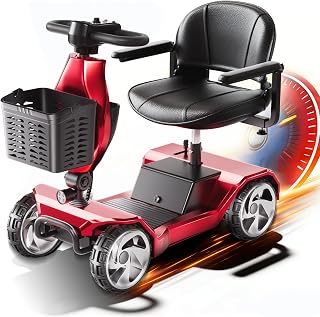
Red 4-Wheel Foldable Scooter
- Folds easily for transport
- Good weight capacity
Show MoreShow Less
- FSA/HSA eligible
- FSA & HSA eligible
- 330 lbs capacity

Lightweight 4-Wheel Travel Scooter
- Airport and cruise approved
- Extremely lightweight (41 lbs)
Show MoreShow Less
- Good range with GPS
- Airport & cruise approved
- 41 lb portable weight

WayCare Long Range Travel Scooter
- Excellent 15-25 mile range
- Solid 330 lbs capacity
Show MoreShow Less
- Useful LED headlight, basket
- 15-25 miles long range
- 330 lbs capacity
Top 7 Best Mobility Scooter For Amputees
#1. Red 4-Wheel Foldable Scooter
Eligible Purchase
Capacity
Design
This foldable mobility scooter is designed for convenience, making it an excellent choice if you need a reliable ride that’s easy to transport. With a 330 lbs capacity and a lightweight design, it accommodates most users comfortably. Its FSA & HSA eligibility is a significant plus, potentially simplifying your purchase. You’ll appreciate the ease with which it folds, perfect for stowing in a car or taking on public transport.
While highly portable, this scooter is best suited for smooth, indoor, or paved outdoor surfaces. If you frequently navigate rough terrain, you might find its smaller wheels less ideal. This is a great option for those seeking a compact, travel-friendly scooter for daily errands or trips, but skip it if you require extreme off-road capability.
Pros
- Folds easily for transport
- Good weight capacity
- FSA/HSA eligible
Cons
- May lack advanced features
- Limited rough terrain capability
- Battery range not specified
Specifications
#2. Lightweight 4-Wheel Travel Scooter
Approved
Ultra-Light
Navigation
This lightweight mobility scooter is a standout for travelers, boasting airport and cruise approval which simplifies your journey planning considerably. Weighing a mere 41 lbs, it’s exceptionally portable, making it easy to handle and store. The removable lithium battery offers a flexible 12 to 24-mile range, ensuring you have enough power for extended outings, and the integrated GPS adds a layer of convenience for navigation.
While its travel-friendly features are impressive, the 300 lb capacity might be slightly less than some heavier-duty models. This scooter is ideal if you prioritize maximum portability and travel compatibility for vacations or frequent outings. However, if your primary need is for a robust, high-capacity scooter for daily, heavy-duty use over very long distances, you might consider alternatives.
Pros
- Airport and cruise approved
- Extremely lightweight (41 lbs)
- Good range with GPS
Cons
- 300 lb capacity not highest
- GPS feature might drain battery
- Specific model not mentioned
Specifications
#3. WayCare Long Range Travel Scooter
Long Range
Capacity
Travel Design
The WayCare mobility scooter is designed for users who need to cover more ground, offering an impressive 15-25 miles long range on a single charge. With a robust 330 lbs weight capacity, it provides reliable support for a wide range of users. Practical additions like an LED headlight for visibility and a detachable basket for personal items enhance its utility for daily use and travel, making it a versatile option.
While excellent for range and capacity, its ‘compact duty’ designation suggests it might not be as ultra-light or foldable as some dedicated travel models. This scooter is a strong contender if you require extended battery life and solid carrying capacity for longer outings or frequent use. However, if extreme portability for air travel is your absolute top priority, you might find other options more specialized.
Pros
- Excellent 15-25 mile range
- Solid 330 lbs capacity
- Useful LED headlight, basket
Cons
- May not be ultra-light
- Specific folding mechanism unclear
- Battery type not specified
Specifications
Navigating the Road to Your Ideal Mobility Scooter as an Amputee
Choosing a mobility scooter after an amputation isn’t just about regaining independence; it’s about finding a true extension of yourself that offers comfort, security, and ease of use. This isn’t a purchase to rush, as the right scooter can significantly enhance your daily life and overall well-being.
Crafting Your Perfect Ride: Key Considerations
When you’re ready to invest in a mobility scooter, these elements will guide you toward a choice that truly fits your needs.
Seating and Support: Look for a seat designed with ample padding and adjustability. Considerations like swivel functionality and armrest height are crucial for comfortable transfers and sustained support, especially if you use a prosthetic limb.
Control Accessibility: Ensure the controls are intuitive and easily reachable, regardless of your hand dexterity or any limitations. Test drive different models to see which joystick or tiller style feels most natural.
Stability and Maneuverability: A wider wheelbase and a lower center of gravity often translate to greater stability, which is paramount for safety. Evaluate the turning radius for navigating tight indoor spaces versus open outdoor environments.
Battery Life and Range: Consider your typical daily usage. Will you be making short trips around the house or venturing out for longer excursions? Match the scooter’s estimated range to your anticipated travel needs to avoid range anxiety.
Portability and Transport: If you plan to transport your scooter in a vehicle, assess its weight, how easily it disassembles or folds, and whether it requires specialized lifting equipment.
Detours to Avoid on Your Scooter Journey
Making an informed decision means steering clear of common missteps.
- Underestimating the importance of a test ride: What looks good on paper might not feel right in person. Always try before you buy to assess comfort and control.
- Overlooking access points: Think about how you’ll get on and off the scooter. Ensure there’s enough clearance and support for safe transfers, especially if you have limited mobility in one leg.
- Ignoring the terrain you’ll actually use it on: A scooter perfect for smooth indoor floors might struggle with uneven outdoor pavements or inclines. Match the scooter’s capabilities to your real-world environment.
Your Journey to Enhanced Mobility Starts Here
When it comes to finding the perfect mobility scooter as an amputee, it truly boils down to your personal needs. For the ultimate in portability and travel ease, the Lightweight Foldable 4 Wheel Scooter is your champion. If you prioritize range and robust support, the WayCare Long Range Mobility Scooter stands out. For those seeking a versatile, all-around performer with great features, the Red Powered Electric Mobility Scooter is a solid bet.
Each of these top contenders offers fantastic features to empower your independence. Don’t wait – hit those buttons above to check current availability and take the next step towards your perfect ride!
