
Understanding Mobility Scooter Registration Rules
No, a standard mobility scooter used by an individual for personal mobility generally does not need to be registered with the state DMV like a car or motorcycle. However, the situation gets more specific based on where you live and what type of device you have.
This answer comes from the fact that most mobility scooters and electric wheelchairs fall under a specific category of vehicle that is exempt from registration requirements. We’ll dig into why this is the case and what the key exceptions are.
Federal Definitions Set the Stage
To understand the registration rules, you first need to know how the federal government classifies your scooter. This classification is the foundation for most state laws.
What Exactly Is a “Mobility Scooter”?
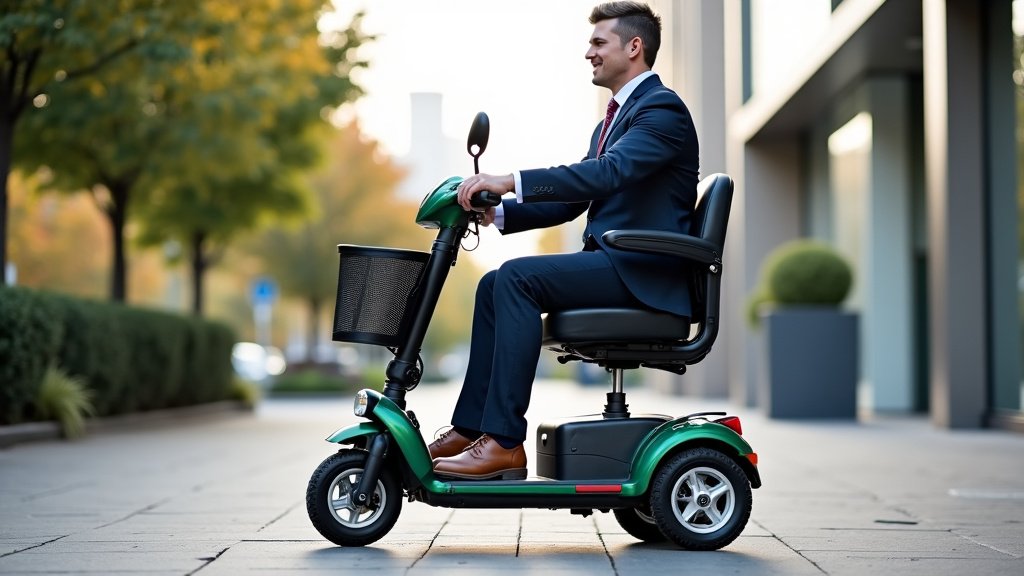
According to the Americans with Disabilities Act (ADA) and the U.S. Access Board, a mobility scooter is considered an “electronic personal assistance mobility device.” This is different from a motor vehicle. The key characteristics that define it are:
- It is designed for individuals with mobility impairments.
- It has a seated operator.
- It is intended for use both indoors and outdoors.
- It has a speed capability of no more than 8 miles per hour on a paved surface.
The federal definition is crucial because it places these devices in a category that is meant to provide access and independence, not to be regulated as traffic on public roads (National Institute on Disability, Independent Living, and Rehabilitation Research).
What Makes a Device Different?
The line can blur with faster, heavier devices sometimes called “heavy-duty” scooters. If a scooter goes faster than 8 mph or has features designed primarily for road use rather than accessibility, it may be reclassified. That classification changes everything.
State-by-State Rules Are Key
While federal definitions provide a baseline, mobility scooter registration is a state-level issue. Most states follow the federal lead and exempt ADA-compliant scooters from registration. However, the specifics can vary widely.
The Common Rule: Exemption for Personal Use
In the vast majority of states, including California, Texas, Florida, and New York, if your device meets the ADA definition, you do not need a driver’s license, insurance, or registration to operate it. You can typically use it on sidewalks, in crosswalks, and on some paved pathways.
When States Might Require Action
Some states have nuances. A few may require a simple registration or have specific operating restrictions. For instance, some municipalities might have local ordinances about where you can ride.
The best resource is always your state’s Department of Motor Vehicles (DMV) or Department of Transportation website. Look for their section on “low-speed vehicles,” “electric personal assistive mobility devices,” or similar terminology.
Special Cases Where Rules Change
Now, let’s talk about the exceptions. These are scenarios where you might need to register a mobility-related vehicle.
High-Speed or Road-Use Scooters
If your device is built to go faster than 20-25 mph, it likely crosses the line into a different vehicle class. States often categorize these as “low-speed electric vehicles” or even mopeds. For these, you will likely need:
- A valid driver’s license or permit.
- Vehicle registration and plates.
- Minimum liability insurance.
Power-Operated Wheelchairs vs. Scooters
Generally, both are treated similarly under accessibility laws. However, a heavy-duty power wheelchair with a very high weight capacity and specific medical necessity documentation might have a slightly different path in some states’ medical equipment regulations, though rarely for public road registration.
A Quick Comparison Table
To make this easier to visualize, here’s how typical personal mobility scooters compare to devices that may require registration.
| Feature | Personal Mobility Scooter (ADA Compliant) | High-Speed / Road-Oriented Scooter | |
|---|---|---|---|
| Typical Speed | Under 8 mph | Over 20 mph | |
| Federal Classification | Electronic Personal Assistance Mobility Device | Low-Speed Vehicle or Moped | |
| State Registration Needed? | No, in most states | Yes, typically | |
| Driver’s License Required? | No | Yes, often a specific class | |
| Insurance Needed? | No | Yes, minimum liability | |
| Where You Can Ride | Sidewalks, crosswalks, paved paths | Roads, bike lanes (per state law) |
State Examples to Consider
Looking at a few states helps illustrate the general pattern and the exceptions.
California: The Exemption Model
The California Vehicle Code explicitly exempts electric personal assistive mobility devices from DMV registration. The law defines them clearly and states they are “not required to be registered” (California Vehicle Code § 21220).
New York: Similar Stance
New York’s law also exempts these devices. It specifies they may be used on sidewalks and crosswalks, but municipalities can regulate their speed on sidewalks. No registration is required for the device itself.
Florida: A Common Exception for High-Speed Devices
Florida has clear exemptions for ADA devices. However, it has a separate statute for “low-speed electric scooters” that can go up to 30 mph. Those do require registration, a driver’s license, and insurance, treating them more like motor vehicles (Florida Statute § 316.2128).
Practical Steps: Your Personal Checklist
So, what should you actually do? Follow this simple checklist to be sure.
- Check Your Device’s Top Speed: If it’s 8 mph or under for personal use, you’re likely in the clear.
- Find Your State DMV Website: Search for “[Your State] DMV mobility scooter registration rules.”
- Look for Official Definitions: See if your state uses terms like “electronic personal assistance mobility device.”
- Call Your Local DMV Office: A quick call can clarify any confusing local ordinances.
- Keep Proof of Purchase: Having your receipt or manual is always a good idea, especially if your device’s capabilities are questioned.
The Bottom Line for Daily Use
For the person using a standard mobility scooter to go to the grocery store or visit a park, the message is consistent. Your freedom to move should not be tied up in red tape. Federal and most state laws are designed to keep it that way.
The focus is on accessibility, not restriction. By meeting the ADA definition, your scooter is categorized as an essential aid, not a traffic hazard. This is why we see the widespread exemption.
Always remember, safety is paramount regardless of registration. Be aware of your surroundings, follow pedestrian traffic rules when on sidewalks, and ensure your scooter is in good working order. A quick review of your state’s specific sidewalk and path rules will give you complete confidence.
Conclusion
In short, your standard mobility scooter is almost certainly exempt from registration. Federal and state laws protect your right to move freely without red tape. The key is your device’s speed and intended use. Always check your specific state’s DMV website for local rules, especially if your scooter is high-speed. Take two minutes today to find your state’s official page on “electric personal assistive mobility devices.” This simple step gives you complete confidence for your next trip to the store or park.
Frequently Asked Questions
Do I need a license to operate a mobility scooter?
For a standard ADA-compliant scooter, you do not need a driver’s license in most states. If your device is classified as a low-speed electric vehicle or moped, then yes, you will typically need a valid license or permit. Always verify your local rules.
Can I ride my mobility scooter on public roads?
Generally, no. ADA-defined scooters are meant for sidewalks, crosswalks, and paved paths. Riding on a public road with motor vehicle traffic is usually prohibited for your safety and legality. Road-use is reserved for faster, registered vehicles.
What if I buy a used mobility scooter? Does registration transfer?
If the scooter is a standard personal mobility device, it was never registered, so there is nothing to transfer. You should just keep your purchase receipt or manual as proof of ownership. No title transfer is required.
My scooter goes 10 mph. Is that considered “high-speed”?
The federal ADA threshold is 8 mph. While 10 mph is just over, your state’s specific classification is what matters. Some states may still exempt it, while others might place it in a different category. Check your state DMV definition for “low-speed vehicle.”
Are there age restrictions for using a mobility scooter?
There are no federal age restrictions for using a personal mobility scooter, as it is considered a medical accessibility device. Some local ordinances or private property rules may have guidelines, but they are not common. The operator must be able to control it safely.
