
In the United States, you can generally start using a mobility scooter when you are old enough to safely operate it, often around age 14-16. However, there is no single federal law setting a minimum age. The rules depend on whether it’s for personal use on private property or for public sidewalks.
We found that local and state regulations primarily govern scooter use in public. This is because mature judgment and the ability to handle traffic safely matter more than a specific birthday. Many experts say the key factors are physical capability and responsible operation.
- The minimum age for personal-use models on private property is often set by the parent or guardian.
- Public sidewalk use may have state or city ordinances, sometimes specifying an age like 16.
- Medical necessity can change the rules, especially for prescription devices.
- Regardless of age, following all pedestrian safety rules is always required.
Below, we break down the key considerations about age requirements and what you need to know before you or a loved one starts using a mobility scooter.
Understanding the Age Requirements for Mobility Scooters
The short answer is there is no single, universal age requirement set by federal law in the United States. Instead, the rules are often a patchwork of state and local regulations, common-sense safety practices, and the specific context of where you plan to use the scooter. Your ability to operate it safely is the most important factor of all.
Rules for Private Property Use
If you’re planning to use a mobility scooter exclusively on your own land, like around your home or farm, the rules are much simpler. Generally, there are no government-set age restrictions. The decision falls entirely to the property owner or the parent or guardian supervising a minor.
Think of it like a kid’s electric toy car. The law doesn’t dictate the age; you decide if your child can handle it responsibly in the driveway. Safety is still your top concern. A mature, responsible teenager might be perfectly fine operating a scooter on private paths, while a younger child might not have the judgment needed.
Public Sidewalks and the Law
This is where things get more complicated. When you take a mobility scooter onto public property, such as sidewalks, paved trails, or crosswalks, it is often legally considered a pedestrian aid. Because of this, it falls under different regulations than a motor vehicle.
Many cities and states have their own ordinances governing pedestrian mobility devices. We found that while some places have no age rule, others explicitly state the operator must be of a certain age, commonly 16 years old. This is often linked to the legal age to be responsible for one’s own actions in public spaces.
Why Age Can Matter in Public
The focus on age in public isn’t about a birthday party. It’s about presumed maturity. A local government may set an age limit to ensure the rider understands complex pedestrian traffic rules, can navigate intersections safely, and can make quick decisions to avoid accidents. An experienced user noted, “It’s not about how old you are, but about demonstrating you can share the sidewalk with walkers, strollers, and bikes without causing danger.”
The Critical Role of Medical Prescription
Many mobility scooters are classified as Durable Medical Equipment (DME). If a scooter is prescribed by a doctor for a specific medical condition, the landscape shifts. In these cases, the primary consideration becomes medical necessity, not chronological age.
Guidelines from the Centers for Disease Control and Prevention (CDC) emphasize that assistive devices should be matched to the user’s functional abilities. A healthcare provider’s prescription is based on the user’s physical and cognitive capability to operate the device safely, which is a much more precise measure than age alone.
Key points:
- A prescription may be required by insurance (like Medicare) for coverage.
- The device is then tailored to the user’s specific needs.
- Training on safe operation is often part of the prescription process.
Comparing Private vs. Public Use Requirements
To help you see the differences clearly, here is a simple breakdown:
| Aspect | Private Property Use | Public Sidewalk Use |
|---|---|---|
| Typical Age Rule | Owner’s/Guardian’s discretion | Often 16+ (varies by city/state) |
| Who Sets the Rule? | You (the owner or parent) | State or municipal ordinances |
| Primary Governing Factor | Personal judgment & safety | Public safety laws & liability |
| Legal Classification | Personal property | Often classified as a pedestrian aid |
Safety, Judgment, and the Right Fit
Beyond the legal fine print, the real question you should ask is: “Is this person ready to operate this machine safely?” This applies whether you are 16 or 60. A mobility scooter is a significant piece of equipment that can weigh 150 pounds or more and reach speeds of 5-8 mph.
Experts at the National Highway Traffic Safety Administration (NHTSA) consistently point to driver judgment as a critical safety factor for any vehicle. This same principle applies here. The operator needs spatial awareness, quick reflexes, and the foresight to anticipate hazards from cars backing out or cyclists passing by.
Factors That Matter More Than Age
When evaluating if someone is ready, consider these real-world indicators:
- Physical Ability: Can they see potential hazards? Can they react quickly?
- Cognitive Awareness: Do they understand right-of-way rules? Can they concentrate and not get distracted?
- Responsible Behavior: Do they have a track record of making safe choices?
Imagine a busy sidewalk near a park. A safe operator needs to navigate around pedestrians, pause for red lights, and steer clear of slippery patches. Age is just a number, but responsibility is demonstrated through action.
How to Choose and Maintain a Safe Scooter
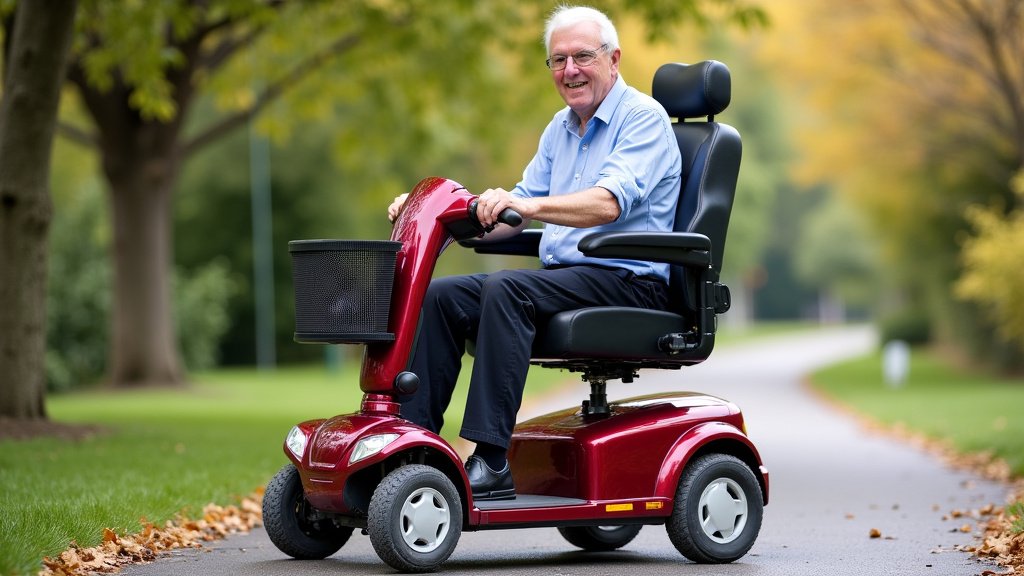
If you determine a mobility scooter is appropriate, the next step is choosing one that fits the user’s needs and the intended environment. A large, heavy-duty scooter meant for roads is overkill for indoor use, and a compact travel scooter might not be stable enough on uneven outdoor terrain.
Regular maintenance is also a key safety component. Brakes, tires, and batteries should be checked often. A scooter that fails unexpectedly can become dangerous. Many manufacturers provide clear age and weight recommendations in their user manuals based on the scooter’s design and power.
Checklist: Before You Start Scooting
Before you or a loved one begins using a mobility scooter, run through this quick checklist:
- Check Local Laws: Contact your city or county clerk’s office to ask about specific age or registration rules for sidewalk use.
- Assess the Rider’s Judgment: Honestly evaluate their ability to navigate safely in busy areas.
- Consult a Professional: Talk to a doctor or physical therapist about whether a scooter is the right mobility solution.
- Consider Training: Look into local occupational therapy or safety courses for new users.
- Start in Low-Risk Areas: Practice first in quiet parking lots or empty sidewalks before tackling busy areas.
- Maintain the Machine: Keep up with all recommended maintenance for safe operation.
By focusing on safety and preparation, you can ensure that using a mobility scooter is a liberating and positive experience.
Conclusion
Ultimately, the question of how old you need to be to use a mobility scooter has no simple, universal answer. We found that federal law doesn’t set a minimum age, but state and local rules often do, especially for public sidewalks. The most important factors are always the user’s ability to operate the scooter safely and their understanding of pedestrian laws. Your personal judgment and a commitment to safety matter far more than a specific birthday.
Before you or a loved one starts scooting, your best next step is to contact your local city or county office. Ask them directly about any age or registration rules for sidewalks in your area. This quick call will give you the clear, local guidance you need to move forward with confidence and stay safe on the move.
Frequently Asked Questions
Can a 12-year-old use a mobility scooter on the sidewalk?
It depends entirely on your local laws. While federal rules don’t prohibit it, many cities have ordinances requiring the operator to be 16 or older for public sidewalk use. Always check with your local government first. The child’s maturity and safety skills are the most critical considerations.
Do I need a prescription to buy a mobility scooter?
You do not need a prescription to purchase a mobility scooter for personal use. However, if you want insurance, including Medicare, to help cover the cost, you will need a doctor’s prescription. The prescription confirms the scooter is a medical necessity for your specific condition.
Where can I practice using a mobility scooter safely?
The best place to start is in a low-risk, controlled environment. A quiet, empty parking lot or a deserted sidewalk on a weekday is ideal. This lets you get comfortable with the controls, turning, and braking without the stress of traffic or pedestrians.
What’s the difference between a mobility scooter and a power wheelchair?
The main difference is in design and intended use. Mobility scooters typically have a tiller for steering and are meant for users who can sit upright and have good trunk control. Power wheelchairs are often more compact, have a joystick for control, and are better for users with limited upper body strength.
How often should I get my mobility scooter serviced?
You should perform basic safety checks, like tire pressure and battery charge, weekly. For professional maintenance, we recommend a full service at least once a year, or as recommended in your owner’s manual. Regular service keeps brakes, electrical systems, and tires in safe working order.
