
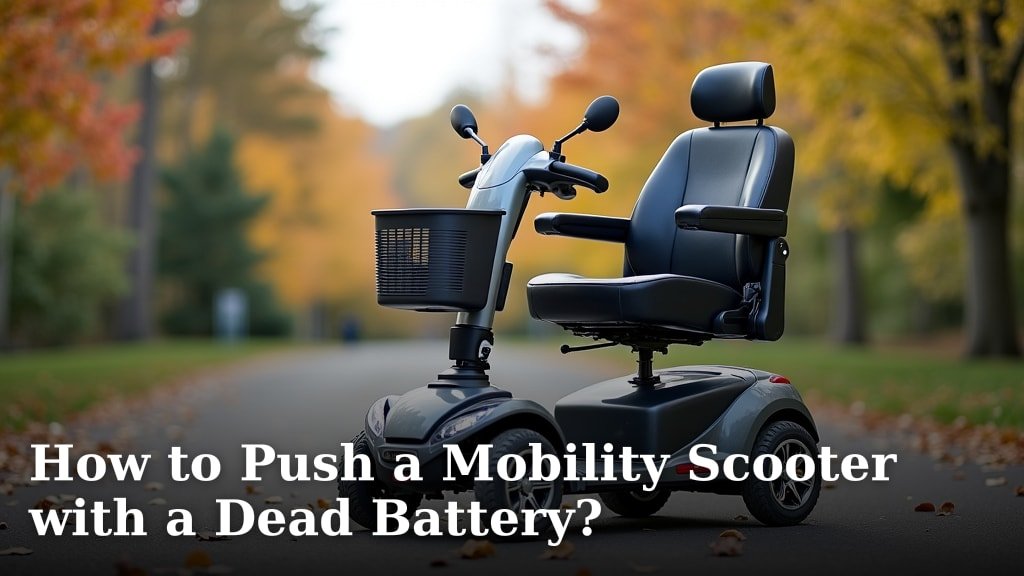
The easiest way to push a mobility scooter with a dead battery is to disengage the freewheel lever. This lever lets you push the scooter by hand. It disconnects the motor from the wheels. You will find it near the rear wheel or axle.
Pushing a mobility scooter by hand can be a real workout. Especially if it’s a larger model or on a slope. Always prioritize safety first. We found that it is important to know your scooter’s specific design. This ensures you can safely move it when the battery dies.
- Find the freewheel lever: Usually yellow or red, near the rear axle.
- Disengage the motor: Move the lever to the “neutral” or “freewheel” position.
- Push with care: Mobility scooters can be heavy.
- Safety first: Watch for inclines and uneven surfaces.
Let’s walk through exactly how to do this safely and without damaging your scooter. We will guide you step by step.
Moving Your Scooter When the Battery Dies
Okay, your mobility scooter battery has decided to call it a day. What now? Don’t panic! You can absolutely move your scooter by hand. It just takes a little know-how and some careful planning. We’ll walk you through each step to make it as easy and safe as possible for you.
Understanding the Freewheel Lever
The secret weapon for pushing your scooter is the freewheel lever. Think of it as your scooter’s neutral gear. When engaged, your scooter is in drive, and the motor powers the wheels. When disengaged, the motor disconnects. This allows the wheels to turn freely.
Locating the Freewheel Lever
You’ll usually find this lever near the rear axle or wheels of your scooter. It’s often brightly colored, like yellow or red, to make it easy to spot. Sometimes it’s a small lever you flip, or a knob you pull. Each scooter model can be a little different. We found it’s a good idea to check your scooter’s manual first. This way, you know exactly where it is and how it works for your specific model.
Operating the Lever
To disengage the motor, simply move the lever to the “freewheel” or “neutral” position. You might hear a small click. This tells you the motor is no longer connected. Now, your scooter is ready to be pushed. Remember to always engage the lever again once you’re done pushing. Otherwise, your scooter won’t move under its own power, even with a charged battery.
Safety First When Pushing
Pushing a mobility scooter can be quite a workout. These machines are not light! The average scooter can weigh anywhere from 100 to over 300 pounds. Safety is your top priority. You don’t want to strain yourself or accidentally damage the scooter. We found that a little preparation goes a long way here.
Assessing the Environment
Before you even think about pushing, take a look around. Are you on a flat surface? Is there an incline? Are there any obstacles in your path? Uneven terrain, hills, or even thick carpet can make pushing much harder. If you’re on a slope, even a slight one, the scooter can pick up speed quickly. This makes it difficult to control. Always be mindful of your surroundings.
Seeking Assistance
Do you have a friend, family member, or even a kind stranger nearby? Don’t hesitate to ask for help! Even having someone to steer while you push from behind can make a huge difference. Pushing alone can be exhausting, and we found that a second person can prevent potential falls or injuries (National Safety Council).
Effective Pushing Techniques
Once you’ve disengaged the lever and assessed your situation, it’s time to get pushing. But how do you do it without hurting yourself or the scooter? There are a few techniques that can make this task much easier.
- Stand Behind the Scooter: This gives you the most leverage and control.
- Use Your Legs, Not Your Back: Bend your knees and use your powerful leg muscles to push. Keep your back straight.
- Push Slowly and Steadily: Avoid sudden jerks. A slow, consistent push is more effective and safer.
- Maintain a Clear Path: Make sure you have enough room to move without bumping into things.
- Steering: If pushing alone, try to steer from behind, guiding the handlebars gently. If you have help, one person can steer while the other pushes.
Troubleshooting Common Pushing Problems
Even with the freewheel lever engaged, you might encounter some difficulties. Here are a few common issues and how to tackle them.
Scooter Won’t Move Easily
Is the scooter feeling stuck even after disengaging the lever? First, double-check that the freewheel lever is fully in the “neutral” position. Sometimes it doesn’t quite click all the way. Also, ensure the brakes aren’t somehow engaged. Some scooters have a separate parking brake. If you still have trouble, check the wheels for any obstructions. A small pebble or debris can stop a wheel from turning freely.
Navigating Inclines
Inclines are the toughest challenge. If you’re going downhill, be extremely careful. The scooter can gain momentum quickly. We found it’s best to have two people in this situation: one person to push from behind and help control the speed, and another to steer and brake if necessary. If going uphill, it’s almost always a two-person job. Don’t risk straining yourself.
Maneuvering Tight Spaces
Pushing a scooter in a tight spot, like around furniture or through a doorway, requires precision. We suggest short, controlled pushes and small adjustments. It’s often easier to pull the scooter backward slightly to get a better angle before pushing it forward again. Take your time and don’t force it.
When to Call for Help (and Who to Call)
Sometimes, pushing just isn’t an option. Maybe you’re on a steep hill, or you simply don’t have the strength. That’s perfectly okay. Knowing when to call for help is a sign of good judgment and prioritizing your safety.
| Situation | Who to Call | Why |
|---|---|---|
| Stranded far from home | Roadside assistance or Taxi/Rideshare (with accessible vehicle) | They have vehicles equipped to handle mobility devices. |
| On a steep incline or decline | Friend, Family, or Emergency Services (non-emergency line) | High risk of injury; trained personnel can assist. |
| Scooter is damaged or won’t freewheel | Mobility scooter repair service | Could indicate a mechanical issue beyond a dead battery. |
| Feeling unwell or in pain | Friend, Family, or Emergency Services (911 if serious) | Your health is most important. Don’t push if you’re not feeling well. |
We found that many mobility scooter owners sign up for roadside assistance programs. These can be a lifesaver when you’re unexpectedly stranded. It’s like AAA for your scooter!
Post-Push Care and Battery Recharging
Once you’ve successfully pushed your scooter to safety, what’s next? You need to address that dead battery. Recharging it correctly is important for its longevity.
Recharging Your Battery
Always use the charger specifically designed for your scooter’s battery. Plug it in and allow it to charge fully. Avoid interrupting the charging cycle if possible. We found that most scooter batteries take 8-12 hours for a complete charge. Check your manual for exact times. An undercharged battery can reduce its lifespan. Many experts say that regularly fully charging your battery is key to its health.
Battery Maintenance Checklist
To prevent future dead battery situations, a little routine maintenance goes a long way. Think of it as a wellness check for your scooter’s power source.
- Charge Regularly: Even if you don’t use your scooter every day, charge it every few days to keep the battery topped up.
- Avoid Deep Discharges: Try not to run your battery completely flat. Charge it when it gets low.
- Keep it Clean: Make sure battery terminals are clean and free of corrosion.
- Store Properly: If storing your scooter for a long time, ensure the battery is fully charged and store it in a cool, dry place.
- Check Connections: Periodically inspect all battery connections to ensure they are secure.
By following these tips, you’ll greatly reduce the chances of getting stuck with a dead battery again. And if you do, now you’ll know exactly how to handle it like a pro!

Conclusion
Dealing with a dead mobility scooter battery can be frustrating, but now you have the tools to handle it. You’ve learned the critical role of the freewheel lever and how to activate it safely. Remember to always prioritize your safety, assess your surroundings, and don’t hesitate to ask for help when needed. By following these steps and maintaining your battery, you can confidently navigate unexpected situations. You’re now prepared to keep moving, even when your battery isn’t!
Frequently Asked Questions
What if my scooter doesn’t have a visible freewheel lever?
Some scooter models integrate the freewheel function differently, or the lever might be less obvious. We recommend consulting your scooter’s owner’s manual. If you still can’t find it, contact the manufacturer or a mobility scooter dealer for guidance specific to your model.
Can pushing my scooter damage the motor or other components?
If you properly disengage the freewheel lever, pushing your scooter won’t damage the motor. The motor is disconnected, allowing the wheels to turn freely. However, improper pushing techniques, like pushing with the lever engaged or forcing it over obstacles, could cause damage.
How often should I charge my mobility scooter battery to prevent it from dying?
For optimal battery health, you should charge your mobility scooter battery regularly, ideally after each use. We found that even if you don’t use it daily, charging it every few days helps maintain its charge and extends its lifespan. Avoid letting it sit with a low charge for long periods.
Is it safe to push a mobility scooter up or down a steep ramp alone?
Pushing a mobility scooter on a steep ramp, especially alone, is not recommended due to safety risks. Scooters are heavy, and gravity can make them hard to control on inclines. Always seek assistance from another person for steep ramps to prevent falls or injuries.
What are the signs that my mobility scooter battery needs replacing?
Common signs that your battery might need replacing include a significantly reduced travel range, taking much longer to charge, or not holding a charge for as long. If your scooter struggles on inclines that were previously easy, or if the battery indicator drops quickly, it might be time for a new battery.
