
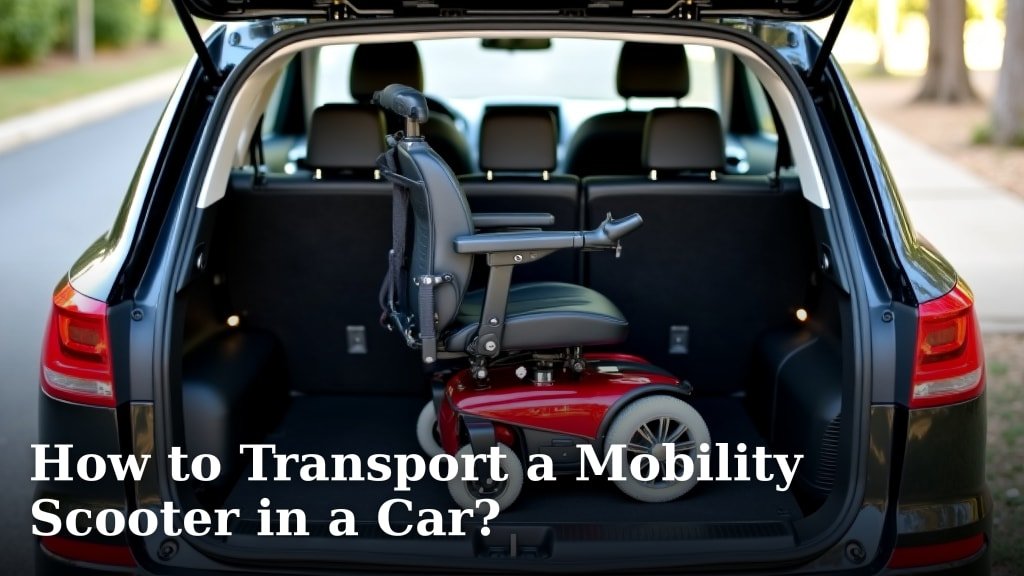
The easiest way to transport a mobility scooter in a car is to use a specialized vehicle lift or a ramp, depending on your car type. These tools help you load and unload your scooter safely and efficiently. You want to make sure your scooter is secure for every trip.
Many people struggle with fitting their mobility devices into standard vehicles. We found that choosing the right transport method can make a huge difference in your daily freedom. This includes considering your scooter’s size and weight, alongside your car’s capabilities. Don’t worry, there are options for almost every situation.
TL;DR:
- Vehicle lifts are great for heavier scooters.
- Ramps work well for lighter models and accessible vehicles.
- Always measure your scooter and car.
- Secure your device inside to prevent movement.
- Consider professional installation for lifts.
Let’s walk through exactly how to transport a mobility scooter in a car, step by step, so you can travel with confidence and ease.
Your Mobility Scooter and Car: Matching Up for Travel
Transporting your mobility scooter doesn’t have to be a puzzle. It’s about finding the right fit for your scooter and your vehicle. We’ll explore the best options for reliable travel.
Understanding Your Scooter’s Specifications
Before you even think about lifting or rolling, you need to know your scooter. What are its vital statistics? This knowledge is your first step to successful transport.
Scooter Size and Weight
First, measure your scooter’s length, width, and height. Note these down. You’ll need them to compare against your car’s available space. Next, check the total weight of your scooter. This figure is crucial for safety. It dictates what kind of lift or ramp you can use. Most manufacturers list this in the owner’s manual (Mobility Scooters Direct).
Why is weight so important? A scooter that’s too heavy for a lift could cause damage or an accident. Never guess. Always get the exact weight.
Disassembly Options
Does your scooter come apart? Many portable models can break down into smaller, lighter pieces. This can make a big difference for transport. You might be able to fit sections into your trunk or back seat. Check your owner’s manual for disassembly instructions. We found this often makes manual loading much easier.
Assessing Your Vehicle’s Transport Potential
Now, let’s talk about your car. Your vehicle’s size and design play a huge role. Not all cars are created equal when it comes to transporting mobility devices.
Trunk Space and Cargo Area
Measure your car’s trunk or cargo area. Get dimensions like length, width, and height. Can your scooter fit flush? Also, consider the height of the opening. A smaller opening might make loading difficult, even if the interior space is sufficient. For SUVs or hatchbacks, consider folding down the back seats for more room.
Vehicle Type Considerations
Different car types offer different advantages. An SUV or minivan generally provides the most interior space. They usually have lower loading thresholds too. Sedans can work for smaller, disassembled scooters. Pickup trucks offer an open bed, which is great for space but requires weather protection (National Highway Traffic Safety Administration).
Think about how often you’ll be transporting the scooter. Daily travel might push you towards a vehicle with easier loading options. Occasional trips offer more flexibility.
Vehicle Lifts: Your Scooter’s Personal Elevator
Vehicle lifts are often the best solution for heavier or non-disassembling scooters. They do the heavy lifting for you. We found they offer great convenience and safety.
Understanding Different Lift Types
There are several kinds of lifts, each with pros and cons. Your vehicle and scooter will help determine the best fit. Let’s break them down.
Inside Lifts
Inside lifts are mounted within your vehicle, usually in the cargo area of an SUV, minivan, or truck. They operate electrically or hydraulically to lift the scooter into the vehicle. These lifts keep your scooter protected from weather and theft. However, they reduce cargo space. Make sure you have enough headspace to clear the entrance.
- Boom-Arm Lifts: These lift and pivot the scooter into your vehicle. They’re good for SUVs or vans with taller openings.
- Platform Lifts: The scooter drives onto a platform, which then raises and moves it inside. These are great for larger scooters and provide stability.
Outside (Hitch-Mounted) Lifts
Hitch-mounted lifts attach to your vehicle’s trailer hitch. Your scooter sits on a platform behind your car. These lifts save interior space. Your scooter is exposed to the elements, though. You’ll need to check your vehicle’s tongue weight capacity. That’s the maximum downward force your hitch can handle (SAE International).
- Manual Lifts: You manually crank them up to lift the scooter. They are more affordable but require some physical effort.
- Power Lifts: These use a switch or remote to raise and lower the scooter. They are more expensive but offer maximum convenience.
Choosing and Installing a Vehicle Lift
Selecting the right lift involves matching it to your scooter’s weight and your car’s capabilities. Don’t rush this decision. We saw that careful planning prevents future headaches.
Here’s a quick comparison of common lift types:
| Lift Type | Pros | Cons | Best For |
|---|---|---|---|
| Inside Boom-Arm | Protects scooter, less visible | Reduces cargo space, higher vehicle opening needed | SUVs, Minivans with lighter scooters |
| Inside Platform | Protects scooter, very stable | Reduces cargo space significantly, fits larger scooters | Minivans, full-size vans with heavier scooters |
| Outside Hitch-Mounted (Manual) | Affordable, keeps interior clear | Scooter exposed, requires physical effort | Vehicles with a hitch, for less frequent use, lighter scooters |
| Outside Hitch-Mounted (Power) | Keeps interior clear, easy to use | Scooter exposed, higher cost, requires vehicle hitch and power | Vehicles with a hitch, for frequent use, moderate to heavy scooters |
Always verify the lift’s weight capacity. It must exceed your scooter’s weight. Professional installation is highly recommended for all vehicle lifts. It ensures safety and correct function. Improper installation could damage your vehicle or lift.
Ramps: A Simpler Loading Solution
Ramps offer a straightforward, often more affordable way to load your scooter. They work well for lighter scooters or vehicles with low loading heights. Sometimes, simple is best!
Types of Ramps for Mobility Scooters
Ramps come in different styles. Each type serves a specific need. Consider where and how you’ll use it.
Portable Ramps
Portable ramps are lightweight and fold up for easy storage. You can carry them in your car. They are great for occasional use or when loading a lighter, disassembled scooter into a hatchback or van. Make sure the ramp’s length is enough to create a gentle slope. A good rule of thumb is a 1:12 slope ratio: 1 foot of ramp for every inch of rise (Americans with Disabilities Act Standards for Accessible Design).
Always ensure the ramp is securely in place before driving your scooter up. A slipping ramp is a big safety risk.
Built-in or Mounted Ramps
Some vehicles, especially modified minivans, have built-in ramps. These deploy automatically or manually. They offer excellent convenience and stability. They integrate seamlessly with the vehicle. If you’re buying a new accessible vehicle, this is often a standard feature.
We found these ramps are typically stronger and wider than portable options. They provide a much more secure loading experience.
Using Ramps Safely
Safety is paramount when using any ramp. A fall can damage your scooter or injure you. Always follow best practices.
- Check the ramp’s weight capacity. It must support your scooter and you if you drive up it.
- Ensure the ramp is stable. It should not slide or shift during loading. Some ramps have safety pins or straps.
- Use a gradual slope. Steep ramps are challenging and dangerous. Never exceed the recommended incline for your scooter.
- Drive slowly and steadily. Avoid sudden stops or turns on the ramp.
- Have a spotter. An extra pair of eyes can help guide you and prevent accidents, especially at first.
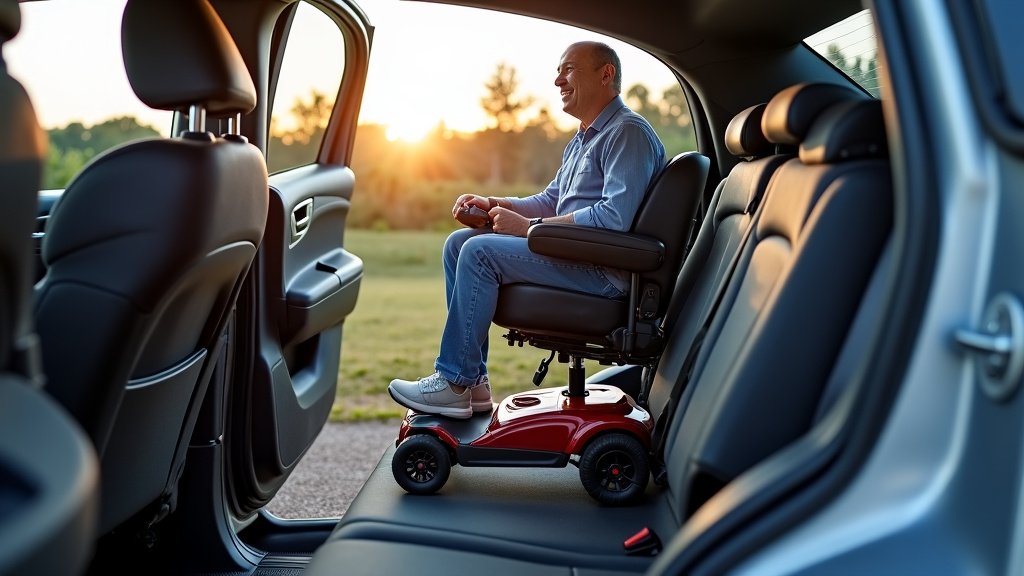
Securing Your Scooter for Travel
Once your scooter is in the car, don’t forget to secure it. This step is critical for safety. An unsecured scooter can shift, causing damage or injury during transit.
Preventing Movement During Transit
Your scooter needs to be held firmly in place. Imagine a sudden stop. You don’t want your scooter becoming a projectile.
- Tie-Down Straps: Use heavy-duty cam buckle or ratchet straps. Attach them to sturdy points on your scooter and anchored points in your vehicle. We recommend using at least four straps for stability.
- Wheel Chocks: Place chocks under the wheels to prevent rolling. This adds another layer of security.
- Blockers or Wedges: Use foam or firm blocks to fill any gaps around the scooter. This prevents side-to-side movement.
- Fold Down or Disassemble: If possible, fold down the tiller or remove components to make the scooter more compact and stable.
Protecting Your Scooter and Vehicle
Protecting both your investment (the scooter) and your car is wise. A few simple steps can prevent scratches and scuffs.
Use blankets or padding to prevent rubbing. Place them between the scooter and any hard surfaces in your car. Cover your scooter if it’s on an exterior lift, especially in bad weather. This protects it from rain, road grit, and UV rays.
Conclusion
You now have a solid understanding of how to safely transport your mobility scooter. We’ve shown you that matching your scooter’s specifications with your vehicle’s capabilities is key. Whether you opt for a vehicle lift or a ramp, the goal is always secure and reliable travel. Prioritize safety by properly securing your scooter every time.
Don’t let transport challenges limit your independence. With the right tools and knowledge, you can enjoy greater freedom and mobility. Take these steps to confidently plan your next journey.
Frequently Asked Questions
What is the best way to transport a heavy mobility scooter?
For heavy mobility scooters, a specialized vehicle lift is usually the best option. These lifts are designed to handle significant weight and eliminate the need for manual lifting. They offer convenience and safety, especially for frequent use.
Can I transport a mobility scooter in the back of a pickup truck?
Yes, you can transport a mobility scooter in a pickup truck bed. However, you’ll need to secure it properly with tie-downs and consider weather protection. A ramp may also be necessary for loading, depending on the truck bed height.
How do I protect my mobility scooter from weather on an outside lift?
To protect your mobility scooter on an outside hitch-mounted lift, use a durable, waterproof scooter cover. This will shield it from rain, snow, road grit, and UV rays. Ensure the cover is securely fastened so it doesn’t fly off during travel.
Are mobility scooter transport services available?
Yes, specialized mobility scooter transport services exist, especially for long distances or if you prefer not to transport it yourself. We found these services often use accessible vans and properly secure your device. Check with local medical transport or mobility equipment companies.
Can a folding mobility scooter fit in a car trunk?
Many folding or disassembled mobility scooters are designed to fit into a car trunk or back seat. Always measure your specific scooter’s folded dimensions and compare them to your car’s trunk space. Disassembling it into smaller pieces can make fitting it much easier.
