

To travel with a mobility scooter on a train, you’ll need to plan ahead and communicate with the train operator. Most train services are accessible, but they often require advance notice for passengers using mobility aids to ensure proper accommodations and assistance are available.
Navigating train travel with a mobility scooter can feel daunting, but with the right information, it’s entirely manageable. We’ve researched and found that understanding the specific policies of train companies, from booking tickets to boarding procedures, is key to a stress-free journey.
- Contact the train company early to reserve space.
- Confirm your scooter meets size and weight limits.
- Arrive at the station with plenty of time.
- Ask for assistance if needed during boarding.
- Understand the train’s accessible seating options.
Let’s walk through exactly how to prepare for your trip, what to expect at the station, and how to enjoy your journey comfortably.
Preparing for Your Train Journey with a Mobility Scooter
Planning is your best friend when traveling with a mobility scooter. A little preparation goes a long way in ensuring a smooth and enjoyable trip. You want to feel confident, not stressed, when you roll onto that platform.
Understanding Train Operator Policies
Each train company has its own rules. We found that policies vary widely, even within the same country. You’ll need to know their specific guidelines for mobility aids. This includes size limits, weight restrictions, and how much advance notice they require.
Most major train services in the U.S., like Amtrak, aim for accessibility. But “accessible” doesn’t always mean the same thing for every passenger. It’s smart to call them directly. Ask about your specific scooter model. Better safe than sorry, right?
Contacting the Train Company
This is perhaps the most important step. We recommend calling the train operator as soon as your travel plans are firm. Don’t rely solely on their website information. Speaking to a representative lets you ask specific questions about your situation.
- Explain you’re traveling with a mobility scooter.
- Describe your scooter’s dimensions and weight.
- Ask about reserving an accessible space.
- Confirm any special boarding procedures.
- Inquire about assistance at your departure and arrival stations.
Keep a record of who you spoke with and the date. This small detail can be a big help if any issues pop up later.
Scooter Size and Weight Restrictions
Train cars have limited space. You might find that your large, heavy-duty scooter won’t fit through certain doorways or into designated areas. Train operators often have maximum dimensions and weight limits for mobility aids (Americans with Disabilities Act).
For example, we found that Amtrak generally accepts scooters up to 30 inches wide, 48 inches long, and weighing no more than 600 pounds (passenger included). Always verify these numbers with your specific route. Your scooter’s manual should list its exact specs. Measure it yourself to be absolutely sure.
Booking Your Ticket and Accessible Seating
Once you understand the policies, it’s time to book. This isn’t just about getting from point A to point B. It’s about securing a comfortable and accessible spot for you and your scooter.
Reserving Accessible Space
When booking, specifically request an accessible seating area. These spots are often larger and have tie-downs or restraints for your scooter. Some trains have dedicated accessible cars. Others might have specific sections within a regular car.
Don’t assume an open seat means an accessible one. Always confirm you have a reserved spot for your scooter. Think of it like reserving a special table at a restaurant; you wouldn’t just show up and hope for the best.
Understanding Ticket Types and Fares
Usually, there’s no extra charge for bringing your mobility scooter. It’s considered a personal mobility aid. However, some ticket types might offer more flexibility or better accessibility features. For instance, business class or first class might have more spacious arrangements, though this isn’t always guaranteed to be “accessible.”
We advise checking if you can purchase a flexible ticket. This allows changes without huge fees. Life happens, and travel plans can shift unexpectedly. Having that flexibility can ease your mind.
Day of Travel: Station and Boarding Procedures
The day of your trip can be exciting! Knowing what to expect at the station and during boarding helps keep that excitement positive. You want to arrive feeling calm and prepared.
Arriving at the Station
Give yourself plenty of time. We can’t stress this enough. Rushing adds unnecessary stress. Aim to arrive at least an hour before departure, especially if it’s a large station or one you’re unfamiliar with.
Finding Assistance and Accessible Routes
Locate the customer service desk or an information booth upon arrival. Many stations have staff specifically trained to assist passengers with mobility aids. They can guide you to the accessible entrance, waiting areas, and boarding platform.
Look for signs indicating accessible routes. These often avoid stairs and provide ramps or elevators. Don’t be afraid to ask for help navigating the station. That’s what the staff is there for!
Pre-Boarding and Early Access
Most train services offer pre-boarding for passengers with disabilities. This means you can get on the train before the general boarding call. This extra time allows you to settle in without the rush and crowds. It makes a big difference!
Make sure to inform station staff that you’d like to pre-board. They will guide you to the correct spot and arrange for any ramps or lifts needed. Think of it as your VIP pass to a smoother start.
Boarding the Train with Your Scooter
This is often the part that makes people most nervous. But with proper communication and assistance, it’s usually straightforward. The train staff are professionals; they do this every day.
Utilizing Ramps and Lifts
Depending on the train car and platform height, staff will use a portable ramp or a lift to help you board. Listen to their instructions carefully. They know the safest way to get you and your scooter on board. Don’t be shy about asking for clarification if something isn’t clear.
Once on the ramp or lift, follow their guidance. Sometimes it’s best to back onto a lift, other times it’s better to go forward. Trust their experience. It’s their job to get you aboard safely and comfortably.
Securing Your Scooter Onboard
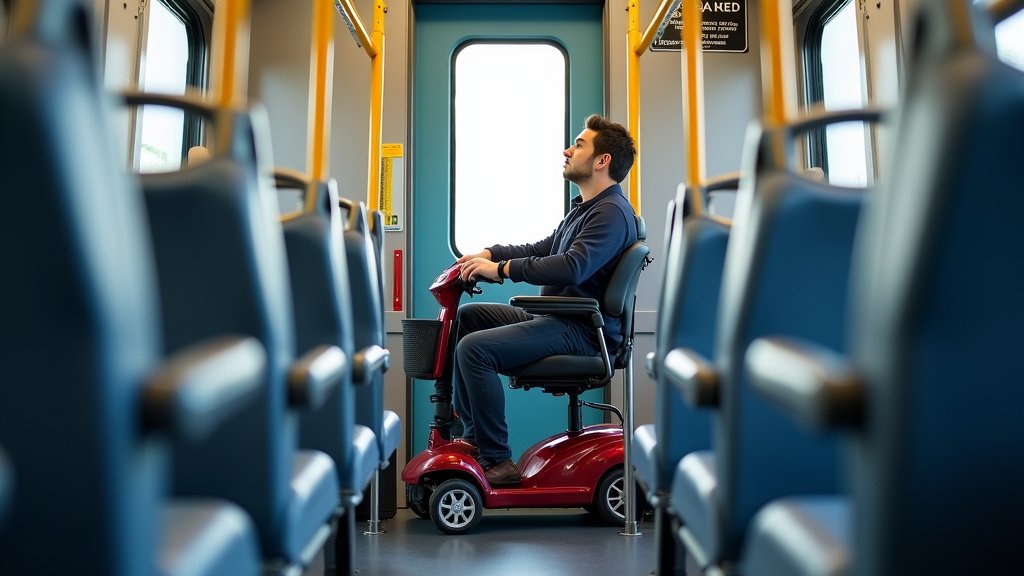
Inside the train, you’ll be directed to your accessible space. Here, the staff will help you secure your scooter. Most accessible areas have straps or tie-downs to prevent your scooter from moving during the journey.
Confirm that your scooter feels stable and securely fastened. You want to relax and enjoy the ride, not worry about your scooter shifting. If anything feels loose, speak up immediately. Your safety is paramount.
During Your Journey and Arrival
You’ve boarded, your scooter is secure, and now it’s time to enjoy the ride! But what else should you keep in mind once the train starts moving, and when you reach your destination?
Comfort and Accessibility Onboard
Train travel offers a unique way to see the country. Make sure you’re comfortable and have everything you need within reach. The journey itself can be a pleasant part of your adventure.
Accessing Amenities
Most accessible train cars have accessible restrooms. Check with a crew member if you need directions or assistance. They can also help with reaching overhead storage if you have a small bag you need help with.
If you need anything during the journey, like a drink or snack from the cafe car, ask a crew member. They are there to assist you. Don’t hesitate to press the call button if one is available near your seat.
Disembarking and Final Considerations
As your destination approaches, start preparing for disembarkation. This process will mirror boarding, but in reverse.
Preparing for Departure
About 15-20 minutes before your scheduled arrival, crew members will often make announcements. This is your cue to get ready. Make sure you have all your personal belongings within easy reach. If you stored anything overhead, ask for assistance to retrieve it.
The crew will likely approach you before the stop to arrange for your scooter to be unsecured and for the ramp or lift to be deployed. This early communication helps ensure a smooth exit.
Assistance at Your Destination
Just like at your departure station, assistance will be available upon arrival. The train crew will help you off the train, and station staff can assist you through the station if needed. It’s helpful to confirm this assistance with the train staff just before you exit.
Remember that some smaller stations might have fewer staff or facilities. If you’re traveling to a less busy stop, reconfirm your needs with the train operator before your trip. Knowing what to expect makes all the difference.
Travel Checklist for Mobility Scooter Users
- Call train operator to confirm scooter policies and reserve accessible space.
- Measure your scooter to ensure it meets size and weight limits.
- Pack any necessary medications, charging cables, and personal items.
- Arrive at the station at least one hour before departure for pre-boarding.
- Inform staff you need assistance with boarding and securing your scooter.
- Keep your phone charged and easily accessible for communication.
Conclusion
Traveling by train with your mobility scooter doesn’t have to be a source of stress. By taking the time to plan ahead and communicate with the train operator, you’re setting yourself up for a successful and enjoyable journey. Always remember to verify policies, confirm your scooter’s fit, and don’t hesitate to ask for assistance. Your comfort and safety are priorities, and with these steps, you can confidently explore new destinations by rail. So, go ahead and book that adventure; your train is waiting!
Frequently Asked Questions
Can I charge my mobility scooter onboard a train?
While some accessible seating areas might have power outlets, it’s not guaranteed. We recommend ensuring your scooter is fully charged before you board. Carry a portable charger for your phone or other small devices, but assume scooter charging won’t be available.
What if my mobility scooter breaks down while I’m traveling?
If your scooter experiences an issue onboard, immediately inform a train crew member. They can assist you with alternative mobility solutions to get you off the train safely. It’s always wise to have a contact number for a local mobility repair service at your destination, just in case.
Are all train stations accessible for mobility scooters?
Most major train stations in the US are designed to be accessible, offering ramps, elevators, and accessible routes. However, smaller or older stations might have limited accessibility features. Always confirm the accessibility of both your departure and arrival stations with the train company beforehand.
Do I need special insurance to travel with my mobility scooter on a train?
No special insurance is typically required by train operators for your mobility scooter itself. Your personal travel insurance may cover loss or damage, so check your policy details. It’s considered a personal mobility aid.
Can a companion help me with my mobility scooter during the trip?
Absolutely. If you’re traveling with a companion, they can certainly assist you with your scooter. However, train staff are also trained to help. It’s a good idea to clarify with the train operator during booking who will be providing assistance, especially for boarding and disembarking.
