Lightweight Wheelchair vs Standard Wheelchair: Which Is Better? (November 2026)
Choose a lightweight wheelchair when lifting and transport matter most; choose a standard wheelchair when carrying weight matters less. Compare each chair's weight, wheel setup and who will push it.
On this page (6 sections)
Choose a lightweight wheelchair when lifting and transport matter most; choose a standard wheelchair when carrying weight matters less. This lightweight wheelchair vs standard wheelchair comparison covers who pushes each chair, where it goes and how often someone must lift it.
It also covers how the chair folds, how transfers work and whether the seat and arms suit a desk, a dining table or a short outing. Those daily details often matter more than the headline weight.
The chairs here weigh 26 lb to 41.3 lb. A lower weight does not automatically mean a better fit, since the 2 lighter models are transport chairs designed for caregiver assistance.
That distinction is important for the person using the chair as well as the person lifting it. A transport chair is pushed by someone else, while a self-propelled chair is pushed by the user using the rear wheels.
If the user will propel the chair, check its wheel setup and intended use. Start with our wheelchair for seniors buying guide.
Think about a normal week before you choose. Note how often the chair enters a car, how far it travels indoors and whether it needs to pass through narrow halls or doorways.
Also note who will lift it and where it will be stored at home. A chair that suits a daily commute may be more work than needed for an occasional appointment, and the reverse can also be true.
Use the comparison below to match weight, wheels and access features to that routine. The right choice is the one that fits how the chair will actually be used.
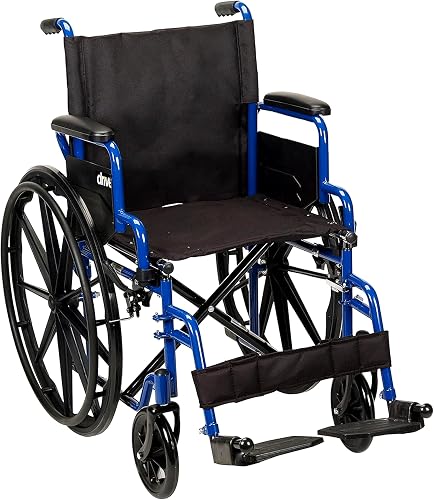 Best for self-propelled use
Drive Medical Blue Streak Lightweight Wheelchair
 Best for caregiver-assisted outings
Drive Medical Folding Transport Wheelchair
Lightweight wheelchair vs standard wheelchair: what's the difference?
A lighter chair can reduce the load during lifting and transport; a heavier chair may suit routines where carrying weight matters less. Compare each model actual weight and features.
The Drive Medical Blue Streak weighs 41.3 lb and has an alloy steel frame, push handles and a self-propelled design. The Medline folding wheelchair weighs 38 lb and has a hammertone frame, swing-back desk-length arms and swing-away footrests.
The 2 transport chairs weigh 26 lb each and are designed for caregiver assistance. Their lower weights do not make them direct substitutes for a self-propelled wheelchair.
A standard wheelchair is often the heavier, more general option for repeated indoor use. A lightweight model aims to reduce the effort needed to lift, fold and move the chair between places.
Frame material helps explain part of that gap. The Blue Streak uses an alloy steel frame, while the Medline transport chair uses an aluminum frame, and the other models use steel or hammertone finished frames.
Wheel setup matters just as much as frame weight. A self-propelled chair lets the user push the large rear wheels, while a transport chair has smaller wheels and relies on push handles for a caregiver.
Seat and arm design also change how the chair feels in daily use. Flip-back or swing-back desk arms can help with transfers and table access, while padded armrests may suit shorter assisted trips.
A chair full weight is only one part of the decision. Consider who will lift it and whether the user or a caregiver will push it.
Also consider where the chair will roll. Indoor floors, level outdoor paths and thresholds put different demands on wheels, tires and brakes.
Set up the chair for the user before regular use. Check that the footrests swing away cleanly, the brakes hold firmly and the arms move as expected for transfers.
For care, keep the frame and fabric clean with the maker guidance and check fasteners and tires on a regular schedule. Simple checks help spot wear before it affects a trip.
Which chair is easier to lift into a car?
The 26 lb transport chairs are the lightest options here, while the 38 lb and 41.3 lb chairs weigh more. Consider the folded shape and who will do the lifting.
The Drive Medical Folding Transport Wheelchair has a compact folding frame and fold-flat backrest. The Medline transport chair folds for storage and transport, with footrests that swing away and lock in place.
The Blue Streak is a folding wheelchair with swing-away footrests. The other Medline wheelchair also folds and has swing-away footrests, and weighs 38 lb.
Consider whether you can lift a similar load before buying. A chair may still be awkward to grip, raise or place in a trunk.
Weight on a sheet does not capture how a folded chair feels in the hands. Width, grip points and balance can make a lighter chair awkward and a heavier chair manageable.
The 26 lb models have an advantage when lifting is repeated. They may suit caregivers who load a car for appointments, travel or visits where the chair is needed for only part of the day.
The 38 lb Medline folding wheelchair sits in the middle of this group. It may suit a user who needs desk arms and a wider seat, but the extra weight should be weighed against those access benefits.
The Blue Streak at 41.3 lb asks the most from whoever lifts it. Its self-propelled design and flip-back desk arms may justify that effort when the user pushes the chair for much of the day.
Folded size also affects where the chair can go. A compact fold may fit a trunk or a small closet more easily, while a wider fold can block space in a small car.
Before a first outing, practice folding and unfolding at home. Learn how the footrests lock, how the backrest folds and where to grip so the chair does not shift during the lift.
Plan the lift as a routine, not a rush. Clear the space first, lock the brakes, keep the load close and ask for help if the chair feels too heavy for one person.
For more detail on wheelchair weight, see how much lightweight wheelchairs weigh.
Store the folded chair away from damp and direct heat when it is not in use. Wipe down the seat and frame after use and check that brakes, tires and footrest locks still work well.
Which type works when the user pushes the chair?
Choose a self-propelled chair if the user will push with the rear wheels; choose a transport chair if a caregiver will push. For larger rear wheels, compare lightweight wheelchairs with big wheels.
Check the wheel arrangement and handles when comparing models.
The Blue Streak is a self-propelled wheelchair with an alloy steel frame, solid wheels and push-to-lock brakes. Its push handles and flip-back desk arms also support assisted use.
The Drive Medical and Medline transport chairs are designed for caregiver assistance. The Medline transport model has 12 in rear wheels, squeeze handbrakes and rear-wheel locking brakes, while the Drive Medical transport model has 8 in wheels.
A transport chair is designed for caregiver assistance. If the user needs to push independently, confirm the chair type with a mobility supplier before choosing.
Which chair helps with transfers and table access?
The Blue Streak and the Medline folding wheelchair have arms that flip or swing back for transfers and table access. Both have swing-away footrests.
The Medline transport chair has detachable swing-away footrests and full-length cushioned armrests. It also has handbrakes and rear-wheel locks.
Choose around the user's routine. Desk-length arms may help when sitting at a table, while short trips may call for other features.
What should you consider for comfort and fit?
Seat size, armrests and footrests affect fit and access; check them against the user needs and the places the chair will go. Consider the chair overall dimensions and seat size.
The Blue Streak has an 18 in seat. The Drive Medical transport chair has a padded 17 in nylon seat, the Medline transport chair has a 19 in wide by 16 in deep seat, and the other Medline wheelchair has a 20 x 16 in seat.
The chairs have different arm styles. The Blue Streak has flip-back desk arms, the Medline folding wheelchair has swing-back desk-length arms, and both transport chairs have padded armrests.
Seat width and depth change how a person sits and transfers. A narrower seat may help in tight spaces, while a wider or deeper seat may offer more room for some users during longer sits.
Check the user measurements against the seat, not just the outside dimensions. Hips, thighs and feet all influence whether the chair feels supportive or cramped after an hour of use.
Arms affect more than comfort. Desk length arms can slide under a table, and arms that flip or swing back can open the side for a lateral transfer.
Padded armrests on the transport chairs suit a different routine. They support the arms during assisted trips, but they do not offer the same table access as desk arms.
Footrests shape the transfer as well. Swing-away footrests move out of the path, and removable footrests can give more legroom when the user is getting positioned.
The Medline transport chair has detachable swing-away footrests. The Blue Streak and the other Medline model also use swing-away footrests, so check how each one clears the feet during entry and exit.
Measure doorways, halls and storage spaces before choosing. Our guide to whether wheelchairs fit through standard doorways covers the measurements to check.
Include the chair overall width with the user seated, not only the folded width. Arms, footrests and wheels can add space that matters in a hallway or bathroom.
For more options and fit details, see our best lightweight wheelchair for seniors guide. You can also compare ultra lightweight wheelchair reviews if lifting weight is your main concern.
After choosing, set the chair up at home first. Test transfers, table access and foot placement in a clear space before using the chair in a busy setting.
What trade-offs come with a lighter chair?
Lower weight can make lifting easier, but the chair still needs to match how it will be pushed and used. Frame material, wheel setup and seat features affect the choice.
The 2 transport chairs each weigh 26 lb. One has a steel frame and fold-flat backrest; the other has an aluminum frame, handbrakes and 12 in rear wheels.
The self-propelled Blue Streak weighs 41.3 lb and has an alloy steel frame. It also has solid wheels, swing-away footrests and flip-back desk arms.
The 38 lb Medline wheelchair sits between those weights and has desk-length arms and a 20 x 16 in seat. Choose based on features that suit your routine as well as weight.
The main trade-off is between lifting effort and propulsion. Transport chairs reduce weight for caregiver assisted trips, while self-propelled chairs support independence for users who can push the rear wheels.
A lighter frame does not remove the need for suitable wheels. Smaller transport wheels suit smoother indoor and level outdoor use, while larger rear wheels can help with maneuvering around corners and thresholds.
Seat and arm features create another trade-off. A wider seat and desk arms may help with comfort and transfers, but they can add width and weight compared with a simpler transport seat.
Footrest design affects both access and storage. Swing-away footrests help with transfers, and detachable footrests may suit users who need extra flexibility when getting in or out.
Brakes also change the daily experience. Push-to-lock brakes hold the rear wheels for transfers, while the Medline transport chair adds squeeze handbrakes and rear-wheel locks for added control.
Weight and frame material alone do not guarantee a chair service life. Follow the care instructions and ask the manufacturer about use conditions that matter for your routine.
Care has a simple rhythm. Clean the nylon seat and frame, check tires and brakes, tighten or check fittings as directed and store the chair folded in a dry place.
Match the chair to the user first, then to the lift. If a caregiver will push and lifting is frequent, a 26 lb transport chair may fit.
If the user will push, a self-propelled model deserves priority.
Finally, test the route before committing to regular use. Check the car, the doorways and the storage spot with the chair in its folded and open forms, and choose the option that fits that real routine.
Which wheelchair should you buy?
Pick a 26 lb transport chair if a caregiver will push and lifting weight is a priority; pick a self-propelled chair if the user needs to push independently. Then compare seat fit, transfer features and the places the chair must pass through.
The Drive Medical Folding Transport Wheelchair has a folding frame and fold-flat backrest for caregiver-assisted trips. The Medline transport chair has handbrakes, rear-wheel locks and 12 in rear wheels.
The Blue Streak suits a self-propelled routine where flip-back desk arms and swing-away footrests help with access. The Medline folding wheelchair has desk-length arms and a 20 in wide seat, and weighs 38 lb.
For a different mobility option, compare a lightweight mobility scooter or lightweight mobility scooters. Consider the user's needs, route and transfer plan when choosing between mobility aids.
Our score weighs specs, features and buyer feedback against what you're shopping for.
Choose by who will push and lift the chair, and where it needs to fit.
Frequently asked questions
What is the difference between a lightweight and standard wheelchair?
A lightweight wheelchair may reduce the weight you lift or move, while a standard wheelchair may use a heavier frame and components. The label alone doesn't tell you how easy a chair is to push, so compare its weight, wheel setup, folding design and who will propel it.
Is a lightweight wheelchair easier to push?
Not always. Wheel size, tire type, frame setup, user strength and the surface all affect pushing effort.
A transport chair is designed for caregiver assistance, while a self-propelled chair has rear wheels the user can push.
Check the chair's intended use and see whether it suits the user's needs.
How much lighter is a lightweight wheelchair?
It depends on the models being compared. The chairs here range from 26 lb for 2 transport chairs to 41.3 lb for the Blue Streak, with a 38 lb Medline folding wheelchair between them.
Compare complete chair weights and consider who will lift the chair and where it needs to go.
Should I choose a transport chair or a self-propelled wheelchair?
Choose a transport chair when a caregiver will push it and its wheel setup suits your trips. Choose a self-propelled wheelchair when the user needs to push the chair using its rear wheels.
Consider the user's ability to propel the chair, transfer needs, route and vehicle.
Does a lighter wheelchair last as long?
Weight alone doesn't show how long a wheelchair will last. Frame material, construction, maintenance and how often and where the chair is used all matter.
Compare the frame and care instructions, and ask the manufacturer or a qualified mobility supplier about durability for your intended routine.


