Medline vs Drive Rollator: Which Brand Is Better? (October 2026)
Choose Medline for a 350 lb capacity and Drive for lighter aluminum options. The right Medline vs Drive rollator depends on the frame, wheel size, seat and storage that fit your routine.
On this page (7 sections)
- Medline vs Drive rollator: which brand fits your needs?
- How do their frames and weight capacities compare?
- Which rollator has the wheels you need?
- How do the seats, handles and storage compare?
- Which Medline and Drive rollators are worth comparing?
- What should you check before choosing a rollator?
- Is Medline or Drive the better rollator brand?
Choose Medline for a 350 lb capacity and Drive for lighter aluminum options. The Medline vs Drive rollator decision depends on the exact model's frame, wheels, seat, storage and fit.
Medline's steel rollator weighs 16.5 lb and supports up to 350 lb. Drive's aluminum options include a 15.6 lb model with 6-inch wheels and the Hugo Elite with 8-inch casters.
Those models differ in more than brand. Compare the features you'll use every day, then check the exact rollator's fit and instructions.


Medline vs Drive rollator: which brand fits your needs?
Medline's steel model stands out for its 350 lb capacity, while Drive offers a choice of aluminum models and wheel sizes. Choose by the details that matter for your body, route and storage space.
The Medline Steel Rollator Walker has 6-inch wheels, adjustable handles and a padded seat with backrest. Drive's aluminum rollator also has 6-inch wheels, while the Hugo Elite has 8-inch casters.
A walker for seniors buying guide can help you compare rollators with other walker styles. For a wider brand shortlist, see our guide to the best rollator walker brands.
How do their frames and weight capacities compare?
Medline's steel rollator supports up to 350 lb; the two Drive models here support up to 300 lb. Check the capacity for the exact model and leave a safe margin for anything carried in its storage.
The Medline frame weighs 16.5 lb. The Drive Medical Aluminum Rollator is described as weighing 15.6 lb, while the Hugo Elite product details give a weight of about 18 lb.
These figures don't make either brand universally lighter. They show why model names matter: the Drive aluminum rollator is lighter than the Medline steel model, but the Hugo Elite is heavier.
Which frame is easier to lift and store?
The Drive aluminum rollator has a side-to-side folding design and can stand upright when folded. Medline's steel frame folds down for transport and storage.
The Hugo Elite folds to fit into most car trunks, and its assembly is tool-free. If setup is a concern, follow our guide on how to assemble a Medline rollator.
Don't judge storage from weight alone. Check the folded shape, trunk opening and the space where you'll park the walker.
Which rollator has the wheels you need?
The Hugo Elite and VOCIC Z21 have 8-inch wheels, while the Medline steel and Drive aluminum models have 6-inch wheels. Consider the surfaces on your usual route and make sure you can steer and brake the rollator comfortably.
The Z21 is described with puncture-proof tires and a textured surface. Its product information also describes 360-degree rotating front wheels and a braking system with free, deceleration and stop modes.
The Hugo Elite's 8-inch casters are paired with a built-in brake cable. Medline's 6-inch wheels are described for indoor and outdoor use, and the Drive aluminum model has soft-grip tires.
Wheel diameter alone doesn't guarantee a better ride on every path. Look at the route, turns, thresholds and storage space, then check the operating instructions for the model you choose.
How do the seats, handles and storage compare?
All 3 Medline and Drive models here have a seat and storage; the Z21 adds multiple seat and handle height settings. Compare measurements and adjustments against the user's reach and preferred resting position.
Medline's padded seat measures 12 x 12 in, with a backrest and under-seat storage. Its handle height adjusts from 31 to 35 in.
The Drive aluminum rollator has a padded seat, storage pouch, adjustable handles and a hinged backrest. The Hugo Elite pairs a seat and backrest with an under-seat storage bag and ergonomic hand grips.
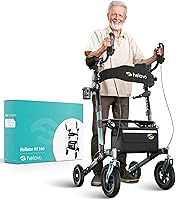
The Z21's seat adjusts across 3 levels from 20 to 22 in, and its handles adjust across 5 levels from 31.5 to 36.6 in. It also has a widened backrest and a storage bag.
How do Medline and Drive brakes work?
Medline's handles brake when squeezed, and push-down locks hold the wheels in place. The Hugo Elite has a built-in brake cable; the Drive aluminum model uses a hand lever.
Learn how each model's brakes engage and lock before sitting or standing. Follow its manual, and ask a mobility professional if you're unsure the handles are within comfortable reach.
Which Medline and Drive rollators are worth comparing?
The Hugo Elite suits shoppers who want 8-inch casters, while the Medline steel model offers a stated 350 lb capacity. The Drive aluminum rollator is another option if you prefer an aluminum frame and a design that stands upright when folded.
Our scores weigh the stated features and specifications against what a shopper comparing Medline and Drive rollators is likely to need.
For model-specific details, read our Medline Empower rollator review and Drive Medical Nitro rollator reviews. These are different models, so use their features as a reference rather than assuming they match the rollators above.
What should you check before choosing a rollator?
Check the capacity, handle height, seat height, folded size and brake operation for the exact model. These details affect whether the rollator fits the user and works in the spaces they use.
Measure the user's height and compare it with the handle adjustment range. Check seat height too, since a seat that's hard to rise from can make rest stops less practical.
Measure doorways, car trunks and storage corners. If your route includes uneven ground, compare wheel size and tire design alongside the walker's overall size and steering.
Practice opening, folding, braking and locking the rollator on a clear, level surface, following the manual. Before every use, check that the frame is locked and the brakes work.
Is Medline or Drive the better rollator brand?
Choose Medline if its 350 lb steel model's capacity and padded seat fit your needs; choose Drive if an aluminum option or 8-inch casters matter more. Compare the specific model's weight, adjustment range, folded shape and brake setup before deciding.
If you're still comparing mobility brands, our guides to the best mobility scooter brand and best mobility scooter brands overall cover a different type of mobility aid. For rollators, let fit and model features decide between Medline and Drive.
Frequently asked questions
Is Medline or Drive better for a rollator?
Medline may fit if you want the steel rollator's 350 lb capacity, padded seat and backrest. Drive offers aluminum options, including a model with 8-inch casters and another that folds upright.
Compare the exact model's capacity, wheel size, weight and fit before choosing.
Are Medline rollators heavier than Drive rollators?
Not always. The Medline steel rollator weighs 16.5 lb, while the Drive Medical aluminum rollator is stated as 15.6 lb; the Hugo Elite product information gives a weight of about 18 lb.
Compare the exact model, since brand alone doesn't predict weight.
Which rollator has larger wheels?
The Drive Medical Hugo Elite has 8-inch casters, while the Medline steel rollator and Drive Medical aluminum rollator have 6-inch wheels. VOCIC's Z21 also has 8-inch wheels.
Larger wheels may matter to your route, but check the model's other fit and safety details too.
What should I check before using a rollator?
Check that the frame is fully open and locked, the fasteners are secure, the wheels turn smoothly and the brakes work. Confirm the seat, backrest and storage are attached correctly.
Follow the model's instructions, and ask a health professional or mobility specialist about fit if you're unsure.
Can I use a rollator seat as a regular chair?
Use the seat only as directed for that model, and lock the brakes before sitting or standing. Keep the rollator on a stable surface and check the manual for safe use.
If sitting down or rising feels unstable, ask a clinician or mobility specialist for guidance.