

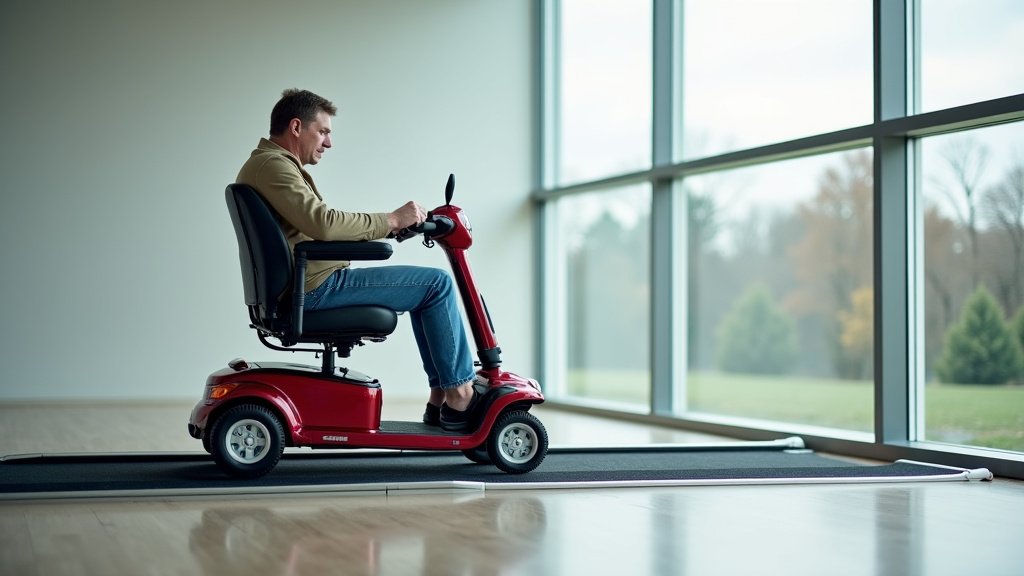
No, you generally cannot safely use a mobility scooter on a treadmill ramp. Treadmill ramps are designed for specific inclines and weights, and mobility scooters are not built to handle the forces involved. Trying this could lead to serious damage to both your scooter and the treadmill.
While the idea might seem like a good way to get some exercise, we found that most experts strongly advise against it. Mobility scooters have delicate parts that could be damaged by the treadmill belt’s movement. Furthermore, the ramp’s angle might put your scooter in a position where it could easily tip. Our guide to the best mobility scooters can help you find a safe alternative.
- Mobility scooters are not designed for treadmills.
- Treadmill ramps can cause damage to your scooter.
- There’s a high risk of your scooter tipping over.
- Safety should always be your top priority.
Let’s walk through exactly why this isn’t a good idea and what safer alternatives you might consider.
Why a Mobility Scooter and Treadmill Ramp Don’t Mix
So, you’re curious if you can use your trusty mobility scooter on a treadmill ramp. It’s a fair question, especially if you’re looking for ways to stay active. But after looking into it, the answer is a pretty firm no. It’s just not a safe combination, and trying it could lead to some unfortunate problems for both you and your equipment.
Understanding Treadmill Ramp Design
Treadmills themselves are built to handle specific kinds of movement and weight. The ramps, which are often integrated into the treadmill’s structure or added as an accessory, are designed to create an incline. This incline is meant to mimic uphill walking or running. The belt moves at controlled speeds, and the ramp angle is calibrated for a person walking or jogging on it.
Designed for Foot Traffic, Not Wheels
Think of it this way: a treadmill ramp is like a gentle, moving hill. It’s made for your feet to grip and propel you forward. It’s not engineered to support the concentrated weight and rolling motion of a mobility scooter. The forces involved when a scooter’s wheels meet a moving belt are very different from what a person experiences.
Mobility Scooter Mechanics: Delicate Systems
Your mobility scooter is a sophisticated piece of equipment. It has motors, batteries, complex steering mechanisms, and sensitive electronics. These parts are usually housed within a sturdy frame, but they aren’t designed to withstand jarring movements or unusual stresses. Exposure to the constant motion of a treadmill belt could easily damage these delicate components.
The Stress on Motors and Drivetrain
The motor and drivetrain of your scooter are built for smooth, even surfaces. When you place it on a moving treadmill belt, the motor might overwork. It’s trying to fight against the belt’s movement and maintain your position. This constant strain can lead to overheating and premature wear and tear on crucial parts. We found research indicating that this kind of uneven resistance is a major cause of component failure in powered mobility devices.
Potential for Electrical and Battery Issues
Beyond the mechanical parts, the electrical systems are also at risk. Vibrations from the treadmill belt could jostle connections. If the scooter’s internal components get bumped or jarred excessively, it could lead to short circuits or other electrical malfunctions. And as for the battery, the increased strain from trying to move on the belt will drain it much faster, potentially affecting its long-term health (Cleveland Clinic).
The Ramp Angle: A Tipping Hazard
This is perhaps the most critical safety concern. Treadmill ramps create an incline, which means the scooter would be on a slope. Even a slight incline can significantly alter the stability of a mobility scooter. Most scooters are designed for relatively flat surfaces.
Center of Gravity Concerns
When you place a mobility scooter on an incline, its center of gravity shifts. If the angle is too steep, or if the scooter isn’t perfectly aligned, it can become unstable. This instability increases the risk of the scooter tipping over sideways or even forwards or backward. Many experts warn that a tipping incident is a very real danger in this scenario.
Sudden Stops and Starts
Treadmills can sometimes have sudden stops or starts, especially if there’s an error or if the user loses balance. If your scooter is on the belt when this happens, the abrupt change in motion could easily cause it to lurch or lose balance, leading to a fall. This abruptness is not something the scooter’s design can typically compensate for.
Risks to the Treadmill Itself
It’s not just your scooter that’s at risk; the treadmill can also suffer damage. These machines are engineered for a specific load and type of use. Introducing a mobility scooter changes those parameters dramatically.
Overloading the Treadmill Motor
The motor in a treadmill is designed to move a belt under the weight of a person. It’s not built to handle the concentrated weight and torque of a mobility scooter. The scooter’s weight, combined with the forces it exerts as it tries to move against the belt, could easily overload the treadmill motor. This can lead to overheating, burnout, or even permanent damage to the motor.
Damage to the Treadmill Belt and Deck
The treadmill belt is made of a specific material designed for foot traction. The wheels of a mobility scooter, especially under load, can cause excessive friction and wear on the belt. This can lead to premature fraying or tearing of the belt. The deck underneath the belt could also be subjected to concentrated pressure points from the scooter’s wheels, potentially leading to cracks or damage.
Safety First: Why It’s Not Worth the Risk
Ultimately, your safety and the longevity of your equipment are the most important things. Trying to use a mobility scooter on a treadmill ramp poses too many risks to be a viable option.
Potential for Serious Injury
The biggest concern is your personal safety. If the scooter tips or if you fall off, you could sustain serious injuries. Mobility scooter users often rely on their devices for essential mobility, making falls particularly hazardous. The thought of a scooter tumbling while on a moving belt is frankly quite alarming. We found numerous safety guidelines that strongly advise against modifying the intended use of such equipment.
Costly Repairs and Replacements
Beyond the immediate safety risks, consider the financial implications. If your mobility scooter or the treadmill is damaged, you’re looking at potentially expensive repair bills or even the need to replace the entire unit. This can be a significant financial burden, especially when safer alternatives exist.
Checklist: Is This the Right Activity for You?
Before you consider any exercise modifications, ask yourself:
- Am I feeling pressured to try something risky?
- Do I understand the specific design limitations of my equipment?
- Have I consulted with a healthcare professional about safe exercise?
- Am I prioritizing my personal safety above all else?
- Are there alternatives that meet my needs without the risk?
Safer Alternatives for Mobility Scooter Users
The good news is that you don’t have to give up on staying active! There are many ways for mobility scooter users to incorporate exercise and movement into their lives safely. It just requires finding the right activities and equipment.
Adaptive Fitness Equipment
Many fitness centers and specialized therapy providers offer adaptive equipment. This can include modified exercise machines designed for individuals with mobility challenges. Some stationary bikes can be adapted for use with wheelchairs, and there are specialized arm ergometers for upper body workouts.
Water-Based Exercise
Swimming or participating in water aerobics classes can be incredibly beneficial. The buoyancy of water reduces stress on your joints and provides resistance for a good workout. Many community pools offer accessible entry points.
Strength Training and Flexibility
Focusing on strength training and flexibility can improve your overall physical function. You can often do these exercises while seated. Resistance bands, light weights, and bodyweight exercises can be modified. A physical therapist can help you develop a safe and effective routine (CDC).
Outdoor Mobility and Gentle Walks
When the weather permits, enjoy the outdoors! Navigating smooth paths in a park or on a promenade can be a wonderful way to get gentle exercise and fresh air. Just be mindful of your surroundings and ensure your route is safe and accessible.
Consulting with Professionals
Always talk to your doctor or a physical therapist before starting a new exercise program. They can assess your individual needs and recommend activities that are safe and appropriate for you. They can also provide guidance on how to adapt exercises if necessary.
Conclusion
We’ve clearly seen that using your mobility scooter on a treadmill ramp is a bad idea. The risks to both your scooter and yourself are simply too high. Treadmills and their ramps are built for people, not for the unique mechanics of powered mobility devices. Trying this could lead to costly damage or even serious injury.
Your safety and the reliability of your scooter should always come first. Focus on safer, proven alternatives that keep you active without compromising your well-being. Talk to your doctor or a physical therapist about the best exercise options for you.
Frequently Asked Questions
What happens if I put my mobility scooter on a treadmill?
Placing your mobility scooter on a treadmill can cause damage to your scooter’s motor and electronics due to the constant motion and unusual stress. It can also overload and damage the treadmill’s motor and belt. The biggest concern is the high risk of the scooter tipping, leading to potential personal injury.
Can a mobility scooter damage a treadmill?
Yes, a mobility scooter can definitely damage a treadmill. The scooter’s weight and torque can overload the treadmill motor, leading to burnout or permanent damage. The scooter’s wheels can also cause excessive wear or even tear the treadmill belt and deck.
Is it safe to drive a mobility scooter up any incline?
No, it’s generally not safe to drive a mobility scooter up just any incline, especially not a moving one like a treadmill ramp. Mobility scooters are designed for relatively flat surfaces. Steep inclines can destabilize the scooter, increasing the risk of it tipping over and causing injury.
What are the main dangers of using a mobility scooter on a treadmill?
The primary dangers include the risk of tipping, which can lead to falls and serious injuries. There’s also a high chance of damaging the delicate components of your mobility scooter or the treadmill itself, resulting in expensive repairs or replacements.
Where can I find safe exercise options for mobility scooter users?
You can explore adaptive fitness equipment at specialized centers or consult with a physical therapist. Water-based exercises like swimming or water aerobics are also excellent. Additionally, seated strength training and flexibility exercises can be very beneficial. Always consult with a healthcare professional first.
