
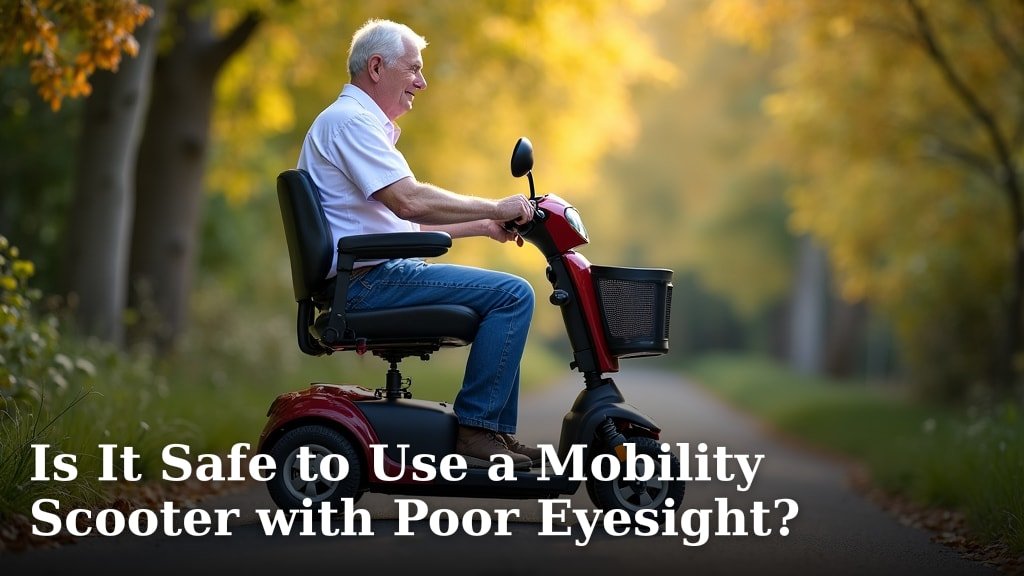
Using a mobility scooter with poor eyesight can be risky, but it’s not always an automatic “no.” Your ability to drive safely depends on the severity of your vision impairment and the environment you’ll be using the scooter in. Many factors contribute to safe scooter operation, and vision is a big one.
Driving any vehicle requires clear vision to navigate safely. This includes spotting obstacles, pedestrians, and traffic signals. When your eyesight isn’t great, these tasks become much harder. We found that understanding the legal requirements and personal limitations is key before you decide.
- Yes, but with serious precautions.
- Vision is critical for spotting hazards.
- Check local laws on scooter use and vision.
- Assess your specific vision limitations honestly.
Let’s take a closer look at what experts recommend and what you should consider if your eyesight isn’t perfect but you’re considering a mobility scooter.
Navigating with Limited Vision: Can You Safely Use a Mobility Scooter?
So, you’re wondering if driving a mobility scooter is still an option when your eyesight isn’t what it used to be. It’s a really important question to ask, and we’ve looked into it. The short answer is: it depends on a few key things. It’s not a simple yes or no for everyone.
Your ability to operate a scooter safely is directly tied to your vision. Think about driving a car – clear sight is essential. The same applies, perhaps even more so, to mobility scooters, which are often used in busy pedestrian areas or alongside traffic. We found that understanding the risks and requirements is the first step.
Understanding Vision Impairment and Scooter Operation
Mobility scooters are designed to give you independence. But, that independence comes with responsibility. Your eyes are your primary tool for navigating the world around you. They help you spot hazards, predict movements, and understand your surroundings.
When vision is impaired, these crucial tasks become much harder. You might miss a curb, not see a child running ahead, or misjudge the speed of an approaching vehicle. We found that even slight vision problems can make operating a scooter more challenging.
What Exactly is “Poor Eyesight”?
Vision impairment covers a wide spectrum. It’s not just about not being able to see far away. It can include:
- Reduced visual acuity: Difficulty seeing fine details. This is what most people think of as blurry vision.
- Limited field of vision: Tunnel vision or blind spots. You might not see things to your sides or directly in front of you.
- Contrast sensitivity issues: Trouble distinguishing between similar colors or seeing objects against backgrounds. Think of seeing a white cane on a white wall.
- Light sensitivity: Discomfort or reduced vision in bright light, or difficulty seeing in dim conditions.
- Glaucoma, cataracts, macular degeneration: These are common eye conditions that significantly impact vision.
We found that the type and severity of your vision impairment matter more than just a general label. What are your specific limitations?
Legal and Regulatory Considerations
Laws about using mobility scooters vary. Some places have specific rules about who can operate them. These rules often consider your ability to see and react safely.
Many jurisdictions consider mobility scooters as personal mobility devices. They aren’t always treated like cars. However, safety is always the main concern. We found that it’s essential to check your local laws and regulations regarding vision requirements for scooter users.
What Do the Laws Say?
Some areas might have minimum vision standards. These could be similar to those for driving a car, though often less strict. Others may not have explicit vision requirements but rely on general safety laws. These laws prohibit operating any vehicle in a dangerous manner.
If your vision is significantly impaired, you might fall short of any legal vision standards. Even if no specific law applies, operating a scooter with severely limited vision could still be considered reckless. We found that relying on common sense and local guidance is a good approach.
Assessing Your Personal Safety and Risks
Beyond legalities, your personal safety is the top priority. Have you honestly assessed your vision’s impact on your daily activities?
Think about how your vision affects you when you’re walking or using other aids. Can you easily detect obstacles like uneven pavement, puddles, or parked scooters? Can you clearly see pedestrians, especially children or pets who might dart out unexpectedly?
Environmental Factors to Consider
Where will you be using your scooter? This makes a big difference. A quiet, familiar path in a park is very different from a busy downtown sidewalk or a crowded shopping mall.
Consider these environmental factors:
- Day vs. Night: Driving at dusk or night with poor vision is significantly more dangerous.
- Weather Conditions: Rain, fog, or snow can further reduce visibility, even for those with good eyesight.
- Traffic Density: How many people, other scooters, wheelchairs, or even vehicles will you encounter?
- Familiarity of Route: Are you traveling on well-known paths or somewhere completely new?
We found that a scooter might be safer for short, familiar trips in controlled environments. Longer or more complex journeys might pose greater risks.
Potential Hazards and How Vision Affects Them
Let’s break down some common hazards you might encounter and how vision plays a role.
Obstacles and Uneven Surfaces
Mobility scooters can navigate small bumps. However, larger potholes, significant cracks in sidewalks, or unexpected obstacles can cause a fall or damage the scooter. Poor vision makes it harder to spot these issues in time to react.
We found that good depth perception and the ability to see contrast are key here. If you have trouble judging distances or seeing changes in elevation, these hazards become much more dangerous.
Pedestrians and Other Users
Sidewalks are shared spaces. You need to be able to see people walking, running, or using other mobility devices. Slow reactions or missed cues can lead to collisions.
This is especially true for children or pets who move unpredictably. We found that a reduced visual field can make it difficult to monitor your surroundings effectively, increasing the risk of unexpected encounters.
Traffic and Roadways
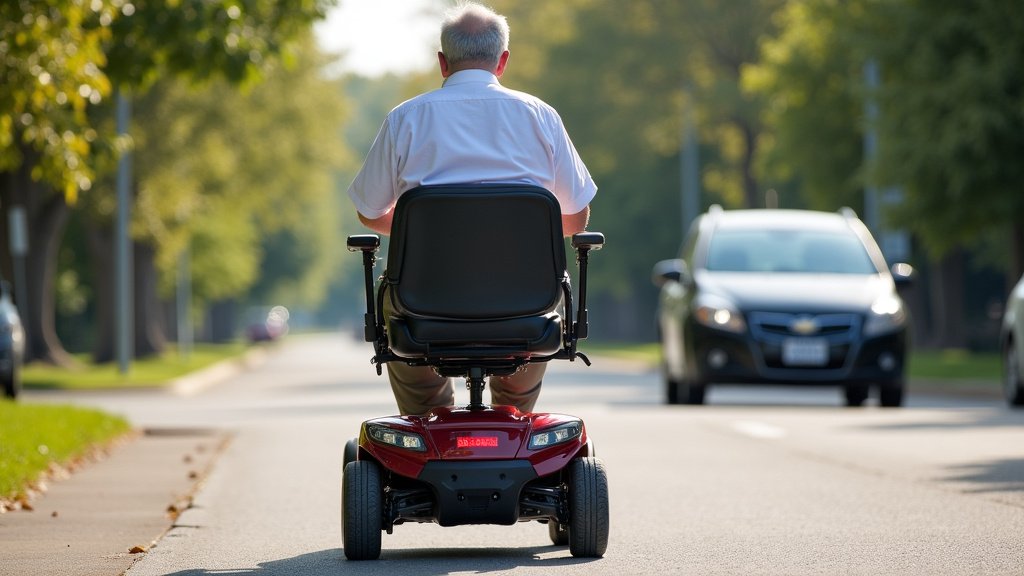
Even if you plan to stick to sidewalks, you might need to cross streets or driveways. You must be able to see oncoming traffic, understand traffic signals, and gauge speeds. This is a high-risk area for anyone with vision impairment.
Many experts say that crossing roads safely requires a certain level of visual acuity and peripheral vision. If your vision doesn’t meet these needs, using a scooter near traffic areas is strongly discouraged. We found this to be one of the most critical safety concerns.
When Is It Likely Too Risky?
It’s tough to say “no” to independence. But, honesty about your abilities is vital. We found that certain situations strongly suggest caution or avoiding scooter use altogether.
Consider stopping if:
- You have been diagnosed with a condition that significantly impairs your vision (like advanced glaucoma or macular degeneration).
- You frequently bump into objects even when walking.
- You struggle to read large print or identify faces.
- Your doctor or eye specialist has advised against driving or operating machinery.
- You have difficulty seeing clearly at dusk or in low light.
If several of these points sound familiar, it might be time to explore alternative mobility solutions. Your safety, and the safety of those around you, is the most important factor. We found that consulting with an ophthalmologist or optometrist is often the best first step.
Alternatives and Aids to Consider
If using a mobility scooter isn’t the safest option for you, don’t despair! There are many other ways to maintain your independence and get around.
Here are a few things to think about:
- Walking Canes and Walkers: These can provide stability and help you feel the ground, aiding in obstacle detection.
- Companion Services: Having a friend, family member, or paid companion can help you navigate safely during outings.
- Public Transportation: Many public transport systems are accessible and can help you travel further distances.
- Ride-Sharing Services: Services like Uber or Lyft can be a convenient option for getting from point A to point B.
- Electric Wheelchairs: Some electric wheelchairs offer different maneuverability and control options that might suit your needs better.
We found that exploring these options can help you find the right balance between independence and safety. A rehabilitation specialist or occupational therapist can offer personalized advice.
Making the Right Choice for You: A Quick Checklist
Before you decide, run through this quick checklist. Be honest with yourself!
- Have I consulted an eye doctor recently?
- Do I understand my specific vision limitations?
- Can I easily see obstacles and changes in terrain?
- Am I comfortable navigating busy pedestrian areas?
- Are my planned routes safe and familiar?
- Are there alternative mobility options I could use?
Answering these questions will help you make an informed decision. We found that taking the time to assess these points is a responsible step toward safe mobility.
Conclusion
Deciding if a mobility scooter is right for you with vision impairment requires careful thought. We found that it’s not a simple yes or no. Your ability to navigate safely depends heavily on the severity of your vision loss and your surroundings. Always prioritize your safety and the safety of others. If you have any doubts, it’s best to explore other mobility aids or services. Your independence is important, but so is safe travel. Take the next step by consulting with your eye doctor about your specific vision and mobility needs.
Frequently Asked Questions
Can I legally use a mobility scooter if I have vision problems?
Laws vary by location, but generally, you must be able to operate a scooter safely. If your vision impairment prevents you from seeing hazards, you might not meet legal safety standards, even if there isn’t a specific vision test for scooters. We found it’s essential to check your local regulations. We found it’s essential to check your local regulations regarding scooter use and vision requirements.
What type of vision impairment is most concerning for scooter use?
Reduced visual acuity, limited field of vision (like tunnel vision), and poor contrast sensitivity can all be very concerning. These issues make it harder to spot obstacles, pedestrians, and changes in the ground surface. We found that these specific limitations often pose the biggest risks.
Is it safe to use a mobility scooter at night with poor eyesight?
Using a mobility scooter at night with poor eyesight is generally considered too risky. Visibility is already reduced, and vision impairments make it even harder to see. We found that most experts strongly advise against night use in these situations.
How can I assess if my vision is good enough for a mobility scooter?
Honestly evaluate your daily vision. Can you easily see curbs, uneven pavement, or people on a sidewalk? Do you struggle in low light or with glare? Consulting your eye doctor for a professional assessment of your functional vision for mobility is the best way to know for sure.
What are good alternatives if a mobility scooter isn’t safe for me?
If a scooter is too risky, consider walking aids like canes or walkers for stability. Companion services for outings, accessible public transportation, or ride-sharing services are excellent alternatives. Exploring these options can help you maintain independence safely.
