
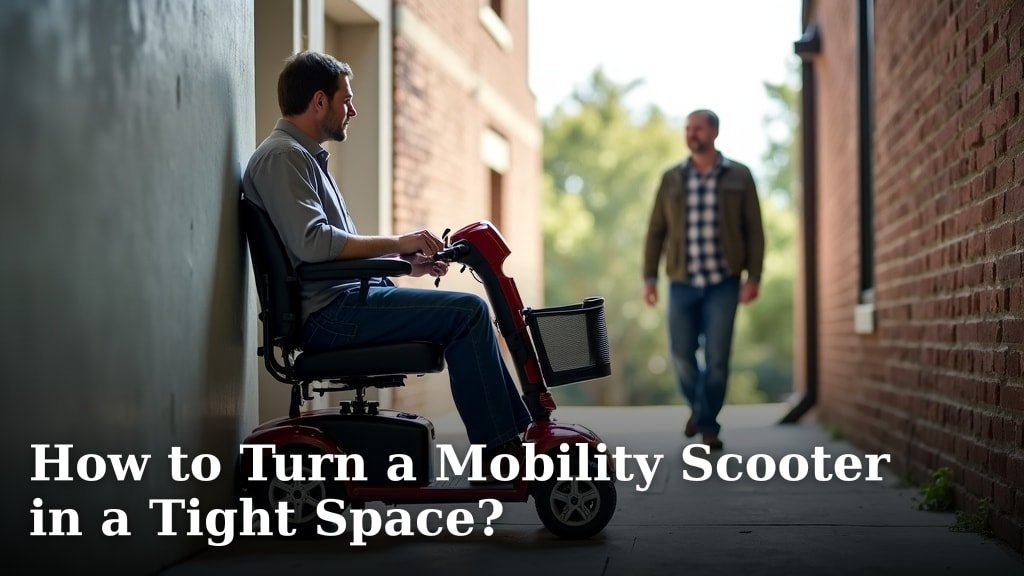
Turning a mobility scooter in a tight space is totally doable with the right techniques. You can master **tight turns** and **precise maneuvering** by understanding how your scooter works and using simple, smart strategies. Think of it like a dance; you just need to learn the steps.
Navigating confined areas like small parking lots or narrow aisles can feel tricky at first. But with a little practice, you’ll gain the **confidence** to move around smoothly. Many scooter users find these methods incredibly helpful for everyday independence. We’ve gathered the best advice to make it easier.
- Use your scooter’s turning radius to your advantage.
- Practice slow, controlled movements.
- Check your surroundings constantly.
- Master the “three-point turn” for very tight spots.
- Get familiar with your scooter’s controls.
Let’s walk through exactly how to make those tight turns feel like a breeze, so you can get where you need to go without stress.
Mastering Tight Turns with Your Mobility Scooter
Navigating tight spaces in your mobility scooter might seem daunting, but it’s a skill you can absolutely master. You just need to understand a few key principles. We’ve found that knowing your scooter’s capabilities is the first step.
Understanding Your Scooter’s Turning Radius
Every mobility scooter has a turning radius. This is the diameter of the smallest circle it can turn. Think of it like the turning circle of a car. A smaller turning radius means it can make tighter turns more easily. Most mobility scooters are designed to be quite maneuverable. We found that checking your scooter’s manual can tell you its exact turning radius. This information is key to planning your moves.
How Turning Radius Affects Your Maneuvers
If you’re in a spot that looks too small, understanding the turning radius helps. You’ll know if you can actually make the turn. Trying to turn in a space smaller than your turning radius is simply impossible. It’s like trying to fit a large box through a small doorway. So, knowing this number gives you realistic expectations.
Practicing Slow and Controlled Movements
Speed is not your friend when turning in tight spots. Moving too fast can lead to overshooting your turn or bumping into things. We recommend practicing slow, deliberate movements. This gives you more time to react and make adjustments. It also allows you to better gauge the space you have available. Think of it like carefully steering a delicate object.
The Importance of Gentle Control
When you gently press the joystick or steering controls, your scooter responds more precisely. This fine control is essential for making small adjustments. You can inch forward or backward with more accuracy. Many users find that taking a deep breath before starting a turn helps them relax and focus. This controlled approach is much safer and less stressful.
Always Check Your Surroundings
Before you even think about turning, do a thorough scan of your environment. Look for obstacles, people, or other vehicles. This might seem obvious, but it’s easy to forget when you’re focused on the turn itself. We found that a quick, comprehensive check can prevent many potential mishaps. Are there chairs, tables, or even uneven flooring nearby?
Using Your Mirrors and Awareness
If your scooter has mirrors, use them! They give you a wider view of what’s behind and beside you. But don’t rely solely on mirrors. Turn your head to look directly. Your own awareness is your best tool. Many experts suggest developing a habit of looking in all directions before starting any maneuver. This situational awareness is a superpower for safe navigation.
The “Three-Point Turn” for Very Confined Areas
Sometimes, the space is so tight, a simple turn won’t work. This is where the “three-point turn” comes in handy. It’s a method used to change direction in limited space. It involves a series of forward and backward movements. We found this technique particularly useful in small parking lots or narrow pathways. It’s like a mini-dance to pivot your scooter.
Step-by-Step: Executing a Three-Point Turn
- Start by moving forward as far as you can towards the edge of the space, turning your wheels in the direction you want to end up.
- Reverse your scooter, turning your wheels in the opposite direction. Move back just enough to create space for the next step.
- Move forward again, straightening your wheels or turning them further to complete the turn.
This maneuver might take a few tries to get right. Practice it in an open area first. You’ll find that patience is key. Many users report feeling much more confident after practicing this technique. It’s a real confidence booster for tricky situations.
Getting Familiar with Your Scooter’s Controls
Your scooter’s controls are your connection to its movement. The joystick is usually the primary control for direction and speed. Push it forward to go forward, backward to reverse, and left or right to steer. Understanding how sensitive these controls are is vital. We found that subtle movements on the joystick translate to precise steering.
Sensitivity and Response Training
Some scooters have adjustable speed settings or joystick sensitivity. If yours does, consider adjusting it for tighter maneuvers. Lowering the sensitivity can make the controls less twitchy. This allows for finer adjustments. Many mobility scooter manuals offer tips on understanding and using your specific controls. Taking the time to read up can prevent frustration. If your scooter has variable speed settings, consider adjusting them for finer control in tight spaces.
A Checklist for Confident Turning
Here’s a quick checklist to keep in mind when facing a tight turn:
- Scan your surroundings thoroughly.
- Know your scooter’s turning radius.
- Move slowly and deliberately.
- Use your controls with gentle precision.
- Don’t be afraid to use a three-point turn.
- Practice makes perfect – try it in an open space first!
When to Seek Additional Assistance
While most turns are manageable, there might be times when you feel unsure or unsafe. If a space feels exceptionally challenging, or if you have any doubts about your ability to navigate it safely, don’t hesitate to ask for help. Many people are happy to lend a hand. It’s always better to be safe than sorry. We found that knowing your limits and seeking help when needed is a sign of smart navigation.
Conclusion
Mastering tight turns in your mobility scooter brings a new level of freedom and confidence. You’ve learned how understanding your scooter’s turning radius is your first step. Practicing slow, controlled movements and always checking your surroundings are key to safety. The three-point turn is a handy tool for those extra-tight spots. Remember, getting familiar with your scooter’s controls makes all the difference. With a little practice, these maneuvers will become second nature. Your next step is to find a safe, open space and put these techniques into practice. You’ve got this!
Frequently Asked Questions
How can I tell if I have enough space to turn my scooter?
Check your scooter’s turning radius in the manual. This number tells you the smallest circle it can turn. Compare that to the space available. If the space looks smaller than your turning radius, you might need a different strategy, like the three-point turn.
Is it safe to ask strangers for help with turning my scooter?
Yes, it can be safe and very helpful. If you feel a space is too challenging, don’t hesitate to ask someone nearby for assistance. Most people are happy to help guide you or offer a spotter. Your safety is the most important thing.
What if my scooter’s controls feel too sensitive for tight turns?
Many mobility scooters have adjustable joystick sensitivity. If your controls feel too twitchy, see if you can lower the sensitivity. This allows for much finer movements, giving you more precise control in confined areas. Consult your scooter’s manual for instructions.
How often should I practice these turning techniques?
Regular practice is key to building confidence and muscle memory. Try to practice in a safe, open area at least once a week, especially focusing on the three-point turn. The more you practice, the more natural these maneuvers will feel.
Can I use my mobility scooter in a crowded shopping aisle?
Yes, but with extreme caution. Always scan your surroundings carefully for people, displays, and other obstacles. Move very slowly and be prepared to stop immediately. If the aisle feels too narrow or crowded, it’s best to wait for it to clear or find an alternative route. Always scan your surroundings carefully for people, displays, and other obstacles when navigating tight spaces.
