
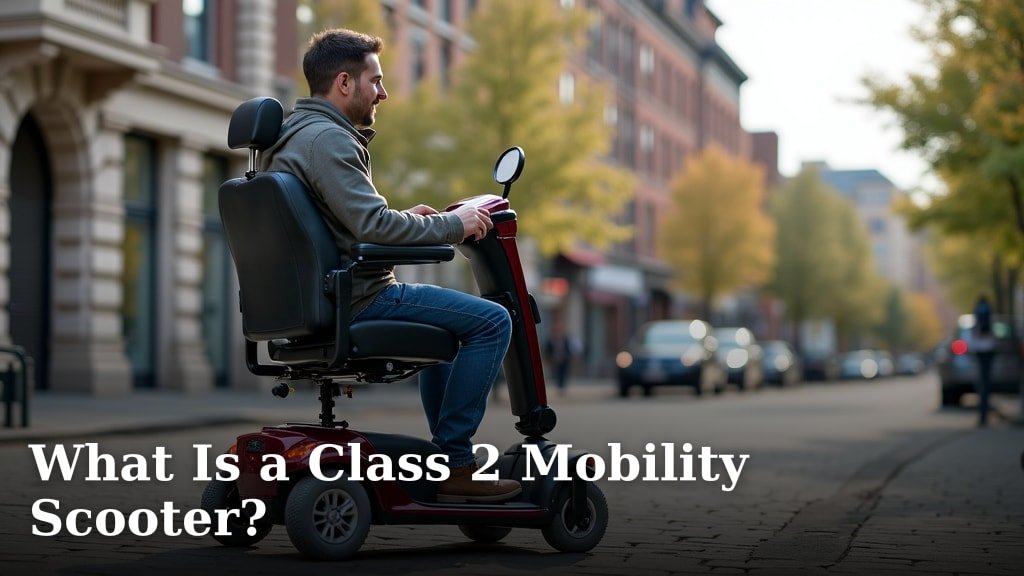
A Class 2 mobility scooter is a medical device designed for pavement use and cannot go on the road. These scooters offer independence and freedom for many individuals. They are generally smaller and more maneuverable than other types.
You might be wondering if a Class 2 scooter is right for you. We found these scooters are best for short trips and getting around indoors. They are popular for places like shopping centers and doctors’ offices.
- Class 2 scooters are for pavement use only.
- They are smaller and more portable.
- Top speeds are around 4 mph.
- Great for indoor and local outdoor travel.
Let’s walk through everything you need to know about Class 2 mobility scooters, helping you make an informed choice.
Understanding Class 2 Mobility Scooters
You’re probably here because you want to know more about Class 2 mobility scooters. Simply put, these are personal mobility devices designed for sidewalks, pavements, and indoor use. They offer a great balance of portability and comfort for many users.
We found that Class 2 scooters are fantastic for short distances and navigating busy spaces. Think of them as your personal assistant for getting around town or inside large buildings.
Key Features and Characteristics
What makes a Class 2 scooter stand out? It’s all about their design for specific environments. They are built to be compact and easy to handle.
These scooters often come with simple controls. They prioritize user-friendliness above all else. You’ll find them a breeze to operate.
Speed and Power Limitations
You won’t be breaking any land speed records with a Class 2 scooter. We found their maximum speed is usually around 4 miles per hour (mph). This is about the speed of a brisk walk.
This speed limit is important for safety. It keeps you and pedestrians safe on crowded pavements. It’s designed for leisurely travel, not a race.
Design for Pavement Use
The entire design philosophy of a Class 2 scooter centers on pavement use. They have smaller wheels and a tighter turning radius than road-legal scooters. This makes them ideal for weaving through pedestrian traffic.
Their size also helps with indoor navigation. You can easily maneuver through aisles in a store or corridors in a medical office. It’s like having your own personal golf cart, but much smaller!
Who Benefits Most from a Class 2 Scooter?
Is a Class 2 scooter the right choice for you? We’ve seen these scooters help a wide range of individuals. They are perfect for those who need a little extra help with mobility but still want to be active.
If you’re looking for something to enhance your daily independence, this could be it. It’s about making everyday tasks easier and more enjoyable.
Ideal User Profile
We found Class 2 scooters are best for people who mostly stay on sidewalks or indoors. This includes trips to the grocery store, visiting friends nearby, or getting around a shopping mall.
They are not meant for long-distance travel or rough terrain. If your usual routes involve smooth, flat surfaces, a Class 2 scooter is a strong contender.
Common Use Cases
Imagine yourself cruising through a park or easily navigating a doctor’s waiting room. These are common scenarios for a Class 2 scooter user. Many people use them for their daily errands and social outings.
They are also a popular choice for vacations. Their smaller size often makes them easier to transport, though you’ll always want to check airline or cruise line policies first.
Comparing Class 2 with Other Scooter Types
It’s helpful to understand how Class 2 scooters fit into the bigger picture. There are other classes of mobility scooters, each with different capabilities. Knowing the differences helps you choose the best fit for your needs.
Let’s look at the main distinctions. You’ll see that each class serves a unique purpose.
Class 3 Mobility Scooters
Class 3 scooters are a step up from Class 2. These are the models that can be used on roads as well as pavements. They are built for more demanding use.
We found that Class 3 scooters have higher speeds, typically up to 8 mph. They also come with features like lights, indicators, and horns, which are needed for road safety (Gov.uk, “Mobility scooters and powered wheelchairs”).
If your travel plans include main roads, you’ll need a Class 3 scooter. They are generally larger and more robust.
Key Differences at a Glance
It can be tough to keep all the classes straight. Here’s a simple breakdown to help you visualize the differences between Class 2 and Class 3 scooters:
| Feature | Class 2 Scooter | Class 3 Scooter |
|---|---|---|
| Max Speed | ~4 mph | ~8 mph |
| Road Use | No | Yes (with required features) |
| Pavement Use | Yes | Yes |
| Size | Generally smaller, more portable | Generally larger, more robust |
| Lights/Indicators | Often optional/basic | Required for road use |
| Best For | Indoor, short-distance pavement travel | Outdoor, longer distances, road travel |
As you can see, the main difference boils down to speed and where you can legally operate them. Your typical travel environment will be a major factor in your decision.
Factors to Consider Before Buying
Choosing a mobility scooter is a personal decision. There are several things you’ll want to think about to make sure you get the right model for your lifestyle. Don’t rush this process.
We want you to feel confident in your choice. Let’s walk through some important questions to ask yourself.
Your Mobility Needs and Lifestyle
First, honestly assess your daily routine. How far do you typically travel? Do you encounter many hills or uneven surfaces? Your answers will guide you toward the right class and features.
If you mostly stay close to home and your path is smooth, a Class 2 scooter is often a perfect match. Consider how often you’ll use it and for what purposes.
Portability and Transport
Do you plan on taking your scooter with you in a car? Some Class 2 scooters are designed to be disassembled or folded. This makes them much easier to transport.
Think about the weight of the individual parts if you need to lift them. This is a common concern for users and their caregivers. Look for models labeled as “portable” or “travel” scooters for easier handling.
Budget and Cost
Mobility scooters come in a wide range of prices. Class 2 scooters are generally more affordable than Class 3 models. Set a realistic budget before you start shopping.
Remember to factor in potential costs like accessories, maintenance, and insurance. It’s an investment in your independence, so you want to ensure it’s a sustainable choice.
Comfort and Features
Test out different models if you can. Comfort is king when you’re using a device daily. Check the seat, armrests, and controls for ergonomics.
Do you need a basket for groceries? What about a swivel seat for easy transfers? Make a list of “must-have” features versus “nice-to-have” ones. Personal preference plays a big role here.
Checklist for Choosing a Class 2 Scooter
To help you narrow down your options, here’s a quick checklist. This will guide you through the decision-making process.
- Will I primarily use this scooter on pavements or indoors?
- Are my typical travel distances short, usually less than a few miles?
- Do I need a scooter that is relatively lightweight and portable?
- Is a top speed of around 4 mph sufficient for my needs?
- Do I prioritize maneuverability in tight spaces over high speed?
- Will this scooter provide the level of independence I am looking for?
Answering these questions will help you determine if a Class 2 mobility scooter aligns with your specific requirements. We believe that with careful consideration, you’ll find the perfect match.
Conclusion
You’ve now got a solid understanding of what a Class 2 mobility scooter is all about. We’ve seen they’re fantastic for short trips on pavements and indoors, offering a balance of maneuverability and independence. Remember, their 4 mph speed limit keeps you safe while navigating busy areas.
If your daily routine involves smooth surfaces and local errands, a Class 2 scooter could be your perfect companion. It’s about enhancing your independence without the need for road-legal features. Take the time to consider your personal needs and preferences.
Ready to explore your options further? We encourage you to visit a reputable dealer to test drive a few models and find your ideal match.
Frequently Asked Questions
Can Class 2 scooters be used in all weather conditions?
Generally, Class 2 mobility scooters are best suited for dry conditions. While some have water-resistant features, prolonged exposure to heavy rain or snow can damage electronics. We recommend checking the manufacturer’s guidelines for specific weather tolerances.
Are Class 2 mobility scooters covered by insurance?
Coverage for Class 2 mobility scooters varies widely. Some homeowner’s or specialized mobility insurance policies might offer protection against theft or damage. We found it’s always best to contact your insurance provider directly to understand your specific coverage options.
How often do I need to charge a Class 2 scooter?
Charging frequency depends on usage, battery type, and the model’s range. For optimal battery life, it’s generally advised to charge your scooter overnight after each day of significant use. Many manufacturers recommend charging after every use to maintain battery health.
Can Class 2 scooters climb hills?
Class 2 scooters are designed for relatively flat terrain. While they can handle slight inclines, steep hills might strain the motor and significantly reduce battery life. If you frequently encounter steep inclines, you might need a more powerful scooter.
Are there any age restrictions for using a Class 2 mobility scooter?
While there aren’t strict age limits for operating a Class 2 mobility scooter, users should be able to safely control the device. This includes having the necessary physical and cognitive abilities. We recommend practicing in a safe, open area before regular use.
