

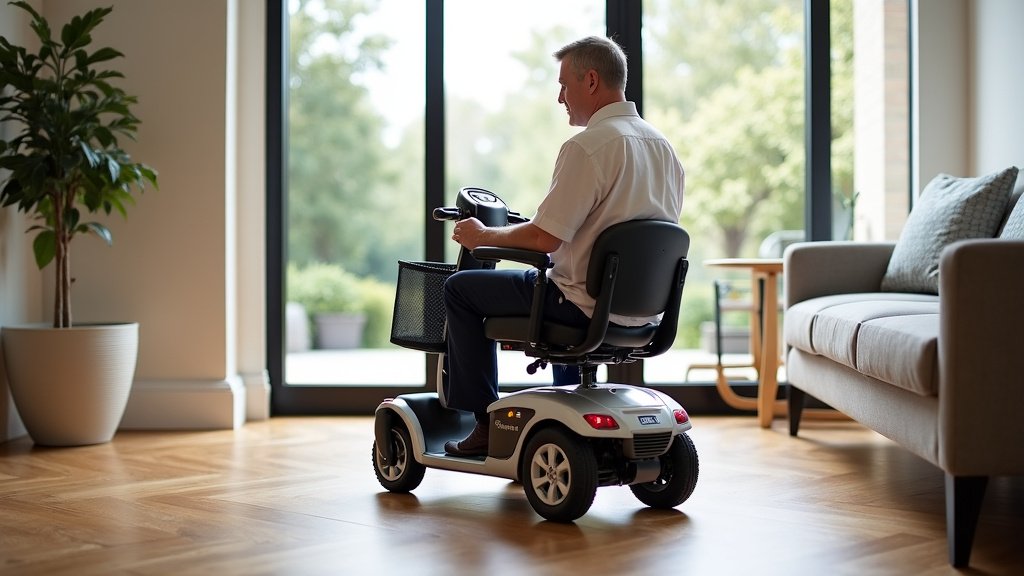
The best mobility scooter for indoor use is typically a compact, lightweight, and highly maneuverable 3-wheel scooter. We found that these models, often called travel or portable scooters, are ideal for navigating tight spaces in your home. They offer the perfect balance of agility and ease of use.
Choosing the right indoor scooter means prioritizing features like a tight turning radius and a small footprint. You want something that can easily move between rooms without bumping into furniture. We understand you need to maintain your independence, and the right scooter can truly make a difference in your daily life.
- Compact and lightweight scooters are best.
- 3-wheel models offer superior maneuverability indoors.
- Look for a tight turning radius.
- Travel or portable scooters are great choices.
- These scooters help you navigate tight spaces at home.
Let’s dive into the details and help you find the perfect indoor mobility scooter for your unique needs. We’ll walk you through everything you need to know.
Finding the Ideal Indoor Mobility Scooter
The best mobility scooter for navigating your home is one that combines compact size with excellent maneuverability. Think of it like a nimble little car for your living space. You want something that can easily weave around furniture, turn in tight corners, and still be comfortable for you to use. It’s all about making your daily routines simpler and more enjoyable.
Understanding Indoor Mobility Scooter Needs
When you’re choosing an indoor scooter, your main focus should be on how it performs within the confines of your home. Outdoor scooters, while powerful, are often too large and clunky for hallways and doorways. You need something designed for indoor environments, where space is often at a premium. We want to help you feel confident moving through every room.
- Tight Spaces: Doorways, bathrooms, kitchens.
- Floor Surfaces: Carpet, hardwood, tile.
- Maneuverability: Turning radius and overall footprint.
- Comfort: How long you’ll be sitting in it.
- Storage: Where you’ll keep it when not in use.
Why Size Matters Most for Indoor Use
Imagine trying to drive a large SUV in a crowded parking garage. That’s how a big scooter feels indoors! A smaller, more compact scooter means you can easily pass through doorways without scratching the frames or getting stuck. It also means less bumping into walls and furniture, protecting your home and giving you a smoother ride. We find that a small footprint leads to a much happier experience.
Research suggests that homes with standard doorways often require a scooter width of no more than 23-24 inches to allow for comfortable passage (National Institute on Aging). Always measure your doorways before you buy!
The Advantage of a Tight Turning Radius
A tight turning radius is your best friend when you’re indoors. This feature allows the scooter to turn almost on the spot, which is crucial for navigating narrow hallways or making a U-turn in a small room. Think of trying to get out of a chair in a tight space – the easier it is to pivot, the better. We’ve seen how this one feature can truly transform indoor independence.
3-Wheel vs. 4-Wheel Scooters for Indoors
This is a big decision, and it really comes down to maneuverability versus stability. For indoor use, a 3-wheel scooter often wins the day. Why? Because that single front wheel allows for an incredibly tight turning circle, much like the front wheel of a bicycle.
However, 4-wheel scooters offer more stability, especially if you have balance issues or frequently encounter uneven surfaces, even indoors. Let’s look closer.
The Benefits of 3-Wheel Scooters
Many people find 3-wheel scooters to be the champions of indoor navigation. Their design naturally lends itself to a smaller turning radius, making them perfect for weaving around kitchen islands or turning sharply in a bathroom. They often feel lighter and more agile, which can be very empowering. You’ll find yourself able to reach more places in your home with ease.
However, it’s worth noting that this enhanced maneuverability can come with a slight trade-off in stability compared to a 4-wheel model, especially on inclines or uneven surfaces (Mayo Clinic). Always proceed with caution.
When a 4-Wheel Scooter Might Be Better Indoors
While 3-wheel scooters are often preferred for their agility, a 4-wheel model can offer a greater sense of security. If you feel unsteady on your feet or are concerned about tipping, the extra wheel provides a wider base and more stability. This can be especially important if your home has slightly uneven floors, thick carpets, or small ramps between rooms. Sometimes, peace of mind is worth a little less agility.
Key Features to Look for in an Indoor Scooter
Beyond the number of wheels, several other features can make a big difference in your indoor scooter experience. These are the details that separate a good scooter from a great one for your specific needs. You want a scooter that feels tailor-made for your home.
Adjustable Seating and Tiller
Just like a good office chair, an adjustable seat is vital for your comfort, especially if you’ll be spending a lot of time in your scooter. Look for features that allow you to adjust the seat height, armrests, and even swivel the seat. A swivel seat is incredibly useful for getting on and off the scooter in tight spaces, or for pulling up to a table. Adjusting the tiller (the steering column) ensures the controls are always within comfortable reach.
Non-Scuffing Tires
This might seem like a small detail, but it’s a big deal for your floors! Many indoor scooters come with non-marking tires that won’t leave unsightly scuff marks on your beautiful hardwood, laminate, or tile floors. This preserves your home’s appearance and saves you from extra cleaning. It’s those little thoughtful touches that make a product truly shine.
Easy Disassembly and Portability
Even for indoor use, the ability to easily disassemble or fold your scooter can be a huge benefit. Perhaps you want to take it to a friend’s house, or maybe you just need to store it compactly when not in use. Many “travel” or “portable” scooters are designed for quick breakdown into lighter pieces, making them simple to transport in a car trunk. We find this feature gives you incredible flexibility.
Weight Capacity and Battery Life
Always check the scooter’s weight capacity to ensure it can safely support you. For indoor use, you might not need a massive battery range, but you still want enough power to get through your day without constantly recharging. Consider how many hours you typically spend moving around your home and choose a battery that can comfortably meet that demand. You don’t want your scooter to run out of juice halfway through cooking dinner!
Choosing the Right Scooter: A Quick Checklist
Ready to make your choice? Use this quick checklist to guide your decision. These points will help you narrow down your options and find a scooter that truly fits your lifestyle.
- Is it a 3-wheel model for superior agility?
- Does it have a tight turning radius (under 40 inches)?
- Will it fit through all your doorways (under 24 inches wide)?
- Does it have non-scuffing tires to protect your floors?
- Is the seat and tiller adjustable for your comfort?
- Can it be easily disassembled for occasional transport or storage?
Comparing Popular Indoor Scooter Types
To help you visualize, let’s look at how different types of scooters generally stack up for indoor use. Remember, these are general guidelines, and specific models will vary. We want to give you a clear picture of what to expect.
| Scooter Type | Maneuverability (Indoor) | Stability | Typical Size | Best For |
|---|---|---|---|---|
| 3-Wheel Travel/Portable | Excellent | Good | Very Compact | Small homes, tight spaces, easy transport |
| 4-Wheel Travel/Portable | Good | Excellent | Compact to Medium | Slightly larger homes, stability needs |
| Full-Size/Heavy Duty | Poor | Excellent | Large | Outdoor only, generally too big for indoors |
As you can see, the “travel” or “portable” categories, whether 3-wheel or 4-wheel, are often your best bet for indoor navigation. They are specifically designed with compactness in mind, making your home accessible again. We hope this table helps clarify the differences for you.
Maintaining Your Indoor Mobility Scooter
Once you’ve chosen your ideal indoor scooter, a little bit of regular maintenance will keep it running smoothly for years. Think of it like taking care of a small appliance; a little attention goes a long way. This ensures your independence remains consistent.
Battery Care Tips
Your battery is the heart of your scooter. Always follow the manufacturer’s charging instructions. Most lead-acid batteries benefit from being charged after each use, even if only for a short period. For lithium-ion batteries, check the manual for specific charging habits. Avoid letting your battery completely drain, as this can shorten its lifespan. A well-maintained battery means fewer interruptions to your daily routine (National Institutes of Health).
Cleaning and Inspection
A quick wipe-down of your scooter’s surfaces with a damp cloth can keep it looking new. Periodically, check the tires for wear and tear, and ensure all nuts and bolts are snug. Listen for any unusual noises during operation. Early detection of small issues can prevent larger, more costly repairs down the line. It’s a simple habit that pays off.
Conclusion
Choosing the best mobility scooter for indoor use really centers on compactness and maneuverability. We’ve shown you that 3-wheel travel scooters often excel in tight home environments due to their superior turning radius. Prioritizing features like non-scuffing tires and adjustable seating ensures comfort and protects your home.
Ultimately, the right scooter should make your daily life easier and more independent. Take the time to measure your doorways and consider how you’ll use it most often. Now you have the knowledge to confidently select a scooter that truly fits your home and lifestyle.
Frequently Asked Questions
What is the narrowest mobility scooter for indoor use?
The narrowest mobility scooters are typically 3-wheel travel models. Some can be as narrow as 17-19 inches, which is ideal for very tight doorways and hallways. Always check the product specifications, but generally, 3-wheel designs offer the slimmest profile.
Can I use a mobility scooter on carpeted floors?
Yes, most indoor mobility scooters can handle carpeted floors. However, thick pile carpets might reduce speed and battery efficiency slightly. Scooters with slightly larger wheels or more powerful motors will generally perform better on carpets.
How often should I charge my indoor mobility scooter battery?
For optimal battery life, we recommend charging your scooter after each day of use, even if it was only for a short time. This prevents deep discharges which can shorten the battery’s lifespan. Refer to your scooter’s manual for specific charging instructions.
Are all indoor mobility scooters able to disassemble for transport?
No, not all indoor mobility scooters are designed for easy disassembly. “Travel” or “portable” models are specifically made to break down into lighter, manageable pieces for transport. Full-size scooters generally do not disassemble easily.
What is a good turning radius for an indoor mobility scooter?
For excellent indoor maneuverability, we look for a turning radius under 40 inches. A smaller number means the scooter can make tighter turns. Some 3-wheel scooters can have a turning radius as low as 30 inches, which is fantastic for navigating small spaces.
