
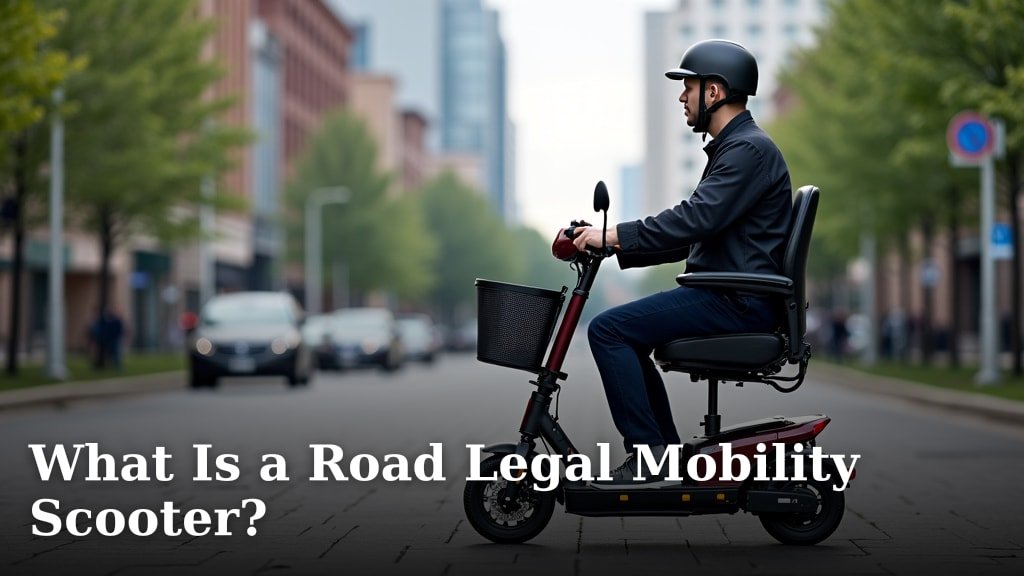
A road legal mobility scooter is a personal electric vehicle designed for use on public roads and sidewalks. These scooters meet specific government regulations for speed, lighting, and safety features. They allow you to travel independently and safely alongside pedestrians and traffic in appropriate areas.
Not all mobility scooters are road legal. Many are designed only for indoor or private property use. To be road legal, a scooter must comply with regulations set by the Department of Motor Vehicles (DMV) and other local authorities. This ensures your scooter is visible and controllable for everyone’s safety.
- Road legal scooters can use public roads and sidewalks.
- They must meet specific safety and speed requirements.
- These scooters have features like lights and mirrors.
- Regulations vary by state, so always check local laws.
Ready to learn more about what makes a mobility scooter road legal, and what to look for when choosing one? Let’s explore the details.
Understanding Road Legal Mobility Scooters
So, what exactly sets a road legal mobility scooter apart from other models? It comes down to a specific set of features and capabilities. These are designed to ensure your safety and the safety of others when you use public spaces.
Key Characteristics of Road Legal Scooters
When you’re looking at mobility scooters, you’ll notice many different types. The ones that are “road legal” have some fundamental characteristics. These features help them blend safely with both pedestrian and vehicle traffic.
- Speed Capability: Road legal scooters typically have higher top speeds than indoor models. They often go up to 8 mph. This speed helps you keep up with traffic flow in certain situations.
- Lighting System: Just like a car, these scooters must have proper lights. This includes headlights, taillights, brake lights, and often turn signals. Good lighting makes you visible, especially at dawn, dusk, or night.
- Horn or Warning Device: You need a way to alert others to your presence. A working horn is a standard safety feature, helping you avoid collisions.
- Mirrors: Rearview mirrors are essential for seeing what’s behind you. They help you make safe lane changes or turns.
- Braking System: A reliable and responsive braking system is critical. It allows you to stop quickly and safely, even from higher speeds.
- Tires: Road legal scooters often have larger, more robust tires. These provide better stability and traction on varied outdoor surfaces.
Comparing Road Legal vs. Pavement Scooters
It can be confusing to tell the difference between various mobility scooter types. Let’s look at the main distinctions between a road legal scooter and one meant only for pavements or indoor use.
| Feature | Road Legal Scooter | Pavement/Indoor Scooter |
|---|---|---|
| Top Speed | Up to 8 mph | Typically 4 mph or less |
| Lighting | Full lighting system (headlights, taillights, brake lights, indicators) | Basic or no lights; reflectors only |
| Mirrors | Required (usually two) | Optional or not included |
| Horn | Required | Sometimes present, but not always as loud |
| Tire Type | Larger, pneumatic (air-filled), better tread | Smaller, solid, less tread |
| Usage Area | Roads (where permitted), pavements, cycle paths | Pavements, shopping centers, indoors |
| Size/Weight | Generally larger and heavier for stability | Smaller, lighter, often disassembles |
Navigating Regulations for Mobility Scooters
Understanding the rules is key when you plan to use a mobility scooter on public roads. Regulations can vary quite a bit. What’s legal in one place might not be in another. It’s a bit like traffic laws for cars.
Federal vs. State and Local Laws
In the United States, there isn’t one single federal law that covers all mobility scooters. Instead, it’s a patchwork of rules. The Department of Transportation (DOT) sets some general guidelines. However, much of the specific regulation falls to individual states and local municipalities. This means you need to do your homework!
State-Specific DMV Requirements
Each state’s Department of Motor Vehicles (DMV) will have its own set of rules. We found that some states classify these scooters as “motorized wheelchairs” or “power-driven mobility devices.” Others might have a separate category entirely. You will want to check your state’s DMV website. They often have sections on “low-speed vehicles” or “mobility devices.”
- Does your state require registration?
- Is there an age limit for operators?
- Are specific safety courses recommended or required?
Local Ordinances and Usage Rules
Beyond state laws, cities and counties can also have their own rules. For example, some cities might restrict scooter use on certain busy streets. Others might have specific hours for scooter operation in parks. Always check with your local city or county government website. Sometimes, your local police department can also provide guidance.
Understanding “Class” Systems for Scooters
Some areas use a “class” system to categorize mobility scooters. This system helps define where and how you can use different models. It’s a way to simplify the rules and make them easier to understand.
- Class 2 Scooters: These are generally limited to 4 mph. They are designed for pavement and pedestrian areas. You cannot use them on public roads, except to cross the road.
- Class 3 Scooters: These are the ones that are considered “road legal.” They can go up to 8 mph. You can use them on roads, but often only where the speed limit is 30 mph or less. They must have all the necessary lighting and safety features.
Knowing which class your scooter falls into is critical. It directly impacts where you can and cannot ride.
Safety Considerations for Road Use
Using any vehicle on public roads comes with responsibilities. For mobility scooter users, safety is especially important. You are often smaller and less visible than cars. Taking precautions can help keep you safe.
Essential Safety Features to Look For
When you’re choosing a road legal scooter, certain features are non-negotiable for your safety. Think of them as your personal safety net. We found that models with these features consistently offer a safer riding experience.
- Excellent Visibility: Bright, working lights (headlights, taillights, brake lights, turn signals) are paramount. Consider adding reflective tape for extra visibility.
- Responsive Controls: Make sure the steering and acceleration are smooth and predictable. You want a scooter that responds immediately to your commands.
- Comfortable Seating: While not directly a safety feature, a comfortable seat reduces fatigue. Fatigue can lead to poor decision-making.
- Puncture-Resistant Tires: Flat tires are not just an inconvenience; they can be a safety hazard. Look for tires designed to resist punctures.
- Good Suspension: A good suspension system provides a smoother ride. It helps maintain control over uneven surfaces.
- Audible Warning System: A loud and clear horn is vital for alerting pedestrians and drivers.
Best Practices for Operating on Roads
Even with the safest scooter, how you operate it matters most. Many experts say that defensive driving techniques are just as important for scooter users as they are for car drivers (National Highway Traffic Safety Administration). Here are some tips:
- Follow Traffic Laws: Obey all traffic signals, stop signs, and road markings. Treat your scooter like any other vehicle on the road.
- Stay Visible: Always wear bright clothing, especially in low light. Consider a high-visibility vest.
- Use Hand Signals: If your scooter doesn’t have turn signals, use clear hand signals for turns and stops.
- Maintain Your Scooter: Regularly check your lights, brakes, and tire pressure. A well-maintained scooter is a safe scooter.
- Plan Your Route: Choose routes with sidewalks, bike lanes, or lower speed limits. Avoid busy roads whenever possible.
- Be Aware of Surroundings: Constantly scan for potential hazards like potholes, uneven pavement, and distracted drivers.
Your safety is in your hands. Taking these steps can make a big difference in your daily travels.
Checklist for Choosing a Road Legal Scooter
Ready to find your perfect road legal companion? Use this quick checklist to guide your decision. It covers the main points we’ve discussed.
- Check local and state DMV regulations for specific requirements.
- Verify the scooter has a top speed of at least 6 mph (often 8 mph).
- Confirm it has a full lighting system (headlights, taillights, brake lights, turn signals).
- Ensure it includes rearview mirrors and an audible horn.
- Look for robust tires suitable for outdoor terrain.
- Consider battery range for your typical travel distances.
Conclusion
Choosing a road legal mobility scooter means gaining true independence. You’ve seen that these aren’t just any scooters; they’re equipped with specific features like higher speeds, robust lighting, and safety components that let you confidently navigate public spaces. Remember, understanding your state and local regulations is just as important as the scooter’s features. We found that taking the time to research these aspects ensures you’re not only riding a capable device but also using it legally and safely.
Your next step is to check your local DMV and city websites. Arm yourself with this knowledge, and you’ll be well-prepared to select a scooter that truly enhances your mobility and freedom.
Frequently Asked Questions
Do I need a special license to drive a road legal mobility scooter?
Generally, in the US, you do not need a special driver’s license to operate a road legal mobility scooter. These devices are often classified differently from cars or motorcycles. However, state and local laws can vary, so always verify requirements with your local DMV.
Can I take my road legal scooter on all public roads?
While designed for road use, road legal scooters often have limitations. Many regulations suggest use on roads with speed limits of 30 mph or less. You should always prioritize routes with sidewalks, bike lanes, or lower traffic to maximize your safety.
How do I know if a specific scooter model is road legal in my area?
The best way is to check the manufacturer’s specifications for the scooter model against your state’s DMV requirements. Look for features like top speed, full lighting systems, and mirrors. Then, confirm these align with local ordinances in your city or county.
Are there any age restrictions for operating a road legal mobility scooter?
Some states or localities may have minimum age requirements for operating mobility scooters, particularly those classified for road use. It’s important to consult your state’s Department of Motor Vehicles website for any specific age restrictions that might apply to you.
What is the typical battery range for a road legal mobility scooter?
The battery range for a road legal mobility scooter can vary widely, often from 15 to 30 miles or more on a single charge. Factors like terrain, rider weight, battery type, and speed affect this. Always consider your typical travel needs when looking at battery range specifications.
