9 Best Gait Belts for Seniors (November 2026)
The best gait belts for seniors include the Vive Gait Belt for padded grips from several angles, the Vive Gait Belt with Handles for a plastic quick-release buckle, and the MDSTOP Gait Belt Transfer Belt for Seniors for a wider back panel.
On this page (7 sections)
The best gait belt for seniors is one that fits securely and gives a trained caregiver a suitable grip. The Vive Gait Belt has 7 padded handles and 4 in wide webbing, while the Posey 6546 has a plain, wipe-clean strap.
A gait belt gives a caregiver a handhold during guided walking or transfers. For bedside support options, see bed rails for queen and full beds.
It doesn't replace training or make an unsafe transfer safe.
If you're comparing other mobility aids for seniors, consider the person's needs and the home layout. Ask a physical therapist or other trained clinician how a gait belt should be used for that person's care.
Our picks at a glance
-
1

-
2

-
3
 Best for a wider back panel
MDSTOP Gait Belt Transfer Belt for Seniors
9.5/10 our score
See it on Amazon
- 4
 Check it
Posey 6546 Premium EZ Clean Gait Belt
Best for wipe-clean use - 5
 Best for seven padded handlesCheck it
- 6
 Best for a six-handle layoutCheck it
- 7
 Best for bed-to-chair assistanceCheck it
- 8
 Check it
Secure Safety Solutions EZ Clean Vinyl Gait
Best for simple wipe-clean support - 9
 Check it
MKEFMEI Transfer Belt for Seniors
Best for a 29 to 48 in fit range
Which gait belts for seniors suit different needs?
The Vive Gait Belt ranks first for its 7 padded grip points and 4 in width. Our score weighs specs, features and buyer feedback against what you're shopping for.
Vive Gait Belt: Best for padded grips from several angles
- 7 padded handles
- Adjusts to waists up to 51 in
- 4 in wide nylon webbing
- Metal buckle with quick-release latch
- Supports up to 350 lb
Seven padded handles give a caregiver multiple grip points, and the 4 in webbing spreads contact across a wider area. It adjusts to waists up to 51 in.
Pros
- 7 padded handles
- 4 in wide webbing
- Quick-release latch
Cons
- Waist fit is limited to 51 in
- Wider than a basic 2 in belt
The Vive Gait Belt is the top choice if a caregiver wants 7 padded handles and a 4 in wide belt. Its nylon webbing adjusts to waists up to 51 in, with a metal buckle and quick-release latch.
The padded grips give a caregiver options for hand placement around the belt. Follow the person's care plan and caregiver training when deciding how to assist.
Vive says the belt supports up to 350 lb. That is the belt's stated capacity, not a measure of whether a transfer is suitable for a particular person or caregiver.
Choose this version if a metal buckle and multiple padded handles fit your needs. If you're comparing fastening styles, see our guide to gait belt metal buckles.
Vive Gait Belt with Handles: Best for a plastic quick-release buckle
- 7 padded handles
- Adjusts to waists up to 51 in
- 4 in wide nylon webbing
- Quick-release plastic buckle
- Supports up to 350 lb
This Vive version has the same 7 padded handles and 4 in width as the metal-buckle version, with a quick-release plastic buckle.
Pros
- 7 padded handles
- 4 in wide webbing
- Plastic quick-release buckle
Cons
- Waist fit is limited to 51 in
- Confirm the buckle choice matches caregiver preference
This Vive model keeps the 7 padded handles and 4 in width, but uses a quick-release plastic buckle. The belt adjusts to waists up to 51 in and has reinforced nylon webbing.
The plastic buckle is the key difference from the first Vive pick. Check that the buckle closes fully and the belt stays in place before beginning movement.
Vive says it supports up to 350 lb. The 4 in width provides a broader hold area than a 2 in strap.
Choose it when you want Vive's handle layout with a plastic buckle. For more handle-focused choices, see our roundup of the best gait belts with handles.
MDSTOP Gait Belt Transfer Belt for Seniors: Best for a wider back panel
- 5 handles in different directions
- Adjusts from 29 to 47 in
- 6 in wide back panel
- Quick-release buckle
- Anti-slip points
A 6 in back panel and 5 handles give caregivers a wide contact area and several grip directions. The belt adjusts from 29 to 47 in.
Pros
- 6 in wide back panel
- 5 handles in different directions
- Anti-slip points
Cons
- Waist range stops at 47 in
- Fewer handles than some picks
The MDSTOP suits buyers who want a wider back section and multiple grip directions. It has 5 handles and a 6 in wide back panel, with an adjustable range of 29 to 47 in.
The belt has anti-slip points on the inside and a quick-release buckle. Its fit range is narrower than the Vive options, so measure the waist where the belt will sit before choosing it.
MDSTOP says the belt can be washed, machine washed or dried. Follow the care instructions and inspect the belt and handles before use.
Choose this pick when the wider back panel and 5 handles match the care task. Ask a clinician for transfer guidance if the belt's capacity affects your decision.
Posey 6546 Premium EZ Clean Gait Belt: Best for wipe-clean use
- 2 in BioThane polyurethane-encapsulated webbing
- Spring-loaded self-locking buckle
- 60 in belt length
- Fits waists up to 58 in
- Wipes clean with mild detergent
The 2 in coated webbing wipes clean with mild detergent, and the spring-loaded self-locking buckle closes securely. It fits waists up to 58 in.
Pros
- Wipe-clean webbing
- Self-locking buckle
- Fits waists up to 58 in
Cons
- No handles
- Narrower than the 4 in support belts
The Posey 6546 is a plain belt for caregivers who value wipe-clean webbing and a self-locking buckle. Its 60 in length fits waists up to 58 in, with a 2 in width.
The BioThane polyurethane-encapsulated webbing wipes clean with mild detergent. Its spring-loaded buckle is molded from polyethylene and locks when fastened.
Because it has no handles, it offers a different grip style from the padded options above. Check whether a plain belt suits the care plan before using it for walking or transfers.
Choose the Posey 6546 if wipe-clean care and its stated waist fit matter more than added handles. If you want a more specialized fit, compare our guide to best gait belts with leg straps.
KkaFFe Gait Belts for Seniors: Best for seven padded handles
- 7 padded handles
- Adjusts to waists from 30 to 46 in
- 5.1 in wide waistband
- Quick-release plastic buckle
- Supports up to 360 lb
Seven padded handles provide grip points in different positions, and the 5.1 in waistband includes anti-slip points. It adjusts from 30 to 46 in.
Pros
- 7 padded handles
- 5.1 in wide waistband
- Quick-release buckle
Cons
- Waist range stops at 46 in
- Wider waistband may not suit every preference
KkaFFe combines 7 padded handles with a 5.1 in waistband and anti-slip points. It adjusts from 30 to 46 in and has a quick-release buckle.
The handle placement gives the caregiver several grip positions, while the wider waistband offers more back coverage than a basic strap. Measure carefully because its fit range stops at 46 in.
KkaFFe states a capacity of up to 360 lb. This is the belt's stated limit, and it doesn't determine the right way to assist a specific person.
Choose this one if the seven-handle layout and fit range work for the wearer. Check that the belt lies flat and doesn't shift before supervised movement.
Posey 6537Q Gait Belt: Best for a six-handle layout
- 6 stitched grab handles
- 4 in rear support band
- Adjusts from 28 to 52 in
- Quick-release buckle
- Machine washable
Six stitched handles provide multiple grip positions, while a 4 in rear band gives caregivers a broader hold area. The belt adjusts from 28 to 52 in.
Pros
- 6 handles
- 4 in rear support band
- Machine washable
Cons
- No stated support weight
- Buckle type may need comparison with other choices
The Posey 6537Q combines 6 stitched handles with a 4 in rear support band. It adjusts from 28 to 52 in and uses a quick-release buckle.
Its handles provide vertical and horizontal grip positions, and the belt is machine washable. Posey describes it for transfers to and from a wheelchair, toilet or bed, and for use as a gait belt.
Choose this belt if you want several handles and a broad rear band. No support weight is stated, so ask Posey or a clinician if that detail affects your decision.
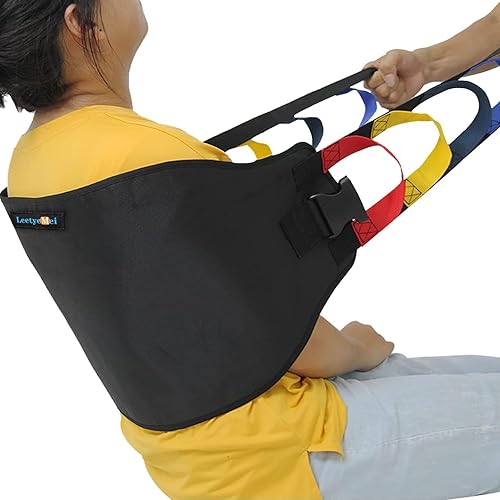
Leetye Mei Transfer Sling: Best for bed-to-chair assistance
- 5 handles at each end
- Supports up to 330 lb
- Nylon and knitted mesh fabric
- Adjustable waist strap
- Quick-release buckle
This transfer sling has 5 handles at each end and is described for moves between a bed, wheelchair, car or commode. It supports up to 330 lb.
Pros
- Handles at both ends
- Adjustable waist strap
- Made for transfer assistance
Cons
- Sling format differs from a standard walking belt
- Check seams before each use
The Leetye Mei Transfer Sling is the transfer-focused option in this group, with 5 handles at each end. It is described for moves between a bed, wheelchair, car or commode and supports up to 330 lb.
Its nylon and knitted mesh fabric gives it a different shape and use from a walking belt. The adjustable waist strap has a quick-release buckle.
Leetye Mei advises checking the sling before each use and stopping if a seam is broken. Choose it only when its sling design suits the transfer and the caregiver has suitable training.
Secure Safety Solutions EZ Clean Vinyl Gait: Best for simple wipe-clean support
- 60 x 2 in vinyl-coated webbing
- Quick-release plastic buckle
- Wipes clean with a damp cloth
- Adjusts up to 60 in
The 60 x 2 in vinyl-coated belt wipes clean with a damp cloth and uses a quick-release plastic buckle. It offers a straightforward hold point without handles.
Pros
- Wipe-clean material
- Quick-release buckle
- Adjusts up to 60 in
Cons
- No handles
- 2 in width may feel narrow beside wider belts
Secure Safety Solutions offers a simple 60 x 2 in vinyl-coated belt with no handles. Its plastic buckle releases quickly, and the material wipes clean with a damp cloth.
This shape may suit someone who needs a plain waist strap as a caregiver hold point. It adjusts up to 60 in, but no support weight is stated.
Choose it if easy cleaning and a simple buckle matter most. If you need padded grip points, compare the handle-equipped picks above.
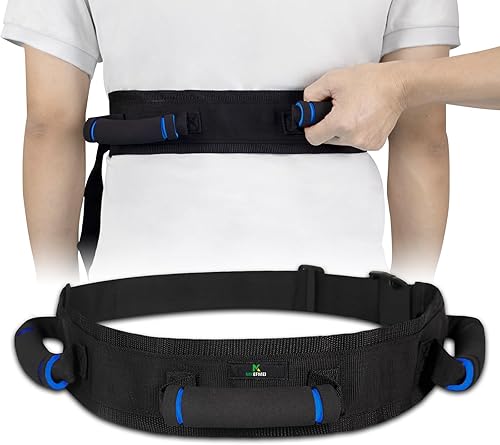
MKEFMEI Transfer Belt for Seniors: Best for a 29 to 48 in fit range
- Multiple padded handles
- Adjusts from 29 to 48 in
- Nylon and thick mesh fabric
- Reinforced stitching
- Machine washable
Multiple padded handles offer grip positions from different angles, and the belt adjusts from 29 to 48 in. Its nylon and thick mesh fabric is machine washable.
Pros
- Multiple padded handles
- Machine washable
- 29 to 48 in fit range
Cons
- Handle count isn't specified
- No support weight is stated
MKEFMEI suits buyers who need a belt that fits 29 to 48 in waists and can be machine washed. It has multiple padded handles, nylon and thick mesh fabric, and reinforced stitching.
The exact handle count and a support weight aren't specified, so compare it with picks that provide those details if either matters to your care plan. The quick-release buckle adjusts across the stated waist range.
Choose it when machine-washable care and the fit range are a match. Confirm the belt's use with a trained caregiver before relying on it during a transfer.
What should you check before choosing a gait belt?
Start with the fit range, buckle and intended task. A secure belt should sit snugly without riding up, and the caregiver should know where and how to hold it.
Measure the wearer's waist where the belt will sit, over the clothing they usually wear during assistance. Use a gait belt size chart to compare the measurement with each belt's stated range.
Then decide whether padded handles matter. They add grip locations, while plain belts such as the Posey 6546 and Secure Safety Solutions option use the belt itself as the caregiver's handhold.
Buckle material is another practical choice. A metal buckle and a plastic quick-release buckle can differ in use, so review the gait belt buckle types and follow the belt's fastening instructions.
Can a gait belt prevent a fall?
A gait belt can give a trained caregiver a handhold during supervised walking or a transfer, but it cannot prevent every fall. The person may still lose balance, and the belt doesn't replace suitable assistance, a clear path or professional guidance.
Use the belt only for tasks approved in the person's care plan. Keep the route clear, fasten the belt as instructed and stop if the person feels pain or the belt slips.
Never use a gait belt to lift someone from the floor or suspend their weight. Ask a physical therapist or other trained clinician to show the caregiver the right technique.
Which gait belt is best for everyday transfers?
For routine assisted movement, compare a belt's grip layout with the transfer task and the caregiver's training. The Posey 6537Q has 6 handles and is described for wheelchair, toilet and bed transfers, while the Leetye Mei is a sling-style option with handles at both ends.
A belt that works for walking assistance may not suit a full transfer. Follow the person's care plan and seek clinician guidance when a move requires lifting or more than one caregiver.
Should you choose a gait belt with handles?
Choose handles when the caregiver needs grip points from different angles. The Vive belts have 7 padded handles, the Posey 6537Q has 6 stitched handles, and the MDSTOP has 5.
A plain belt gives the caregiver fewer designated grip points. Consider how it will be used and whether a best gait belt for physical therapy comparison fits your situation.
How do you clean and inspect a gait belt?
Follow the care directions for the specific belt. Posey 6546 and Secure Safety Solutions describe wipe-clean surfaces, while Posey 6537Q and MKEFMEI belts are machine washable.
Check the buckle, stitching, handles and fabric before use. Leetye Mei advises stopping use if a seam is broken.
Which gait belt should you choose?
Pick the Vive Gait Belt if you want 7 padded handles, a 4 in width and a metal buckle. Choose the Posey 6546 for wipe-clean use without handles, or the MDSTOP for a 6 in back panel and 5 grip points.
If the care task involves a full transfer or lifting, ask a trained clinician which equipment and technique are suitable. A gait belt is one part of an assistance plan.
Our top 3 picks at a glance
-
1
-
2
-
3
Best for a wider back panel
MDSTOP Gait Belt Transfer Belt for Seniors
9.5/10 our score
See it on Amazon
Frequently asked questions
What is the best gait belt for seniors?
The Vive Gait Belt is a strong choice if you want 7 padded handles, a 4 in width and a metal buckle. If wipe-clean care matters more, the Posey 6546 uses coated webbing that wipes with mild detergent.
Check waist fit and ask a trained caregiver which style suits the transfer.
How should you choose a gait belt size?
Measure the wearer's waist where the belt will sit, then compare that measurement with the belt's stated fit range. Allow for clothing and make sure the buckle can close securely without excess slack.
Use our gait belt size chart for a closer fit check before buying.
Are gait belts safe for lifting a person?
A gait belt is a handhold for guided movement and transfers, not a substitute for lifting equipment or training. Follow instructions from a clinician or trained caregiver, and stop if the belt shifts, the person feels pain, or the transfer feels unsafe.
Never pull on the belt to lift someone off the floor.
What is the difference between a gait belt and a transfer belt?
The terms often describe a belt that gives a caregiver a grip while helping someone walk or move between surfaces. Some transfer belts add handles or a wider back panel, while basic gait belts use a simple strap and buckle.
Choose by the task and the caregiver's training.
Should you choose a gait belt with handles?
Handles can give a caregiver grip points from different angles, which may help during guided movement or a transfer. They also add bulk compared with a plain strap.
Consider handle placement, waist fit and the person's care plan before choosing.