9 Best Threshold Ramps for Showers (November 2026)
The best rubber threshold ramps for showers include the VEVOR Rubber Threshold Ramp for smooth tile floors, the VEVOR 3" Rise Rubber Threshold Ramp for tall shower curbs, and the Nuvium 1" Rise Rubber Threshold Ramp for low shower sills.
On this page (7 sections)
- Which rubber threshold ramps for showers stand out?
- The best threshold ramps for shower curbs
- How should you measure a shower threshold ramp?
- What should you check before using a ramp in a wet bathroom?
- How do you set up and care for a shower threshold ramp?
- What mistakes should you avoid when buying a shower ramp?
- Which shower threshold ramp should you choose?
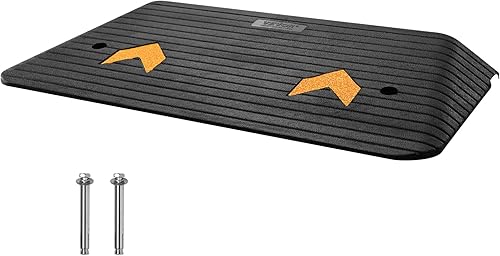
The VEVOR Rubber Threshold Ramp is our top pick among the best rubber threshold ramps for a shower curb around 1.6 in high. Its grooved surface, cuttable 35.4 in width and included tape suit a measured low-to-mid rise on a smooth floor.
For a low sill, the Nuvium 1 in ramp has a shallower profile. A 2 or 3 in ramp may suit a higher curb, but it needs more approach space and must match the mobility device's limits.
A threshold ramp changes the way you enter and leave a wet area. If you also need a seat for bathing, compare our shower chairs for bathtubs.
Choose it only after checking the curb, floor space, door swing and route through the bathroom.
For a broader plan, see our bathroom safety for seniors guide. A ramp addresses the raised edge, while non-slip bath mats, non-slip mats for textured tubs and non-slip mats without suction cups address traction in other parts of the bathing area.
Our picks at a glance
-
1

-
2
-
3

- 4
 Check it
Linkloos 1.5" Rise Rubber Threshold Ramp
Best for mid-height curbs - 5
 Check it
Heonay Threshold Ramps for Doorways Self-Adhesive Rubber
Best for tiny floor lips - 6
 Check it
BESEA 3" Rubber Threshold Ramp for Wheelchairs
Best for wide approaches - 7
 Check it
GANSNAY 2" Rise Threshold Ramp for Doorways
Best for easy repositioning - 8
 Check it
LIEKUMM 3/4" Odorless Threshold Ramp for Doorways
Best for shallow transitions - 9
 Check it
Nuvium 2 Inch Rubber Threshold Ramps
Best for separated wheel paths
Which rubber threshold ramps for showers stand out?
The VEVOR 1.6 in ramp is the strongest all-around choice for a curb close to that height when the floor is smooth enough for its included tape. It balances a useful rise with a footprint that suits many small bathrooms without taking over the entry.
For a lower sill, the Nuvium 1 in ramp offers a shallower profile and a smaller depth. The Heonay strip and the LIEKUMM ramp cover even smaller lips, while the GANSNAY and two-piece Nuvium options address mid-height curbs.
For a taller curb around 3 in, the broad VEVOR and BESEA ramps provide a longer approach. Those models need more clear floor space, so the best pick depends on the measured rise, the room layout and the mobility device in use.
| Product | Best for | Rise | Size | Material | Our score |
|---|---|---|---|---|---|
| VEVOR Rubber Threshold Ramp | smooth tile floors | 1.6 in | 35.4 x 7.9 x 1.6 in | Rubber | 9.7 |
| VEVOR 3" Rise Rubber Threshold Ramp | tall shower curbs | 3 in | 35.5 x 17.7 x 3 in | Rubber | 9.5 |
| Nuvium 1" Rise Rubber Threshold Ramp | low shower sills | 1 in | 35.5 x 5.3 x 1 in | Rubber | 9.4 |
| Linkloos 1.5" Rise Rubber Threshold Ramp | mid-height curbs | 1.5 in | 35.4 x 7.87 x 1.5 in | Rubber | 9.2 |
| Heonay Threshold Ramps for Doorways Self-Adhesive Rubber | tiny floor lips | 0.4 in | 39.4 x 2 x 0.4 in | Rubber | 9.1 |
| BESEA 3" Rubber Threshold Ramp for Wheelchairs | wide approaches | 3 in | 35.5 x 18.1 x 3 in | Rubber | 8.5 |
| GANSNAY 2" Rise Threshold Ramp for Doorways | easy repositioning | 2 in | 31.5 x 8.7 x 2 in | Rubber | 8.4 |
| LIEKUMM 3/4" Odorless Threshold Ramp for Doorways | shallow transitions | 3/4 in | 36 x 4 x 3/4 in | Rubber | 8.0 |
| Nuvium 2 Inch Rubber Threshold Ramps | separated wheel paths | 2 in | 17 x 8.5 in each | TPR rubber | 7.9 |
We compared the listed rise, footprint, surface and placement features with common shower-entry needs. The scores reflect how well each ramp's stated features fit the use described here.
The best threshold ramps for shower curbs
The right ramp matches the measured curb and the available approach area. A high rise needs more room to approach, while a low sill can often use a shallower ramp.
VEVOR Rubber Threshold Ramp: Best for smooth tile floors
- 1.6 in rise
- 35.4 in wide
- Cuttable width
- Grooved surface
- Double-sided tape included
A cuttable width and 1.6 in rise suit a low-to-mid curb when the floor can take double-sided tape. Measure the approach space and check that the door still swings freely.
Pros
- Cuttable width
- Grooved surface
- Double-sided tape included
Cons
- 7.9 in depth needs floor space
- Tape is intended for smooth surfaces
VEVOR's 1.6 in rise suits a curb around that height, and its 35.4 in width can be cut to fit a narrower opening. Its 7.9 in depth offers a compact approach compared with the broad 3 in ramps.
The grooved surface is designed to add traction, and the included double-sided tape is intended for smooth floors. If your floor is textured or absorbent, do not assume the tape will hold, so choose a placement method that suits the surface.
This solid rubber ramp weighs 13.7 lb. Think about whether you will leave it in place or need to move it for cleaning, and verify that it does not interfere with the shower door.
The one-piece design means there is no assembly to manage, which suits a simple doorway change. Check that the trimmed edge stays flat and that the ramp still covers the wheel path after cutting.
Choose it for a curb near 1.6 in and a one-piece ramp that can be trimmed to the doorway width. Skip it if the rise differs substantially or the ramp would block the route.
VEVOR 3" Rise Rubber Threshold Ramp: Best for tall shower curbs
- 3 in rise
- 35.5 in long
- 17.7 in wide
- Beveled edges
- Grooved tread
This broad, 3 in ramp suits a high curb only when the bathroom has room for its footprint. Its beveled edges and grooved tread provide a sloped approach.
Pros
- 3 in rise
- Beveled edges
- Grooved tread
Cons
- Needs a wide floor area
- Weighs 29 lb
This VEVOR model rises 3 in and has beveled edges on all sides with a grooved tread. Its 35.5 x 17.7 in footprint requires more clear floor than a low-profile ramp.
At 29 lb, it is a substantial piece to lift for cleaning or repositioning. Check the doorway, door swing and nearby fixtures before deciding whether it can remain in place without narrowing the route.
The ramp is one piece and needs no assembly tools. Its description includes indoor use, but bathroom fit still depends on drainage, floor stability and whether water reaches the ramp.
The wider approach can suit a wheelchair that needs a broad path, yet the slope still has to match the device limits. Measure the space in front of the curb and confirm a helper can assist if the slope feels steep.
Choose it only for a curb close to 3 in when the room has enough approach space. For broader mobility ramp comparisons, see our mobility scooter ramp guide.
Nuvium 1" Rise Rubber Threshold Ramp: Best for low shower sills
- 1 in rise
- 35.5 in wide
- Cuttable width
- Deep grooves
- Adhesive strips included
Its shallow profile suits a low sill when a deeper ramp would crowd the floor. Adhesive strips are intended for clean, dry, smooth surfaces.
Pros
- Shallow footprint
- Cuttable width
- Grooved surface
Cons
- Only suits a 1 in rise
- Adhesive is intended for smooth surfaces
Nuvium's 1 in rise and 5.3 in depth create one of the shallower profiles in this group. The 35.5 in width can be trimmed, and the deep grooves are designed to increase traction.
Adhesive strips are intended for clean, dry, smooth surfaces. Nuvium also advises checking whether a floor may absorb color, so verify compatibility before placing the ramp.
Flexible rubber may arrive with a slight curve. Nuvium recommends laying it flat or pressing it with a heavy object to help it recover its shape.
The shallow depth helps where a deeper ramp would crowd the floor near a toilet, vanity or shower door. It can suit walkers, carts and small wheels that only need a low transition.
Pick this for a low sill near 1 in, especially where a deeper approach would crowd the floor. Skip it for a higher curb because its rise will not bridge the full height.
Linkloos 1.5" Rise Rubber Threshold Ramp: Best for mid-height curbs
- 1.5 in rise
- 35.4 in wide
- Beveled edges
- Cuttable
- Non-slip surface
The 1.5 in rise sits between the lower and taller choices, with beveled edges and a cuttable width. Plan for its 7.87 in depth and decide how to keep it from shifting.
Pros
- Mid-height rise
- Beveled edges
- Cuttable width
Cons
- No adhesive is described
- Requires 7.87 in of depth
Linkloos pairs a 1.5 in rise with beveled edges and a 35.4 in width that can be cut. Its 7.87 in depth needs room between the curb and any door, toilet or vanity.
The solid rubber construction is described for indoor and outdoor use. No adhesive or other fastener is specified, so plan how to prevent movement on your bathroom floor.
This middle-rise choice is useful when a curb is close to 1.5 in. Do not choose it just because the height seems like a compromise, so measure the threshold and ensure the approach works for the person or device.
The beveled approach can ease the change in height from either side, which helps in a tight entry. Still check that wheels or feet land fully on the ramp and do not catch on its edges.
Choose it when the measured curb and available floor space fit. Skip it if you cannot secure it against shifting or if the doorway is too narrow.
Heonay Threshold Ramps for Doorways Self-Adhesive Rubber: Best for tiny floor lips
- 0.4 in rise
- 39.4 in long
- 2 in wide
- Self-adhesive backing
- Cuttable
This narrow strip addresses a small floor-height change where a wider ramp would take too much room. Its self-adhesive backing and cuttable length suit a limited transition, not a tall shower curb.
Pros
- Low 0.4 in rise
- Narrow 2 in width
- Self-adhesive backing
Cons
- Too low for a taller curb
- Narrow surface may not suit every wheel
Heonay's strip has a 0.4 in rise and 2 in width, so it addresses a small lip rather than a full shower curb. Its self-adhesive backing and cuttable length make it a different kind of threshold transition.
The 39.4 in length can span a doorway, but the narrow surface may not provide a broad wheel path. Check where a person's feet or a device's wheels will land, and avoid leaving a raised edge that catches toes or small wheels.
The strip has grooves and is designed to stick in place. Adhesive on a bathroom floor still depends on surface condition, so ensure the floor is clean and dry and inspect the bond after placement.
This shape suits a slight change between floor levels, such as a tile edge or a low shower lip. It is less suited to a wheelchair that needs continuous support across the full width of the opening.
Consider this only for a low transition where a narrow strip fits the route. Skip it for a curb near 1 in or taller, or for a wheelchair that needs a continuous broad surface.
BESEA 3" Rubber Threshold Ramp for Wheelchairs: Best for wide approaches
- 3 in rise
- 35.5 in long
- 18.1 in wide
- Textured surface
- 28 lb ramp weight
The broad 18.1 in approach suits a 3 in curb when the floor area is clear. Check the height and your mobility device's slope limits before choosing it.
Pros
- Broad 18.1 in width
- Textured surface
- 3 in rise
Cons
- Requires substantial floor space
- Ramp weighs 28 lb
BESEA combines a 3 in rise with an 18.1 in width, creating a broad approach for a high curb. Its 35.5 x 18.1 in footprint can crowd a small bathroom.
The textured rubber surface is designed to improve traction for wheels and footwear. The ramp weighs 28 lb, so moving it for cleaning may take effort, and weight alone does not confirm it will stay stable on a wet or sloped floor.
BESEA advises measuring the entrance and checking the mobility device's slope limits. These checks matter especially for a wheelchair crossing a tall curb.
The broad width can help a wider device stay centred on the ramp, but the approach still needs a clear run before the curb. Confirm the shower door, changing area and turning space remain usable after placement.
Choose this ramp if the curb is close to 3 in and the floor can accommodate its width. Skip it for a low sill or a cramped entrance.
GANSNAY 2" Rise Threshold Ramp for Doorways: Best for easy repositioning
- 2 in rise
- 31.5 x 8.7 in footprint
- Grooved surface
- Cuttable
- 4.4 lb
At 4.4 lb, this 2 in ramp is easier to lift than the broad 3 in options. Its grooves and cuttable design may suit a mid-height curb, but verify how it stays put on your floor.
Pros
- Lighter 4.4 lb weight
- 2 in rise
- Cuttable
Cons
- No adhesive or fastener is described
- 31.5 in length may not span every opening
GANSNAY's 2 in rise offers a middle option for curbs above 1.5 in. It weighs 4.4 lb and measures 31.5 x 8.7 in, so it is lighter to reposition than the broad 3 in choices.
The grooves are designed to improve traction, and the ramp can be cut with a saw. No tape or fastener is described, so check its stability on the floor before relying on it.
Its portability can help if the ramp needs to be moved, but a light ramp still needs to stay put during use. Confirm the approach fits the doorway and that water does not pool around it.
The shorter length can suit a narrower opening, yet it may not span a wide doorway. Measure the opening and the wheel path before trimming, because a cut edge should stay clear of the main route.
Pick this for a 2 in curb when easy repositioning matters. Skip it if the shorter length will not span the opening or if you need a fixed setup without a way to secure it.
LIEKUMM 3/4" Odorless Threshold Ramp for Doorways: Best for shallow transitions
- 3/4 in rise
- 36 in wide
- 4 in deep
- Cable groove
- Double-sided tape included
A 3/4 in rise and 4 in depth suit a small height change where space is tight. The cable groove may collect water near a shower, so consider its placement carefully.
Pros
- Shallow footprint
- Double-sided tape included
- Cuttable width
Cons
- Too low for a tall curb
- Cable groove may collect water
LIEKUMM's 3/4 in rise and 4 in depth suit a small height change where a deeper ramp would take up too much room. It is 36 in wide, can be trimmed and includes double-sided tape.
A cable groove runs underneath. It may be useful at a doorway, but near a shower it could collect water, so think through drainage and cleaning before placing it where splashes reach.
The surface has anti-slip grooves, and the ramp is described for indoor and outdoor use. Its shallow rise limits it to a low sill rather than a tall curb.
The tape is intended for smooth surfaces, so test the bond on your floor type before relying on it. A low ramp can also help a robot vacuum or cart cross a small lip, but check the device limits first.
Choose it for a transition around 3/4 in where the cable groove will not be exposed to standing water. Skip it for a higher curb or a wet area where water could collect underneath.
Nuvium 2 Inch Rubber Threshold Ramps: Best for separated wheel paths
- 2 in rise
- Two-piece set
- 8.5 in wide each
- Silicone grip pads
- Waterproof TPR rubber
The two pieces can sit side by side or separately under wheels, with grip pads intended to reduce movement on smooth floors. The setup needs careful alignment at the shower entrance.
Pros
- Two-piece layout
- Grip pads
- Waterproof TPR rubber
Cons
- Each piece is 17 in long
- Placement needs to match wheel spacing
This Nuvium set has a 2 in rise and comes as two pieces that can sit side by side or separately under wheels. Each piece is 17 x 8.5 in, with silicone grip pads intended to reduce movement on smooth floors.
The modular layout may work where a single broad ramp is awkward, but the pieces must align with the wheels and leave no exposed gap in the route. Check the spacing with the actual wheelchair or walker.
The TPR rubber is described as waterproof and intended for bathroom entry. Check that water drains away and that the pieces remain in position on your floor.
Separate pieces can match wheel spacing in a narrow entry, yet they add more edges to manage. Mark the placement before use so the pieces return to the same spots after cleaning.
Choose it for a 2 in rise when separate wheel paths suit the device and doorway. Skip it if you need a single continuous surface or cannot keep the pieces aligned.
How should you measure a shower threshold ramp?
Measure the curb's vertical height first, because the ramp rise should match the actual change you need to cross. Use a tape measure or ruler at the centre and at both ends of the doorway, since a curb can vary along its length.
Then check the clear depth in front of the curb, from the edge of the ramp to the nearest door, toilet, vanity or wall. A ramp that fits the height can still fail if its footprint blocks the door swing or leaves no room for feet or wheels.
Check the clear width as well, and note where a person will approach, turn and step or roll through. For a wheelchair, walker or scooter, the usable width matters more than the ramp's total width, especially after any trimming.
Measure at more than one point if the curb or floor is not level. If the height varies, a ramp that rocks or leaves a gap can create another obstacle.
Look for sloping floors, uneven tiles and low spots where water gathers, because those details affect stability and drainage. A ramp placed over a dip may shift, and a ramp placed in water may behave differently from the same ramp on a dry floor.
For wheelchair access, compare the rise and approach length with the chair maker's slope guidance. A short ramp may look manageable in a photo yet be too steep for a particular chair or user.
Consider who will use the ramp, including their strength, balance and ability to line up with the approach. A setup that works for a walker may be too steep or too narrow for a power chair, so test the route with the actual device where safe to do so.
Also check the shower door or curtain, the handle height and the space needed to close the door after entry. A ramp that helps at the curb can still make the wider route awkward if it pushes the user into a tight turn.
For larger access needs beyond a shower curb, our guide to mobility scooter ramp costs explains factors that affect ramp choice and budget.
What should you check before using a ramp in a wet bathroom?
Confirm the ramp stays in place, water can drain, and the surface works for the user's feet or wheels. Keep the approach clear of bath mats, cords and items that could catch a foot or wheel.
Adhesive needs a clean, dry surface and may not suit textured flooring. Follow the ramp's care instructions, and don't rely on tape that is lifting or exposed to standing water.
After positioning the ramp, check both ends for gaps, rocking and raised lips. Open and close the shower door, then check that the route remains wide enough for the user and any mobility aid.
A threshold ramp addresses the curb, while a mat can address traction elsewhere in the bathing area. For a different shower setup consideration, see our handheld vs fixed shower head comparison.
How do you set up and care for a shower threshold ramp?
Set up the ramp on a clean, dry, level floor, with its high edge meeting the curb and its low edge lying flat. Follow the included instructions for adhesive or grip pads, and let the surface dry before relying on the setup.
Clean the floor first to remove soap film, dust and moisture, because residue can weaken the bond of tape or pads. Press the ramp down evenly, then check each edge for lifting, rocking or a gap against the curb.
If the ramp arrives curved, place it flat and let it settle before use. Flexible rubber can hold a bend from packaging, so give it time to recover its shape on a level surface.
For a cuttable model, measure twice and trim only the width or length the product is designed to allow. Keep the cut edge clear of the door and route, and check that the remaining piece still covers the wheel or foot path.
Rinse or wipe the ramp as appropriate for its material, then let it dry and check its underside, grooves and attachment points. Grooves can hold grit and soap residue, so clear them with water or a cloth as directed.
Moveable pieces should be repositioned carefully after cleaning so they return to the same aligned path. A small shift after cleaning can change wheel spacing or leave a raised edge at the joint.
Check the setup after the first few uses, because adhesive, grip pads and rubber can settle as the floor and ramp adjust. Repress tape, clean the contact area again or reposition the ramp if it begins to move.
Store a portable ramp flat and dry when it is not in use, rather than rolled or leaning against a wall for long periods. That habit helps the shape recover faster and keeps the surface clean for the next use.
Inspect the ramp for cracks, worn grooves, lifting tape or a warped edge before each season of use. Replace or reposition it if the surface no longer lies flat, because a warped ramp can catch a wheel or a foot.
What mistakes should you avoid when buying a shower ramp?
The most common mistake is choosing by rise alone. A ramp also needs enough width, approach depth and stable placement, and it must work with the door and mobility device.
Many buyers measure the curb but not the floor in front of it, so a deep ramp can crowd the entry. Mark the full footprint on the floor before buying, and check the door swing with the ramp in place.
Avoid assuming that every rubber ramp can stay safely in a wet shower area. Consider drainage, floor finish, adhesive suitability, water exposure and whether the surface is slippery when wet.
Another mistake is trusting tape on a textured, porous or damp floor. Adhesive needs a clean, dry and smooth contact surface, so test the bond and inspect it after the first use.
Do not assume a high load capacity means a ramp is suitable for every wheelchair or user. The device's slope limits, wheel spacing and the user's ability to manage the approach still matter.
Also avoid leaving gaps between a ramp and curb, placing a mat where it can bunch against the ramp, or trimming a piece in a way that makes its edge unstable. Recheck the setup after moving or cleaning it.
Finally, do not ignore the rest of the route, including handles, turning space and the shower door. A ramp solves one edge, but it should not create a tight turn or block the exit path.
Which shower threshold ramp should you choose?
Choose the VEVOR 1.6 in ramp for a curb near that height and a smooth floor that can take its tape. Pick the Nuvium 1 in for a low sill, the Linkloos 1.5 in for a measured mid-height curb, or the two-piece Nuvium set when separate wheel paths suit a 2 in entrance.
For a curb near 3 in, choose one of the broad VEVOR or BESEA ramps only if the bathroom has room for its footprint and the mobility device can manage the slope. Choose the GANSNAY 2 in ramp when lower weight matters, or the Heonay strip only for a very small lip.
The best rubber threshold ramp for a shower is the one that matches the measured rise, fits the approach and stays stable on the actual floor. If those checks are uncertain, ask an occupational therapist or accessibility professional to assess the setup.
Our top 3 picks at a glance
-
1
-
2
-
3
Frequently asked questions
How do I choose a rubber threshold ramp for a shower?
Measure the curb's vertical rise and the clear floor area in front of it. Choose a ramp with a matching rise, enough width for the user or device, and a surface and attachment method suited to your bathroom floor.
For a wheelchair or walker, check the device maker's slope limits and get help assessing the approach if needed.
Can you use a rubber threshold ramp in a shower?
Some rubber ramps are described for bathroom or shower entry, but fit depends on the curb, floor and ramp design. Check whether water can drain, whether the ramp stays in place on the floor, and whether it blocks the door or creates a new trip edge.
Keep the path clear and follow the ramp maker's care instructions.
What ramp rise do I need for a shower curb?
Measure the curb where the ramp will sit, then compare that height with the ramp's stated rise. A ramp that is too low can leave an abrupt edge, while one that is too high may interfere with the door or nearby floor.
Also check the ramp's length and slope against your mobility device.
Are rubber shower threshold ramps safe for wheelchairs?
A rubber ramp may help a wheelchair cross a suitable threshold, but safety depends on the rise, approach length, width, surface grip and how firmly it stays in place. Check the wheelchair's slope limits and assess the setup with assistance before relying on it.
Ask an occupational therapist or accessibility professional if the fit is uncertain.


