Bathroom Safety for Seniors: Complete Guide
Bathroom safety for seniors starts with a clear route and equipment suited to the person and the room. Check the floor, toilet, tub or shower, then choose aids for the movement that needs support.
On this page (9 sections)
- Where should you start with bathroom safety for seniors?
- How can you make the bathroom floor and route easier to use?
- What kind of grab bar may help?
- How can you make bathing easier?
- What can make toilet transfers easier?
- How do you choose equipment that fits?
- How should you set up and care for bathroom safety equipment?
- What common mistakes make bathroom aids less useful?
- How do you decide what to change first?
Bathroom safety for seniors starts with a clear route and steady support where the person sits, stands or steps. Check the whole room, then match each change to a specific task, such as getting on the toilet or entering the shower.
A slip can happen in a small moment, during a reach, a turn or a step the person has done many times before. A steady routine matters more than adding many items at once.
A single device can't address every risk. The right setup depends on the person's balance, reach, strength, bathroom layout and ability to use the equipment safely.
Some people need help mainly at the toilet, while others struggle most when stepping into a tub or standing in a shower. That difference shapes which changes come first.
Think about who the setup is for, including height, seated position, dominant hand and how much help a caregiver can give. A change that suits one person may narrow the space or slow another person down.
It also helps to note the time of day when tasks feel hardest, since fatigue, pain or poor lighting can change balance and grip. A setup that works when rested should also work on a tired evening.
This guide explains what to check, how to choose equipment and which setup may fit common needs. For more bathing-specific advice, see our shower safety for seniors guide.
Where should you start with bathroom safety for seniors?
Start by watching how the person moves through the bathroom during everyday tasks. Look for places where they reach for an unstable object, step over a high edge, twist or have trouble sitting down or standing up.
You don't need to change everything at once. Begin with the movement that feels most difficult or least steady, and check whether a room adjustment or aid could help.
Walk through this checklist:
- Is the path to the bathroom clear and easy to see?
- Can the person reach the lights before entering?
- Is anything loose or easy to trip over on the floor?
- Where do they hold on when they sit, stand or step into the tub?
- Can they reach the controls and supplies without leaning?
- Can a helper get close enough to assist if needed?
- Is there enough room for a chair, walker or other aid?
Notice what the person does instead of relying only on what they say. Someone might hold a towel bar or sink for balance because it's nearby, even though it isn't meant to support their weight.
Ask what feels hard or uncomfortable, and include the person in decisions. A change that makes a transfer easier for one person may get in another person's way.
How can you make the bathroom floor and route easier to use?
A clear, well-lit route helps reduce obstacles around the bathroom. Remove loose items from the walking path and keep everyday supplies within easy reach.
Check the route from the bedroom or hallway, not just the space beside the shower. Laundry baskets, cords and small storage items can get in the way, especially when someone walks slowly or uses a mobility aid.
Small items near the floor often cause the most trouble because they are easy to miss. A basket, pet bowl or loose rug can shift underfoot and break a person's rhythm mid step.
Keep towels, clothing and bath supplies where the person can reach them without stretching or bending far. If they need to step away from a chair or support to retrieve an item, change where it's stored.
A shelf or hook at a comfortable height can make daily use simpler than a high cabinet or low drawer. The goal is to keep the person close to a stable support while they reach for what they need.
A bath mat can help manage water, but it should lie flat and stay in place. Compare options in our best non slip bath mats guide, and check that a mat doesn't create a raised edge on the walking path.
Wet floors outside the tub or shower are worth checking too, since drips often land where a person turns or dries off. Drying that spot and keeping a towel where it can be reached quickly can lower the chance of a slick patch.
Lighting matters throughout the route. Use light that makes the floor and doorway easy to see, and check that switches are reachable before someone steps into the bathroom.
Night lighting can help when a person gets up in the dark and does not want to use the main light. A low light along the hallway or near the bathroom door can show the path without making the room bright.
If the layout leaves little room to turn or position a mobility aid, reconsider where items are stored before adding equipment. A device only helps when the person can reach, position and use it safely.
Cords, stools and storage that crowd a small bathroom may need to move to another room. Freeing floor space can make a chair, walker or transfer easier to place and remove.
Check door swing, drawer reach and the space beside the toilet as well. A change that opens one path may block another if the room is tight.
Simple order can make care easier for everyone who uses the room. When supplies have a clear home, the person is less likely to lean, twist or step away from support.
What kind of grab bar may help?
A grab bar may provide a handhold near a tub, shower or toilet when it's securely installed for that location. Choose its position based on the movement the person needs to make, not just on an open patch of wall.
The Moen 8912 Home Care grab bar is 12 in long, made of stainless steel and has a 1.5 in diameter grip surface. Concealed mounting screws give it a finished appearance, and the bar is designed for use near tubs, showers, toilets and other places where additional support is desired.
Before choosing a bar, consider the person's reach, preferred hand and the direction they move during a transfer. A bar that's too far away may encourage an awkward reach.
Watch the actual movement first, such as sitting on the toilet edge, pushing up from a seat or stepping over a tub wall. The handhold should sit where the hand naturally falls during that motion.
Height and angle matter as much as length, since a bar placed too high can pull the shoulder upward and a bar placed too low can force a deep bend. A trial with the person present, without weight on the bar, can show whether the position feels reachable.
A grab bar may provide a handhold near a tub, shower or toilet when it is securely installed for that location. Choose its position based on the movement the person needs to make, not just on an open patch of wall.
For someone with limited grip strength, the shape and surface of the bar can affect comfort during a short hold. A wider grip may feel easier to hold, while a bar that is too thick may be hard to wrap fingers around.
Review our best grab bars for bathrooms guide to compare options and placements. For the installation process, see how to install grab bars in a bathroom.
Some grab bars use suction cups instead of mounting screws. Our best suction cup grab bars guide covers that style.
Suction style bars depend on a smooth surface and a good seal, so they can move if tiles, grout or moisture are not suitable. A fixed bar that is mounted as directed is meant to give a steadier handhold for a transfer.
Set up and care also affect daily use, since a bar needs to stay clean, dry and free from loose covers or screws. Check the mounting and the surrounding wall or surface at regular intervals, especially after cleaning or a change in the room.
Follow the installation and use instructions for the bar you choose. Check the attachment as directed before relying on it for support.
A caregiver may need to reach the same bar from the other side, so its position should not crowd the helper. If the bar blocks a shower door, seat or transfer path, move the plan before drilling or mounting anything.
When the person cannot reach the bar without twisting, a different aid or position may fit better. A clinician or occupational therapist can suggest a placement that matches the person's movement.
How can you make bathing easier?
A bathing setup should match the person's ability to stand, sit and cross a tub edge. If standing is difficult, consider whether a seat or transfer aid fits the person and the available space.
A shower chair lets someone sit while bathing. A stool, a chair with a back, a wheeled chair and a bench each suit a different layout or transfer need.
The DMI Rolling Shower Chair can move in and out of the shower and over a standard-size toilet. It has a waterproof seat and backrest, armrests and rear wheel locks, with a 250 lb weight capacity.
This chair may suit someone who needs one seat for toileting and bathing, or who has difficulty transferring between separate devices. Skip it if the bathroom can't accommodate a wheeled chair, the user can't transfer onto it safely, or the rear locks and chair position can't be managed as intended.
For a fixed shower area, compare types of shower chairs and our best shower chairs for seniors guide. If moving the chair between locations is part of the plan, see best shower chairs on wheels.
A shower bench or stool may suit someone who can transfer to a seat but wants to sit while washing. Compare best shower benches for seniors with best shower stools for seniors based on the person's need for a backrest, arms and room to maneuver.
For a tub with a high side, a transfer bench places part of the seat outside the tub so the person can sit before moving across. The DMI Tub Transfer Bench and Shower Chair has a removable cutout, safety belt and adjustable seat height from 19 to 23.5 in.
This style may suit a person who can sit and move across the bench with assistance, especially when stepping over the tub wall is difficult. Skip it if the bathroom is too narrow for its 39 in width, its feet cannot sit securely, or the transfer requires more support than the person and helper can provide.
Measure the tub and surrounding floor before choosing a bench. Our best tub transfer benches for seniors guide compares options for this kind of transfer.
A bath lift may be another option when lowering into and rising from a tub is difficult. Review bath lift costs as you compare options.
Compare best bath lifts for elderly users, and ask a clinician or occupational therapist whether the setup suits the person.
A handheld shower head can make it easier to direct water while seated. See best handheld shower heads for seniors for options to consider with a shower chair or bench.
What can make toilet transfers easier?
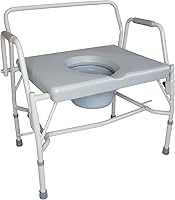
Toilet aids may help when sitting down or standing up is difficult. For a wider seat or higher capacity, compare bariatric bedside commodes.
First identify whether the user needs more seat height, a handhold or a different toileting setup.
A raised toilet seat changes the height of the sitting surface. The right height depends on the toilet, the person's legs and their ability to stand afterward.
See best raised toilet seats for seniors and compare raised toilet seat sizes and heights before choosing. Make sure the seat attaches as intended and leaves enough room for the person's usual transfer.
A toilet safety rail can give the user a place to hold when sitting or standing. For a closer look at a freestanding toilet support, read Pelegon toilet safety rail.
The Medline Toilet Handle Safety Rail has an aluminum frame, adjustable arm height and width, and folds for storage.
The rail's maximum weight recommendation is 300 lb.
The rail may suit someone who needs a handhold at the toilet and can grip and use its arms. Skip it if the frame doesn't fit securely with the toilet, blocks the user's approach, or the person needs support that the rail's arrangement can't provide.
Review best toilet safety rails and frames for seniors to compare styles. Check whether the rail fits the toilet and allows the user to get into position without twisting.
A bedside commode may be useful when reaching the bathroom is difficult, though it requires a suitable place and a plan for emptying and cleaning it. Our guides to best bedside commodes for elderly users and types of commode chairs explain the main options.
How do you choose equipment that fits?
Choose equipment by measuring the bathroom and matching the device to the user's movement. Check the dimensions, installation needs and support points before buying.
Measure doorways and the route into the bathroom, then measure the space where the device will sit. For a chair or bench, check its footprint and whether the user can turn, transfer and reach the shower controls.
Consider these questions:
- Can the user sit down and stand up from the seat height?
- Can they reach the support without leaning too far?
- Does the device fit without blocking the doorway or toilet?
- Does it need permanent installation, or can it stand on the floor?
- Can the person use the controls and move the device as intended?
- Will a helper have room to assist?
- Can the equipment be cleaned and stored in the way the household needs?
Think about the person's ability to use the aid on an ordinary day, not only when they feel rested. A setup that requires strong gripping, turning or lifting may not work if those movements are already difficult.
A device's weight capacity is one check, not a complete fit assessment. The person also needs to be able to use its seat, handles, locks and other features as intended.
Read the instructions before setup and follow the installation requirements. If the transfer is uncertain or the person's needs are changing, ask a clinician or occupational therapist to assess the bathroom with the user.
How should you set up and care for bathroom safety equipment?
Set up each aid on the surface and in the position its instructions require. A correct fit and a clear transfer path matter as much as the equipment choice.
For a floor-standing chair or bench, follow the assembly steps and adjust the legs as directed. Confirm that each foot rests on the intended surface and that the seat is level before someone uses it.
For a wheeled chair, learn how to position it and use the wheel locks before a transfer. Keep the route from the toilet to the shower clear, and don't move the chair with someone seated unless its instructions allow that use.
For a toilet rail, check that its frame is fitted to the toilet as intended and that the handles are at a usable height and width. For a wall-mounted grab bar, use the specified mounting method and location.
Clean seats, frames and grips according to their care instructions. Dry areas that remain wet, and check for loose parts, movement, cracks or wear during regular cleaning.
Stop using equipment that no longer feels stable until it has been checked.
Practice a new transfer with help if needed. Don't rush the person, and don't ask them to use equipment in a way that isn't covered by its instructions.
What common mistakes make bathroom aids less useful?
The most common mistake is choosing equipment before identifying the movement it needs to support. A chair, rail or bench is only useful if it fits the person, the bathroom and the transfer.
Avoid these errors:
- Buying a bench before measuring the tub and floor space.
- Placing a grab bar where it looks convenient instead of where the user can reach it during the transfer.
- Assuming any towel bar or sink can support body weight.
- Leaving bath supplies out of reach, so the person has to lean or stand.
- Blocking a doorway or turning space with a chair or storage item.
- Skipping assembly or installation instructions.
- Using wheel locks or other features without learning how they work.
- Ignoring changes in mobility that make an old setup harder to use.
Another common mistake is judging fit by strength alone, without checking whether the person can actually use the seat, handles or locks. A device may hold weight well yet still be too high, too wide or too hard to grip for daily use.
Rushing the setup can also create problems, since a chair placed at a slight angle or a bench with uneven legs may feel steady at first glance. Taking time to level, lock and test each part can prevent a surprise during a real transfer.
Changes in health can make a once suitable setup less safe, even if the equipment itself looks fine. Weaker grip, new pain or slower standing may mean the height, position or amount of help needs to change.
Care habits matter too, because water, soap and frequent cleaning can loosen parts or leave surfaces slick if they are not dried. A quick check during cleaning can catch movement, cracks or missing pieces before the next use.
An aid may also be unsuitable even when it fits physically. If the person cannot grasp the handles, move onto the seat or follow the transfer steps, ask a clinician or occupational therapist to help find a safer arrangement.
It helps to involve the person in the choice, since comfort and confidence affect whether a setup gets used as intended. A device that feels awkward may be avoided, leaving the original risk in place.
Family members may also assume that more equipment always means more safety, even when items crowd the room. Too many aids can block turning space, slow a transfer or make it harder for a helper to stand close.
Keeping the plan simple can make each step easier to learn and repeat. Fewer, well placed aids may work better than a crowded bathroom with several items competing for space.
How do you decide what to change first?
Start with the movement that feels least steady, then select equipment for that task. Choose a grab bar for a needed handhold, a chair for bathing while seated, a transfer bench for crossing a tub edge, or a toilet aid for sitting and standing.
If the person can walk to the bathroom but struggles to stand in the shower, begin by assessing a seat and the room around it. Check whether the person can transfer onto the seat, reach the controls and stay seated long enough to wash safely.
Seat height, back support and arm support can change how comfortable a shower feels. A seat that is too high may make standing up harder, while a seat that is too low may make rising more tiring.
If the main challenge is sitting down or standing up at the toilet, compare a raised seat with a toilet rail and choose based on what movement needs support. One option changes seat height, while the other gives the hands a place to push or pull.
Consider how the person approaches the toilet, since feet position and knee bend can affect whether a higher seat helps. A rail may also need room on one or both sides, and that space should not crowd a caregiver.
If crossing the tub wall is difficult, measure for a transfer bench before deciding. The bench needs enough room inside and outside the tub, plus level places for its feet on both sides.
A transfer bench can suit someone who can sit and slide across with help, but it may not work if the bathroom is narrow. Its width, seat height and the height of the tub wall all shape whether the movement is manageable.
If getting to the bathroom is the larger problem, consider a commode and its daily cleaning needs. Placement, privacy, emptying and cleaning should be planned before the commode arrives, not after.
Measure before buying, and check that the user can reach and operate the equipment safely. For bathroom safety for seniors, the best choice is the simplest setup that fits the room and supports the specific task; continue with our shower safety for seniors guide for bathing-area details.
Once one change is in place, watch how the person uses it during real daily tasks. A small change in reach, height or timing may make the same aid work much better.
Pause and reassess if the person still grabs furniture, hesitates at the same step or needs more help than expected. That sign often means the task, not just the equipment, needs a different plan.
A clinician or occupational therapist can help when transfers are complex or needs are changing quickly. Their view of the person and the room can prevent a purchase that fits badly.
Frequently asked questions
What is the most useful first step for bathroom safety?
Check the route to the bathroom, then look at the toilet, tub or shower, floor and lighting. Clear obstacles and note where the person needs support to sit, stand or cross a tub edge.
Choose equipment for that task and measure the space before buying.
Are grab bars safer than suction cup grab bars?
A grab bar secured to suitable backing is intended to provide a fixed handhold. Suction cup bars attach to a smooth surface and can shift if the surface or seal is unsuitable.
Follow the maker's instructions and don't rely on one as a fixed support during a transfer.
Should an older adult use a shower chair?
A shower chair may help someone who has trouble standing through a shower. Choose a seat that fits the shower area and the person's needs, and make sure its legs sit steadily.
A clinician or occupational therapist can help assess whether a chair or another bathing setup is appropriate.
How do I choose a raised toilet seat?
Measure the toilet and consider how much extra height the user needs to sit and stand comfortably. Check how the seat attaches and whether it leaves enough room for safe transfers.
A toilet safety rail or frame may be another option if it fits the toilet and the user's grip and movement.
Can a bath transfer bench fit any tub?
No. A transfer bench spans the tub wall, so measure the tub, shower area and nearby floor space before choosing one.
Check the bench's overall width and height range, and make sure its feet can rest securely.
A care professional can help assess a transfer that needs assistance.