9 Best Wheelchairs for Tall People (November 2026)
The best wheelchairs for tall people include the Drive Medical Blue Streak Lightweight Wheelchair for self-propelling, the Drive Medical Folding Transport Wheelchair for compact travel, and the Medline Lightweight Foldable Transport Wheelchair with Handbrakes for a wider seat.
On this page (5 sections)
The best wheelchair for a tall person depends on seat depth and leg support, not height alone. A tall user can be measured in several ways, and the right chair is the one that supports the thighs, back and lower legs at the same time.
The VOCIC ultra-lightweight chair has a 17 in deep seat, while several other models have 16 in seat depths. That 1 in difference sounds small, yet it can change how much of the thigh rests on the seat during a longer sit.
Tall users often need more thigh support, a higher back and enough leg rest reach to position the feet comfortably. If the seat is too short, pressure can build near the knees and the user may slide forward to find support.
Compare seated measurements with chair dimensions before choosing, and use our wheelchair size chart to understand seat fit. Measure hip width, thigh length and lower leg length while the person is seated in the position they will use most.
A wider seat does not necessarily mean a deeper seat. Width helps with hip room and clothing, while depth helps with thigh support, so both numbers need a separate check.
Someone shopping for a wheelchair for tall men or a lightweight wheelchair for a tall man should check depth and footrest adjustment as carefully as weight and folding size. A chair that lifts easily is less useful if the feet cannot rest flat or the back leaves the shoulders unsupported.
Start with the body, then look at the chair. That order keeps the decision practical and helps you rule out models whose stated dimensions do not match the user.
Our picks at a glance
-
1
 Best for self-propelling
Drive Medical Blue Streak Lightweight Wheelchair
9.7/10 our score
See it on Amazon -
2
 Best for compact travel
Drive Medical Folding Transport Wheelchair
9.7/10 our score
See it on Amazon -
3
 Best for a wider seat
Medline Lightweight Foldable Transport Wheelchair with Handbrakes
9.6/10 our score
See it on Amazon
- 4
 Check it
Medline Comfortable Folding Wheelchair
Best for elevating leg rests - 5
 Check it
Vive Mobility Reclining Wheelchair with Elevating Leg
Best for reclining support - 6
 Check it
WHLICKS Wheelchairs for Adults Ergonomic Transport Chair
Best for adjustable footrest height - 7
 Check it
VOCIC Ultra Lightweight Foldable Wheelchairs for Adults
Best for a deeper seat - 8
 Check it
Invacare Transport Wheelchair for Adults
Best for a 19 in transport seat - 9
 Check it
VOCIC U12 Lightweight Transport Wheelchair for Adults
Best for caregiver push control
Which wheelchair for a tall person fits different needs?
The best wheelchair for a tall person is the one whose seat depth, back support and footrest reach match the user. Height alone gives little useful detail, because two people of the same height can have different thigh length, hip width and lower leg length.
These picks include wider seats, a deeper stated seat, adjustable footrests and travel-focused designs. Each option suits a different routine, from self-propelling at home to caregiver-pushed trips and reclining for rest.
We compared the published dimensions and features against fit concerns tall users may have. That means checking whether a wider seat also has enough depth, and whether adjustable footrests can help without fixing a short seat.
Our score weighs specs and features against what you are shopping for. A chair with a useful stated depth may rank highly for tall users, while a lighter chair with missing depth information needs more checking before it can be recommended with confidence.
Use the comparison as a shortlist, then measure the person. The final choice should come from matching numbers, not from a single feature or a low weight on its own.
| Product | Best for | Seat depth | Seat height | Capacity | Our score |
|---|---|---|---|---|---|
| Drive Medical Blue Streak Lightweight Wheelchair | self-propelling | 16 in | 18 in | 300 lb | 9.7 |
| Drive Medical Folding Transport Wheelchair | compact travel | 9.7 | |||
| Medline Lightweight Foldable Transport Wheelchair with Handbrakes | a wider seat | 9.6 | |||
| Medline Comfortable Folding Wheelchair | elevating leg rests | 9.6 | |||
| Vive Mobility Reclining Wheelchair with Elevating Leg | reclining support | 9.3 | |||
| WHLICKS Wheelchairs for Adults Ergonomic Transport Chair | adjustable footrest height | 9.0 | |||
| VOCIC Ultra Lightweight Foldable Wheelchairs for Adults | a deeper seat | 300 lb | 8.9 | ||
| Invacare Transport Wheelchair for Adults | a 19 in transport seat | 8.7 | |||
| VOCIC U12 Lightweight Transport Wheelchair for Adults | caregiver push control | 300 lb | 8.4 |
The best wheelchairs for tall people
The strongest options here offer a measurable fit detail that helps answer a tall user's needs. Seat width, seat depth and footrest adjustment are clearer starting points than general claims about comfort.
Check every dimension against the person who will use the chair, since a fit that works for one tall adult may not work for another. Clothing, posture, transfer method and sitting time can all change what feels right.
Look for stated numbers where you can, and note where a key measurement is missing. A missing seat depth does not make a chair wrong, but it does mean you should ask for that detail before buying.
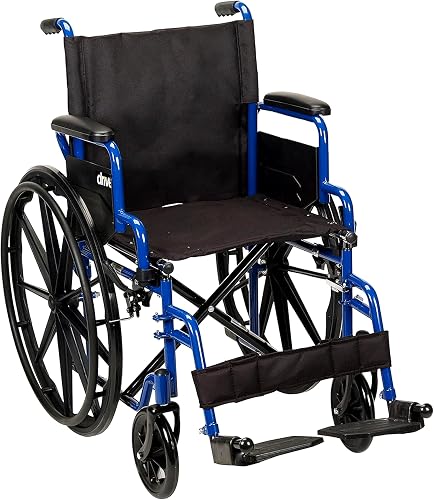
Drive Medical Blue Streak Lightweight Wheelchair: Best for self-propelling
- 18 in seat
- 16 in seat depth
- Swing-away footrests
- Push-to-lock brakes
The Blue Streak has an 18 in seat, 16 in depth and swing-away footrests. Those dimensions give you concrete points to compare with a taller user's body measurements.
Pros
- Self-propelled design
- Swing-away footrests
- Flip-back desk arms
Cons
- Seat depth is 16 in
- Chair weighs 41.3 lb
The Blue Streak is a self-propelled chair with an 18 in seat and 16 in seat depth. That combination gives you two clear numbers to compare, one for hip width and one for thigh support.
Swing-away footrests and flip-back desk arms give the user more flexibility during transfers and when sitting at a table. For a tall user, that matters because footrests that stay in the way can make each transfer harder and less steady.
Its steel frame weighs 41.3 lb, and its maximum weight recommendation is 300 lb. The weight is heavier than the transport chairs in this guide, so think about whether the user will move it alone or whether a caregiver will help with lifting.
The 18 in seat height is another number to compare with the user's leg length and preferred transfer height. A seat that is too high can leave the feet unsupported, while a seat that is too low can make standing harder.
The 16 in depth may suit some tall adults but cannot be assumed to fit everyone. Measure the user while seated and check whether the back provides enough support before choosing this chair.
Choose it if self-propelling is important, and compare its depth with the 17 in options before deciding. The wheelchair and power chair buying guide covers more factors for choosing a wheelchair for seniors.
Drive Medical Folding Transport Wheelchair: Best for compact travel
- 17 in padded nylon seat
- Swing-away footrests
- Fold-flat backrest
- 26 lb
This transport chair folds flat and weighs 26 lb, which can help when loading a chair into a vehicle. Its 17 in seat is narrower than the wider options, so confirm the fit first.
Pros
- Folds flat
- Swing-away footrests
- Padded armrests
Cons
- 17 in seat may feel narrow
- Transport chair needs a caregiver to push
The Drive Medical folding transport chair weighs 26 lb and has a 17 in padded nylon seat. The padded seat is a simple comfort feature, but the stated measurement is width, not depth.
Its fold-flat backrest and swing-away footrests make it convenient for trips, but the seat width is more limited than the 19 in choices. That narrower width may suit a slimmer user, yet it leaves less room for taller or broader hips.
This is a caregiver-pushed transport chair, so consider how it will be used during outings. The person in the seat does not propel it, which changes the fit priorities toward back support, foot position and how the chair handles in vehicles and doorways.
The padded armrests and seat offer a simple setup, while the steel frame provides the chair structure. Set up should stay straightforward, with the footrests swung away for transfers and locked back in place for travel.
The available seat measurement is width rather than depth. Tall users should confirm seat depth, back height and footrest reach before buying, especially if the chair will be used for extended sitting.
Choose it for folding travel use when the fit checks out. For a broader selection of transport chairs and a tall user's leg needs, compare it with the two VOCIC options below.
Medline Lightweight Foldable Transport Wheelchair with Handbrakes: Best for a wider seat
- 19 in wide x 16 in deep seat
- Swing-away detachable footrests
- 12 in rear wheels
- Hand brakes and rear-wheel locking brakes
The 19 in seat width gives more room than a standard 17 in transport chair, while its 16 in depth is a useful measurement to compare with your seated length. Detachable footrests make transfers easier.
Pros
- 19 in seat width
- Hand brakes and rear locking brakes
- Folds for transport
Cons
- Seat depth is 16 in, so compare it with your own measurement
- Transport chair design requires a caregiver to push
The Medline transport wheelchair stands out for its 19 in wide seat. That extra width is useful for a tall user who needs more room across the hips than a standard 17 in transport seat allows.
Its 16 in depth gives a clear starting point for comparing thigh support, and the detachable swing-away footrests can make transfers less obstructed. Removing the footrests clears the front of the chair, which can help when getting close to a bed, car seat or toilet.
It weighs 26 lb and folds for storage in a car trunk. That makes it practical for appointments and short trips, provided the person who lifts it can manage the folded chair safely.
Hand brakes and rear-wheel manual locking brakes provide braking controls for the caregiver. They help hold the chair still during transfers, which is an important detail for a taller user who may need extra time to settle into the seat.
The 12 in rear wheels are designed to maneuver around tight corners, doorways and ramps. That feature helps with movement, but it does not change whether the seat depth is long enough.
Choose it if seat width and folding transport matter, and verify the 16 in depth against the user's measurements. For a narrower user who prioritizes a lighter frame, compare our best small lightweight wheelchair guide.
Medline Comfortable Folding Wheelchair: Best for elevating leg rests
- 20 in wide x 16 in deep seat
- Elevating leg rests
- Swing-back desk-length arms
- 300 lb capacity
This chair combines a 20 in seat width with elevating leg rests for buyers who need to compare both seat room and lower-leg positioning. Its 16 in seat depth still needs to match the user's seated measurement.
Pros
- 20 in seat width
- Elevating leg rests
- Swing-back arms
Cons
- 38 lb chair weight
- Seat depth is 16 in
This Medline wheelchair combines a 20 in wide by 16 in deep seat with elevating leg rests. The wider seat and leg rest feature give you details to compare for hip room and lower-leg positioning.
Its swing-back, desk-length arms allow easier lateral transfers and access to tables and desks. For a tall user, that can make a real difference at a dining table, where standard arms may sit too high or block the chair from moving close.
The chair weighs 38 lb, so consider who will lift it if it needs to go into a vehicle. That weight is more than the 26 lb transport chairs, and it should be part of the decision if the chair will travel often.
Elevating leg rests can change lower-leg positioning, but they do not add seat depth. A tall user with long thighs still needs the 16 in seat to support the legs without pressure behind the knees.
The key fit limit is still seat depth. A 16 in measurement may be too short for some tall users, even when the seat width feels generous.
Choose it if elevating leg rests are a priority, then confirm seat depth and back support with the user. If a doorway is a concern, see our guide to the best wheelchair for narrow doorways.
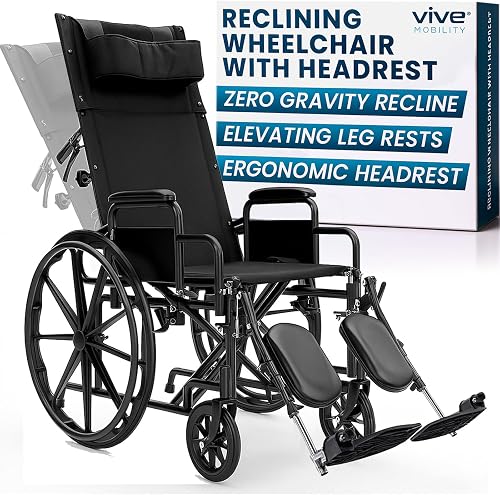
Vive Mobility Reclining Wheelchair with Elevating Leg: Best for reclining support
- Reclines to 180 degrees
- Elevating, height-adjustable leg rests
- Integrated headrest
- 300 lb capacity
The reclining back and height-adjustable leg rests offer several ways to position the upper body and legs. At 60 lb, this chair is much heavier than the folding transport options.
Pros
- Adjustable leg rests
- Reclining back
- Integrated headrest
Cons
- 60 lb weight
- Seat depth and seat width are not specified
The Vive Mobility chair has a reclining back and height-adjustable elevating leg rests. It reclines to 180 degrees, and an integrated headrest plus detachable cervical cushion provide support while reclined.
That design suits a user who needs to rest during the day or change position often. For a tall person, the recline and leg positioning matter more than a narrow focus on seat width, because posture can change how the whole body fits.
At 60 lb, it is much heavier than the folding transport choices. This is not a chair to lift into a car often, so it fits best when it will mainly stay in one place or be moved by someone able to handle its size.
Its dimensions are 50 x 27 x 48 in, but seat depth and seat width are not specified. Those missing seat measurements matter for a tall user, because leg rests and recline cannot make an undersized seat fit the thighs or hips.
Confirm the seat dimensions with the manufacturer before treating the adjustable leg rests as a complete fit solution. Ask about back height as well, since reclining support depends on where the back and headrest sit relative to the user.
Choose it when reclining and leg positioning are key needs, provided the seat dimensions fit. It is not the easiest pick for caregivers who need to lift a chair often.
WHLICKS Wheelchairs for Adults Ergonomic Transport Chair: Best for adjustable footrest height
- Three-level footrest height
- 16.5 in seat width
- 12 in rear wheels
- 23.1 lb
Three footrest height settings can help tailor lower-leg positioning, and the stated chair weight is 23.1 lb. Its 16.5 in seat width is relatively narrow, so measure before choosing it for a tall user.
Pros
- Adjustable footrest height
- 23.1 lb weight
- Removable, washable cushions
Cons
- 16.5 in seat width
- Seat depth is not specified
WHLICKS gives users 3 footrest height settings, with a stated adjustment range of 4.13 to 5.91 in. That range can help a tall user place the feet more comfortably, but it only adjusts one part of the fit.
The 16.5 in seat width is on the narrow side, so measure hip width and leave room for clothing. A tall user who wears bulkier clothing or needs lateral support may find this seat too close at the hips.
The chair weighs 23.1 lb and has 12 in rear wheels. The low stated weight helps with lifting and storage, while the larger rear wheels can help with movement around doors and outdoor paths.
Its removable cushions are machine washable, and the S-shaped backrest follows the natural curve of the spine according to WHLICKS. Washable cushions are practical for daily use, especially when the chair will travel and be handled often.
The seat depth is not specified. Verify thigh support for a tall user before choosing this model based on adjustability alone, because footrest settings cannot add depth to the seat.
Choose it if a lighter transport chair and footrest adjustment matter, and confirm seat depth before buying. The adjustable setup is useful only when the seat itself fits.
VOCIC Ultra Lightweight Foldable Wheelchairs for Adults: Best for a deeper seat
- 17.7 in wide x 17 in deep seat
- Three-level armrest height
- Adjustable footrests
- 23 lb frame without leg rests and quick-release wheels
The 17 in seat depth is longer than the 16 in depth on several picks here, and armrests adjust to three height levels. Check the complete chair dimensions and fit before buying.
Pros
- 17 in seat depth
- Three-level armrest adjustment
- Quick-release wheels
Cons
- 23 lb figure excludes leg rests and wheels
- Seat width is 17.7 in
VOCIC's Ultra Lightweight Foldable Wheelchairs for Adults lists a 17 in seat depth, a longer stated measurement than the 16 in depths on several other picks. The seat is 17.7 in wide, and its armrests adjust to 3 height levels.
That extra inch of depth is the main reason this chair stands out for tall users. It gives more thigh support on paper, though the user still needs to check whether the back and footrests line up with their seated position.
The 23 lb figure excludes leg rests and quick-release wheels, so the complete chair will weigh more. When comparing weight with other chairs, include those parts in your thinking, especially if the chair will be lifted into a vehicle.
Adjustable footrests and quick-release wheels add flexibility, but check the user's fit against the chair's dimensions. Armrest height can help with posture and reaching a table, while footrest position helps with lower leg support.
This chair has a 300 lb capacity and a dual braking system. Its seat depth makes it worth comparing, though a single measurement cannot confirm overall comfort or fit.
Choose it if a 17 in depth and adjustable armrests suit the user, after checking the complete chair configuration. The VOCIC U12 below also has a 17 in seat depth and adjustable footrests.
Invacare Transport Wheelchair for Adults: Best for a 19 in transport seat
- 19 in x 16 in seating area
- Foldable backrest
- Seatbelt
- 26 lb
A 19 in wide seat offers room across the hips, while the 16 in depth is a separate fit check for a tall user's thighs. The backrest folds down for compact storage.
Pros
- 19 in seat width
- Foldable backrest
- Seatbelt
Cons
- Seat depth is 16 in
- Transport chair requires a caregiver to push
Invacare's transport chair has a 19 in wide by 16 in deep seating area, plus swing-away footrests and a foldable backrest. The width can provide more hip room, but the depth remains a separate check for long thighs.
It weighs 26 lb and includes a seatbelt. The seatbelt can help the user feel more secure during travel, while the light weight helps with loading and storage.
Its backrest folds down, and the chair narrows to 9 in when folded. That compact fold is useful for closets and small car boots, which matters when the chair will move between home and appointments.
Because it is a transport chair, a caregiver pushes it. The user should not expect to propel it, so consider how often a caregiver will be available for outings and transfers.
Confirm seat depth and footrest reach before choosing it for longer outings or extended periods of sitting. A 19 in width may feel roomy while a 16 in depth still leaves the thighs short of support.
Choose it if a 19 in seat and compact folding are useful, and the 16 in depth matches the user. Compare it with the Medline 19 in transport chair to see which features better suit the caregiver and user.
VOCIC U12 Lightweight Transport Wheelchair for Adults: Best for caregiver push control
- 17.7 in wide x 17 in deep seat
- Three push-handle height settings
- Adjustable footrests
- 28 lb
This transport chair pairs a 17 in seat depth with adjustable footrests and a push handle with three height settings. The handle adjusts for the caregiver, while the user's seat and leg fit should be checked separately.
Pros
- 17 in seat depth
- Three push-handle settings
- Adjustable footrests
Cons
- 17.7 in seat width
- Transport chair requires a caregiver to push
The VOCIC U12 has a 17 in seat depth, adjustable footrests and 3 push-handle height settings. Its 17.7 in seat width is narrower than the 19 in options, so check both hip room and thigh support.
The chair weighs 28 lb and has a 300 lb capacity. That weight sits between the lightest transport chairs and heavier self-propelled models, so lifting it into a vehicle still needs planning.
The adjustable push handle is set for the caregiver's posture, while the footrest adjustment relates to the user's leg length. Those are two different fits, and both should be set before the chair is used for a trip.
It is a transport chair, so it needs a caregiver to push. Check the footrest's adjustment range and the full seat dimensions before relying on it for a tall user, especially if the chair will be used beyond short appointments.
Choose it if caregiver push control and a 17 in depth are priorities. Compare the best mobility scooter for tall men or top mobility scooters for tall adults if powered travel is a better fit.
How should tall users compare wheelchair fit?
Start with seated measurements, then compare seat depth, seat width, back support and footrest reach. A chair's overall height does not tell you whether its seat and leg position fit a particular person.
Measure hip width while seated and compare it with the seat width. Leave a little room for clothing, because a seat that matches the bare measurement exactly may feel tight in daily use.
For seat depth, measure from the back of the pelvis to just behind the knee, then follow the chair maker's fit guidance for clearance. If the seat is much shorter than that measurement, the thighs may lack support and pressure can build near the knees.
Check the seat-to-footrest distance as well as the footrest adjustment range. Tall users may need longer lower-leg support, but leg rests should not force the knees or hips into an uncomfortable position.
Sit in the chair and look at where the feet land. The feet should rest in a stable position without the legs being pushed up, pressed down or left hanging during a normal sit.
Back height matters if the user needs upper-body support. Ask the manufacturer for the back measurement if it is not stated, and consider whether head support is needed for the planned use.
Also check armrest height against the table or desk the user will use. A chair can fit the legs well and still be awkward if the arms block access to a surface or leave the shoulders raised.
Measure the room as well as the person. Doorways, hallways and the space beside a bed or car seat affect whether a wider or deeper chair will work day to day.
Write the numbers down before you compare models. A simple list of hip width, thigh length, lower leg length and back support needs makes it easier to spot which chairs are worth a closer look.
Can a lightweight wheelchair for a tall person still fit well?
Yes, but low chair weight does not guarantee a good fit. Compare the seat and leg measurements first, then decide whether the chair is light enough for the caregiver to lift or the user to transport.
The VOCIC Ultra Lightweight Foldable Wheelchairs for Adults has a stated 17 in seat depth, while the 23 lb weight excludes its leg rests and quick-release wheels. That means the complete chair is heavier than the headline figure, so check what is included before comparing it with other models.
WHLICKS weighs 23.1 lb, but its seat depth is not specified. A light chair with unknown depth may still suit some users, yet it needs more checking for a tall person who needs thigh support.
For some users, a conventional wheelchair with a known seat depth and elevating leg rests may be a better match than the lightest folding design. The heavier chair may offer clearer fit information and more leg positioning options.
Consider who will lift the chair, how long the user will sit, and whether it fits through the home's doors. A chair that is easy to lift but too shallow for the thighs will not serve a tall user well over time.
Think about the main routine as well. Short trips, daily use at home and long appointments place different demands on seat depth, back support and foot position.
A lightweight wheelchair for a tall person can work when the stated dimensions match the user. Weight should be the second filter, after seat fit, rather than the first reason to choose a chair.
If the seat depth is missing, ask the seller or maker for it before buying. That one number may decide whether a light folding chair is a good fit or a poor one.
Which wheelchair should you choose for a tall adult?
Choose the VOCIC Ultra Lightweight Foldable Wheelchairs for Adults if its 17 in seat depth and adjustable armrests fit the user. Before buying, check the complete chair weight with leg rests and quick-release wheels included.
Pick the Medline Comfortable Folding Wheelchair when elevating leg rests matter, or the Medline Lightweight Foldable Transport Wheelchair with Handbrakes when a wider seat and caregiver-pushed travel are the priority. Those choices suit different routines, so match the chair to how it will be used every day.
If self-propelling matters most, the Drive Medical Blue Streak gives you an 18 in seat with swing-away footrests and flip-back desk arms. Its 16 in depth still needs to match the user's thigh length, so measure before deciding.
If reclining and leg elevation are the main needs, the Vive Mobility chair offers more positioning options. Check its seat width and seat depth first, because those missing numbers matter more than the adjustable features on their own.
The best wheelchair for a tall person is the one that fits seated measurements, including thigh length, back support and lower-leg reach. A wider seat, a deeper seat and adjustable footrests each solve a different problem, and a tall user may need more than one of them.
Ask a seating professional for help if a standard chair's adjustments do not provide a safe, comfortable fit. That is especially worth doing when the user sits for long periods or needs help with transfers.
Our top 3 picks at a glance
-
1
Best for self-propelling
Drive Medical Blue Streak Lightweight Wheelchair
9.7/10 our score
See it on Amazon -
2
Best for compact travel
Drive Medical Folding Transport Wheelchair
9.7/10 our score
See it on Amazon -
3
Best for a wider seat
Medline Lightweight Foldable Transport Wheelchair with Handbrakes
9.6/10 our score
See it on Amazon
Frequently asked questions
What wheelchair dimensions matter most for a tall person?
Check seat depth, seat height, back height and the distance from the seat to the footrests. Seat depth affects thigh support, while footrest reach affects leg position.
Compare each measurement with the user's seated body measurements and the chair's adjustment range before buying.
Is a 16 in wheelchair seat deep enough for a tall adult?
It depends on the user's seated thigh length. A 16 in seat depth appears on several chairs in this guide, but it may leave too little support for some tall adults.
Measure from the back of the pelvis to just behind the knee, then compare that with the chair maker's sizing guidance.
Are transport wheelchairs suitable for tall people?
They can fit some tall users, but transport chairs often have fewer adjustment options than self-propelled chairs. Check seat depth, back height and footrest reach, along with whether a caregiver will push the chair.
A wider seat does not automatically provide more legroom.
How do I measure for a wheelchair?
Measure the user while seated, including hip width, thigh length and lower-leg length. Compare those numbers with seat width, seat depth and seat-to-footrest adjustment.
Our wheelchair size chart explains seat width and fit checks.
Can an adjustable footrest make a standard chair fit a tall person?
An adjustable footrest can change where the feet rest, but it cannot add seat depth or back height. Check the chair's full dimensions and adjustment range rather than relying on one adjustable part.
Ask a seating professional for help if the user needs a custom fit.


