

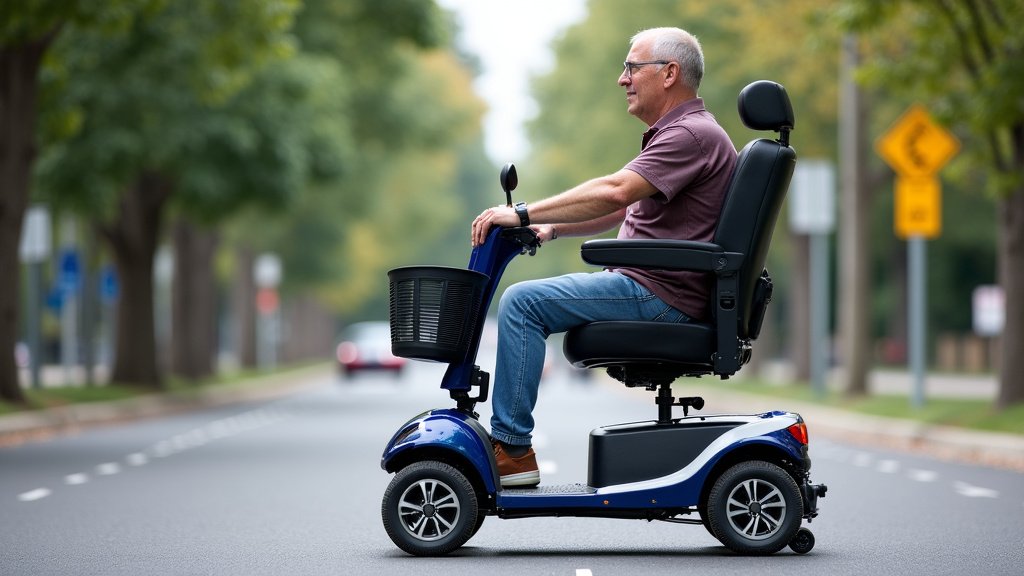
Yes, you can drive a mobility scooter on the road in many situations, but there are important rules. Your ability to drive on the road often depends on your scooter’s class and local regulations. Always check your state and local laws first.
Mobility scooters are generally designed for sidewalk use. However, faster models might have specific provisions for road travel. Understanding your scooter’s capabilities and legal classifications is super important for your safety. We found that regulations can vary quite a bit from place to place.
- Road use depends on scooter class.
- State and local laws are key.
- Sidewalks are often primary.
- Safety is always first.
- Always know the rules.
Let’s dive into the specifics of what you need to know about driving your mobility scooter on the road. We’ll help you navigate the rules and stay safe.
Navigating Mobility Scooters on Public Roads
So, you’re wondering if you can take your mobility scooter on the road. The short answer is often yes, but with some very important conditions. It really boils down to your scooter’s design and what your local laws say. It really boils down to your scooter’s design and what your local laws say, and our guide can help you choose the right mobility scooter for your needs.
Most mobility scooters are designed for pedestrian areas. Think sidewalks, parks, and indoor spaces. But some models are built with road use in mind. These typically offer more speed and stability. It’s like comparing a golf cart to a small car; they both move, but they’re made for different environments.
Understanding Mobility Scooter Classifications
Before you even think about hitting the road, you need to know your scooter’s class. The United States doesn’t have one single federal classification system for mobility scooters. Instead, regulations often fall to individual states and even local municipalities. This is where it can get a little tricky.
Generally, scooters are categorized by their speed and power. These classifications help determine where and how you can legally operate them. It’s not about how fast you *think* your scooter can go, but its official top speed. Always check your owner’s manual first.
Class 2 vs. Class 3 Scooters (Common UK/EU Model – Good for Comparison)
While the US doesn’t use these exact terms, it’s helpful to look at how other regions classify scooters. This gives us a good framework to understand the different types you might encounter. Many global manufacturers use these classifications, so your scooter might fall into one of these categories unofficially.
- Class 2 Scooters: These are typically for pavement and indoor use. They usually have a maximum speed of around 4 mph. They aren’t generally built for roads. Think of them as pedestrian aids.
- Class 3 Scooters: These are designed for road use as well as pavements. They often have a top speed of 6-8 mph, sometimes up to 12 mph. They usually come with features like lights, indicators, and mirrors. These are the ones you’re more likely to see on the road.
In the US, you’ll need to look at your scooter’s specifications. If it can go faster than typical walking speed and has safety features, it might be suitable for road use. We found that slower scooters are almost always limited to sidewalks.
Key Regulations for Road Use
So, what does it take to legally drive on the road? This is where your homework comes in. We can’t stress enough how important it is to check your local Department of Motor Vehicles (DMV) or equivalent state agency website. They will have the most accurate information for your area.
However, we can give you a general idea of what to expect. Many states treat faster mobility scooters similarly to bicycles or low-speed vehicles. This means you’ll need to follow traffic laws. You might even need specific equipment on your scooter.
Consider this table as a general guide. Remember, regulations can vary wildly:
| Feature | Often Required for Road Use | Typically Not Required for Road Use |
|---|---|---|
| Top Speed | Over 4 mph (often 6-8 mph minimum) | Up to 4 mph |
| Lights (Head & Tail) | Yes, especially at night | No, or basic reflectors |
| Turn Signals | Often yes | No |
| Horn | Yes | No |
| Rearview Mirrors | Yes | No |
| Tires | Pneumatic, more robust | Solid, smaller |
You can see that road-capable scooters are often more like small vehicles. They need the features to be visible and predictable to other drivers. Imagine driving a car without brake lights – that would be very dangerous!
Driver’s License and Registration
This is a common question. Do you need a driver’s license for a mobility scooter? In most cases, no, you do not need a driver’s license to operate a mobility scooter, even on the road. The same often applies to registration and insurance. Mobility scooters are typically classified as medical devices or personal mobility aids, not motor vehicles.
However, there are exceptions. Some states might have specific rules if your scooter exceeds a certain speed or power output. Always verify this with your state’s DMV. We found that this is one area where local laws can really differ, so don’t assume. It’s always better to be safe than sorry.
Prioritizing Your Safety
Even if it’s legal to drive your scooter on the road, safety should always be your number one concern. Roads are designed for cars, which are much larger and faster. You need to be extra vigilant and predictable.
Here are some crucial safety tips we’ve gathered:
- Be Visible: Always wear bright clothing, especially reflective gear at night. Use your scooter’s lights. Consider adding a flag or beacon for extra visibility.
- Follow Traffic Laws: Obey all traffic signals, stop signs, and lane markings. Just because you’re on a scooter doesn’t mean the rules don’t apply to you.
- Stay to the Right: Drive on the right side of the road, as close to the curb as safely possible. If there’s a bike lane, use it.
- Avoid Busy Roads: If you can, choose quieter streets with less traffic. Avoid highways or major thoroughfares at all costs.
- Signal Your Intentions: Use your scooter’s turn signals. If it doesn’t have them, use clear hand signals.
- Be Aware of Surroundings: Constantly check for cars, pedestrians, and cyclists. Always look over your shoulder before changing direction.
- Weather Watch: Avoid driving in bad weather like heavy rain, snow, or ice. Visibility for you and other drivers will be greatly reduced.
- Don’t Rush: Give yourself plenty of time to get where you’re going. Don’t feel pressured to speed up or keep pace with traffic.
Think of yourself as a pedestrian on wheels when you’re on the road. You don’t have the same protection as someone in a car. So, act defensively. Many experts recommend taking a defensive driving course, even for scooter users (National Safety Council).
When to Use the Sidewalk vs. the Road
This is a critical decision you’ll make every time you ride. In most areas, you have the option of using either the sidewalk or the road, depending on various factors. But which is better? It often comes down to weighing the risks.
Sidewalks offer separation from fast-moving traffic. This can feel much safer. However, sidewalks have their own challenges. They can be uneven, crowded with pedestrians, and have obstacles like lampposts or signs. Pedestrians might not expect a scooter moving at a moderate speed.
Roads, as we’ve discussed, put you directly in traffic. This requires extreme caution. But roads are generally smoother and wider. They often lack the sudden obstacles you find on sidewalks.
Here’s a quick checklist to help you decide:
- Is the sidewalk safe and clear? If yes, consider the sidewalk.
- Are there many pedestrians on the sidewalk? If yes, the road might be safer.
- Is the road a busy, multi-lane highway? If yes, avoid the road at all costs.
- Does your scooter have all the required road safety features? If not, stick to sidewalks.
- Are there bike lanes available? If yes, use them if permitted.
- Are you comfortable and confident sharing the road with cars? If not, reconsider.
Always choose the safest option for your specific situation. There’s no single “right” answer for every journey. Your personal comfort level and the specific conditions of your route matter a lot.
Common Misconceptions About Scooter Road Use
There are a few myths we often hear about mobility scooters and roads. Let’s clear some of them up. We found that many people assume things that just aren’t true, which can lead to unsafe situations.
One big one is, “If it’s fast, it’s road-legal.” Not true! Speed is just one factor. As we discussed, features like lights, mirrors, and signals are also important. Even a fast scooter without these features isn’t suitable for road use. It’s like having a race car without headlights; it’s fast, but not road-legal at night.
Another myth is, “Mobility scooters always have the right of way.” While you might be considered a pedestrian in some cases, you still need to yield to traffic when appropriate. Don’t assume other drivers see you or know your intentions. Always drive defensively.
Finally, some think that “all mobility scooters are insured automatically.” This is rarely the case. While you don’t typically need vehicle insurance, having personal liability insurance can be a very good idea. What if you accidentally cause damage or an injury? This is something to discuss with your insurance provider. It’s a small investment for peace of mind.
Conclusion
Driving your mobility scooter on the road offers freedom, but it comes with responsibility. You’ve learned that legality hinges on your scooter’s type and your local laws. Prioritizing safety by being visible and following traffic rules is absolutely critical. We’ve seen that defensive driving isn’t just for cars; it’s essential for you too.
Always remember that your safety is paramount. Make informed decisions about when and where to ride. Your next step should be to contact your state’s DMV to understand the exact regulations for your specific area. Stay safe and enjoy your mobility!
Frequently Asked Questions
What speed does my mobility scooter need to be for road use?
For road use, your mobility scooter generally needs to have a top speed of more than 4 mph. Many road-suitable models go between 6 and 8 mph. Always check your scooter’s specifications and local traffic laws to confirm.
Do I need a special license or registration for a road-legal scooter?
In most places in the US, you do not need a special driver’s license or vehicle registration for a mobility scooter, even one used on the road. However, regulations can vary by state or even city. It’s best to confirm with your local DMV.
What safety features should my scooter have if I plan to drive on the road?
If you plan to use your scooter on the road, it should ideally have headlights, taillights, turn signals, and a horn. Rearview mirrors are also highly recommended for your safety. These features help you be seen and communicate your intentions to other drivers.
Is it safer to use the sidewalk or the road with a mobility scooter?
The safest option depends on the specific situation. Sidewalks offer separation from traffic but can be uneven or crowded. Roads are smoother but expose you to faster vehicles. Always choose the path that feels safest and is most appropriate for your scooter and the environment.
Should I get insurance for my mobility scooter if I drive it on the road?
While often not legally required, obtaining personal liability insurance for your mobility scooter is a very good idea. This can protect you in case of an accident or if you accidentally cause damage or injury. We found that many insurance providers offer specific policies for mobility devices.
