
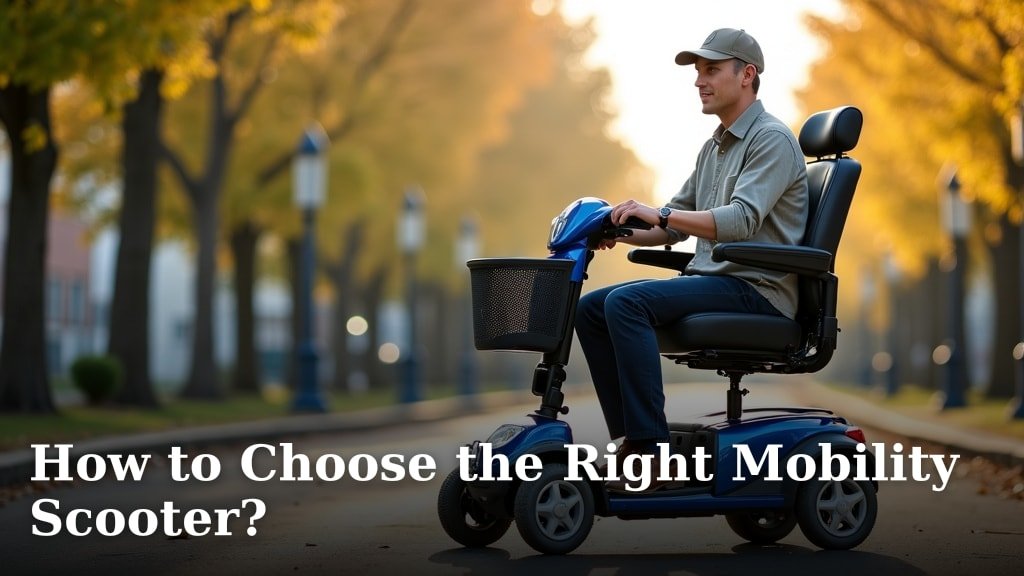
To choose the right mobility scooter, you should first think about where and how you’ll use it most often. Consider factors like its size, battery range, and if it needs to be portable. The best scooter for you will fit your lifestyle and provide the most independence.
There are many types of mobility scooters available today. You’ll find everything from small, foldable models to larger, more robust scooters designed for outdoor adventures. It’s important to match the scooter’s features with your daily needs and activities.
- Consider where you’ll use the scooter most.
- Think about battery life and travel range.
- Decide if portability is important for you.
- Match the scooter’s features to your personal needs.
Let’s walk through exactly how to select the perfect mobility scooter for you, ensuring you make a confident and informed choice.
Selecting Your Ideal Mobility Scooter
Finding the right mobility scooter can truly enhance your independence. We’ll help you pinpoint the perfect model by looking at your daily activities and mobility needs.
Understanding Different Scooter Types
Just like cars, mobility scooters come in various types, each suited for different purposes. Knowing these categories helps narrow your choices.
Portable and Travel Scooters
These scooters are designed for people who need a scooter on the go. They often disassemble into lighter pieces or fold up for easy transport. They’re typically smaller and lighter.
- Great for errands, shopping malls, and travel.
- Usually have a shorter battery range.
- Often have a lower weight capacity.
- Can be stored in a car trunk.
Medium-Sized and Three-Wheel Scooters
These models offer a balance between portability and features. Three-wheel scooters provide excellent maneuverability indoors. They are a popular choice for many users.
- Good for indoor and some outdoor use.
- Better turning radius than four-wheel models.
- Can handle slightly rougher terrain than travel scooters.
- Offer more comfort and battery life.
Heavy-Duty and Four-Wheel Scooters
If you plan to use your scooter outdoors frequently or need extra stability, a heavy-duty, four-wheel model is a great option. These are often larger and more powerful.
- Best for outdoor adventures and varied terrain.
- Superior stability and higher weight capacity.
- Longer battery range and more powerful motors.
- Less portable due to size and weight.
Where Will You Use Your Scooter Most?
Your environment plays a huge role in scooter selection. Will you be mostly indoors, outdoors, or a mix of both? This decision impacts size, tire type, and battery life.
Indoor Use Considerations
For indoor use, maneuverability is key. You’ll want a scooter that can easily navigate hallways, doorways, and around furniture. Smaller models or three-wheel scooters often work best here.
- Tight spaces: Look for a small turning radius.
- Floor surfaces: Smooth tires are fine for carpets and hard floors.
- Doorways: Check the scooter’s width against your home’s doorways.
Outdoor Use Considerations
Outdoor use demands more robust features. You’ll need good ground clearance and bigger tires to handle bumps, cracks, and uneven sidewalks. A longer battery range is also important.
- Terrain: Consider pneumatic (air-filled) tires for a smoother ride.
- Distance: Prioritize a model with extended battery life.
- Weather: Think about protective accessories like canopies or covers.
- Hills: A more powerful motor helps with inclines.
Essential Features to Consider
Beyond type and use environment, many features contribute to your comfort and convenience. Let’s look at some of the most important ones.
Battery Life and Range
This tells you how far your scooter can go on a single charge. If you plan longer outings, you’ll need a scooter with a greater range. We’ve found that many manufacturers provide estimated ranges, but these can vary based on terrain, rider weight, and temperature (CDC).
- Short trips (under 5 miles): Many portable scooters suffice.
- Medium trips (5-15 miles): Look for mid-range models.
- Long trips (15+ miles): Heavy-duty scooters are usually best.
Weight Capacity
Every scooter has a maximum weight it can safely carry. Always choose a scooter that comfortably exceeds your body weight to ensure safety and optimal performance.
Portability and Transportability
Do you need to take your scooter in a car, on a plane, or store it in a small space? If so, portability is a critical factor. Some scooters fold, others disassemble, and some are too large to transport without a vehicle lift.
Comfort Features
Since you’ll be spending time on your scooter, comfort matters. Adjustable seats, armrests, and tiller (steering column) can make a big difference in your overall experience.
- Seat: Look for padded, swiveling, or height-adjustable options.
- Armrests: Should be adjustable for width and height.
- Tiller: Adjustable tillers help you find the most comfortable driving position.
Testing and Buying Your Scooter
Once you have a few models in mind, it’s time to try them out. You wouldn’t buy a car without a test drive, right? The same goes for your mobility scooter.
The Importance of a Test Drive
A test drive allows you to experience the scooter firsthand. Pay attention to how it handles, how comfortable it feels, and if you can easily operate the controls. Try navigating tight turns and different surfaces if possible.
Warranty and Service
Check the warranty details. A good warranty offers peace of mind. Also, inquire about local service and repair options. You’ll want to know where to go if your scooter needs maintenance.
Your Mobility Scooter Checklist
Use this quick checklist to help guide your decision-making process:
- Do I primarily need it for indoor or outdoor use?
- What is my approximate daily travel distance?
- Do I need to transport it in a car or on public transport?
- Does the weight capacity meet my needs?
- Is the seat and steering comfortable for me?
- What is the available warranty and service support?
Comparing Mobility Scooter Types
Here’s a quick overview to help you see the differences at a glance. We’ve found that choosing the right type often comes down to balancing portability with features.
| Scooter Type | Key Benefit | Best For | Common Range (Miles) |
|---|---|---|---|
| Portable/Travel | Easy transport & storage | Shopping, travel, short trips | Up to 10 |
| Medium/3-Wheel | Good maneuverability, balanced features | Indoor/outdoor mix, errands | 10-20 |
| Heavy-Duty/4-Wheel | Stability, power, rough terrain | Outdoor, long distances, varied ground | 20+ |
Remember, this table provides general guidelines. Actual performance can vary between models and manufacturers.
Conclusion
Choosing the right mobility scooter can significantly improve your daily life. By carefully considering where you’ll use it, your specific needs, and essential features like battery range and portability, you can make a confident decision. Remember to take a test drive to ensure it feels right for you.
Your ideal scooter should fit your lifestyle, offering comfort and independence. Don’t rush the process; invest time in research and testing. You’ll soon be enjoying greater freedom and mobility.
Frequently Asked Questions
How do I know if I need a three-wheel or four-wheel scooter?
You should choose based on your priority: maneuverability or stability. Three-wheel scooters offer a tighter turning radius, making them excellent for indoor use and navigating tight spaces. Four-wheel scooters provide greater stability, especially outdoors and on uneven terrain, but have a wider turning circle.
Can I take my mobility scooter on an airplane?
Most airlines allow mobility scooters, but you must check their specific policies in advance. They often have rules about battery type (gel, AGM, or lithium-ion) and size restrictions. Always contact your airline well before your travel date to confirm their requirements.
How often do I need to charge my scooter’s battery?
The charging frequency depends on how often and how far you use your scooter. For optimal battery health, we recommend charging your scooter after each significant use, even if the battery isn’t completely drained. Follow the manufacturer’s specific charging instructions for your model.
Are mobility scooters covered by insurance?
Coverage for mobility scooters varies widely depending on your insurance provider and policy. In the US, Medicare Part B may cover some of the cost if it’s deemed medically necessary by a doctor. We recommend checking directly with your insurance company to understand your benefits.
What is the average lifespan of a mobility scooter?
With proper care and maintenance, a quality mobility scooter can last anywhere from 3 to 7 years, or even longer. Factors like usage frequency, terrain, and battery upkeep all play a role. Regular servicing helps extend the life of your scooter.
