How to Adjust Rollator Brakes
For a rollator walker brake adjustment, tighten a loose cable with its barrel adjuster, then test both hand brakes and parking locks before using the walker. If a cable is frayed, a brake does not hold, or you are unsure, stop and ask a mobility equipment technician for help.
On this page (7 sections)
- How do you adjust rollator walker brakes?
- What should you check before changing cable tension?
- How do you test the brakes after adjustment?
- When should you stop and get a repair?
- Can you adjust brakes on every rollator the same way?
- Do accessories affect safe brake checks?
- What should you do before using the rollator again?
For a rollator walker brake adjustment, follow the model's manual and test both hand brakes and parking locks before using the rollator. Brake cables and adjusters vary, so stop and ask a mobility equipment technician for help if a cable is damaged or the brakes do not hold.
If a cable is frayed, a part is bent, or an adjustment does not restore reliable braking, stop and contact the manufacturer or a mobility equipment technician. Do not use a rollator with brakes that fail to stop or hold it.
How do you adjust rollator walker brakes?
Use the cable barrel adjuster to take up a little slack, if your model has one and its manual allows it. Make small changes, then test the hand brake and parking lock on each side before walking.
- Park the rollator on a level surface and set both parking locks.
- Check the wheels, brake pads, cables, and levers for dirt or visible damage.
- Find the cable adjuster described in your manual, often near the hand lever or brake arm.
- Turn the adjuster a small amount to tighten the cable, then secure its locknut if there is one.
- Release the parking locks and squeeze each lever to check that its wheel stops.
- Set each parking lock and gently try to roll the walker forward and backward.
The adjuster direction varies by model. If the cable gets tighter in the wrong direction, return it to the starting position and check the manual rather than forcing it.
Keep your fingers clear of the wheel and brake parts while checking movement. If the brake rubs continuously after adjustment, follow the manual or ask for service.
What should you check before changing cable tension?
Inspect the brake system before turning an adjuster. A loose cable is only one possible cause of weak braking.
Look for a frayed, kinked, or disconnected cable, a loose housing, worn brake pads, or a wheel that does not spin freely. Remove only surface dirt you can reach safely, following the cleaning instructions for your rollator.
Make sure the wheels are seated and the frame is stable. Don't try to straighten bent parts or replace a cable unless the manufacturer provides instructions for that repair and you can follow them safely.
A rollator should fit you as well as work mechanically. Check the rollator walker handle height so you can reach the levers without straining or changing your grip.
How do you test the brakes after adjustment?
Test both hand brakes and both parking locks before putting weight on the rollator. A brake that feels firm in your hand still needs to stop and hold its wheel.
With the rollator empty and on level ground, release the parking locks and push it gently. Squeeze one brake lever at a time; its wheel should stop turning.
Repeat on the other side, then squeeze both levers together.
Next, set each parking lock using the lever action described in your manual. Gently try to move the rollator forward and backward without leaning on it.
The locked wheels should stay in place.
If a wheel keeps turning, a lever reaches the handle, or one side behaves differently, don't use the rollator. Review the adjustment once, and contact a technician if the problem remains.
For a separate explanation of the parking mechanism, see how to lock walker wheels. Use that method only if it matches your rollator's instructions.
When should you stop and get a repair?
Stop using the rollator if a brake cannot stop its wheel or a parking lock cannot hold it. Cable damage, broken parts, or repeated adjustment problems need professional attention.
Contact the rollator's manufacturer or a mobility equipment repair service if you see a frayed cable, loose brake hardware, a bent brake arm, or a damaged wheel. Don't tape or tie a cable in place, and don't rely on only one working brake.
Ask for help if the brake lever feels unusually stiff or does not return after you release it. A sticking brake can affect steering and wheel movement.
If you need a different mobility aid while the rollator is being repaired, compare a walker for seniors with a rollator based on how you move and where you use it. A standard walker has a different braking setup, so check its own manual.
Can you adjust brakes on every rollator the same way?
No. Brake cables, adjusters, and lock mechanisms differ by make and model.
The manual for your rollator sets the right adjustment and testing steps.
Some models have a barrel adjuster that changes cable tension. Others may need a different procedure or professional service.
Don't copy a turn count or measurement from another rollator.
If you cannot find the manual, check the manufacturer's website using the model name or number on the frame. You can also contact the manufacturer and ask for the brake adjustment instructions for that exact model.
A caregiver can help with the inspection and test, but both of you should confirm the brakes work before the user relies on the rollator. Review rollator walker instructions for basic setup and use.
Do accessories affect safe brake checks?
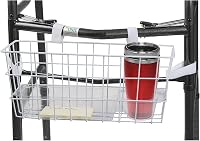
Keep baskets and trays from blocking the brake levers, cables, or wheels. Remove an accessory if it shifts the rollator's balance or gets in the way during a brake check.
The HealthSmart basket has adjustable straps, a built-in cup holder, and a removable plastic tray. Check that it fits your rollator and does not block brake parts.
It fits most standard walkers, including folding walkers about 18.5 in wide, but not extra-wide or bariatric walkers.
Skip an accessory if you cannot confirm that it fits securely or if it obstructs your hand access to the brakes. Accessories do not repair weak or damaged brakes.
What should you do before using the rollator again?
Use the rollator only after both brakes stop the wheels and both parking locks hold. Test it on level ground, then follow the safe-use steps for your model.
Stand behind the rollator, keep both hands near the grips, and avoid leaning on it while checking the brakes. If you feel uncertain during the test, ask someone to assist and arrange a repair.
For advice on walking, turning, and stopping, read how to use a rollator safely. If the brakes remain unreliable, keep the rollator out of use until a repair professional confirms it is safe.
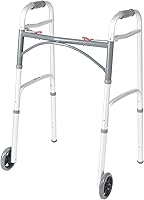
A standard folding walker may suit someone who does not need a rollator's wheels, though it is not a substitute for a repair when you depend on a rollator. The Medline walker has a two-button fold design and 5 in wheels.
For a rollator walker brake adjustment, use the manual's cable procedure only when the parts are intact and the change is small. If a brake still slips or a parking lock fails, choose repair before relying on the walker again.
Frequently asked questions
Can I adjust rollator brakes myself?
You may be able to make a small cable adjustment if your rollator manual describes it and the cable and brake parts are in good condition. Follow that model's steps, adjust in small increments, and test both sides.
Stop if the brakes still feel weak, drag, or fail to lock.
How do I know if my rollator brakes need adjustment?
The brakes may need attention if the hand levers pull unusually close to the handle, the wheels keep moving when you squeeze the levers, or one side feels different. Check for dirt or visible cable damage first, then follow your manual.
Don't use the rollator until the brakes work reliably.
How tight should rollator brakes be?
The brakes should engage both rear wheels when you squeeze the levers, and the parking locks should keep the wheels from rolling when set. Use the lever travel and clearance specified in your rollator manual.
There is no single adjustment measurement that fits every model.
Can I use a rollator if one brake is not working?
No. A rollator with one brake that fails may turn or roll when you need it to stop, so avoid using it until repaired and checked.
Ask a mobility equipment technician or the manufacturer for service guidance, and use another safe mobility aid in the meantime.