How to Lock Walker Wheels
To lock walker wheels, set the wheel brakes fully and check that the walker stays still before leaning on it. Many standard walkers have no wheel locks, so check your model's instructions and never rely on the frame to hold you if it can roll.
On this page (8 sections)
- How do you lock walker wheels safely?
- How can you tell whether your walker has wheel locks?
- What should you check before leaning on a locked walker?
- What can help keep items secure while the walker is parked?
- What if the walker moves after you set the brakes?
- Can wheel position tell you whether the walker locks?
- How do you lock walker wheels before a transfer?
- What is the safest way to remember the brake check?
To lock walker wheels, set the brakes fully and confirm the frame stays still before you lean on it. Many standard walkers don't have wheel locks, so check your model's instructions and don't trust a rolling frame to hold you.
The correct steps depend on the walker. A rollator often has hand brakes with a parking position, while a standard walker may have no wheels or may have front wheels without brakes.
How do you lock walker wheels safely?
Use only the brake controls made for your walker, then check that the wheels stay still. Keep the walker on a level, firm surface while setting the brakes.
On many rollators, you pull both hand brake levers to slow down. For a model-specific example, see the ELENKER upright walker review.
To park, push or hold the levers down until they stay in the maker's parking position; the exact motion varies by model. If the brakes need adjustment, follow rollator brake adjustment steps.
Check that both sides are engaged and try to move the walker gently without putting your weight on it. If a wheel turns, the frame shifts, or a brake lever will not stay in place, don't lean on the walker or sit on its seat.
Follow the manual if its instructions differ from these general steps. For help with the rest of the setup, see our rollator walker instructions.
Learn how to adjust rollator handle height for a comfortable fit.
How can you tell whether your walker has wheel locks?
Look for brake levers, brake cables, or a marked lock position near the handles or wheels. The manual should explain how the brakes work and whether they're meant to hold the walker still while parked.
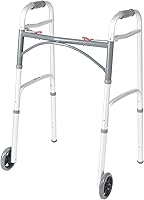
A rolling walker isn't automatically a locking walker. Some models have front wheels that roll while the rear legs remain stationary, and others have brakes at the handles or near the wheels.
Don't press a random lever or add a clamp to stop a wheel. If the controls aren't clear, ask the manufacturer or a mobility equipment professional to identify them.
Can you lock a walker that has no brakes?
A walker with no brakes may have no built-in way to lock its wheels. Don't rely on a wall, rug, or your foot as a substitute when you need the frame to stay put.
Move the walker only while holding its handles, and keep it within reach before standing or sitting. If you need a device that stays in place for a specific task, ask a clinician or mobility equipment professional which walker style suits that use.
A walker for seniors may have a different wheel and brake setup from a rollator. Check the model details before choosing one.
What should you check before leaning on a locked walker?
Check the brakes, the floor, and the frame's movement before putting weight on the handles. Make sure the walker is fully open and its folding locks are engaged according to the manual.
Check the brakes while standing upright and holding a stable support if needed. Don't pull hard on the frame or try to check it by sitting down.
A locked wheel doesn't make every walker safe to sit on. Use a seat only if the manufacturer designed that model for sitting, and park it as instructed on a level surface.
How do you park a rollator before using its seat?
Set both parking brakes on level ground before turning around or lowering yourself onto a rollator seat. Keep a hand on a stable support and follow the rollator's instructions for sitting and standing.
If the rollator moves during a gentle check, don't use the seat. Have the brake checked before using it again.
For a walker designed for a different type of support, compare what makes a walker safer for seniors. The right choice depends on the user's needs and the device's intended use.
What can help keep items secure while the walker is parked?
A basket or tray can keep small items within reach, but neither one locks the wheels or makes the walker more stable. Keep loads light, balanced, and within the accessory's limits.
The HealthSmart basket has a built-in cup holder, adjustable hooks and loop straps, and a removable plastic tray. It fits most walkers and rollators, with adjustable straps for attachment.
Don't hang a heavy bag from one side, and don't use the basket as a handle or support. If your walker wheels make noise while moving, see how to make walker wheels quieter.
The DMI Walker Tray folds down when it's not in use and has two cup holders. It fits most standard walkers, including folding walkers about 18.5 inches wide, and its 5 lb capacity requires even weight distribution.
Check your walker width and leg spacing before choosing a tray. Never push down on a loaded tray to steady yourself.
What if the walker moves after you set the brakes?
Stop using the walker for weight-bearing until you know why it moves. Check that the brakes are engaged as the manual directs and that the floor is firm, dry, and level.
Look for visible damage, loose parts, or an obstruction near a wheel. Don't adjust cables or brake tension unless the instructions say you can; have a qualified repair service check a brake that won't hold.
If a wheel needs replacement, use parts approved for the model. Our guide to replacing rollator wheels explains what to check before a repair.
The Medline Lightweight Two Button Folding Walker has 5 in wheels, a two-button folding mechanism, and a 300 lb weight capacity. Check its wheel and brake arrangement before assuming it has wheel locks.
Don't choose a walker only by wheel size. Consider whether you need rolling wheels, hand brakes, a seat, or a frame that stays still during transfers.
Can wheel position tell you whether the walker locks?
Wheel placement alone doesn't tell you whether a walker has a lock. Brakes and parking controls vary by model, so use the manual to confirm the exact setup.
The choice between wheels at the front or rear affects how a walker moves, but it doesn't replace a brake. Read whether walker wheels should go in front or back before comparing frame styles.
How do you lock walker wheels before a transfer?
Before standing or sitting, park the walker as its maker directs and confirm it doesn't roll. Keep the device close enough to reach without pulling it toward you.
Use a stable seat or support, move slowly, and ask for help if you're unsure how to transfer safely. Don't use a walker that shifts when you put light pressure on its handles.
For a mobility scooter, use the scooter's own key or locking procedure; walker brakes don't apply. See how to lock a mobility scooter or compare a mobility scooter lock if that's the device you need to secure.
What is the safest way to remember the brake check?
Set the brakes, confirm the walker stays still, then use it only as the manufacturer intends. If the frame rolls or a control is unclear, pause and get the brake or model checked.
Choose a rollator with clear parking brakes when you need a walker that can be secured while stationary. For a basic folding walker, check whether its wheels have brakes before relying on them to hold the frame.
Frequently asked questions
How do you lock walker wheels?
Use the brake controls designed for your walker, following its instructions, and check that each wheel stays still before leaning on the frame. Some walkers have push-down locks near the wheels, while rollators often use hand brakes with a parking position.
If there are no brake controls, don't assume the wheels can lock.
Do all walkers have wheel locks?
No. Some standard walkers have no wheels, some have front wheels without brakes, and some rollators have wheel brakes.
Check the manual or ask the manufacturer how your specific model stops; don't attach an unapproved brake or rely on friction to keep the frame still.
Can you sit on a walker with the brakes locked?
Only sit on a walker if its maker says it is designed for sitting and you know how to secure it. A rollator seat may require both parking brakes to be engaged on level ground.
A standard walker is not a chair, even if its wheels appear locked.
Why won't my rollator wheel lock?
A brake may be out of adjustment, worn, obstructed, or used incorrectly. Check the user manual for the correct parking-brake steps and permitted adjustments, and stop using the rollator if a wheel still moves with the brake set.
Ask the maker or a qualified repair service to inspect it.