
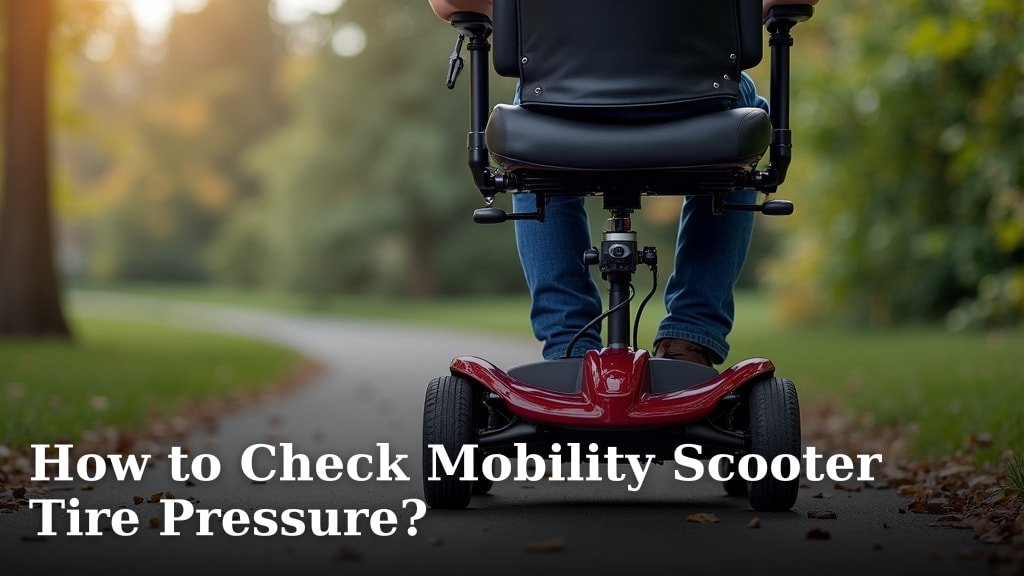
The easiest way to check mobility scooter tire pressure is by using a low-pressure tire gauge. You simply remove the valve cap, press the gauge firmly onto the valve stem, and read the display. This quick check helps ensure your scooter’s tires are properly inflated for a safe and smooth ride.
Maintaining correct tire pressure is more important than you might think for your mobility scooter. Low pressure can make your scooter feel sluggish, while too much air can lead to a bumpy experience. It also affects battery life and tire wear. Many experts say that checking your tires regularly will also keep you safer on uneven surfaces.
- Use a low-pressure tire gauge.
- Locate the tire’s valve stem.
- Press the gauge firmly for a reading.
- Compare to your scooter’s recommended PSI.
- Inflate or deflate as needed.
Let’s walk through exactly how to do this, step by step, ensuring you get the most out of your mobility scooter.
Understanding Your Mobility Scooter’s Tire Pressure
Maintaining the correct tire pressure on your mobility scooter is a small task with big benefits. It impacts your safety, comfort, and even your scooter’s lifespan. Think of it like Goldilocks: not too much, not too little, but just right.
You need to know your scooter’s recommended tire pressure before you start checking. This number is your target, your golden standard.
Finding Your Scooter’s Recommended PSI
Every mobility scooter model is different. You can’t just guess your tire pressure. The recommended PSI (pounds per square inch) is specific to your make and model.
The easiest place to find this information is in your owner’s manual. We found that most manufacturers print it right there, clear as day. If you don’t have a physical copy, many manuals are available online as a PDF.
Sometimes, you’ll find the PSI printed directly on the tire’s sidewall. Look closely at the rubber. It might be in small print, but it’s often there. This is a quick reference if your manual isn’t handy.
Another place to check is a sticker on your scooter’s frame. Manufacturers often place these near the seat or footrest. It’s designed to be easily visible for maintenance checks.
If you’re still coming up empty, don’t worry. A quick call to your scooter’s manufacturer or dealership can clarify things quickly. They have all the specs for their products.
Gathering Your Tools for a Tire Pressure Check
You don’t need a huge workshop for this job. Just a few simple tools will do. Having them ready makes the process smooth and quick. It’s like having the right ingredients ready for a favorite recipe.
Essential Tools You’ll Need
First and foremost, you need a tire pressure gauge. Not just any gauge, though. A low-pressure gauge is best for mobility scooter tires. Your scooter tires are much smaller than car tires, and they require a different type of gauge to get an accurate reading.
Many experts say that a digital gauge can be easier to read than an analog one. The numbers light up clearly. But an analog gauge with a needle works perfectly well, too. Just choose what you’re comfortable with.
Next, consider a tire pump. If your tires are low, you’ll need a way to add air. A bicycle pump works great for most scooter tires. Some people prefer a small electric compressor for less effort. These are often portable and plug into a car’s accessory outlet or even a wall socket.
Finally, a small cloth or rag can be useful. Sometimes valve stems are a little dirty, and you want a clean surface for your gauge.
Why a Low-Pressure Gauge is Best
You might have a car tire gauge in your garage. But car tires typically run at much higher pressures, 30-35 PSI. Your mobility scooter tires usually need much less, often in the 10-25 PSI range.
A car gauge isn’t designed for such low pressures. It might give you an inaccurate reading. We found that a gauge specifically designed for low PSI offers much better precision. This means you get a reading you can actually trust.
The Step-by-Step Process for Checking Tire Pressure
Ready to get started? This process is straightforward. We’ll break it down into easy, manageable steps. You’ll be a pro in no time.
Preparing Your Mobility Scooter
First, make sure your scooter is turned off and stable. You don’t want it rolling unexpectedly. Engage the parking brake if your scooter has one. Safety first, always!
It’s always best to check your tires when they are “cold.” This means they haven’t been used for at least a few hours. Driving generates heat, and heat can increase tire pressure temporarily. An accurate reading comes from a cold tire.
Have your tire pressure gauge ready in your hand. This prevents fumbling around once you start.
Locating and Accessing the Valve Stem
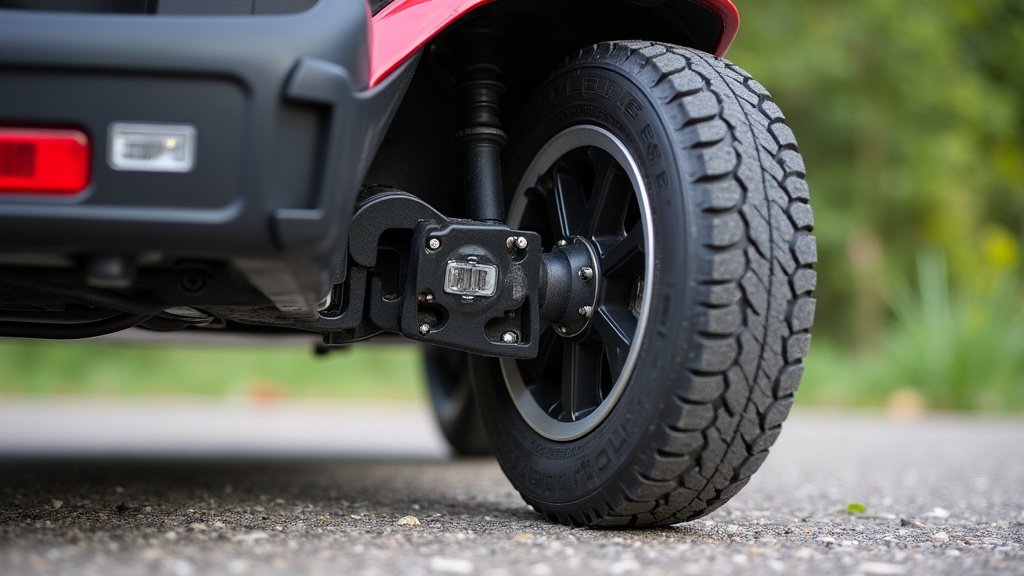
Each tire has a small valve stem sticking out. It often has a cap on it. This is where you’ll connect your gauge and pump.
Carefully unscrew the valve cap. Keep it in a safe place, like your pocket, so you don’t lose it. These caps prevent dirt and moisture from getting into the valve.
Sometimes, the valve stem can be tricky to reach, especially on smaller tires. You might need to rotate the wheel a little to bring the stem to the most accessible position. Don’t be afraid to move the scooter gently to get a better angle.
Getting an Accurate Reading with Your Gauge
Now, take your tire pressure gauge. Press its end firmly and squarely onto the valve stem. You should hear a brief hiss of air. This means you’ve made a good seal. If you hear continuous hissing, you’re not pressing hard enough or straight enough. Adjust your angle.
For a digital gauge, the reading will appear almost instantly on the screen. For an analog gauge, the needle will move, or a small rod will push out with the measurement. Read the number carefully.
Compare this reading to your scooter’s recommended PSI. Is it higher? Is it lower? This comparison tells you what to do next.
Here’s a quick checklist for checking your tire pressure:
- Familiarize yourself with your scooter’s recommended PSI.
- Gather your low-pressure tire gauge and pump.
- Ensure the scooter is off and stable, tires are cold.
- Locate and carefully remove the valve cap.
- Press the gauge firmly onto the valve stem for a reading.
- Compare the reading to the recommended PSI.
Adjusting Your Tire Pressure
Once you have your reading, you might need to adjust. This is where your tire pump comes in handy. It’s a simple process, much like adjusting air in a bicycle tire.
When to Add Air to Your Tires
If your gauge shows a number lower than the recommended PSI, your tires need more air. This is the most common situation. Low tire pressure can make your scooter feel sluggish and harder to steer. It also wears out your tires faster and can reduce your battery’s range.
Attach your pump to the valve stem, just like you did with the gauge. Pump a few strokes of air, then remove the pump and re-check the pressure with your gauge. It’s better to add a little at a time and re-check than to overinflate. Repeat this process until you reach the correct PSI.
When to Release Air from Your Tires
What if your gauge shows a number higher than the recommended PSI? This means your tires are overinflated. Overinflation can lead to a less comfortable ride, making every bump feel more pronounced. It can also reduce the tire’s contact patch with the ground, affecting traction and potentially making your ride less stable, especially in turns or on uneven surfaces (National Highway Traffic Safety Administration).
To release air, gently press the small pin in the center of the valve stem. You can use the back of your tire gauge or a small tool for this. You’ll hear air escape. Release a small amount, then re-check the pressure. Keep doing this until you reach the correct PSI. Remember, it’s easier to let air out than to put it back in if you release too much!
Important Considerations After Adjustment
Once you’ve reached the correct PSI, remember to replace the valve caps securely on all tires. These caps are more important than they seem; they protect the valve from dirt, moisture, and potential leaks.
Take your scooter for a short test ride. Does it feel smoother? Is the steering more responsive? You should notice a positive difference right away. This simple check ensures your scooter is ready for your next adventure!
The Benefits of Correct Tire Pressure
Why go through all this trouble? Because properly inflated tires offer many advantages. It’s not just about a comfortable ride; it’s about getting the most out of your mobility investment.
When your tires are at the right pressure, you’ll experience a smoother and more stable ride. It’s like floating along instead of bumping over every little pebble. This comfort is key for longer journeys.
Your battery will thank you, too. Underinflated tires create more rolling resistance. This means your scooter’s motor has to work harder, draining your battery faster. Correct pressure extends your battery’s range (Mobility Scooter Resource Center).
Tires last longer when they are properly maintained. Both under- and overinflation can cause uneven wear patterns. Keeping tires at their recommended PSI helps them wear evenly, meaning you won’t need to replace them as often. This saves you money in the long run.
Most importantly, correct tire pressure contributes to your overall safety. Properly inflated tires provide better traction and handling. This is especially important when navigating turns, slopes, or uneven outdoor terrain. You’ll have better control and a more secure feeling.
| Tire Pressure Condition | Effects on Your Scooter Performance | Impact on Your Safety/Comfort |
|---|---|---|
| Underinflated | Reduced battery range; increased tire wear (shoulders); harder steering; more sluggish feel. | Less stable ride, especially on turns; increased risk of tire overheating; can feel “squishy.” |
| Overinflated | Rougher ride; increased tire wear (center); reduced contact patch with the ground. | Less comfortable due to feeling every bump; reduced traction; can feel “bouncy” or unstable. |
| Correct PSI | Optimal battery range; even tire wear; responsive steering; efficient performance. | Smooth and comfortable ride; excellent traction and stability; enhanced control. |
How Often Should You Check Your Tires?
This isn’t a one-and-done task. Regular checks are important. How often depends on how much you use your scooter.
For most users, we found that checking your tire pressure at least once a month is a good rule of thumb. This ensures that any slow leaks or minor pressure changes don’t go unnoticed for too long.
If you use your scooter daily, or for long distances, consider checking the pressure every two weeks. Frequent use means more opportunities for pressure changes.
Also, always check your tires before a long trip or journey. Just like you’d check a car before a road trip, give your scooter the same care. This helps prevent unexpected issues far from home.
Changes in temperature can also affect tire pressure. Tires naturally lose a bit of pressure when the weather gets colder. So, when seasons change, it’s a good idea to perform a check.
Conclusion
Checking your mobility scooter’s tire pressure is a simple habit with significant rewards. You’ll enjoy a safer, smoother ride, extend your scooter’s battery life, and make your tires last longer. Knowing the correct PSI, having the right low-pressure gauge, and performing regular checks are all key steps. Make this small maintenance task a regular part of your routine. Your mobility scooter will thank you with reliable performance and enhanced comfort for all your journeys.
Frequently Asked Questions
How often should I really check my mobility scooter tires if I don’t use it much?
Even with infrequent use, we found it’s wise to check your tire pressure at least once a month. Tires can naturally lose air over time, even when just sitting. Regular checks prevent issues before your next outing.
Can I use a regular car tire pump for my mobility scooter tires?
Yes, you can use a regular car tire pump to inflate your mobility scooter tires. However, we recommend using a low-pressure tire gauge for checking, as car gauges are often inaccurate for the lower PSI ranges of scooter tires.
What happens if I overinflate my mobility scooter tires?
Overinflated tires can lead to a less comfortable and bouncier ride. They also reduce the tire’s contact patch with the ground, which can decrease traction and potentially shorten the tire’s lifespan by causing wear in the center.
My scooter has solid tires. Do I need to check their pressure?
No, if your mobility scooter has solid, puncture-proof tires, you do not need to check their pressure. These tires are designed to maintain their shape and do not require inflation. This article is mainly for pneumatic (air-filled) tires.
What’s the best way to remember to check my tire pressure regularly?
Consider setting a recurring reminder on your phone or marking it on a calendar. You could also tie it to another routine task, like charging your scooter’s battery. This helps ensure consistent maintenance.
