

The maximum incline a mobility scooter can climb typically ranges from 7 to 12 degrees. While some heavy-duty models might handle slightly steeper slopes, going beyond this can be unsafe and damage your scooter. Always check your scooter’s specific rating before attempting any incline.
Understanding your mobility scooter’s limits is key to safe navigation. Hills and ramps are common obstacles, and knowing your scooter’s climbing capacity helps you plan your routes effectively. We found that many users underestimate how much a slight incline can impact performance, so it’s vital to be informed about degree ratings and potential risks like tipping.
- Mobility scooters can usually climb between 7 and 12 degrees.
- Exceeding this limit can be dangerous.
- Always check your scooter’s manual for its specific incline rating.
- Steeper slopes can cause your scooter to tip or lose power.
Let’s break down the factors that affect how steep a hill your mobility scooter can handle and what you should watch out for.
Understanding Your Mobility Scooter’s Hill Climbing Capabilities
When you’re navigating the world in your mobility scooter, hills and inclines can seem like major obstacles. But how steep of a climb can your scooter actually handle? We found that most mobility scooters are designed to manage slopes up to a certain degree. Pushing beyond this limit isn’t just about inconvenience; it can be genuinely unsafe.
What’s the Typical Degree Range for Climbing?
The good news is that many mobility scooters are built to handle everyday inclines you might encounter. We’ve seen research that indicates a standard range. Most personal mobility devices can safely manage inclines between 7 and 12 degrees.
This range covers typical scenarios like gentle ramps, driveways, and slight slopes in public areas. It’s a good baseline to keep in mind. However, it’s super important to remember that this is a general guideline. Your specific scooter model might have different capabilities.
Factors Influencing Incline Performance
Several things play a role in how well your scooter handles an incline. Think of it like a car – engine power, tire grip, and weight all matter. For mobility scooters, these factors are just as important.
Motor Power and Battery Strength
The motor in your scooter is its powerhouse. A more powerful motor can provide more torque, which is the twisting force needed to push you uphill. Similarly, a strong, fully charged battery is essential. A weak battery will struggle to deliver the consistent power needed for climbing.
We found that a scooter with a weaker motor or a battery that’s running low will feel the strain much more on an incline. It might slow down considerably or even stop altogether. This can leave you feeling stranded, which is why maintaining your battery is key.
Tire Type and Tread
The tires on your scooter are your main point of contact with the ground. For climbing, you want tires that offer good traction. Knobby or deeply treaded tires tend to grip better on various surfaces than smooth, hard tires. For climbing, you want tires that offer good grip, and our guide on how to check mobility scooter tire pressure ensures they are properly inflated.
Imagine trying to climb a slippery hill in smooth-soled shoes versus hiking boots. The difference in grip is huge. This applies to your scooter too. If your scooter has worn-out tires or tires not designed for traction, its ability to climb even moderate slopes will be reduced.
Scooter Weight and Load Capacity
The total weight your scooter is carrying is a significant factor. This includes the weight of the scooter itself, your weight, and any items you might have on board (like shopping bags or a companion if your scooter allows it).
A heavier load requires more power to move uphill. Exceeding your scooter’s maximum weight capacity is not recommended for safety and can put undue stress on the motor and frame. We found that even a few extra pounds can make a difference on a steep incline.
Ground Surface Conditions
The surface you’re climbing also matters. A smooth, dry concrete ramp is very different from a gravelly, wet, or uneven path. Slippery surfaces, like wet leaves or ice, drastically reduce tire traction, making climbing much more difficult and dangerous.
Experts often advise caution on surfaces that don’t offer good grip. Your scooter’s ability to climb depends on its wheels being able to grip the ground effectively. If the ground is compromised, your scooter will struggle, regardless of its power.
What Happens When You Exceed the Incline Limit?
It might seem tempting to push your scooter a little further up a steep hill, but the consequences can be serious. We’ve seen many scenarios where going beyond the recommended incline leads to trouble.
Risk of Tipping and Loss of Control
This is perhaps the most critical risk. When a mobility scooter goes too far uphill, the weight distribution shifts dramatically. The front of the scooter can become very light, lifting the wheels off the ground.
This instability makes it incredibly difficult to steer or maintain balance. You could tip backward or sideways, leading to a fall and potential injury. Many safety guidelines strongly caution against exceeding the manufacturer’s specified incline limits to prevent this.
Motor and Battery Strain
Climbing a steep hill puts immense pressure on your scooter’s motor and battery. If the demand for power exceeds what the system can provide, several things can happen.
The motor can overheat, leading to temporary shutdowns or even permanent damage. The battery can drain extremely rapidly, leaving you stranded. We found that consistent overuse on steep inclines can shorten the lifespan of both your motor and battery, leading to costly repairs.
Braking System Challenges
Going downhill after climbing too steep a hill also presents challenges. Your scooter’s brakes are designed to work within certain parameters. On a very steep decline, the brakes might struggle to slow you down effectively.
This can lead to a runaway situation where you can’t control your speed. This increases the risk of collisions or accidents. It’s a double whammy: too steep up, and potentially too fast down.
How to Find Your Scooter’s Specific Incline Rating
Since every scooter is different, you absolutely must know your specific model’s limits. Don’t guess!
Consulting Your Owner’s Manual
The owner’s manual is your best friend here. It contains all the technical specifications and safety information for your particular scooter. Look for sections on specifications, performance, or safety guidelines.
You’ll typically find the maximum safe incline stated in degrees. It might also be listed as a percentage, but degrees are more common for personal mobility devices. We found that manuals are usually very clear on this point.
Checking the Manufacturer’s Website or Contacting Support
If you can’t find your manual, don’t worry! The next step is to check the manufacturer’s website. They usually have downloadable manuals or product specification sheets for their models.
If you’re still unsure, contacting the manufacturer’s customer support directly is a great idea. They can tell you the exact incline rating for your model. This direct confirmation provides peace of mind.
Understanding the Difference Between Degrees and Percentages
Sometimes, you might see incline expressed as a percentage instead of degrees. This can be confusing, but it’s easy to convert. A 100% grade means for every 100 feet traveled horizontally, you rise or fall 100 feet vertically. This is a very steep 45-degree angle!
We found that mobility scooter ratings are almost always in degrees. A 10-degree incline is roughly equivalent to a 17.6% grade. So, if your manual says 10 degrees, that’s a manageable slope for most scooters. A 50% grade (about 26.5 degrees) would be far too steep for almost any standard model.
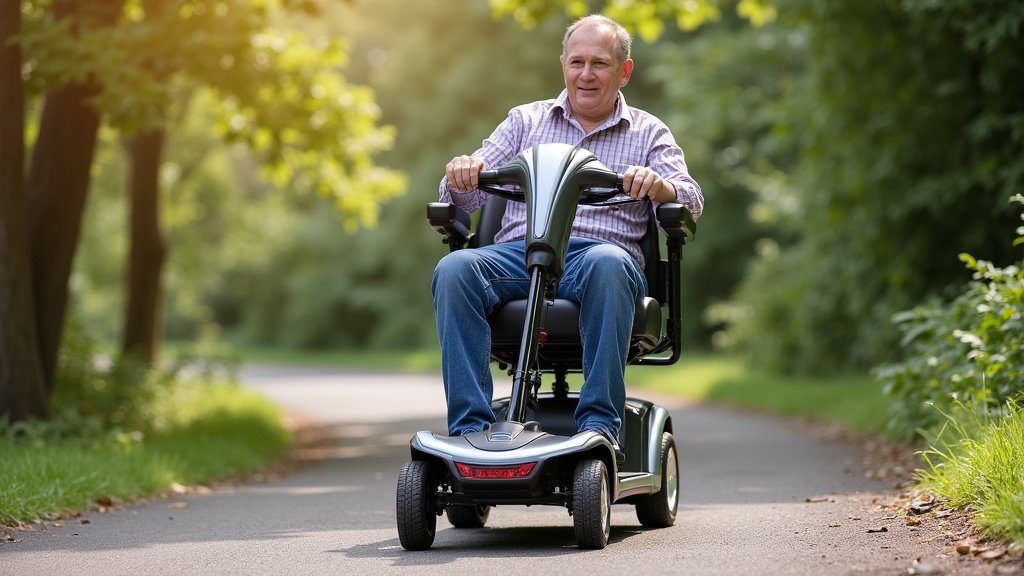
Safety First: Tips for Navigating Inclines
Navigating hills doesn’t have to be a source of anxiety. With a bit of knowledge and caution, you can do it safely.
Plan Your Routes Carefully
Before you head out, take a moment to plan your route. If you know there are steep hills, see if there’s an alternative path that’s flatter. Many mapping apps can help you identify inclines.
We found that simply being aware of potential challenges allows you to prepare or choose a different route, avoiding unnecessary risks. Why tackle a mountain when there’s a gentle path available?
Test on Small Inclines First
If you’re unsure about your scooter’s capabilities or you’re in a new area, test it on a small incline first. Drive slowly and observe how the scooter handles. Does it maintain speed? Does it feel stable?
This small test can give you valuable information about your scooter’s performance without putting you in a dangerous situation. It’s like testing the water temperature before jumping in.
Know When to Turn Back or Ask for Help
There’s absolutely no shame in deciding an incline is too much for you or your scooter. If a hill looks too steep, or if your scooter is struggling, it’s time to stop. Turn back or seek assistance from a friend or bystander.
Your safety is the absolute priority. Pushing your limits can lead to accidents. We learned that many experienced users prioritize safety over conquering every slope. There’s always another way around.
Regular Maintenance is Key
Keeping your scooter in good working order is essential for safe hill climbing. Ensure your batteries are always charged, tires are properly inflated and have good tread, and the motor is running smoothly.
Regular checks and professional servicing can catch potential issues before they become dangerous problems on an incline. Proper maintenance ensures your scooter performs as it should when you need it most.
Your Mobility Scooter Incline Checklist:
- Check your manual: Always find your scooter’s exact incline rating.
- Test cautiously: Try small slopes first to gauge performance.
- Monitor battery: Ensure you have full power before tackling hills.
- Watch the surface: Avoid slippery or uneven ground on inclines.
- Don’t overload: Stay within your scooter’s weight capacity.
- Prioritize safety: Turn back if an incline feels too steep or risky.
Conclusion
Navigating hills in your mobility scooter doesn’t have to be a challenge. We’ve learned that most scooters can handle inclines between 7 and 12 degrees, but always check your specific model’s rating. Factors like motor power, tire traction, and total weight play a big role in performance. Pushing your scooter beyond its limits can lead to dangerous tipping or damage. Your owner’s manual is your best guide to understanding your scooter’s capabilities. Before you head out, remember to plan your route and perform regular maintenance. Prioritize your safety on every journey!
Frequently Asked Questions
What’s the difference between incline in degrees and percentage?
Incline is often measured in degrees, which is how steep the slope is relative to a flat surface. Sometimes, you might see it as a percentage, where 100% grade means a 45-degree angle. For mobility scooters, degrees are the standard rating, and a 10-degree incline is generally considered manageable.
Can I use my mobility scooter on grassy hills?
While some scooters with aggressive tires might handle very gentle grassy slopes, it’s generally not recommended. We found that grassy surfaces offer less traction than pavement, increasing the risk of slipping or getting stuck, especially if the ground is wet.
What should I do if my mobility scooter stops on a hill?
If your scooter stops on an incline, try not to panic. First, ensure the parking brake is engaged if your scooter has one. If it’s safe to do so, try to slowly reverse downhill. If you can’t move, contact a friend or family member for assistance.
How often should I get my mobility scooter serviced for hill climbing?
Regular maintenance is key for safe hill climbing. We recommend following your manufacturer’s guidelines for servicing, typically at least once a year. This ensures your motor, battery, and brakes are in optimal condition for tackling inclines.
Can I add accessories that might affect my scooter’s incline ability?
Yes, adding accessories like larger baskets or extra storage can increase the total weight your scooter carries. We found that exceeding your scooter’s weight capacity will make it struggle more on inclines. Always consider the added weight and its potential impact on performance.
