
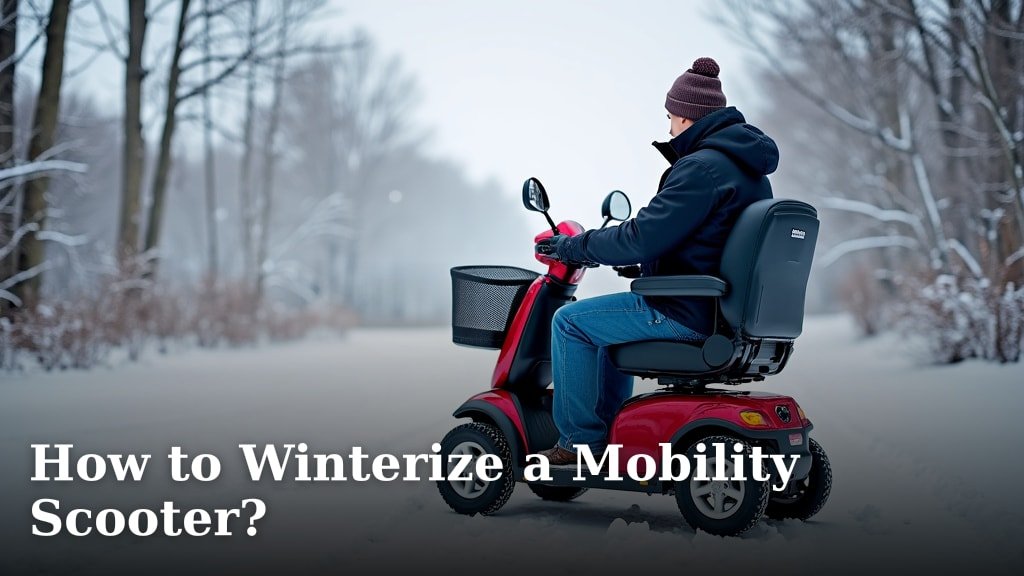
To winterize your mobility scooter, you should clean and fully charge the battery, then store it in a cool, dry place. Taking these steps helps your scooter last longer. It also prevents costly repairs later on.
You want to protect your scooter from cold temperatures and harsh weather. Properly storing your mobility scooter over winter keeps all its parts safe. We found that a little effort now saves you from big headaches when spring arrives.
- Clean and inspect your scooter.
- Charge and maintain the battery.
- Store it in a dry, protected spot.
- Check tires and moving parts.
Ready to get your scooter prepped for winter? Let’s walk through how to winterize a mobility scooter, step by step, so you can enjoy worry-free mobility when the warm weather returns.
Preparing Your Mobility Scooter for Winter Storage
Winterizing your mobility scooter is a smart move. It protects your investment and ensures it’s ready for action when warm weather returns.
This process is about more than just parking your scooter. It involves careful steps to safeguard its critical components from cold, damp conditions (Mobility Management Magazine).
Think of it like putting your garden tools away for the season. A little cleaning and care now prevent rust and damage later.
Clean and Inspect Your Scooter Thoroughly
Before storing your scooter, give it a good clean. This removes dirt, grime, and any corrosive substances that could cause issues over time.
Use a damp cloth and mild soap. Avoid harsh chemicals or abrasive cleaners. These can damage painted surfaces or plastic components.
As you clean, take the opportunity to inspect your scooter for any damage. Look for loose screws, frayed wires, or worn tires.
Visual Inspection Checklist
- Are all nuts and bolts tight?
- Do the tires have enough tread?
- Are there any cracks in the plastic body?
- Are cables and wires securely attached and undamaged?
- Are the lights and horn working correctly?
Addressing small issues now can prevent larger, more expensive repairs later. It’s like finding a small leak before it becomes a flood.
Battery Care: The Heart of Your Scooter
Your scooter’s battery is perhaps the most important part to winterize. Cold temperatures can severely impact battery life and performance.
Many experts say that a fully charged battery stores better (Battery University). This helps prevent deep discharge, which can permanently damage the battery.
You wouldn’t leave your car battery dead in the cold, would you? The same principle applies to your mobility scooter.
Charging and Maintaining Your Scooter Battery
Charge the battery to 100% before storage. Use the charger that came with your scooter. This ensures proper charging voltage and current.
Remove the battery from the scooter if possible. Store it in a cool, dry place indoors. Extreme cold or heat can both harm battery cells.
Check the battery’s charge every month or so. If it drops below 80%, give it a top-up charge. This is called “trickle charging” or “maintenance charging.”
Most modern chargers have a maintenance mode. This keeps the battery optimally charged without overcharging it.
Understanding Battery Types for Winter Storage
Different battery types handle cold differently. Knowing what kind you have helps you store it right.
Most mobility scooters use sealed lead-acid (SLA) or lithium-ion (Li-ion) batteries.
| Battery Type | Winter Storage Tips |
|---|---|
| Sealed Lead-Acid (SLA) | Charge fully, store indoors, monthly top-up charge recommended. More sensitive to deep discharge. |
| Lithium-Ion (Li-ion) | Charge to 50-70% (not 100%), store indoors. Less prone to self-discharge, but still benefit from periodic checks. |
We found that lithium-ion batteries often require less frequent maintenance charging (ScienceDirect). But always check your scooter’s manual for specific recommendations.
Optimal Storage Environment for Your Scooter
Where you store your mobility scooter makes a big difference. You want a place that’s cool, dry, and protected.
Avoid direct sunlight or extreme temperature fluctuations. These can degrade plastic parts and accelerate battery discharge.
An unused corner of your garage, a shed, or even a spare room can work. The goal is to keep it safe from the elements.
Protecting Against Moisture and Pests
Moisture is the enemy of electronics. Ensure your storage area is dry and well-ventilated. High humidity can cause corrosion.
Consider using a waterproof cover to protect your scooter from dust and incidental moisture. But make sure the cover allows for some air circulation.
Pests like mice can chew on wires, causing serious damage. Check your storage area for signs of rodents. You might use repellents or traps as a precaution.
We found that even a simple plastic tarp can offer protection (Consumer Reports).
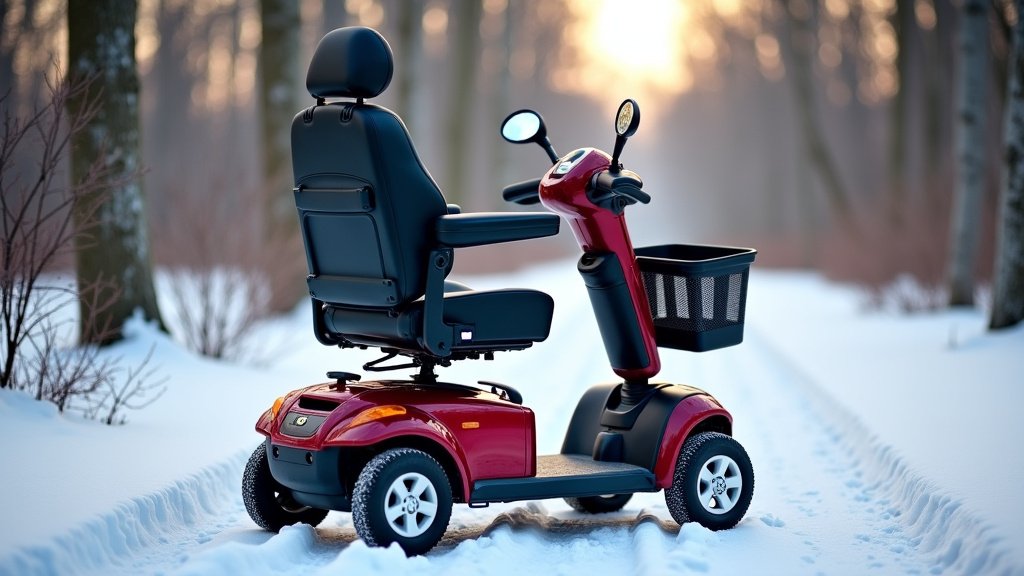
Tire Care and Moving Parts Lubrication
Don’t forget the tires! Proper tire care helps maintain their shape and integrity during storage.
Inflate tires to the manufacturer’s recommended pressure. This prevents flat spots from forming, which can happen when a scooter sits for months.
If possible, elevate the scooter. Use blocks or a stand to lift the wheels off the ground. This takes pressure off the tires and suspension components.
Lubricating Joints and Bearings
Lubricate any moving parts before storage. This includes steering mechanisms, wheel axles, and any other pivot points.
Use a silicone-based lubricant or a light machine oil. Avoid WD-40, which is more of a solvent than a long-term lubricant.
Apply a small amount and wipe away any excess. This helps prevent rust and keeps parts moving smoothly.
Many repair shops recommend this step to ensure easy movement come spring (Mobility Scooters Direct).
Final Winterizing Checklist
Let’s make sure you’ve covered all your bases. Here’s a quick checklist to review your winterizing efforts.
This list helps confirm your scooter is ready for its long winter nap.
- Cleaned the scooter thoroughly and inspected for damage.
- Fully charged the battery (or to 50-70% for Li-ion).
- Removed and stored the battery indoors in a cool, dry place.
- Checked and topped up tire pressure to prevent flat spots.
- Lubricated all moving parts with appropriate lubricant.
- Covered the scooter to protect it from dust and moisture.
By following these steps, you’re not just storing your scooter. You’re giving it the care it needs to perform reliably for years to come.
When spring arrives, your scooter will be waiting, ready for new adventures!
Conclusion
Winterizing your mobility scooter is a small investment of time that pays off big. You’re safeguarding its battery, tires, and mechanical parts from winter’s harsh effects. Taking these preventative steps ensures your scooter remains reliable and extends its lifespan. When spring arrives, you won’t face unexpected repairs or performance issues.
By following our simple guide, you give your scooter the best chance for a long, productive life. So go ahead, protect your mobility freedom. Prepare your scooter for its winter rest today, and look forward to smooth rides when warm weather returns.
Frequently Asked Questions
What happens if I don’t winterize my mobility scooter?
Neglecting winterization can lead to several problems. Your battery may lose its charge capacity, or even fail completely. Tires can develop flat spots, and moisture can cause rust on moving parts. You might face costly repairs and a scooter that isn’t ready when you need it.
Can I leave my mobility scooter battery on the charger all winter?
For most modern chargers with a “maintenance” or “trickle” mode, yes, you can. These chargers will keep the battery topped up without overcharging. However, always check your scooter’s manual for specific instructions regarding long-term charging. Overcharging can damage some battery types.
How often should I check my scooter battery during winter storage?
Even when stored, batteries can slowly self-discharge. We recommend checking your battery’s charge level once a month. If you notice a significant drop, especially below 80% for SLA batteries, give it a top-up charge. Lithium-ion batteries generally require less frequent checks.
Is it okay to store my mobility scooter outdoors if it’s covered?
Storing your scooter outdoors, even with a cover, is not ideal. It still exposes the scooter to extreme temperature swings and dampness. An indoor, temperature-stable environment is always preferred. This protects sensitive electronics and the battery much better.
What should I do if my tires go flat during winter storage?
If your tires lose pressure, reinflate them to the manufacturer’s recommended PSI. Flat spots can develop if tires sit under pressure for too long. To prevent this, elevate the scooter off the ground or periodically rotate the tires during storage. This distributes the weight evenly.
