
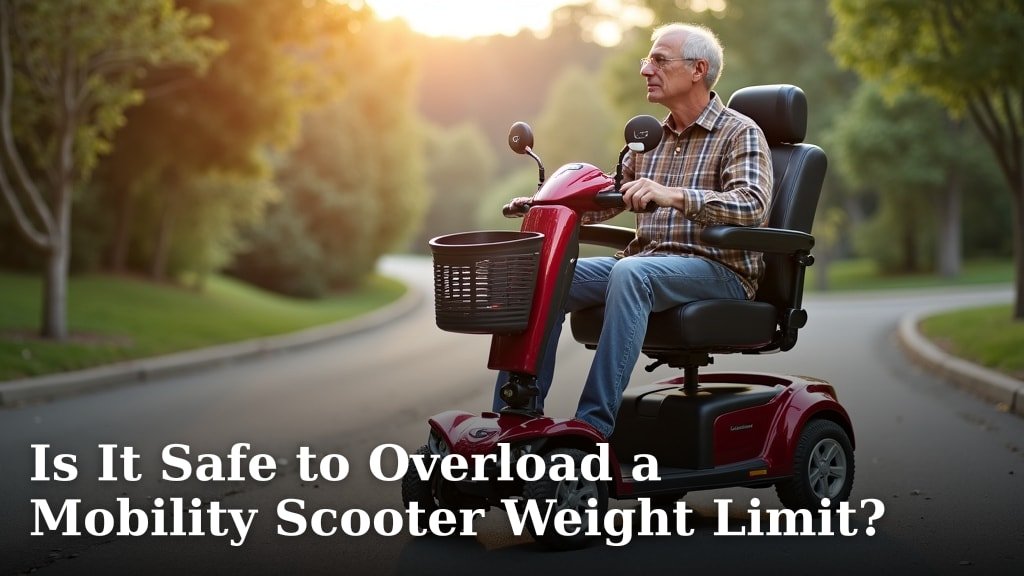
No, it is generally not safe to overload a mobility scooter beyond its stated weight limit. Doing so can damage the scooter and compromise your safety. Mobility scooters are engineered for specific weight capacities.
Exceeding these limits can lead to reduced performance and potential mechanical failures. It’s important to understand your scooter’s specifications to ensure reliable operation and prevent unexpected issues. Your safety is always the top priority.
- Don’t overload your mobility scooter.
- Overloading can cause damage.
- It can lead to safety risks.
- Always check your scooter’s weight limit.
Let’s break down exactly what happens when you overload a mobility scooter and why sticking to the weight limit is so important for you.
What Happens When You Exceed Your Mobility Scooter’s Weight Limit?
It’s a common question: what’s the real harm in pushing your mobility scooter just a little past its weight limit? You might think it’s just a number. Unfortunately, that number is there for a very good reason.
When you overload your scooter, you’re asking its components to do more work than they were designed for. This can lead to a cascade of problems, affecting performance, longevity, and, most importantly, your safety.
Understanding Your Scooter’s Weight Capacity
Every mobility scooter comes with a specific weight capacity. This isn’t just a suggestion; it’s a carefully calculated limit based on the scooter’s engineering. Think of it like the weight limit on an elevator or a bridge.
This limit considers the strength of the frame, the motor’s power, the battery’s ability to deliver energy, and the durability of the tires and suspension system. Exceeding it puts undue stress on all these parts, leading to potential breakdowns. If you need a scooter with a higher weight capacity, consider looking into bariatric mobility scooters.
Immediate Effects on Performance
The first things you’ll likely notice when your scooter is overloaded are changes in how it performs. It might feel sluggish, especially when going uphill or starting from a standstill. You’ll probably find it takes longer to reach its top speed.
Battery life can also take a hit. The motor has to work harder to move the extra weight. This means your battery will drain faster, cutting your travel time short. It’s like trying to run a marathon after a big meal – you’ll feel the extra effort.
Reduced Speed and Power
When you exceed the weight limit, the motor struggles. It might not be able to provide the usual power, making hills feel much steeper than they actually are. You might find yourself moving at a crawl instead of a comfortable pace.
This reduced power isn’t just inconvenient; it can be a safety concern in certain situations. Imagine needing to quickly maneuver around an obstacle and finding your scooter lacks the necessary responsiveness. That’s a stressful situation no one wants to be in.
Braking System Strain
Your scooter’s braking system is designed to stop a specific amount of weight safely. When you add more weight than it’s rated for, the brakes have to work much harder. This can lead to increased stopping distances.
Longer stopping distances are a serious risk, especially in traffic or crowded areas. It’s vital that your scooter can stop reliably when you need it to. Overloading compromises this essential safety feature.
Long-Term Damage and Wear
Beyond the immediate performance issues, overloading can cause cumulative damage over time. The constant strain on various components will shorten their lifespan and potentially lead to premature failure.
This means you could face more frequent and costly repairs. It’s often more economical to stay within the weight limits than to deal with the fallout of consistent overloading.
Motor and Drivetrain Stress
The motor is the heart of your mobility scooter. When it’s overloaded, it overheats and works much harder than intended. This can lead to permanent damage to the motor windings or the gears in the drivetrain.
Many experts say that motor burnout is a common consequence of persistent overloading. Once the motor is damaged, it often needs to be replaced, which can be a significant expense.
Frame and Structural Integrity
The frame of your scooter is designed to support a certain load. Consistently exceeding this limit can cause the frame to bend or weaken over time. This is especially true for lighter models or those with less robust construction.
A compromised frame not only affects how the scooter handles but can also lead to other parts failing as they are no longer properly aligned. It’s like driving a car with a bent chassis – things just don’t work right.
Battery and Electrical System Issues
As we mentioned, the motor draws more power when overloaded, leading to faster battery drain. But it doesn’t stop there. The increased electrical demand can also put a strain on the scooter’s wiring and controller.
This extra strain can cause components to overheat, potentially leading to short circuits or failure of the electronic control system. Repairing these can be quite complex and costly.
Safety Risks Associated with Overloading
The most critical aspect of overloading is the increased risk to your personal safety. When a scooter is pushed beyond its limits, it becomes less predictable and more prone to sudden failure.
Imagine being out on a path and experiencing a sudden loss of power or a braking failure. These aren’t just minor inconveniences; they can lead to accidents, falls, and injuries.
Tipping and Instability
Mobility scooters have a specific center of gravity when used within their weight limits. Adding excess weight, especially if it’s not distributed evenly, can raise the center of gravity and make the scooter more prone to tipping.
This is particularly dangerous on slopes, uneven terrain, or when making sharp turns. A tipped scooter can result in serious harm to the rider. Research from mobility device safety organizations consistently highlights stability issues with overloaded equipment.
Component Failure and Unexpected Stops
When key components like the motor, brakes, or steering mechanism fail due to overload, you can be left stranded or in a dangerous situation. A sudden stop in a busy area, or a loss of control on a decline, can be very hazardous.
You rely on your scooter to get you from point A to point B safely. Overloading jeopardizes that reliability. It’s much better to be safe than to risk an accident because of a few extra pounds.
What Counts Towards the Weight Limit?
It’s not just about your body weight. You need to consider everything you’re carrying when assessing if you’re nearing the scooter’s limit. This includes:
- Your personal weight
- Any passengers (if your scooter is designed for it, which most aren’t)
- Groceries or shopping bags
- Medical equipment (like oxygen tanks)
- Any accessories attached to the scooter that add weight
Think of it like packing for a trip. You have a luggage weight limit, and you need to account for everything you put in your bags. For your scooter, it’s the same principle – everything adds up.
Practical Tips for Staying Within Limits
Staying within your mobility scooter’s weight limit is about smart planning and responsible usage. Here are a few tips to help you out:
- Know your scooter’s limit: Check your owner’s manual. It’s usually listed clearly.
- Weigh yourself: If you’re unsure, step on a scale.
- Distribute weight evenly: If carrying items, try to balance the load.
- Use appropriate storage: Utilize baskets or bags designed for your scooter.
- Make multiple trips: For heavy shopping, it’s better to go back and forth than overload.
- Consult your dealer: If you have questions about accessories or capacity, ask a professional.
Following these simple guidelines helps ensure your scooter remains a reliable and safe tool for your mobility. It’s about maximizing its performance and longevity while keeping you protected on every journey.
Conclusion
You’ve learned that overloading your mobility scooter is a direct path to potential trouble. Pushing past the weight limit isn’t just inconvenient; it actively compromises your scooter’s performance and, more importantly, your safety. From struggling motors and weakened frames to unreliable brakes and increased tipping risks, the consequences can be serious and costly.
To ensure your scooter remains a dependable partner, make it a habit to always respect its weight capacity. You can find this information in your owner’s manual. By staying within the limits, you’re not just protecting your scooter; you’re safeguarding your independence and well-being on every outing.
Frequently Asked Questions
What is the typical weight limit for a mobility scooter?
Weight limits vary widely depending on the scooter model and design. Generally, they can range from 200 lbs for lighter portable models to over 500 lbs for heavy-duty or bariatric scooters. Always consult your owner’s manual for the exact specification for your specific model.
Can I add accessories like a basket or a cup holder without affecting the weight limit?
While many accessories are designed to be lightweight, they do add to the overall load. You should account for the weight of any permanently attached accessories when considering the total weight. Some heavy-duty baskets or cargo carriers might add a considerable amount, so check their specifications too.
What should I do if I think I might be close to my scooter’s weight limit?
If you are concerned about your weight or the weight of items you carry, it’s best to err on the side of caution. Consider making multiple trips for groceries, or see if a lighter-weight alternative accessory exists. Regularly checking your owner’s manual for the specified limit is always recommended.
Does riding on inclines put more stress on the scooter than the weight limit suggests?
Yes, riding on inclines or rough terrain does put extra strain on the motor and drivetrain, even if you are within the scooter’s weight limit. When overloaded, these inclines become even more challenging and can accelerate wear and tear on components.
Is it better to buy a scooter with a higher weight capacity than I need?
Choosing a scooter with a higher weight capacity than your current needs can offer peace of mind and future flexibility. It also means the scooter will likely experience less strain during daily use, potentially leading to greater longevity and fewer maintenance issues.
