Knee Scooter vs Wheelchair After Foot Surgery: Which Is Better? (November 2026)
A knee scooter suits some people who can balance on one leg and bear weight on the injured knee; a wheelchair may suit people who need seated mobility or cannot use a scooter safely. Follow your surgeon’s weight-bearing instructions before choosing either.
On this page (6 sections)
A knee scooter suits some people who can balance on one leg and bear weight on the injured knee; a wheelchair may suit people who need seated mobility or cannot use a scooter safely. Follow your surgeon’s weight-bearing instructions before choosing either.
A scooter keeps your foot off the ground while you stand on the other leg, rest the injured knee on a pad and steer. A wheelchair lets you travel while seated, either by propelling a manual chair or having someone push a transport chair.
Your recovery instructions, balance, home layout and help available are more important than choosing the device that looks easier. We compared the features of 2 knee scooters and 2 wheelchairs to show what to consider.
 Best for self-propelled mobility
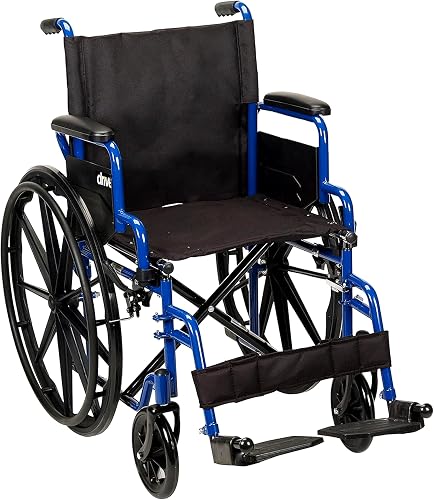
Drive Medical Blue Streak Lightweight Wheelchair
 Best for caregiver-assisted trips
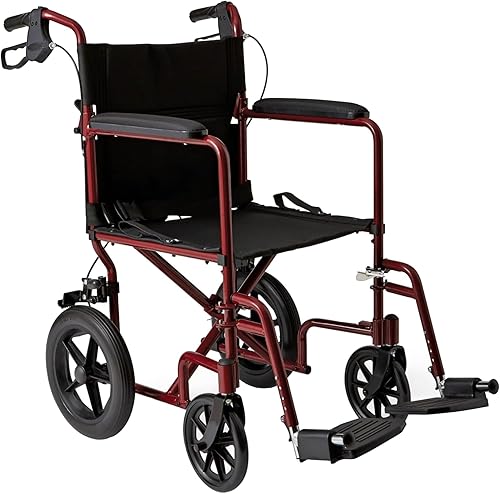
Medline Lightweight Foldable Transport Wheelchair with Handbrakes
Knee scooter vs wheelchair: what’s the main difference?
A knee scooter requires standing, balance and steering; a wheelchair supports you in a seated position. Those differences affect transfers, fatigue, doorways and the routes you can take.
With a knee scooter, one knee rests on a padded platform while the other leg pushes the scooter along. You steer with the handlebar and use the brake to slow or stop.
It can keep your hands available for steering, but you need to be able to control the scooter and stop safely.
A wheelchair keeps you seated and moves on wheels. A manual wheelchair may let you propel yourself with your arms, while a transport wheelchair is designed for a caregiver to push.
A footrest can support your lower leg, but getting into and out of the seat still takes planning.
Neither device is automatically the safer choice for every person or stage of recovery. Ask your care team which movements and surfaces fit your restrictions.
Who may be better suited to a knee scooter?
A knee scooter may be a practical option if your care team approves it and you can balance, steer and use the brake. It may not fit if you can't comfortably rest the injured knee on a pad or control the scooter.
A scooter can suit someone who needs to move between rooms while standing and can push with the uninjured leg. It may also help you carry small items if the scooter has a bag, though you should keep both hands on the controls while moving.
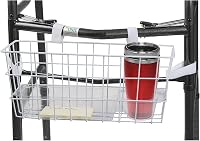
The [BlessReach Lightweight Knee Scooter for Adults] is an indoor-oriented option with 8-inch wheels, a folding steering lever, a locking handbrake and a detachable canvas bag. The maker gives a 300 lb weight capacity; confirm that the knee pad and handlebar positions suit your body.
For more on fit, see knee scooter sizes.
A scooter asks more of your balance and coordination than a seated chair. If you feel unsteady, cannot hop or push comfortably with the other leg, or can't reach the brake reliably, ask your care team about another mobility option.
When does a knee scooter vs wheelchair choice depend on the route?
A smooth, level route may be easier to manage on a scooter than an uneven or crowded path. Turns, thresholds, loose rugs, slopes and tight spaces can change how safe either option feels.
The BlessReach Foldable All Terrain Knee Scooter has 11-inch front wheels and 8-inch rear wheels, plus a disc brake and locking hand brake. The maker describes it for grass, gravel and sidewalk crevices, and recommends a safe speed below 3 mph.
Treat the surface and your ability to control the scooter as part of the decision.
A wheelchair also needs a clear route and enough turning room. A caregiver may need to help over thresholds, and a narrow doorway can block either device.
Walk or roll through the route in your mind before choosing: bedroom to bathroom, entryway to car, and any steps or ramps.
Who may be better suited to a wheelchair?
A wheelchair may fit better if you need seated mobility, cannot safely balance on a scooter, or have someone available to push you. A manual wheelchair and a transport wheelchair offer different kinds of help.
A manual chair with large rear wheels may let you propel yourself, if your arm strength, coordination and care instructions allow it. A transport chair is pushed by a caregiver and may be useful for trips when you expect assistance.
The [Drive Medical Blue Streak Lightweight Wheelchair] has swing-away footrests, flip-back desk arms and push-to-lock brakes. It is a manual chair with a steel frame, so consider who will propel it and whether its 41.3 lb weight is manageable for the person who will load it.
The [Medline Lightweight Foldable Transport Wheelchair with Handbrakes] is designed for caregiver-assisted mobility. It has hand brakes, rear-wheel locking brakes, a 19 in wide by 16 in deep seat, and detachable swing-away footrests.
Consider it if another person will push you and you want a chair that folds for car transport.
For help comparing walking aids for days when you can bear weight, see our walker for seniors buying guide. A walker is not a substitute for the mobility device your care team recommends while your foot must stay off the ground.
Which option is easier for transfers and daily tasks?
A wheelchair provides a seated place to rest, while a scooter requires you to stand and move between the pad and your destination. Either can require help during transfers, so plan for the bed, toilet, shower and car.
A wheelchair's swing-away or detachable footrests can clear space for getting in and out. Flip-back desk arms, like those on the Drive Medical chair, can make it easier to pull up to a table.
They don't remove the need to transfer carefully or follow instructions for protecting your foot.
A knee scooter doesn't provide a seat for resting. You need a safe place to stop, park and get off when you reach a chair or bed.
Carrying objects can also be awkward, so a bag may help with light items, but don't overload it or take your hands off the controls while moving.
Think through one ordinary task at a time. If you need to carry a drink, open a heavy door or get into a small bathroom, ask your care team or caregiver to help assess the setup.
What should you check before choosing?
Check medical clearance, fit, braking and the route you’ll use before choosing a knee scooter or wheelchair. A device that fits your room but conflicts with your recovery instructions is the wrong choice.
Ask whether your restrictions allow pressure on the knee, hopping on the other leg, or using your arms to propel a chair. Also ask whether your route should avoid stairs, uneven ground or slopes.
The American Academy of Orthopaedic Surgeons guidance on foot and ankle conditioning explains that a clinician can tailor exercises and recovery advice to your needs.
Check scooter height and knee-pad position, then test the handbrake and turning space with someone nearby. The standard BlessReach scooter has a stated 300 lb capacity; the all-terrain model also states 300 lb.
Read more about knee scooter weight limits and confirm the exact model's limits before use.
For a wheelchair, check seat width, footrest position, brake access and whether someone can push or lift it as needed. Measure doorways and the car opening, and consider the chair's weight if a caregiver will load it.
See the knee scooter price guide when comparing the cost of scooter options.
If you’re still weighing the basics, start with what a knee scooter is. If your recovery also involves hip surgery, read Is It Safe to Use a Mobility Scooter After Hip Surgery? and ask your care team how your procedures affect mobility.
How do you decide between a knee scooter and wheelchair?
Choose a knee scooter if your care team approves it and you can balance and steer; choose a wheelchair if seated mobility or caregiver assistance fits your needs better. Your restrictions and typical routes should decide the match.
The Drive Medical Blue Streak is the manual wheelchair option here for someone who can propel a chair or has help. The Medline transport chair is for caregiver-pushed trips.
The BlessReach standard scooter is a folding choice for smoother indoor routes, while its all-terrain model has larger front wheels for approved rougher paths.
Before you settle on one, ask your surgeon or physical therapist about weight-bearing, knee pressure, transfers and safe surfaces. Pick the device you can use as instructed on the route you actually need.
Frequently asked questions
Is a knee scooter better than a wheelchair after foot surgery?
A knee scooter may suit you if your surgeon allows it, your injured knee can rest on the pad, and you can balance and steer. A wheelchair may be a better fit if you need seated mobility, cannot safely use a scooter, or need a caregiver to assist.
Follow your care team’s instructions.
Can you use a knee scooter if you cannot put weight on your foot?
Possibly, but only if your surgeon or physical therapist says a knee scooter is appropriate for your specific restrictions. Your foot stays off the ground, but the scooter requires pressure on the padded knee, balance and control.
Ask what movements and surfaces are safe before using one.
Is a transport wheelchair the same as a manual wheelchair?
No. A transport wheelchair is generally pushed by a caregiver, while a manual wheelchair with large rear wheels may allow the user to propel it.
The Medline chair here is a transport model, and the Drive Medical Blue Streak is a manual wheelchair.
Check who will push the chair on your usual routes.
Which is easier to take in a car?
Both options can fold, but ease depends on the exact model, who will lift it, and the car’s cargo space. The Medline transport chair folds for car transport, and both knee scooters here have folding features.
Measure your trunk opening and allow room for any other recovery equipment.
Can you use a knee scooter on grass or gravel?
Some knee scooters are designed for rougher surfaces, but that doesn't make every route safe. The BlessReach all-terrain model has 11-inch front and 8-inch rear wheels, and its maker describes use on grass and gravel.
Ask your care team about your route and practice only where you can stop safely.