How to Make Walker Wheels Quieter
To learn how to make walker wheels quieter, remove reachable debris, check for loose or worn parts, and clean the wheels as the walker manual directs. Skip lubricant unless the manufacturer approves it for that exact part.
On this page (10 sections)
- How do you make walker wheels quieter?
- What causes walker wheels to squeak or rattle?
- Can lubricant make walker wheels quieter?
- How should you clean walker wheels for indoor use?
- When should you replace noisy walker wheels?
- How can walker setup affect indoor noise?
- Which walker accessories suit indoor use?
- What are common mistakes when quieting walker wheels?
- How can you tell the walker is ready to use again?
- How to make walker wheels quieter: which fix should you choose?
To make walker wheels quieter, remove reachable debris, inspect the wheels and brakes, and clean them according to the walker’s manual. If you’re searching for how to make walker wheels quieter, start with those checks before buying parts or trying lubricant.
A quiet wheel should still roll freely and let the brakes work as intended. Stop using the walker if a wheel wobbles, a brake drags, or the frame feels unstable, and get help identifying the problem.
How do you make walker wheels quieter?
Start with a safe visual check and gentle cleaning. This solves noise caused by hair, lint, or grit without changing how the wheel or brake is set.
- Park the walker on a level surface and engage its brakes if it has them.
- Look around each wheel, fork, and axle for debris or anything rubbing.
- Remove loose hair or lint you can reach without forcing tools between parts.
- Wipe the wheel with a damp cloth and mild cleaner only if the manual permits it.
- Dry it fully, then check that it rolls and stops normally.
Turn the walker over only if you can do so safely, or ask someone to help. Don’t lean your weight on a walker that is upside down or supported unevenly.
If a part feels loose or a wheel won’t turn smoothly, consult the manual before adjusting it. Avoid taking apart an axle or brake assembly unless the manufacturer gives clear instructions.
What causes walker wheels to squeak or rattle?
Debris, a loose fastener, a worn wheel, or a damaged bearing can make a walker noisy. A wheel rubbing against the frame or fork can also create a repeated scrape.
Move the walker slowly over a flat floor and listen for where the sound comes from. A squeak that repeats with each turn may point to the wheel or axle area, while a rattle can suggest a loose part.
The sound is a clue, not a diagnosis. Look for cracks, flat spots, wobble, or rubbing, and leave repairs that involve the axle or brakes to someone who can follow the model’s service instructions.
Can lubricant make walker wheels quieter?
Use lubricant only when the manufacturer approves it for the specific part. Oil or spray can collect dust and grit, and it may reach a brake surface where grip matters.
Check the walker manual for approved maintenance steps. If it doesn’t mention lubricant, ask the manufacturer or a mobility equipment service professional before applying anything.
Never spray lubricant onto brake pads, tires, or other surfaces that need grip. After any approved maintenance, check that the wheels roll freely and the brakes engage before walking.
How to make walker wheels quieter when a brake rubs
A brake that rubs against a wheel can cause scraping or drag. If it needs attention, see how to adjust rollator brakes.
Check whether the brake releases fully and whether its parts look bent, loose, or out of place.
Don’t bend or reposition a brake to silence it. Follow the instructions for how to lock walker wheels and ask the manufacturer or a repair professional about a brake that continues to rub.
How should you clean walker wheels for indoor use?
Wipe off dirt and grit, then dry the wheels before walking again. Use only cleaning products allowed by the manual.
Hair and thread can wrap around the axle, especially after use on rugs or carpet. Remove what you can reach gently; don’t cut into the wheel or pry against the fork.
Avoid soaking the wheel assembly or directing water into bearings and brake parts. If the wheel still squeaks after cleaning, or the sound returns quickly, inspect it for wear or arrange a repair check.
When should you replace noisy walker wheels?
Replace a wheel that is cracked, loose, badly worn, or still noisy after cleaning and inspection. Choose one made for the walker model, then follow its installation instructions.
Don’t assume that a wheel with the same diameter will fit. Attachment points, axle size, and brake clearance can vary, so check the walker’s model and parts guidance before ordering.
If you can’t tell whether the wheel, axle, or brake is causing the noise, have a mobility equipment professional inspect it. The guide to how to replace rollator wheels can help you understand what to check before a replacement.
How can walker setup affect indoor noise?
Rugs, cords, thresholds, and uneven flooring can make wheels catch or sound louder. Clear the route and check that the wheels don’t rub against a floor covering or the walker frame.
Use the walker on surfaces its manufacturer allows. If you’re choosing a walker for your home, compare the wheel setup with your flooring and storage needs; the walkers and rollators buying guide explains the main choices.
A walker with front wheels may move differently from one with glide attachments or rear wheels. Read about whether walker wheels should go in front or back before changing the setup.
Which walker accessories suit indoor use?
Choose an accessory for carrying items, not as a way to quiet a noisy wheel. A basket or tray can keep everyday belongings within reach, but it won’t fix a squeak, worn wheel, or rubbing brake.
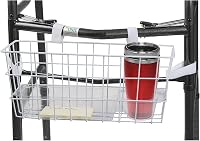
The HealthSmart basket suits someone who wants storage and a cup holder on a compatible walker or rollator. It uses adjustable hook and loop straps, has a removable plastic tray insert, and is rated for up to 10 lb; skip it if the added basket would block the user’s route or access to the brakes.
The DMI folding tray suits a user who wants a flat surface for a meal, book, or craft activity. It fits many standard walkers around 18.5 in wide, folds down when not in use, and has a 5 lb capacity; skip it for an extra-wide or bariatric walker, or if you can’t distribute the load evenly.
For someone who is comparing a complete walker setup, the Medline folding walker has 5 in wheels, a two-button fold, and a 300 lb capacity. Set the handles to a comfortable height using rollator handle adjustment guidance.
It’s a candidate for users whose height and fit match its range; skip it if you only need to repair an existing walker or need a different capacity or fit.
For more walker add-ons, see walker accessories for seniors. If you use a rollator, follow rollator walker use and brake guidance so the brakes and wheels are set for safe movement.
What are common mistakes when quieting walker wheels?
The main mistake is trying to silence the wheel before finding the source of the sound. Lubricant, forceful scraping, or a replacement wheel that doesn’t fit can create a new problem.
Avoid these shortcuts:
- Don’t spray lubricant around the axle or brake without manufacturer approval.
- Don’t pry between the wheel and fork with a knife or screwdriver.
- Don’t tighten fasteners by guesswork; use the manual’s steps.
- Don’t keep walking on a cracked, loose, or wobbling wheel.
- Don’t load a tray or basket beyond its capacity or block brake access.
- Don’t assume a repeated scrape is harmless because the walker still moves.
If noise begins after an adjustment or wheel replacement, stop and check that the parts match the walker and are installed as directed.
How can you tell the walker is ready to use again?
Move it slowly on a level surface and confirm that every wheel rolls freely and each brake works. Stop if it scrapes, wobbles, pulls to one side, or makes a sudden change in sound.
Check that the wheels are secure and that no cleaner or lubricant remains on the tread or brake area. If the walker still feels unstable or shows damage, don’t rely on it until someone has inspected it.
How to make walker wheels quieter: which fix should you choose?
Clean first if you can see dirt or wrapped hair; seek a repair check for looseness, wear, rubbing, or persistent noise. Replace a wheel only when you’ve confirmed the part matches the walker model.
Choose the HealthSmart basket or DMI tray when you need to carry items and the accessory fits your walker. Consider the Medline walker only when you’re comparing a complete walker and its fit and capacity suit the user; these accessories and products do not repair a noisy wheel.
For rollator wheel replacement, use the wheel replacement guide. If your needs point toward a powered aid, compare the quiet mobility scooter guide or 3-wheel mobility scooter guide.
Frequently asked questions
Why are my walker wheels squeaking?
Squeaking can come from debris near a wheel, a loose fastener, a worn wheel, or a bearing problem. Check the wheel and fork for visible dirt or damage, then consult the walker’s manual before tightening or lubricating anything.
If the sound continues, ask the manufacturer or a mobility equipment professional to inspect it.
Can I put WD-40 on walker wheels?
Don’t apply WD-40 or another lubricant unless the walker’s manufacturer approves it for that part. Lubricant can attract dirt or reach surfaces that need grip, such as brakes.
Check the manual or contact the manufacturer for the right product and location.
How do I clean walker wheels?
Remove hair, lint, and grit from around the wheels, then wipe them with a damp cloth and mild cleaner if the manual allows it. Keep water and cleaner away from brake parts, dry the wheels fully, and check that they roll and stop as expected before using the walker.
When should I replace noisy walker wheels?
Replace a wheel if it is cracked, loose, badly worn, or still noisy after cleaning and a safe inspection. Use wheels that match the walker model and follow the manufacturer’s installation instructions.
If you aren’t sure what is causing the noise, have a repair professional check the walker before use.