Modular Ramp vs Portable Ramp: Which Should You Buy? (November 2026)
Choose a modular ramp for a regular doorway route that needs a fitted setup, and a portable ramp when you need to move or store it. Match the ramp to the rise, mobility device and space at both ends.
On this page (8 sections)
- Modular ramp vs portable ramp: what is the main difference?
- Which ramp fits the rise and route?
- Who should choose a modular ramp?
- Who should choose a portable ramp?
- Which ramp is easier to move and store?
- How should you set up and care for a ramp?
- What common ramp buying mistakes should you avoid?
- Which ramp should you buy?
Choose a modular ramp for a regular doorway route that needs a fitted setup, and a portable ramp when you need access you can move or store. In a modular ramp vs portable ramp comparison, start with the rise, mobility device and clear space at the top and bottom.
A modular ramp can be adjusted with sections or extensions, while a folding portable ramp can be carried and put away. Some products combine both traits, so decide based on the design and routine you need rather than the label alone.
This comparison focuses on doorway transitions and steps. For a wider look at access options, including stair lift choices, see our complete ramps, lifts and stairlifts guide.
 Best for daily doorways
EZ-ACCESS TRANSITIONS Aluminum Modular Threshold Ramp
 Best for short home steps
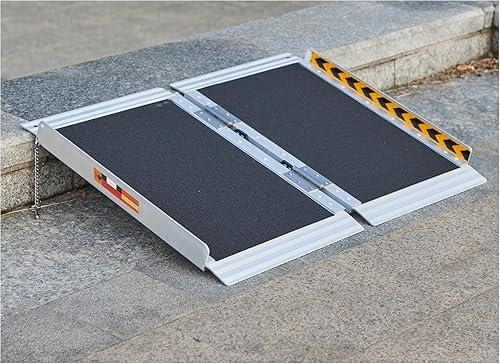
FACHNUO 2FT Portable Wheelchair Ramp for Home
Modular ramp vs portable ramp: what is the main difference?
A modular ramp fits a repeat route that needs an adjusted setup; a portable ramp fits access that needs to move or fold away. A threshold ramp can be modular and portable at the same time.
The EZ-ACCESS TRANSITIONS is a self-supporting modular threshold ramp. Its sections can be removed to lower the ramp or paired with extensions to raise it.
The FACHNUO ramps fold and include carrying handles. The 2 ft model is aimed at shorter rises, while the 8 ft model reaches taller rises and weighs 57 lb.
Portable doesn't always mean easy for one person to carry, and modular doesn't always mean a large permanent build. Check weight, folded size, setup and fit for the exact ramp.
How modular and portable ramps overlap
Ramp labels describe different features, so check whether a model is adjustable, movable or both. The EZ-ACCESS threshold ramp is modular, portable and self-supporting.
A folding ramp can be portable without being modular. It may have one fixed length rather than sections that change its height.
For a small doorway rise, compare the options in our threshold ramp vs modular ramp guide. A short step may call for a different shape, as explained in our step ramp vs threshold ramp comparison.
Which ramp fits the rise and route?
Measure the vertical rise and approach space before choosing. A ramp that reaches the doorway but leaves no room to approach or land may not suit the route.
The FACHNUO 2 ft ramp is 24 inches long unfolded and is intended for height adjustments from 2 to 6 inches. For wheelchair access, FACHNUO recommends a step height of 4 inches or less.
The EZ-ACCESS threshold ramp comes in height options from 1 to 6 inches, with a pivoting flap that adjusts up to 1/4 inch. Its design is for threshold transitions, not long stair runs.
The FACHNUO 8 ft ramp is 96 inches long unfolded. FACHNUO recommends it for heights from 8 to 24 inches and advises a ramp length at least 4 times the step height.
These are recommendations for specific ramps, not a universal design rule. Check local guidance and seek qualified advice when planning a permanent wheelchair route.
What else should you measure?
Measure the clear doorway width, landing space, door swing and path around the ramp. A ramp may fit the rise but block a door, narrow a walkway or interfere with a sliding track.
The 2 ft FACHNUO ramp has an extension plate that needs clearance beside a sliding door. FACHNUO warns that the plate can obstruct the track when there isn't enough room.
Check the mobility device's width and wheelbase against the ramp. The 2 ft model has a 27 inch wheelbase limit, and a larger wheelbase makes it unusable.
If the rise is only at a threshold, a shorter transition may work better than a longer ramp. Use our step ramp vs threshold ramp guide to compare those shapes.
Who should choose a modular ramp?
Choose a modular threshold ramp when the same doorway or patio entry needs a consistent route every day. It's a good fit when the rise falls within the available height options and the ramp can sit without obstructing the door or path.
The EZ-ACCESS TRANSITIONS has removable sections and a self-supporting design. Its extruded surface is intended to provide traction, and the pivoting flap helps fit the door edge.
This type suits a household that wants to leave a threshold ramp in place or adjust it as the entry changes. Its 3 lb weight and compact threshold format also make repositioning more manageable than moving a long folding ramp.
Skip this style if the route has a taller stair run, if its width doesn't suit the device, or if the doorway has no room for the ramp and landing. Modular sections don't eliminate the need to measure the full approach and door clearance.
Who should choose a portable ramp?
Choose a portable ramp when access is occasional, changes by location or needs to be stored between uses. A folding design can work for a visit to a home with a short step, provided someone can position it securely.
The FACHNUO 2 ft ramp is the more manageable of these folding options for short rises. Its handle and folded size suit storage or transport, but its wheelbase limit and door clearance need to match the user and entry.
The 8 ft model is for a taller rise when there is enough approach space. At 57 lb, it is a poor choice for frequent solo carrying or a household without a safe place to store it.
Skip a portable ramp if setting it up each time will be difficult, if the available ramp length would create a steep approach, or if the device exceeds the ramp's limits. If a ramp route won't fit the site, compare a wheelchair lift vs ramp before deciding.
Which ramp is easier to move and store?
A folding ramp is easier to put away only if you can handle its weight and have a suitable storage spot. Compare folded dimensions and weight, not just the word “portable.”
The FACHNUO 2 ft ramp weighs 10.9 lb and folds to 24 x 13.2 x 3.2 inches. Its built-in handle helps when you need to carry a short ramp between locations.
The FACHNUO 8 ft ramp folds to 48 x 14.5 x 6.3 inches, but weighs 57 lb. The handle helps with carrying, though that weight can make frequent solo moves difficult.
The EZ-ACCESS threshold ramp weighs 3 lb and uses removable sections. Its shape and dimensions still need to fit the entry, walkway and storage space.
If a mobility scooter will use the route, the ramp is only one part of transport planning. Our guides to the Best Portable Mobility Scooter and Best Portable Mobility Scooters help compare scooters that fold or break down for transport.
How should you set up and care for a ramp?
Set the ramp on a firm, level surface and check that each end meets the ground or threshold securely before use. Follow the instructions for the exact model, then recheck the setup whenever you move it.
For the 2 ft FACHNUO, make sure the front extension plate sits fully flush with the ground. Keep enough clearance for a door to open and for a sliding door track to remain unobstructed.
For a folding ramp, open it fully and confirm it rests evenly before anyone crosses. Keep hands clear of hinges while unfolding, and don't leave a ramp where it narrows a walking path or creates a trip hazard.
Keep the surface and contact points free of dirt, water, ice and loose debris. Check the ramp for movement, damage or a change in fit; stop using it if it rocks, shifts or no longer meets the surfaces cleanly.
What common ramp buying mistakes should you avoid?
The most common mistake is choosing by ramp length or load capacity before checking the route. A ramp must fit the rise, approach, device and entry as a whole.
- Buying by step height alone: measure the vertical rise, then make sure the ramp can fit with space to approach and land.
- Ignoring the device: check width, wheelbase and total load, including the user and anything carried.
- Assuming “portable” means lightweight: the 8 ft ramp weighs 57 lb, so consider who will set it up and where it will be stored.
- Forgetting the door: check swing, threshold clearance and sliding track space before choosing a folding ramp.
- Treating capacity as a complete safety check: follow the instructions and confirm the ramp sits securely at both ends.
- Using the wrong ramp type for the route: a threshold transition is not a long stair ramp, and a short folding ramp is not suited to every rise.
Which ramp should you buy?
Pick a modular threshold ramp for a frequently used doorway rise that matches its height options; pick a folding portable ramp when you need to move or store it. Choose a longer ramp for a taller step only when the full approach and landing space are available.
The EZ-ACCESS TRANSITIONS suits a regular doorway route where removable sections and a self-supporting design help create a fitted transition. The FACHNUO 2 ft ramp suits shorter rises when its wheelbase limit, extension plate and door clearance work for the entry.
Choose the 8 ft FACHNUO when its length fits the rise and someone can manage its 57 lb weight. If no ramp creates a workable route, compare a wheelchair lift vs ramp before committing.
Measure the rise, width, door movement and landings first. In this modular ramp vs portable ramp decision, choose the model that fits those measurements and the way you'll use it.
Frequently asked questions
Is a modular ramp better than a portable ramp?
A modular ramp suits a regular route when its sections can be adjusted to a doorway or landing. A portable ramp suits temporary access or situations where you need to move and store it.
Some ramps combine both features, so check the specific design and how it fits your entry.
Can a portable ramp stay in place every day?
A portable ramp may work for repeated access if its design, instructions and fit support that use. A folding ramp often needs to be positioned and removed, while a self-supporting modular threshold ramp can suit a doorway transition.
Check that the ramp stays stable and doesn't block the door or walking path.
How long should a wheelchair ramp be?
Ramp length depends on the rise, mobility device, site and guidance for the specific ramp. FACHNUO recommends a ramp length at least 4 times the step height for its 8 ft model, intended for heights from 8 to 24 inches.
Check local requirements and get qualified advice for a permanent route.
Can I use a portable ramp at a doorway?
Yes, if it fits the rise and leaves room for the door, mobility device and landings. The FACHNUO 2 ft ramp has vertical side walls that can affect door clearance, and its extension plate may obstruct a sliding door track.
Measure the opening and path before choosing.
When should I choose a lift instead of a ramp?
Consider a lift when a ramp would need more approach space than the site allows or the rise makes ramp travel impractical. A lift also has different installation and operating needs.
Compare the route and user's mobility device in our guide to wheelchair lift vs ramp.


