
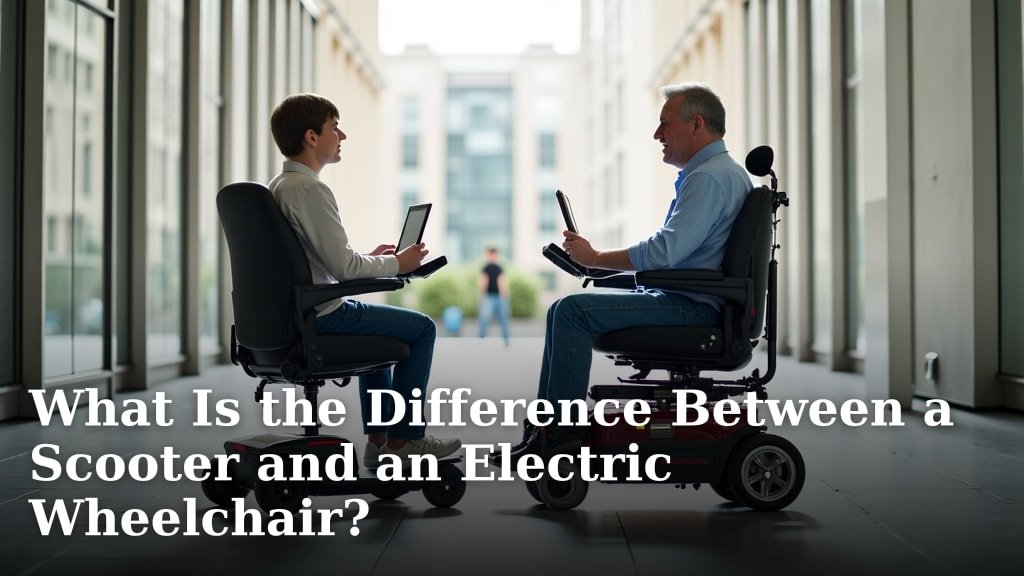
The main difference between a scooter and an electric wheelchair lies in their primary design and intended use. Scooters are typically designed for individuals who have some mobility but need assistance for longer distances, offering a more recreational and less medically assistive experience. Electric wheelchairs, on the other hand, are built to provide full mobility for those with significant physical limitations, offering advanced support and maneuverability for daily living.
While both mobility devices offer independence, they serve distinct needs. Scooters often resemble three or four-wheeled vehicles, built for ease of operation on relatively smooth surfaces. Electric wheelchairs are engineered with user comfort and postural support in mind, often featuring complex seating systems and power controls tailored to individual medical requirements. We found that understanding these core differences is key to choosing the right device.
- Scooters are for users with some mobility, needing help for distance.
- Electric wheelchairs are for users with significant mobility challenges.
- Scooters offer a recreational feel, while wheelchairs provide essential daily support.
- Wheelchairs offer more postural support and customized controls.
Let’s dive into the specific features that set these two mobility aids apart, so you can better understand which might be the right fit for your needs.
Understanding the Key Differences: Scooters vs. Electric Wheelchairs
When you’re looking for a mobility aid, you’ll find two common options: scooters and electric wheelchairs. While they both help you get around, they’re designed for very different needs. Think of it like choosing between a sturdy bicycle and a comfortable armchair with wheels. We found that understanding these core distinctions is the first step toward finding your perfect mobility partner.
Scooter Design and Intended Use
A mobility scooter is essentially a personal vehicle. It’s built to help people who have trouble walking long distances but can still stand and transfer themselves with some ease. Many users find scooters give them back a sense of freedom for activities like shopping or visiting friends. We found that scooters often look like small, three- or four-wheeled cars.
Who Benefits Most from a Scooter?
Scooters are a great fit if you have some difficulty with walking. This could be due to conditions like arthritis, balance issues, or recovering from certain injuries. You should be able to sit down and stand up on your own. You also need enough arm strength to operate the steering and controls. We found many users who can walk around their home but struggle with longer outings find scooters incredibly helpful.
Features and Operation of Scooters
You’ll typically steer a scooter using a tiller, which is like a handlebar. There are usually levers or buttons for acceleration and braking. Most scooters have a swivel seat, making it easier to get on and off. They often come apart for transport, fitting into a car trunk. We researched that charging is usually straightforward, similar to charging a large battery.
Types of Scooters
There are several types to consider. Travel scooters are lightweight and disassemble easily for trips. 3-wheel scooters offer a tighter turning radius, great for indoor use or crowded spaces. 4-wheel scooters provide more stability, making them ideal for outdoor terrain or for users who need extra balance support. We found that choosing the right wheel count often depends on where you plan to use it most.
Electric Wheelchair Design and Intended Use
An electric wheelchair, also known as a power wheelchair, is a more advanced mobility solution. It’s designed for individuals who have significant physical limitations. This often means they cannot walk or stand, or have limited strength for self-propulsion. These chairs are engineered to provide full support and control. We found that their primary goal is to offer independent mobility for daily life. Our guide to the best mobility scooters for muscular dystrophy can help if this condition is a factor.
Who Benefits Most from an Electric Wheelchair?
Electric wheelchairs are for those who need a seated mobility solution. This could include people with conditions like multiple sclerosis, spinal cord injuries, muscular dystrophy, or advanced arthritis. If you struggle with balance, have significant weakness, or cannot safely transfer without assistance, an electric wheelchair is likely a better choice. We found that these chairs are often prescribed by doctors or physical therapists.
Features and Operation of Electric Wheelchairs
Control is typically managed via a joystick, which allows for intuitive, multi-directional movement. Many electric wheelchairs offer advanced seating options. This can include tilt, recline, and elevating leg rests for comfort and pressure relief. Some models even have power seat functions. We researched that these features are vital for users who spend a lot of time seated.
Customization and Support
One of the biggest differences is the level of customization. Electric wheelchairs can be tailored to your specific medical needs. This includes specialized cushions, backrests, and support systems. Many experts say this postural support is crucial for preventing pressure sores and maintaining spinal alignment (Cleveland Clinic). You can often adjust armrests, footrests, and even the joystick sensitivity.

Key Differences at a Glance: A Comparison Table
To help you see the distinctions clearly, we’ve put together this simple comparison. Think of it as a quick reference guide.
| Feature | Mobility Scooter | Electric Wheelchair |
|---|---|---|
| Primary User | Individuals with some walking difficulty, but can stand/transfer. | Individuals with significant mobility impairments, unable to walk or stand safely. |
| Control Method | Tiller (handlebar) with levers/buttons. | Joystick for precise, multi-directional control. |
| Seating | Swivel seat, often basic. | Highly customizable, with options for tilt, recline, elevation, and postural support. |
| Maneuverability | Good on flatter surfaces, wider turning radius for 4-wheel models. | Excellent maneuverability, often with tight turning capabilities, suitable for various indoor and outdoor environments. |
| Portability | Many models disassemble for transport. | Typically heavier and often require a specialized ramp or lift for transport. |
| Medical Necessity | Often considered an aid for lifestyle enhancement. | Frequently considered a medical necessity, prescribed by healthcare professionals. |
Factors to Consider When Choosing
Making the right choice depends entirely on your personal situation. We found that asking yourself a few key questions can guide you. What are your daily activities? Where will you primarily use the device? What level of support do you need?
Your Mobility and Stamina Levels
This is the most important factor. Can you walk short distances? Do you tire easily? If you can stand and walk with some effort but get exhausted quickly, a scooter might work. If walking is not possible or very difficult, an electric wheelchair is usually the answer. Many health organizations note that assessing your personal stamina is key (CDC).
Where Will You Use It?
Think about the terrain. Will you be mostly indoors or outdoors? Are there a lot of inclines or rough surfaces? Scooters can handle some outdoor environments, especially 4-wheel models. However, electric wheelchairs often offer better performance on varied surfaces and can navigate obstacles more easily. We found that indoor maneuverability is often a strong point for power wheelchairs with their precise controls.
Need for Postural Support
Do you require specific back support, headrests, or leg support to maintain good posture and comfort? Electric wheelchairs excel here. Their advanced seating systems can be adjusted precisely to your needs. This is critical for preventing pain and health issues associated with prolonged sitting. Many therapists emphasize that proper seating can improve overall quality of life.
Transport and Storage
How will you transport your mobility device if needed? Some travel scooters break down into manageable pieces. This makes them easier to fit into a car. Most electric wheelchairs are heavier and bulkier. They often require a ramp or a lift system on a vehicle. We found that if you frequently travel and rely on your own car, the portability of a scooter might be more appealing.
Checklist for Making Your Decision
Before you decide, run through this quick checklist:
- Can you transfer in and out of a seat independently?
- Do you have good arm strength for steering?
- How much walking assistance do you truly need?
- What kind of surfaces will you be navigating daily?
- Do you need specialized seating or support?
- How important is portability for your lifestyle?
Conclusion
Choosing between a mobility scooter and an electric wheelchair is a personal decision. You’ve learned that scooters offer independence for those with mild walking difficulties, focusing on distance and freedom. Electric wheelchairs provide essential support and control for individuals with more significant mobility challenges. Your daily needs, where you’ll travel, and the level of support you require are key factors. We found that understanding these differences empowers you to make an informed choice that best fits your lifestyle. Your next step should be to consult with a healthcare professional or a mobility specialist to assess your specific needs and try out different models.
Frequently Asked Questions
Can I use a scooter if I can walk a little bit?
Yes, mobility scooters are designed for people who have some difficulty walking but can still stand and transfer themselves. They are ideal if you need assistance for longer distances but can manage short walks around your home.
What makes an electric wheelchair better for postural support?
Electric wheelchairs offer advanced seating options like tilt, recline, and elevating leg rests. These features can be customized to provide tailored support for your back, head, and legs, which is vital for comfort and health.
Is it hard to drive a scooter or an electric wheelchair?
Scooters are typically steered with a tiller, like handlebars, and use levers for control. Electric wheelchairs usually feature a joystick for precise, multi-directional movement. Many users find joysticks intuitive and easy to learn.
How do I transport a mobility scooter versus an electric wheelchair?
Many travel scooters can be disassembled into lighter parts for easy transport in a car trunk. Electric wheelchairs are generally heavier and bulkier, often requiring a vehicle ramp or lift system for transport.
Which device is considered more of a medical necessity?
Electric wheelchairs are frequently considered a medical necessity and are often prescribed by doctors or physical therapists. They are designed to provide essential mobility for individuals with significant physical limitations.
