What Is the Safest Walker for Seniors?
A standard walker without wheels often offers a planted base when all four feet are on the floor. The safest choice for you depends on your balance, strength, grip and walking environment, so ask a physical or occupational therapist to help choose and fit it.
On this page (8 sections)
- What is the safest walker for seniors with balance problems?
- Is a standard walker safer than one with wheels?
- Is a rollator the safest walker for elderly adults?
- How do you choose a walker for your strength and grip?
- What should you check before using a walker?
- When should you ask a clinician to reassess your walker?
- More guides on this topic
- Which walker should you choose for safer daily walking?
A standard walker without wheels often provides a planted base when all four feet are on the floor. The safest walker for you also needs to match your balance, strength, grip and usual walking surfaces.
If you need to lift a walker but cannot do so steadily, a two-wheel walker may be easier to move. A rollator with four wheels may suit someone who can control its brakes, but it rolls when those brakes are not engaged.
A physical or occupational therapist can help choose the right type, adjust its height and show you how to use it. For a broader overview of frame styles and features, see our walker for seniors buying guide.
What is the safest walker for seniors with balance problems?
The safest walker for a senior with balance problems is one that provides enough support while remaining controllable. A standard walker often offers a planted base when all four feet are on the ground, but someone who cannot lift it safely may need another style.
A walker should be fitted, and you should learn how to use it. MedlinePlus recommends getting help from a health care provider or physical therapist to choose a walker, and says its handles should be adjusted to the user's height.
The National Institute on Aging's fall prevention guidance advises checking that a walker is the right size and its wheels roll smoothly.
Consider these differences as a starting point:
| Walker style | What it can offer | What to consider |
|---|---|---|
| Standard walker, no wheels | A planted frame when all feet are on the floor | You must lift and place it with each step |
| Two-wheel walker | Front wheels can reduce the need to lift the whole frame | Rear legs or glide caps still need to stay controlled |
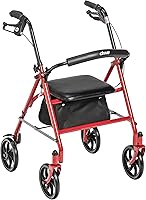
| Four-wheel rollator | Continuous rolling and, on some models, a seat and brakes | You must steer and use the brakes correctly |
| Upright walker | Forearm support and handles positioned for a more upright posture | Frame size and brake reach need careful checking |
No type is automatically safest for every older adult. If you feel unsteady while turning, reaching, standing up or sitting down, tell your clinician and ask for a mobility assessment.
For more targeted ideas, read our guide to the best walkers for seniors with balance problems. If you are comparing a rollator with a scooter for longer outings, see mobility scooters for walkers who need extra support.
Is a standard walker safer than one with wheels?
A standard walker may feel steadier because it does not roll when you set it down. That depends on placing all four feet on the floor before taking a step and keeping the frame close enough to use without leaning too far.
A standard walker requires you to lift or move it forward. If your hands, shoulders or legs cannot do that comfortably, the effort may make walking harder.
A therapist can help decide whether a walker with front wheels is easier for you to control.
A two-wheel walker rolls at the front while the rear legs or glide caps stay in contact with the floor. It may suit someone who has trouble lifting a full frame but does not need a four-wheel rollator.
The Drive Medical Two-Button Folding Walker with Wheels has 5 in front wheels and rear glide caps. Its lightweight aluminum frame supports up to 350 lb.
A rolling frame still needs room to turn and a user who can keep it under control. Ask a therapist to watch you walk with it, especially if you tend to lean heavily on the handles or lose balance when the frame moves.
Is a rollator the safest walker for elderly adults?
A rollator may suit someone who can steer a wheeled frame and manage its brakes. It can roll continuously and may include a seat, but it moves when its wheels are unprotected.
Before choosing a rollator, check whether you can squeeze the brake handles and engage the parking brakes. The brake reach, handle height and seat position should work for the person who will use it.
A seat is useful only if you can stop, lock the brakes and sit down safely. Practice these steps with a therapist or another qualified health professional before using a rollator on your own.
The Helavo Upright Walker with Seat has 10 in rubber front wheels, padded armrests, adjustable handles, a seat and a parking brake. Helavo gives its weight as 22.7 lb and its user capacity as up to 300 lb.
The large front wheels are a feature to consider if your route includes outdoor surfaces, but wheel size alone does not mean a walker suits your needs. Check the turning space and practice steering, stopping and sitting before taking it outside.
An upright rollator can change how you hold your body. The ELENKER Upright Walker has adjustable forearm tubes, handlebars and leg tubes, plus hand brakes and rear wheel locks.
It has 8 in solid PVC wheels and an anti-tip frame.
An upright style is not automatically a safer choice. You still need to reach the brakes, turn without tipping or catching the frame, and use the seat safely if the model has one.
How do you choose a walker for your strength and grip?
Choose a walker you can move, steer and stop without straining. A frame that feels stable in a shop may be difficult to use if you cannot grip its handles or lift its legs at home.
Think through these tasks before choosing a style:
- Can you lift a standard frame a few inches and place it forward without losing balance?
- Can you push a two-wheel walker without letting it run ahead?
- Can you reach and squeeze rollator brakes with both hands?
- Can you turn the frame in your hallway or bathroom?
- Can you stand up from a chair without pulling on the walker?
- Can you keep your hands on the grips while carrying essentials?
If a hand or arm is weaker, ask a therapist to check that you can operate the model's releases or brakes safely. For an upright walker, check that you can rest your forearms comfortably and reach the controls without leaning.
If walking is limited after knee surgery, get advice on the right walking aid and how to use it during recovery. Our guide to the best walkers for knee replacement covers options for that specific need.
What should you check before using a walker?
Check the fit, frame and floor conditions before each walk. If the walker is damaged, unstable or hard to control, ask someone qualified to check it before you use it.
Start with these basics:
- Adjust the handles to a comfortable height with your arms relaxed and elbows slightly bent.
- Check that the frame opens and locks as intended.
- Look for loose parts, worn feet, damaged wheels or brakes that do not hold.
- Keep the path dry and clear of cords, clutter and loose rugs.
- Wear shoes with nonskid soles.
- Practice getting up, walking, turning and sitting with a therapist or caregiver nearby.
Keep everyday items in a bag or holder made for the walker so you do not have to carry them in your hands. Avoid hanging heavy bags on the handles, which can change how the frame moves.
Carpet can add drag and make some frames harder to move. Compare details in our guides to the best walkers for seniors on carpet and best cheap walkers for seniors, then check that any model fits your home and abilities.
A walker is not designed to make stairs safe. Do not try to use stairs or escalators with it unless a physical therapist has trained you to do so.
When should you ask a clinician to reassess your walker?
Ask a clinician to reassess your walker if your balance, strength, walking pattern or ability to use the device changes. A new fall or near fall is also a reason to talk with your health care provider.
A therapist can check how the walker fits and whether you can use its brakes and frame with control. This matters after surgery, a new injury, a change in medication or a decline in grip strength.
If your home has narrow turns, thick rugs or uneven entryways, describe those conditions during the assessment. You can also ask for advice on transfers and moving through each room.
For people who use a knee walker during recovery, setup and assembly steps vary by model. See how to assemble a knee walker and follow the model's instructions.
More guides on this topic
- Best Upright Walkers for Parkinson's
- Best Rollator Walkers for Parkinson's Patients
Which walker should you choose for safer daily walking?
Choose a standard walker if you can lift and place it steadily, a two-wheel walker if you need help moving the frame, or a rollator if you can steer and control its brakes. Ask a therapist to fit the walker and observe you using it before making it part of your routine.
The safest walker for seniors is one you can control on your usual routes, including turns, doorways and the surfaces inside your home. If you cannot use a walker without leaning, stumbling or losing control, ask a health care provider to reassess your mobility aid.
For a general comparison of styles, start with the complete walker and rollator guide.
Frequently asked questions
What is the safest walker for seniors with poor balance?
A standard walker without wheels often provides a planted base when all four feet are on the floor, but you must lift and move it. A therapist can check whether your balance and strength suit that style or whether a fitted two-wheel walker is easier to manage.
Is a rollator safer than a standard walker?
A rollator is easier to push and may have a seat, but its wheels move unless you use its brakes. A standard walker without wheels can provide a planted base when all four feet are on the floor, though you need to lift it.
The right style depends on your control, strength and needs.
Are walkers with wheels safe for seniors?
Walkers with wheels may suit people who can control their movement and brakes. Check that the wheels roll smoothly, the brakes work as intended and the frame is stable before use.
Ask a therapist to help with fitting and practice.
How should a walker fit a senior?
A walker should be adjusted so its handles are around wrist or hip level when you stand upright, with your arms relaxed and elbows slightly bent as you hold them. Fit can vary by device and your needs, so ask a therapist or health care provider to check it.
Should seniors use an upright walker?
An upright walker may suit someone who prefers forearm support and a more upright posture, but it is not automatically safer than a standard walker. Check that you can steer, reach and use the brakes with control, and ask a therapist to assess the fit.