
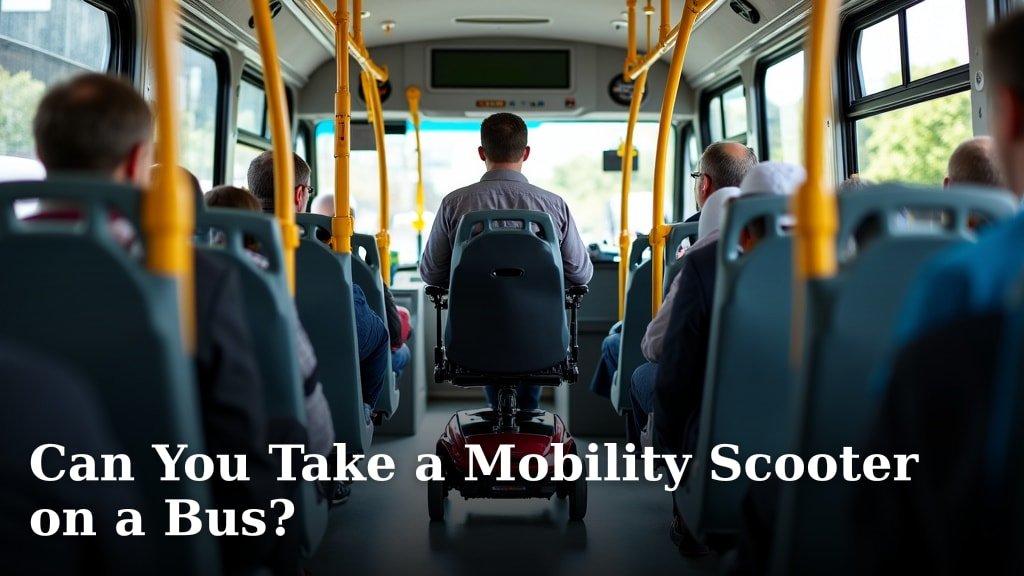
Yes, you can often take a mobility scooter on a bus, but it really depends on the bus system and the size of your scooter. Many public transit agencies have specific rules to ensure everyone’s safety and accessibility. We’ve done the research and found what you need to know.
You’ll find that buses are increasingly designed to accommodate passengers using mobility devices. However, there are usually limits on the size and weight of scooters allowed. It’s smart to check with your local transit provider before you travel to avoid any surprises.
- Many buses accommodate mobility scooters.
- Size and weight limits often apply.
- Check your local transit agency’s rules.
- Not all scooters are approved for bus travel.
- Safety is a key factor in these regulations.
Ready to learn more? Let’s walk through the specifics of how you can make sure your mobility scooter and the bus are a perfect match for your travels.
Understanding Bus Travel with Your Mobility Scooter
You’re ready to get out and about, and your mobility scooter is your trusted companion. But what happens when your journey involves public transportation? Can you bring your scooter on the bus?
The short answer is usually “yes,” but there are important details you need to know. It’s not quite as simple as just rolling on board. Most transit agencies have rules designed to keep everyone safe. These rules cover things like the size of your scooter and how it gets secured.
Let’s explore the common guidelines you’ll encounter. This way, you can plan your bus trips with confidence and avoid any surprises.
General Policies for Mobility Device Accommodation
Most public transportation systems in the U.S. are designed to be accessible. This is thanks to laws like the Americans with Disabilities Act (ADA). The ADA ensures that individuals with disabilities have equal access to public services, including bus travel.
This means buses must accommodate wheelchairs and mobility scooters. They usually have ramps or lifts to help you board. Once inside, there are designated areas where you can safely park your device.
However, “accommodate” doesn’t mean “anything goes.” There are still practical limits based on bus design and safety considerations. Think about it: a bus needs to carry many passengers safely.
ADA Requirements and Bus Accessibility
The ADA sets clear standards for accessible public transit. It requires buses to have features like lifts or ramps for boarding. It also mandates securement areas for mobility devices.
These securement areas are crucial for your safety. They prevent your scooter from moving during stops or turns. We found that these features are now standard on most modern transit buses across the country (U.S. Department of Transportation).
Still, while the spirit of the law is clear, the exact implementation can vary slightly between cities. This is why checking local rules is so important.
Scooter Size and Weight Restrictions: Will Yours Fit?
This is often the biggest hurdle. Not all mobility scooters are created equal in terms of size. Some are compact and nimble, while others are larger and more robust.
Bus systems have limits on the dimensions and weight of devices they can carry. Why? Because space on a bus is limited. Plus, the lift or ramp has a maximum weight capacity.
Exceeding these limits can be a safety hazard for you and other passengers. It can also damage the bus equipment. So, how do you know if your scooter meets the requirements?
Typical Dimensions and Weight Limits
We’ve researched typical transit agency guidelines. Many specify that your mobility device (including you on it) should not exceed certain measurements. A common guideline is often around 30 inches wide by 48 inches long (U.S. Access Board).
The weight limit is also key. This usually includes the weight of the scooter plus the rider. This combined weight often falls in the range of 600 to 800 pounds. Again, these are common figures, not universal rules.
It’s vital to measure your scooter accurately. Don’t just guess! Also, know your combined weight when you’re on the scooter. This information will help you compare against local transit rules.
Boarding Procedures and Securement Protocols
So, your scooter fits. Great! Now, how do you actually get it on the bus and make sure it stays put?
Bus operators are trained to assist passengers with mobility devices. They will deploy the ramp or lift for you. Then, they will guide you to the designated securement area.
This process is designed to be smooth and safe. Don’t hesitate to ask for help if you need it. The driver is there to assist you.
Using Ramps and Lifts Safely
Most modern buses have either a ramp that deploys from the front door or a lift that comes out from the side. The driver will operate these for you. Just pull up close to the bus and wait for their signal.
When using the ramp, drive slowly and carefully. If it’s a lift, the driver will guide you onto the platform. Stay centered and hold on if there are handrails. It might feel a little strange the first time, but it’s a very common procedure.
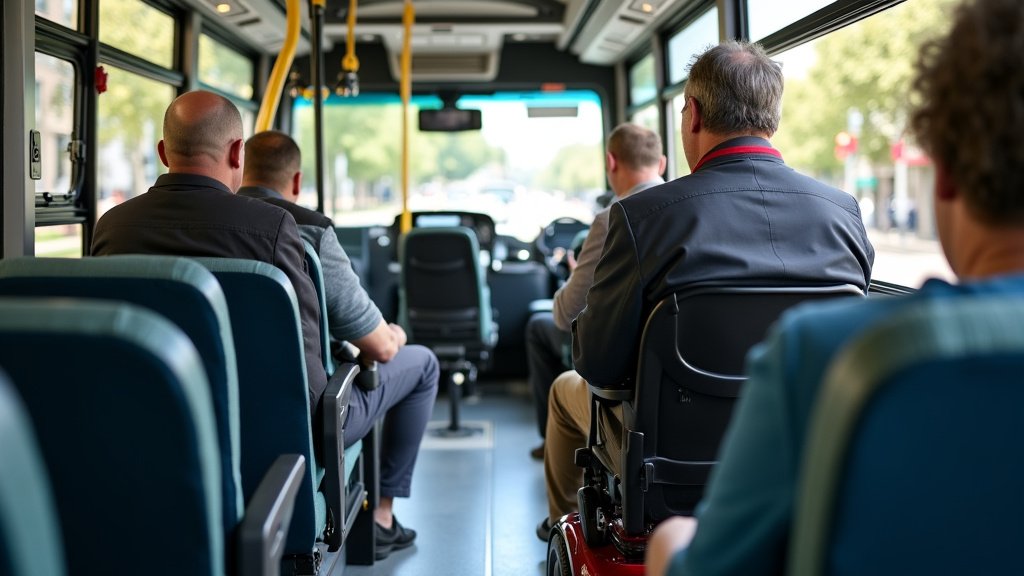
Once you’re on the bus, the driver will guide you to the securement area. These spots are typically near the front of the bus, often with flip-up seats to create space.
How Your Scooter Will Be Secured
Once in the securement area, your scooter needs to be locked down. This is for your safety and the safety of everyone else on the bus. Drivers use straps or tie-downs to secure your device.
These straps usually hook onto strong points on your scooter’s frame. We found that most scooters have designated securement points. It’s a good idea to know where yours are located.
The driver will tighten the straps so your scooter won’t roll or tip. If you feel it’s not secure, speak up! Your comfort and safety are paramount.
Planning Your Trip: Checking with Your Local Transit Agency
This step cannot be stressed enough: always check with your specific local transit agency before you travel. Rules can differ widely from one city to another, or even between different bus routes.
Don’t assume that because your scooter fit on a bus in one town, it will fit on a bus in another. A quick phone call or visit to their website can save you a lot of hassle and potential disappointment.
Look for the “accessibility” or “riders with disabilities” section on their website. This is where you’ll find the most up-to-date and accurate information.
Important Questions to Ask
- What are the exact maximum dimensions (length, width, height) for mobility devices?
- What is the maximum weight limit (scooter + rider)?
- Are there specific types of scooters that are not allowed (e.g., three-wheeled vs. four-wheeled)?
- What is the procedure for boarding and securement?
- Do I need to reserve space in advance, or is it first-come, first-served?
- Is there a customer service line for accessibility questions?
Scooter Types and Bus Compatibility: Not All Are Equal
While many scooters are bus-friendly, some designs are better suited than others. Generally, more compact, standard-sized models have an easier time.
Larger, heavy-duty scooters or those with unique designs might run into issues. This is especially true if they exceed the width or length limits for the securement area.
Think about how your scooter maneuvers. Can it make tight turns if needed? Some bus interiors can be a bit challenging to navigate.
Considerations for Different Scooter Models
| Scooter Type | Bus Compatibility Factors |
|---|---|
| Travel Scooters | Often good. Compact, easy to maneuver. Check weight limits if you’re a larger individual. |
| Mid-Size Scooters | Most common for bus travel. Fits well within typical dimensions. Confirm width and length. |
| Heavy-Duty Scooters | Can be challenging. Often exceed width, length, or weight limits. Always verify with transit. |
| 3-Wheel Scooters | Generally fine. Can sometimes be easier to maneuver in tight spots than 4-wheel models. |
| 4-Wheel Scooters | Also generally fine. Provide more stability. Ensure overall dimensions fit. |
If your scooter is particularly large or unique, consider practicing maneuvering it in tight spaces beforehand. This can build your confidence for bus travel.
Safety First: Tips for a Smooth Bus Ride
Your safety is the top priority. Following a few simple guidelines can make your bus trip much more enjoyable and secure.
Always wait for the bus to come to a complete stop before attempting to board or exit. Listen to the driver’s instructions. They are experienced and know the safest procedures.
Once secured, try to remain in your scooter. If you need to transfer to a seat, tell the driver so they can assist you or ensure your scooter remains properly secured.
Checklist for a Confident Ride
- Measure your scooter (length, width, height) and know your combined weight.
- Call your local transit agency or check their website for specific rules.
- Locate the securement points on your mobility scooter.
- Charge your scooter’s battery fully before your trip.
- Arrive at the bus stop a few minutes early.
- Communicate clearly with the bus driver about your needs.
By taking these steps, you’ll be well-prepared for a smooth and independent journey on public transit.
Conclusion
Navigating public transit with your mobility scooter is very possible and offers great freedom. We’ve shown that most bus systems are ready to accommodate you. The main steps are knowing your scooter’s dimensions and checking your local transit agency’s specific rules. Safety is always a priority, so understanding boarding and securement procedures is key.
Don’t let uncertainty hold you back from exploring your community. With a little preparation, you can confidently use the bus for your travels. Your next step is to grab a tape measure and make that call to your local bus company!
Frequently Asked Questions
Do I need to book my mobility scooter spot on the bus in advance?
Generally, no. Most bus services operate on a first-come, first-served basis for mobility device securement areas. However, busy routes or special services might have different rules. Always check with your local transit provider to be sure.
What if my scooter is too big for the bus?
If your scooter exceeds the bus’s size or weight limits, it unfortunately cannot be accommodated for safety reasons. In this situation, you might need to explore other transportation options, such as paratransit services or accessible taxis, which may have different vehicle specifications.
Can bus drivers refuse to let me board with my scooter?
Yes, a bus driver can refuse boarding if your scooter exceeds the stated size or weight limits, if it cannot be safely secured, or if there is no available securement space. This is for the safety of all passengers. Always communicate with the driver and follow their instructions.
Are all bus routes accessible for mobility scooters?
Most modern bus routes are designed to be accessible thanks to ADA regulations. However, older buses or specific routes might still have limitations. It is always a good idea to confirm accessibility for your specific route with the transit agency beforehand.
Should I stay on my scooter during the bus ride?
Yes, it is generally recommended to remain on your mobility scooter once it is properly secured. This provides the most stability and safety during transit. If you wish to transfer to a seat, inform the driver, and ensure your scooter remains secure and does not obstruct the aisle.
