
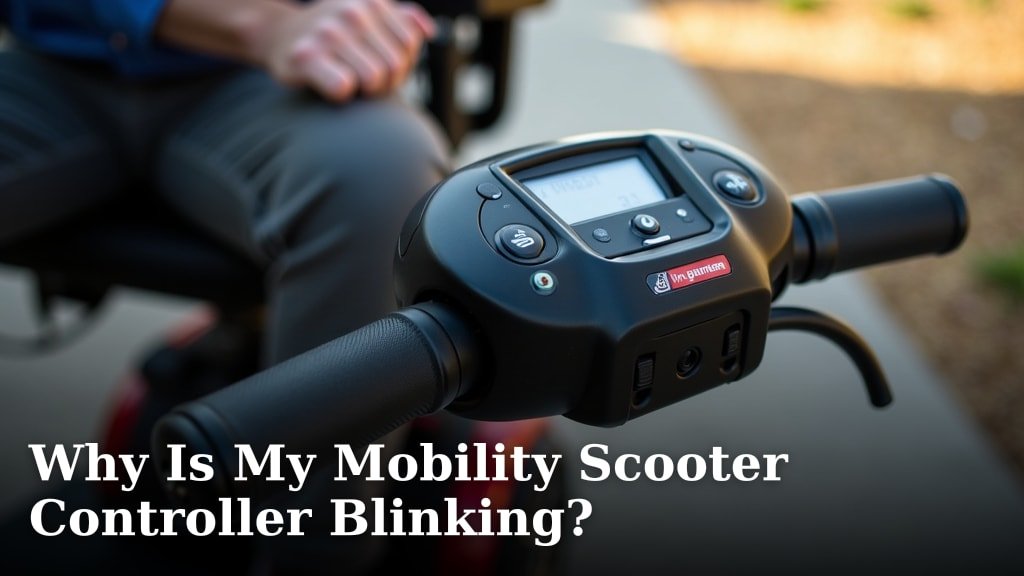
When your mobility scooter controller starts blinking, it’s usually a clear sign of an underlying issue. This blinking isn’t random; it’s your scooter’s way of signaling a diagnostic trouble code. Essentially, it’s trying to tell you something needs attention, from a simple battery problem to a more involved electrical fault.
Understanding these blinking patterns can save you a lot of frustration. Many blinking lights indicate common problems that you might be able to fix yourself with a little guidance. Others point to more serious malfunctions that will require professional diagnosis. Knowing what the blinking means is the first step to getting your scooter back up and running smoothly.
- Blinking lights mean your scooter has a diagnostic code.
- These codes help identify specific problems.
- Many blinking issues are minor and fixable.
- Some blinking lights signal a need for expert help.
- Don’t ignore the blinking; it’s important communication.
Below, we’ll break down the common blinking patterns and what they likely mean for your mobility scooter, so you can get back to enjoying your independence.
Understanding Your Mobility Scooter’s Blinking Controller Lights
When you see your mobility scooter’s controller blinking, it’s like a little alarm system going off. Don’t panic! This blinking is your scooter’s built-in way of telling you what’s going on. Think of it as a secret code. Each blink pattern can point to a specific problem. It’s trying to communicate with you, and understanding this communication is key to getting it fixed quickly.
Most modern mobility scooters have diagnostic systems. These systems monitor different parts of the scooter. When something isn’t working right, the controller lights will start to blink. This helps technicians (and sometimes you!) pinpoint the issue faster. We’re here to help you decode these blinks so you can figure out what’s next.
Common Blinking Patterns and What They Mean
The exact meaning of the blinking lights can vary between scooter brands and models. However, many common patterns indicate similar issues. It’s always best to check your scooter’s owner’s manual first. It will have a specific chart for its diagnostic codes. But, we can cover some of the most frequent blinking scenarios you might encounter.
Single Blinks: Usually Minor Issues
A single, consistent blink often suggests a relatively minor problem. This could be something as simple as a connection that’s come a little loose. Or it might indicate a slight fluctuation in power. These are often the easiest to resolve.
Battery Connections
One of the most common culprits for a single blink is a problem with the battery. Your scooter needs a steady flow of power to operate correctly. If the battery connections are loose or corroded, the power supply can become inconsistent.
We found that checking your battery terminals is a good first step. Make sure they are clean and securely attached. Sometimes, simply wiggling the battery or cleaning the contacts can fix the issue. If you’re unsure how to do this safely, it’s best to ask for help.
Low Battery Voltage
Another frequent cause for a single blink is a battery that’s running low. Scooters are designed to warn you when the power is getting too low to operate safely. This blinking might be a gentle nudge to plug in your charger.
If your scooter has been sitting for a while, the battery might have discharged. Even if it’s a newer battery, it needs regular charging. Research from battery manufacturers often highlights the importance of keeping scooter batteries topped up to extend their lifespan and ensure consistent performance (National Electrical Manufacturers Association).
Multiple Rapid Blinks: Potential Faults
When the lights start blinking rapidly, it often signals a more specific or potentially serious issue. This rapid blinking is the scooter saying, “Pay attention, something needs looking at!”
Motor Issues
Rapid blinking can sometimes point to a problem with the motor itself. This could be anything from a seized motor to a faulty motor controller connection. The controller is essentially the brain for the motor, so if it detects an anomaly, it will flash a warning.
In some cases, debris might have gotten into the motor housing. Or, the motor’s wiring could have sustained damage. These types of issues usually require a closer inspection by a qualified technician.
Controller or Wiring Problems
The controller itself, or the wiring that connects it to other components, can also trigger rapid blinking. A loose wire, a damaged cable, or a fault within the controller board can all cause these alerts.
These are often more complex to diagnose. The controller is a sophisticated piece of electronics. It’s best left to professionals who have the right tools and knowledge to test its functionality. We found that technicians often use specialized diagnostic equipment to check the controller’s readings.
Specific Blink Sequences: Diagnostic Codes
Many advanced scooters use specific sequences of blinks to indicate precise error codes. For example, a pattern might be: blink, pause, blink, blink. Your manual is your best friend here. It will have a table that translates these sequences into problem descriptions.
Common Code Examples (Consult Your Manual!)
Here are some general examples of what specific blink patterns *might* represent. Remember, this is not exhaustive, and your manual is the definitive guide:
| Blink Pattern Example | Possible Meaning | Likely Next Steps |
|---|---|---|
| One long blink, then pause, then three short blinks | Possible throttle issue or short circuit | Check throttle connections, then contact service if persistent. |
| Two blinks, pause, two blinks | Potential brake system fault | Ensure brakes are disengaged and functioning, then consult manual/service. |
| Continuous rapid blinking of all lights | General system fault or overheating | Allow scooter to cool, check for obstructions, then seek service. |
| Three blinks, pause, one blink | Battery charger error or improper charging | Ensure charger is correctly connected and functioning, try a different outlet. |
This table is just illustrative. You must refer to your specific owner’s manual for the accurate interpretation of your scooter’s blinking codes. These codes are like a doctor’s notes for your scooter.
When to Seek Professional Help
While some blinking issues are minor, others require expert attention. If you’ve tried the simple checks and the blinking persists, it’s time to call in the cavalry. Don’t attempt repairs that are beyond your comfort or skill level.
Safety First
Mobility scooters are complex electrical devices. Tampering with components without proper knowledge can be dangerous. It could also void your warranty. We always recommend prioritizing your safety and the integrity of your scooter.
Many experts advise against opening the controller box yourself. This area contains sensitive electronics. Mishandling it can lead to further damage. Think of it like this: if your car’s check engine light comes on, you don’t usually open the hood and start tinkering without knowing what you’re doing.
What Professionals Will Do
A qualified mobility scooter technician has specialized tools and training. They can accurately read diagnostic codes. They can test individual components like the motor, controller, throttle, and battery. They can also check for loose connections or damaged wiring that you might miss.
We found that service centers often have access to updated diagnostic software. This helps them identify even obscure problems. Their goal is to get your scooter back to full working order safely and efficiently.
Troubleshooting Checklist: What You Can Check
Before calling for service, here’s a quick checklist of things you can safely examine yourself. This can help narrow down the problem and might even solve it!
- Check Battery Charge: Is the battery fully charged? Plug it in to be sure.
- Inspect Battery Terminals: Are they clean and tightly connected?
- Examine Wiring: Look for any obvious signs of damage, cuts, or loose connections.
- Ensure Seat and Tiller are Secure: Sometimes, a loose seat or tiller can interfere with sensors.
- Check for Obstructions: Make sure there’s nothing jamming the wheels or motor.
- Consult Your Manual: Always cross-reference any blinking lights with your scooter’s manual.
By going through these steps, you can often identify simple issues. If the blinking continues after these checks, it’s definitely time to reach out for professional help. Your independence is important, and getting your scooter repaired properly is the surest way to maintain it.
Conclusion
Seeing your mobility scooter controller blink can be concerning, but it’s your scooter’s way of communicating. You’ve learned that these blinks are diagnostic codes, ranging from simple battery checks to more complex motor or wiring faults. By understanding common patterns and knowing what you can safely check yourself, you’re better equipped to address the issue.
Remember, your owner’s manual is your ultimate guide for specific blink sequences. If simple troubleshooting doesn’t resolve the blinking, don’t hesitate to contact a qualified technician. They have the tools and expertise to get your scooter running safely again, so you can continue enjoying your independence without worry.
Frequently Asked Questions
What should I do if my mobility scooter controller starts blinking unexpectedly?
First, don’t panic. Check your scooter’s owner’s manual for the specific blinking code. Then, perform the basic troubleshooting steps we discussed, like checking battery charge and connections. If the blinking continues, it’s time to seek professional help.
Can I fix a blinking mobility scooter controller myself?
For very simple issues like loose battery connections or a low charge, you might be able to fix it yourself. However, more complex blinking codes often indicate internal faults. Attempting repairs beyond your knowledge can cause more damage and may void your warranty.
How often should I charge my mobility scooter battery?
You should aim to charge your mobility scooter battery regularly, ideally after each use, even if it’s not fully depleted. This helps maintain battery health and ensures consistent power for operation, preventing low voltage warnings indicated by blinking lights.
Are all mobility scooter blinking codes the same?
No, blinking codes can vary significantly between different brands and models of mobility scooters. Always refer to your specific owner’s manual for the most accurate interpretation of the blinking patterns you’re seeing.
What if my manual doesn’t explain the blinking light pattern?
If your manual is unclear or doesn’t list the specific blinking pattern, the best course of action is to contact the manufacturer’s customer support or a certified mobility scooter repair service. They can help diagnose the issue based on your scooter’s model.
