
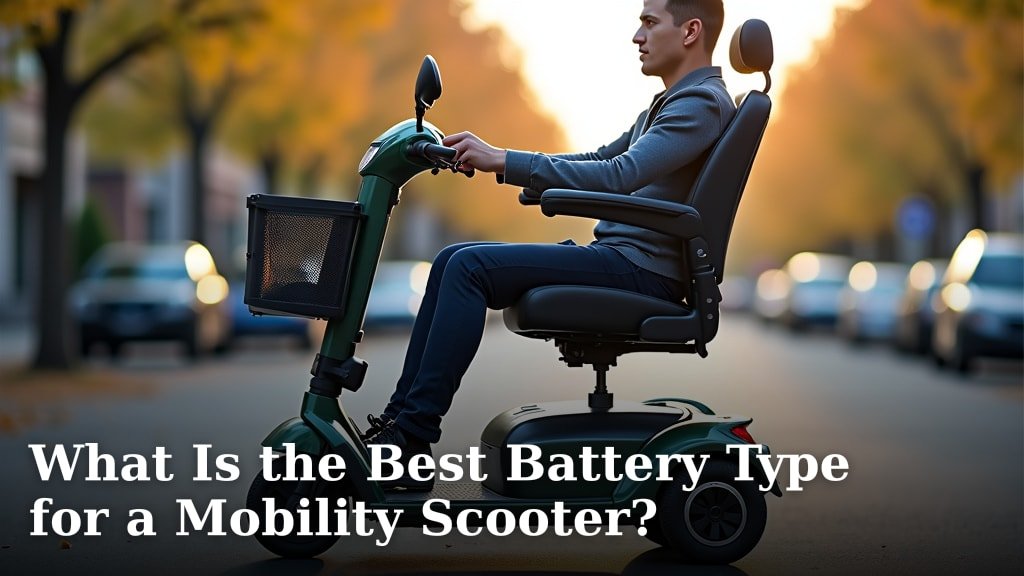
When choosing the best battery type for your mobility scooter, sealed lead-acid (SLA) batteries are generally the most common and a great all-around choice. They offer a good balance of cost and performance for everyday use. You’ll also want to consider lithium-ion batteries if you need longer run times and faster charging, though they come at a higher initial price.
Your mobility scooter’s battery is its lifeline, powering your independence. The type you choose impacts everything from how far you can travel to how often you need to plug in. We found that understanding the differences between battery technologies helps you make the smartest decision for your needs and budget, ensuring reliable power on the go. Understanding battery types helps ensure reliable power on the go.
- Sealed Lead-Acid (SLA): Most common, cost-effective. Good for daily use.
- Lithium-ion: Lighter, longer-lasting, faster charging. More expensive upfront.
- Gel Batteries: A type of SLA, good in various temperatures.
- AGM Batteries: Another SLA type, maintenance-free and durable.
Let’s break down the key differences and help you find the perfect power source for your mobility scooter.
Choosing the Right Power Source for Your Mobility Scooter
Your mobility scooter’s battery is truly the heart of your independence. It’s the part that keeps you moving and exploring. Picking the best battery type means ensuring you get reliable power. You’ll want a battery that matches your daily life and budget. Let’s look at the main options available.
Understanding Mobility Scooter Battery Technologies
Mobility scooters primarily use two main battery chemistries. These are Sealed Lead-Acid (SLA) and Lithium-ion. Within SLA, there are common variations like Gel and AGM. Each type has its own strengths and weaknesses. We’ve researched these to help you decide.
Sealed Lead-Acid (SLA) Batteries: The Workhorse
SLA batteries are the most common choice for mobility scooters. They’ve been around for a long time. Many scooter manufacturers prefer them. This is largely due to their balance of cost and performance. They are readily available and generally affordable.
How SLA Batteries Work
SLA batteries contain lead plates and an electrolyte solution. This solution is sealed inside the battery casing. They are “maintenance-free” in that you don’t add water. This makes them easier to care for than older battery types. They offer dependable power for everyday use. They are a solid, reliable option for most users.
Gel Batteries: A Subtype of SLA
Gel batteries are a variation of SLA technology. Instead of a liquid electrolyte, they use a gel-like substance. This makes them very spill-proof. Gel batteries also perform well in a wider range of temperatures. They can be a good choice if you sometimes use your scooter in cooler or warmer conditions. Many experts say they offer longer cycle life than standard flooded lead-acid batteries. We found that they can sometimes be a bit more expensive than standard SLAs.
AGM Batteries: Another Popular SLA Type
Absorbent Glass Mat (AGM) batteries are another type of SLA. The electrolyte in AGM batteries is held in fiberglass mats. These mats are squeezed between the lead plates. AGM batteries are known for being very durable. They are also vibration-resistant. This is great for a device like a mobility scooter that might encounter bumps. Like gel batteries, they are maintenance-free and spill-proof. Many users prefer AGM for their robustness. Research indicates they can handle deeper discharges better than some other SLA types.
Lithium-ion Batteries: The High-Performance Option
Lithium-ion batteries represent a more advanced battery technology. You’re likely familiar with them from your smartphones and laptops. They are becoming increasingly popular for mobility scooters. The main draw is their superior performance characteristics. However, they also come with a higher upfront cost.
Advantages of Lithium-ion
Lithium-ion batteries are noticeably lighter than SLA batteries. This can make your scooter easier to handle, especially if you need to remove the battery. They also tend to last much longer. This means more charge cycles before needing a replacement. Charging is often faster, too. You can get a significant charge in a shorter amount of time. This is a big plus if you need to top up quickly. Many users report better power consistency throughout the discharge cycle.
Considerations for Lithium-ion
The primary consideration is the initial purchase price. Lithium-ion batteries are significantly more expensive than SLA batteries. While they may offer better long-term value due to their lifespan, the upfront investment can be substantial. It’s important to weigh this against your budget and how frequently you use your scooter. We found that the overall cost of ownership can sometimes be comparable over many years, but the initial outlay is higher.
Key Factors When Comparing Battery Types
When you’re trying to decide which battery is best for you, several factors come into play. It’s not just about the technology itself. It’s about how that technology fits your life. Think about how you use your scooter daily. Consider where you charge it and how far you typically travel. Several factors come into play when choosing the best battery for your needs.
Cost and Budget: Upfront vs. Long-Term
As we’ve discussed, SLA batteries are typically less expensive upfront. This makes them accessible for many users. Lithium-ion batteries have a higher initial cost. However, their longer lifespan and potentially faster charging could mean fewer replacements over time. You need to consider your budget both now and in the future. A good way to look at it is the “cost per mile” or “cost per year.” This can help you see the long-term picture.
Weight and Portability
If you ever need to lift or move your scooter’s battery, weight matters. SLA batteries, especially the larger ones, can be quite heavy. Lithium-ion batteries are much lighter. This can make a big difference if you have to remove the battery for charging or storage. We’ve heard from users who find the lighter weight of lithium-ion a real benefit for daily handling. It can make managing your scooter much easier.
Lifespan and Durability: How Long Will They Last?
Battery lifespan is usually measured in “charge cycles.” A charge cycle is one full discharge and recharge. SLA batteries typically offer fewer charge cycles than lithium-ion batteries. For example, a good SLA might offer 300-500 cycles. A lithium-ion battery could offer 1000 or more cycles. This means a lithium-ion battery might last two or three times as long as an SLA. Durability in terms of handling rougher terrain or impacts is also a factor. Some SLA types, like AGM, are quite robust. Lithium-ion batteries are generally well-protected internally.
Performance: Range and Charging Speed
How far can you go on a single charge? This is your scooter’s “range.” Lithium-ion batteries often provide a slightly better or more consistent range. They tend to hold their voltage better as they discharge. Charging speed is another big difference. If you need to quickly recharge your battery for a short trip, lithium-ion can be much faster. SLA batteries generally take longer to charge fully. Many experts suggest topping up SLA batteries regularly for optimal health. We found that charging speed is a convenience factor many users highly value.
Environmental Factors: Temperature and Usage
Battery performance can be affected by temperature. Extreme heat or cold can reduce the capacity and lifespan of any battery. Gel batteries are often noted for better performance in varying temperatures compared to standard SLAs. Lithium-ion batteries also perform well in a range of temperatures, but extreme cold can temporarily reduce their output. Consider where you’ll be using your scooter most often. If you live somewhere with very cold winters or hot summers, this might influence your choice. Proper charging and storage practices are key for all battery types.

Making Your Final Battery Choice: A Quick Checklist
Choosing the right battery is a personal decision. It depends on your specific needs and preferences. Think about these points to guide you:
- Your Budget: How much can you spend upfront?
- Your Travel Distance: How far do you typically go on a charge?
- Charging Habits: Do you need fast charging, or do you have plenty of time?
- Lifting Needs: Will you need to move the battery often?
- Climate: Do you use your scooter in extreme temperatures?
- Usage Frequency: How often do you use your scooter daily or weekly?
Conclusion
Your mobility scooter’s battery choice directly impacts your freedom and daily life. We found that Sealed Lead-Acid (SLA) batteries, including Gel and AGM types, offer a dependable and cost-effective solution for many users. If you prioritize lighter weight, longer lifespan, and faster charging, and your budget allows for a higher initial investment, lithium-ion batteries are a powerful upgrade. Carefully consider your personal budget, typical travel distances, and charging habits. Making an informed decision ensures your scooter provides reliable power for all your adventures.
Frequently Asked Questions
How often should I charge my mobility scooter battery?
For Sealed Lead-Acid (SLA) batteries, it’s best to charge them after each use, or at least daily if you use your scooter regularly. This helps maintain their charge and prolongs their lifespan. For lithium-ion batteries, you have more flexibility; charging when it’s convenient is usually fine, as they handle partial charges well.
Can I mix different types of batteries in my mobility scooter?
No, you should never mix different types of batteries, or even different brands or ages of the same type, in your mobility scooter. This can lead to uneven charging and discharging, potentially damaging the batteries and your scooter’s electrical system. Always replace batteries with the exact same type and specifications recommended by the manufacturer.
What does “maintenance-free” mean for SLA batteries?
When we say SLA batteries are “maintenance-free,” it means you don’t need to add water or check electrolyte levels, unlike older flooded lead-acid batteries. They are sealed to prevent leaks and fumes, making them safer and easier to use. However, they still require regular charging and proper care to ensure optimal performance.
Will a lithium-ion battery make my scooter lighter?
Yes, lithium-ion batteries are significantly lighter than Sealed Lead-Acid (SLA) batteries of comparable power. If you find yourself needing to remove the battery for charging, transport, or storage, the weight difference can make a big practical difference in handling your scooter.
How do I know if my mobility scooter battery needs replacing?
Signs that your battery may need replacing include a noticeable decrease in your scooter’s travel range, the battery not holding a charge for as long as it used to, or the battery taking an unusually long time to charge. If your scooter seems weaker or struggles on inclines it previously handled easily, it’s also a strong indicator.
