
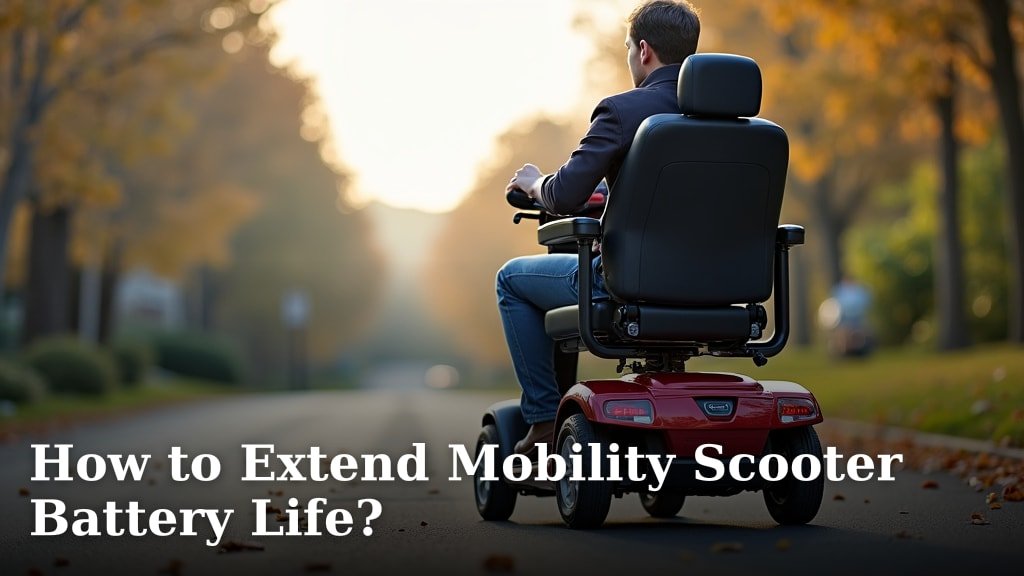
To extend mobility scooter battery life, you should always charge it correctly and avoid fully draining it. Regular maintenance and proper storage also play a big role.
Taking care of your mobility scooter’s battery ensures longer use between charges. It also helps you avoid costly replacements down the road. Isn’t that something we all want?
- Charge batteries after every use.
- Never fully drain your battery.
- Store your scooter in a cool, dry place.
- Avoid extreme temperatures.
- Check battery terminals regularly.
Let’s walk through exactly how you can keep your mobility scooter battery going strong. We’ll find out what works best for you and your scooter.
Maximizing Your Mobility Scooter Battery’s Lifespan
You want your mobility scooter battery to last as long as possible. We found a few key habits that can significantly extend its life. Think of it like taking good care of your car’s engine; a little attention goes a long way. This means more independence for you, and fewer worries about being stranded.
Understanding Your Battery Type
Before we dive into charging, it’s good to know what kind of battery powers your scooter. Most mobility scooters use either Sealed Lead-Acid (SLA) batteries or Lithium-Ion (Li-ion) batteries. Each type has its own quirks and best practices. Knowing yours helps you treat it right.
Sealed Lead-Acid (SLA) Batteries
SLA batteries are the most common type. They are reliable and often less expensive. Absorbed Glass Mat (AGM) and Gel Cell are two main kinds. AGMs are good for power, while Gel Cells handle deep discharges better. Remember, these batteries prefer being kept fully charged. They don’t like sitting empty for long.
Lithium-Ion (Li-ion) Batteries
Li-ion batteries are lighter and offer a longer range. They also tend to last longer overall. You’ll find them in newer or more premium scooters. These batteries are a bit different in how they like to be charged. They don’t mind partial charges as much as SLA batteries do. In fact, many experts say they prefer not to be fully drained or fully charged for long periods.
The Golden Rules of Charging
Charging your battery correctly is the single most important thing you can do. It’s like watering a plant – too much, too little, or at the wrong time, and it won’t thrive. Getting this right will make a huge difference in how long your battery serves you.
Always Charge After Every Use
This might be the simplest, yet most effective, rule. After you’ve used your scooter, even for a short trip, plug it in. Don’t wait for the battery indicator to drop significantly. This habit prevents deep discharges, which are very bad for SLA batteries. It keeps the battery cells active and healthy.
Avoid Overcharging and Undercharging
Modern chargers are smart. They usually stop charging once the battery is full. However, leaving a scooter plugged in for weeks on end can sometimes stress the battery. For SLA batteries, it’s generally fine to leave it plugged in overnight. For Li-ion, it’s often best to unplug once full, especially if you won’t use it for a few days. On the flip side, never undercharge. Stopping the charge too soon means your battery isn’t getting all the juice it needs to stay strong.
Use the Right Charger
This sounds obvious, but it’s vital. Always use the charger that came with your scooter. If you need a replacement, get one specifically designed for your scooter’s battery type and voltage. Using the wrong charger can damage the battery, cause it to overheat, or even create a fire risk. It’s not worth the gamble.
Smart Usage Habits for Longevity
How you use your scooter matters just as much as how you charge it. Think of it like exercising – consistent, moderate activity is better than occasional overexertion. These tips will help preserve your battery’s capacity and extend its useful life.
Don’t Fully Drain Your Battery
We’ve said it before, but it’s worth repeating: one of the worst things for a mobility scooter battery is letting it run completely empty. This is especially true for SLA batteries. Each deep discharge takes a toll. Try to recharge when your battery indicator shows about 25% to 50% left. This helps prevent irreversible damage to the battery cells.
Distribute Your Weight Evenly
Your battery works harder when it has to push more weight. If you frequently carry heavy items or exceed the scooter’s weight limit, the battery will drain faster and experience more stress. Try to distribute weight evenly and avoid overloading your scooter. This small habit reduces strain on the motor and, by extension, the battery.
Plan Your Routes
Long, uphill climbs or rough terrain make your battery work harder. If you have a choice, pick flatter, smoother paths. This isn’t always possible, of course, but being mindful can help. Think about it: an easy stroll is less tiring than a sprint, right? The same goes for your battery.

Environmental Factors: Temperature and Storage
Batteries are sensitive creatures. Extreme temperatures can severely affect their performance and lifespan. Just like you prefer a comfortable room temperature, so does your scooter battery.
Avoid Extreme Temperatures
Heat and cold are the battery’s enemies. Very hot weather can degrade battery components faster. Try to avoid leaving your scooter in direct sunlight on a scorching day. Similarly, cold weather reduces battery capacity temporarily. If you use your scooter in freezing temperatures, you’ll notice it won’t go as far. When not in use, bring it indoors if possible. Don’t store it in an unheated garage during winter if you can help it.
Here’s a quick look at ideal temperature ranges:
| Battery Operation | Battery Storage |
|---|---|
| 68°F to 86°F (20°C to 30°C) | 50°F to 77°F (10°C to 25°C) |
These are general guidelines (CDC). Always check your scooter’s manual for specific recommendations.
Store Your Scooter Properly
When you’re not using your scooter for an extended period, how you store it matters. Make sure it’s in a cool, dry place. Avoid basements that might get damp or attics that get extremely hot. For SLA batteries, some sources suggest a regular “maintenance charge” every few weeks during storage to prevent self-discharge. For Li-ion, storing them at around 50-60% charge is often recommended if you won’t use them for months.
Routine Maintenance and Checks
A little bit of regular attention can prevent big problems. Think of it as a quick check-up for your battery. It doesn’t take long, but it can catch issues before they turn into something more serious. Many people overlook these simple steps, but they’re surprisingly effective.
Keep Battery Terminals Clean and Tight
Over time, battery terminals can get dirty or corroded. This creates resistance and prevents a good connection, making your battery work harder and charge less efficiently. Once a month or so, check the terminals for any signs of corrosion (a white or greenish crust). If you see any, you can clean them carefully with a wire brush and a mixture of baking soda and water (for sealed lead-acid batteries only, and always disconnect the battery first). Make sure the connections are also snug and tight. Loose connections can lead to power loss and heat buildup.
Monitor Battery Performance
Pay attention to how your scooter is performing. Are you noticing a shorter range? Is the scooter feeling sluggish? These can be early warning signs that your battery is losing its capacity. If you catch these issues early, you might be able to adjust your charging or usage habits to slow down further degradation. Sometimes, a professional battery test can also tell you the health of your battery.
Regular Battery Checklist
Here’s a quick checklist to help you keep your battery in top shape:
- Charge after every use.
- Avoid deep discharges.
- Use only the correct charger.
- Keep terminals clean and tight.
- Store in a cool, dry environment.
- Avoid extreme temperatures.
Following these steps can truly make a difference. You’re not just maintaining a battery; you’re maintaining your freedom and independence. And that’s something worth putting a little effort into, isn’t it?
Conclusion
Taking care of your mobility scooter battery isn’t just about saving money; it’s about maintaining your independence. We’ve learned that correct charging, thoughtful usage, and mindful storage are key to getting the most out of your battery. Each small habit, like charging after every use or avoiding extreme temperatures, adds up to significant longevity.
Think of these practices as an investment in your freedom. By following these straightforward tips, you’re ensuring reliable transportation for years to come. Now, go ahead and put these tips into practice to keep your scooter rolling smoothly!
Frequently Asked Questions
How often should I replace my mobility scooter battery?
Typically, a mobility scooter battery lasts 1 to 2 years, but some quality batteries can go longer with proper care. How often you use your scooter and how well you maintain the battery are the biggest factors. When you notice a significant drop in range or power, it’s likely time for a replacement.
Can I use a car battery charger for my mobility scooter?
No, you should never use a car battery charger for your mobility scooter. Car chargers provide a different voltage and amperage that can severely damage your scooter’s battery. Always use the specific charger designed for your scooter’s battery type and voltage to prevent harm and ensure safe charging.
What’s the best way to store my scooter battery for winter?
If you won’t use your scooter for several months, store it in a cool, dry place, ideally between 50°F and 77°F. For SLA batteries, give it a “maintenance charge” every few weeks to prevent discharge. For Li-ion, aim to store it with about a 50-60% charge level, and check it periodically.
Does fast charging harm a mobility scooter battery?
Most standard mobility scooter chargers are not “fast chargers” in the same way modern phones are. Using the charger that came with your scooter is usually the safest option. Using an unapproved, higher-amperage charger could potentially generate too much heat and reduce your battery’s lifespan, especially for lead-acid types.
Is it better to fully discharge my battery before recharging?
No, it’s generally not better to fully discharge your mobility scooter battery, especially if it’s a Sealed Lead-Acid (SLA) type. Deep discharges significantly shorten the lifespan of SLA batteries. For both SLA and Lithium-ion batteries, it’s best to recharge when the battery indicator shows 25-50% remaining to keep it healthy.
