
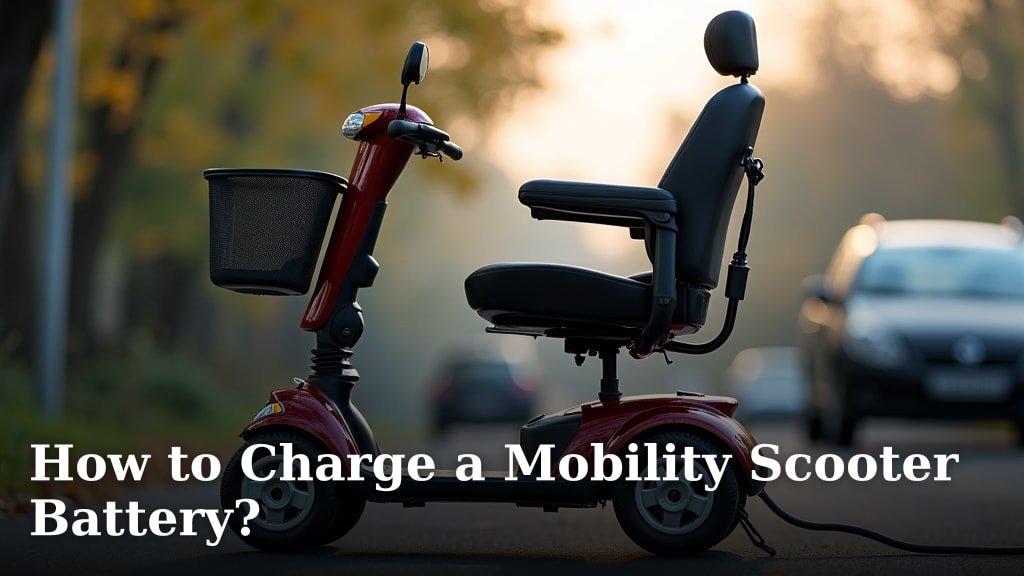
To charge a mobility scooter battery, you should connect the charger to the scooter’s charging port first, and then plug the charger into a wall outlet. This sequence is important for safety and to prevent sparks. We found that always using the manufacturer’s recommended charger ensures optimal performance and battery longevity when you need to charge a mobility scooter battery.
Properly charging your mobility scooter battery is essential for reliable operation and extending its life. You want to make sure your scooter is always ready when you are, right? This means understanding the correct charging process, knowing how long to charge, and avoiding common mistakes that can degrade your battery over time. A well-maintained battery is key to your independence.
TL;DR
- Always connect charger to scooter first, then to the wall.
- Use the charger that came with your scooter.
- Avoid overcharging or letting the battery completely drain.
- Check battery levels often for best performance.
- Charge your scooter regularly, even if not used daily.
Let’s walk through everything you need to know about charging your mobility scooter battery, ensuring you stay mobile and worry-free. We’ll cover the dos and don’ts of battery care.
Getting Started: Charging Your Mobility Scooter Battery
So, you’re ready to charge your mobility scooter. It might seem straightforward, but a few key steps ensure safety and optimal battery life. Think of it like fueling your car; you wouldn’t just splash gas anywhere, right? We want to make sure your scooter is powered up correctly every time.
The Right Way to Connect Your Charger
You’re probably eager to get going, but let’s take a quick moment to confirm the charging order. This is a common point of confusion, and getting it right can prevent sparks and protect your battery. We found that following the manufacturer’s sequence is always best practice.
Step-by-Step Connection Guide
- Connect the charger to the scooter first. Look for the charging port, usually on the front or side of the scooter’s base. It often has a protective cap. Plug the charger’s output cord firmly into this port. This establishes the electrical connection safely.
- Then, plug the charger into a wall outlet. After the charger is connected to your scooter, you can plug the charger’s AC power cord into a standard wall socket. This reduces the risk of arcing or sparking, which can happen if you plug the charger into the wall first and then try to connect it to the scooter.
- Ensure the power indicator light is on. Most chargers have an indicator light that shows when power is flowing and when charging has started. This gives you peace of mind that everything is connected properly.
You might wonder, “Does it really matter which goes first?” Yes, it does! We found that this specific order minimizes electrical stress on the battery and the charger. It’s like putting on your seatbelt before you start the car – a small step that brings big safety benefits.
Using the Correct Charger for Your Mobility Scooter
Imagine trying to charge your phone with a laptop charger. It might fit, but it’s probably not ideal, right? The same principle applies here. Using the charger that came with your mobility scooter is not just a suggestion; it’s a critical recommendation.
Your scooter’s charger is designed specifically for your battery’s chemistry and voltage. Using an incompatible charger can lead to inefficient charging, battery damage, or even a fire hazard. We found that matching the charger to the battery is fundamental for longevity and safety (Mobility Scooter Manufacturer Guidelines).
Understanding Charger Specifications
- Voltage (V): Make sure the charger’s voltage output matches your scooter’s battery voltage (e.g., 24V or 36V).
- Amperage (A): The charger’s amperage determines how fast it charges. Using a charger with too low amperage will take an excessively long time, while one with too high amperage can damage the battery.
- Connector Type: Chargers have specific plug types that fit your scooter’s charging port. Don’t force a connection that doesn’t fit correctly.
If you lose or damage your original charger, always replace it with an authorized charger from the scooter manufacturer or a trusted supplier. It’s an investment in your safety and the life of your scooter.
How Long Should You Charge Your Mobility Scooter Battery?
This is a question we hear often: “How long is long enough?” It’s tempting to just plug it in and forget about it. However, finding the right charging duration is a balance. You want a full charge, but you also want to avoid overcharging, which can be just as detrimental as undercharging.
Most mobility scooter batteries require a full charge overnight. This typically means 8 to 12 hours. We found that this timeframe allows the battery to fully replenish without undue stress.
Optimal Charging Times
While 8-12 hours is a good rule of thumb, the exact time can vary. Factors like the battery’s current charge level, its age, and the charger’s output all play a role. Many modern chargers have automatic shut-off features once the battery is full. This is a game-changer!
- Initial Charge: When you first get a new scooter, or a new battery, it often requires a longer initial charge – sometimes up to 24 hours. Check your scooter’s manual for this important instruction.
- Regular Charging: For daily use, aim for an overnight charge. Most chargers have lights that change color (e.g., red to green) when charging is complete.
- Avoid Overcharging: While most modern chargers prevent severe overcharging, continuously leaving your scooter plugged in for days on end isn’t ideal. It can lead to unnecessary heat and wear on the battery.
Think of your battery like a sponge. It can only hold so much water. Once it’s saturated, adding more water doesn’t help and can even be messy. Your charger’s indicator lights are your signal that the “sponge” is full.
Battery Types and Their Charging Quirks
Not all mobility scooter batteries are created equal. The most common types are Sealed Lead Acid (SLA), which includes Gel and AGM, and Lithium-ion. Each has its own charging characteristics that you should be aware of. Understanding your battery type helps you keep it healthy.
| Battery Type | Key Charging Characteristic | Common Usage |
|---|---|---|
| Sealed Lead Acid (SLA) – GEL | Sensitive to overcharging; requires a slower, more precise charge. | Many standard mobility scooters. |
| Sealed Lead Acid (SLA) – AGM | Can handle faster charging than gel; less sensitive to temperature. | Scooters, power wheelchairs. |
| Lithium-ion (Li-ion) | Charges quickly, lighter weight, longer lifespan, specialized charger required. | Newer, higher-end scooters and portable models. |
Always refer to your scooter’s manual to confirm your battery type and any specific charging instructions. Using the wrong charger or charging method for your battery type can shorten its life dramatically. We found that knowing your battery’s chemistry is key to proper care.
Lithium-ion Battery Charging Considerations
Lithium-ion batteries are becoming more popular due to their efficiency. If your scooter has a Li-ion battery, you’ll notice it charges faster and offers more range. However, they are also more sensitive to specific charging requirements.
- Dedicated Charger: Lithium-ion batteries ABSOLUTELY require a charger specifically designed for them. Do not use an SLA charger.
- Temperature Sensitivity: Avoid charging Li-ion batteries in extreme heat or cold. Room temperature is ideal.
- Partial Charges are Okay: Unlike lead-acid batteries, Li-ion batteries don’t suffer from “memory effect,” so partial charges are perfectly fine and even beneficial (Battery University).
While Li-ion batteries are often more expensive upfront, their enhanced performance and lifespan can make them a worthwhile investment for many users. Just remember their unique charging needs!
When to Charge Your Mobility Scooter Battery
You wouldn’t wait until your phone dies completely before charging it, would you? The same logic applies to your mobility scooter battery. Developing a regular charging routine is one of the best habits for battery health.
Establishing a Charging Routine
We found that a consistent charging schedule significantly extends battery life. Think of it like your nightly ritual – brushing your teeth, perhaps reading a book, and then plugging in your scooter.
- After Every Significant Use: If you’ve used your scooter for a few hours or covered a noticeable distance, plug it in. Don’t wait for the battery indicator to be critically low.
- Daily or Overnight: Many people find it easiest to charge their scooter every night, even if it wasn’t heavily used. This ensures it’s always ready for a full day’s activity.
- Before Storage: If you plan to store your scooter for more than a few days, give it a full charge first.
A good rule of thumb: “Whenever in doubt, plug it out… wait, no, plug it IN!” It’s better to slightly overcharge occasionally (if your charger has automatic shut-off) than to consistently undercharge or let the battery go completely flat.
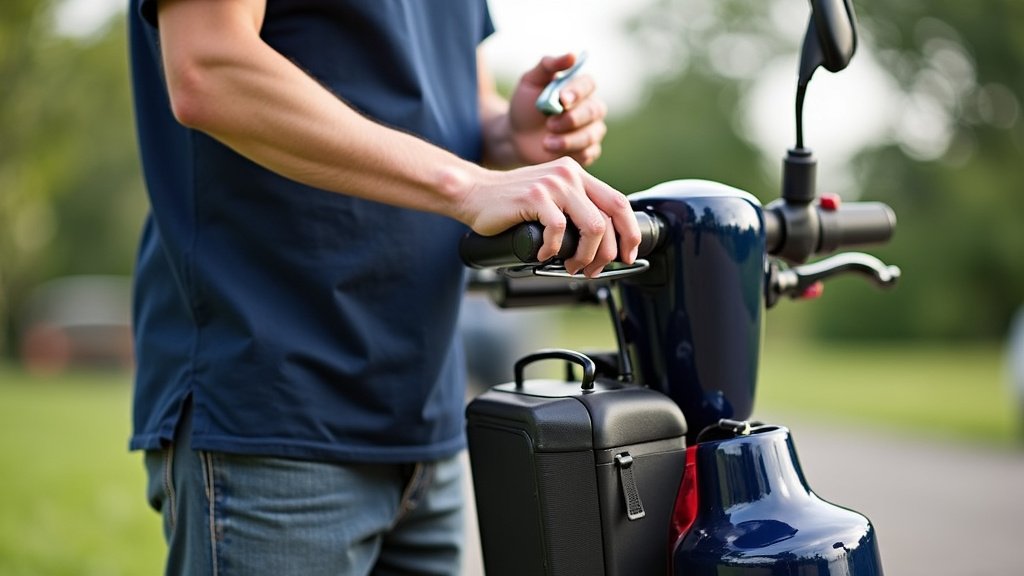
Temperature and Battery Charging
Just like Goldilocks, your mobility scooter battery prefers charging conditions that are “just right.” Extreme temperatures, both hot and cold, can impact charging efficiency and battery lifespan. This is an often-overlooked factor, but it’s crucial for long-term health.
We found that charging your battery in a moderately stable temperature environment is best. Think of a comfortable room temperature, not a scorching garage or a freezing shed.
Ideal Charging Temperatures
For most battery types, a charging temperature between 50°F (10°C) and 80°F (27°C) is optimal. This range allows the battery cells to accept a charge efficiently without being stressed by heat or impeded by cold.
- Avoid Hot Garages: Charging in a very hot environment can cause the battery to overheat, reducing its capacity over time and potentially shortening its life.
- Beware of Cold Weather: Cold temperatures slow down the chemical reactions within the battery, making it harder to accept a full charge. A cold battery will take longer to charge and may not reach its full capacity.
If you absolutely must charge in cold conditions, try to bring the battery indoors for a while to allow it to warm up before plugging it in. It’s a small effort that can make a big difference for your battery’s longevity.
Battery Maintenance Checklist
To keep your mobility scooter battery performing its best and to ensure its longest possible life, here’s a quick checklist to follow. These simple steps can prevent headaches down the road and keep you moving independently.
- Always use the correct, manufacturer-recommended charger.
- Connect charger to scooter first, then to the wall outlet.
- Charge regularly, ideally after every significant use or overnight.
- Avoid letting the battery completely drain (deep discharge).
- Charge in a well-ventilated, room-temperature environment.
- Check battery terminals for corrosion periodically and clean if needed.
Conclusion
Taking good care of your mobility scooter battery ensures your independence and extends your scooter’s life. Always charge your scooter correctly and consistently, prioritize using the manufacturer’s recommended charger, and be mindful of your battery type. We found following these simple guidelines will keep your battery healthy, giving you reliable power whenever you need it. By adopting these habits, you’re investing in worry-free mobility every single day.
Frequently Asked Questions
Can I use a car battery charger for my mobility scooter?
No, you should never use a car battery charger for your mobility scooter. Car chargers typically have different voltage and amperage requirements and are not designed for the specific chemistry of mobility scooter batteries. Using one could seriously damage your battery or even create a fire hazard.
What does a flashing light on my scooter charger mean?
A flashing light on your charger often indicates an issue. It could mean a poor connection, a fully charged battery, or a problem with the battery itself. Consult your scooter’s manual, as the meaning of flashing lights can vary by manufacturer and model.
Should I fully discharge my mobility scooter battery before recharging?
For most modern mobility scooter batteries, especially SLA and Lithium-ion, you should avoid fully discharging them. Deep discharges can significantly reduce the battery’s overall lifespan. It’s best to recharge after significant use, even if the battery isn’t completely depleted.
Can a cold battery affect my scooter’s range?
Yes, cold temperatures can affect your scooter’s range and battery performance. Batteries perform less efficiently in the cold, meaning you might get fewer miles than usual on a full charge. It’s always best to charge and store your scooter in a moderately warm environment.
How do I know when it’s time to replace my mobility scooter battery?
Signs that your battery might need replacing include a noticeable decrease in range, longer charging times, or if the scooter struggles to climb inclines. If a full charge doesn’t last as long as it used to, even after proper charging, it’s likely time for new batteries.
