Charging your mobility scooter without a garage is definitely possible. You just need to find a safe, dry indoor spot with an electrical outlet, keeping weather and security in mind.
Many scooter users face this common challenge. We know it can be tricky to find the right setup, especially if you live in an apartment or don’t have outdoor covered space. The good news is, with a little planning, you can keep your scooter charged and ready for your next adventure.
- Charge indoors for safety.
- Protect your charger from moisture.
- Consider extension cord safety.
- Prioritize battery health.
- Explore portable charging options.
Let’s walk through the best ways to charge your mobility scooter safely and effectively, even without a garage.
Charging Your Mobility Scooter Without a Garage: Best Practices
Charging your mobility scooter safely and effectively without a garage involves finding the right indoor spot and protecting your equipment. It’s all about balancing convenience with safety.
Choosing the Safest Indoor Charging Location
Your home offers several excellent spots for charging. The key is to find a place that is dry, temperature-controlled, and close to a power outlet.
Designated Indoor Spaces
Many people find success charging their scooter in a spare room, a living area corner, or even a spacious hallway. We found these areas are usually well-lit and have easy access to wall sockets.
- Living Room or Dining Area: These rooms often have extra space and are kept at a comfortable temperature. Just make sure the scooter isn’t blocking any walkways.
- Spare Bedroom/Office: If you have an unused room, it’s perfect. You can dedicate a corner for your scooter, keeping it out of the way.
- Large Hallway/Entryway: This can work if your hallway is wide enough. You don’t want to create a tripping hazard for yourself or others.
Avoiding Risky Areas
Some indoor locations are less ideal. For example, a bathroom, while having outlets, is too humid. Basements can be damp and unheated, which isn’t good for batteries. Kitchens can be busy and prone to spills.
We found that keeping your charging station away from water sources and extreme temperatures is critical for battery longevity (Battery University).
Essential Tools and Safety Considerations
Beyond finding a spot, you’ll need a few things to make sure charging is safe. Your scooter’s charger, good electrical connections, and maybe an extension cord are all important.
Using Your Scooter’s Original Charger
Always use the charger that came with your mobility scooter. It’s specifically designed for your battery type and voltage. Using a different charger can damage your battery or even create a fire hazard.
Think of it like charging your phone; you wouldn’t use just any old charger, right? The same applies, even more so, to a powerful mobility scooter battery.
The Role of Extension Cords (and How to Use Them Safely)
Sometimes, your ideal charging spot isn’t right next to an outlet. An extension cord might be necessary. But use caution!
- Choose the Right Cord: Always use a heavy-duty outdoor-rated extension cord, even indoors. These are more robust and can handle the power draw. We found that thinner indoor cords can overheat easily.
- Length Matters: Keep the cord as short as possible. Longer cords increase resistance and can lead to voltage drops, affecting charging efficiency.
- Avoid Trip Hazards: Route the cord carefully. Tape it down with electrical tape if it crosses a walkway. Don’t run it under rugs or furniture, as this can cause overheating and make it hard to spot damage.
- Check for Damage: Regularly inspect your extension cord for fraying, cuts, or exposed wires. Replace damaged cords immediately.
Surge Protectors vs. Power Strips
It’s good practice to plug your scooter charger into a surge protector, not just a basic power strip. A surge protector can shield your charger and scooter from power spikes. We found that unexpected power surges can harm delicate electronics (UL Standards).
Maximizing Battery Life and Charging Efficiency
Proper charging isn’t just about safety; it also extends your scooter’s battery life. Treating your battery well means more independence for you.
Understanding Your Battery Type
Most mobility scooters use Sealed Lead Acid (SLA) or Lithium-Ion (Li-ion) batteries. Each has slightly different charging needs.
- SLA Batteries: These prefer to be charged after each use, even if you’ve only gone a short distance. Don’t let them fully discharge regularly, as this can shorten their life.
- Li-ion Batteries: These are more forgiving. They don’t have a “memory effect.” You don’t need to fully discharge them before recharging. Many experts say charging them regularly, but not always to 100%, can extend their overall lifespan.
Your scooter’s manual will have specific instructions for your battery type. Always follow those guidelines!
The Ideal Charging Schedule
For most users, charging overnight is ideal. It allows for a full charge cycle without interrupting your daily activities. We found that a typical scooter takes 8-12 hours for a full charge, depending on the battery size and how depleted it is.
However, avoid leaving your scooter plugged in for weeks on end if you’re not using it. While most modern chargers have auto-shutoff, prolonged “trickle charging” can sometimes stress the battery.
When an Indoor Spot Isn’t Feasible: Portable Solutions
What if even the best indoor space feels too cramped? Or maybe you live somewhere with very limited outlets? Don’t worry, there are a few creative solutions to consider.
Portable Power Stations (Power Banks)
These large, battery-powered devices can act as a “mobile outlet.” You charge the power station from a wall outlet, then use it to charge your scooter. This gives you flexibility.
It’s like having a giant portable phone charger for your scooter. We found some models are powerful enough to charge a scooter multiple times. Look for models with a high Watt-hour (Wh) rating and an AC outlet (like a wall plug).
Solar Charging Kits (with caveats)
While less common, small solar charging kits can be an option for some. These usually involve a solar panel that charges a separate battery, which then charges your scooter.
This is a more complex setup and requires good sunlight exposure. It’s usually a slower charging method and might be better suited for maintaining a charge rather than a full overnight recharge. Consult an expert if considering solar options for your scooter.
Preparing Your Charging Area Checklist
Before you plug in, take a moment to review this quick checklist for your chosen charging spot. A little preparation goes a long way!
- Is the area dry and protected from rain or spills?
- Is the temperature moderate, not too hot or cold?
- Is the power outlet easily accessible and in good condition?
- If using an extension cord, is it heavy-duty and free of damage?
- Is the scooter positioned so it doesn’t block exits or pathways?
- Is the charger itself placed on a hard, non-flammable surface?
Troubleshooting Common Charging Issues
Sometimes, things don’t go as planned. If your scooter isn’t charging, here are a few common things to check. Don’t panic!
No Power Indicator Light?
First, check the wall outlet. Plug something else in, like a lamp, to ensure the outlet has power. If it doesn’t, check your circuit breaker.
Next, check the connections. Is the charger firmly plugged into the wall and into your scooter? Sometimes a loose connection is all it is.
Slow Charging or Not Holding a Charge?
This could indicate an issue with your battery. Batteries, like all things, have a lifespan. We found that mobility scooter batteries typically last 1-2 years with regular use and proper care (Mobility Scooter Association).
If your battery is older, it might be time for a replacement. Also, ensure your charger is working correctly; sometimes chargers can wear out over time.
Unusual Smells or Sounds?
If you notice any unusual smells, hear strange noises, or see smoke, immediately unplug the charger. These are signs of a serious problem. Contact a qualified technician right away. Your safety is paramount.
| Charging Location | Pros | Cons |
|---|---|---|
| Living Room/Bedroom | Warm, dry, easy access to outlets. | May take up space, potential trip hazard. |
| Large Hallway/Entryway | Convenient for bringing scooter inside. | Must ensure it doesn’t block paths. |
| Portable Power Station | Flexibility in charging location, backup power. | Initial cost, needs to be charged itself. |
| Solar Charging Kit | Eco-friendly, off-grid potential. | Slower charging, dependent on sunlight, complex setup. |
Conclusion
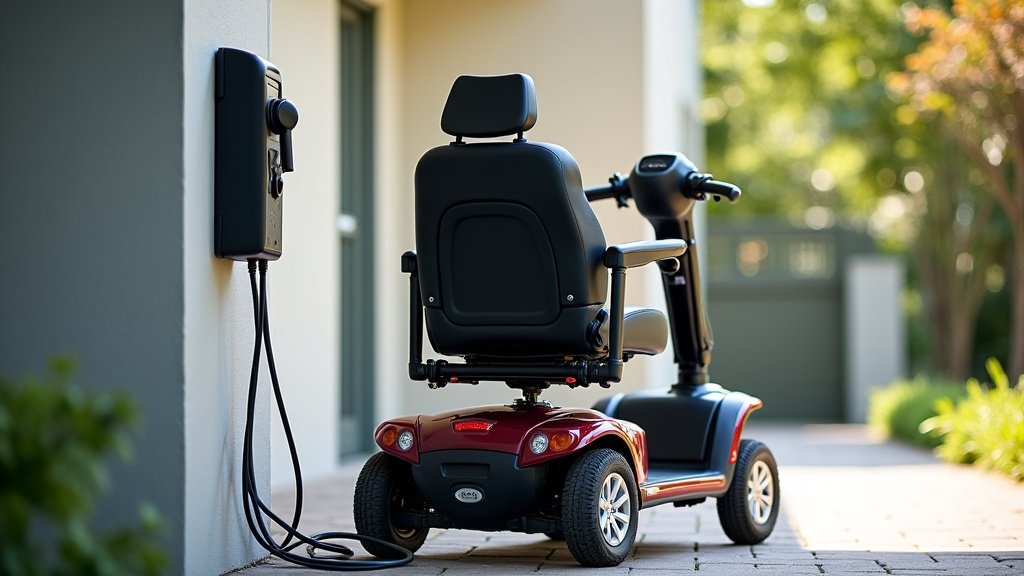
You’ve seen that charging your mobility scooter without a garage isn’t just possible, it’s straightforward with a bit of planning. Prioritizing a safe, dry, indoor space, using your scooter’s original charger, and being smart about extension cords are your best bets. Remember, caring for your battery extends its life and keeps you moving. By following these practical tips, you can ensure your scooter is always charged, ready for your next outing, and keeps you independent. Take a moment today to set up your ideal charging station!
Frequently Asked Questions
Can I charge my mobility scooter outside if it’s covered?
We advise against regular outdoor charging, even under a cover. Weather conditions can change quickly, exposing your scooter and charger to moisture or extreme temperatures, which is bad for electronics and batteries. An indoor location is always the safest option.
How often should I charge my mobility scooter battery?
For most Sealed Lead Acid (SLA) batteries, charging after every use is recommended, even for short trips. Lithium-Ion (Li-ion) batteries are more flexible, but consistent charging prevents deep discharges and prolongs their lifespan. Always check your scooter’s manual for specific guidance.
What if my scooter charger feels warm during charging?
It’s normal for chargers to feel slightly warm during operation. However, if it’s excessively hot to the touch, or you notice any burning smells or strange noises, immediately unplug it. This could indicate a fault and should be checked by a professional.
Is it okay to leave my mobility scooter plugged in all the time?
Most modern mobility scooter chargers have an automatic shut-off feature, preventing overcharging. However, leaving it plugged in for weeks or months without use can still subtly stress the battery. For long-term storage, charge it fully, then check and top it off monthly.
Where can I get a replacement charger if mine breaks?
You should always purchase a replacement charger directly from your scooter’s manufacturer or an authorized dealer. This ensures you get the correct charger specifically designed for your scooter’s battery type and voltage, preventing potential damage or safety hazards.