Can You Put a Grab Bar on a Glass Shower Door?
No, grab bars on glass shower doors are unsafe. A door is not a structural support, and drilling or clamping it can damage the glass. Choose a suitable wall location or another support for the specific movement.
On this page (10 sections)
- Can you put grab bars on glass shower doors?
- Where should a grab bar go beside a glass shower door?
- How do you choose a wall-mounted grab bar?
- How can you tell whether the wall can support a grab bar?
- Can you install a grab bar in a fiberglass shower?
- What should you use when standing in the shower is difficult?
- What can help when getting up from the toilet is the main concern?
- How should you set up and care for bathroom support?
- What mistakes should you avoid when choosing shower support?
- Which option should you choose for grab bars on glass shower doors?
No, grab bars on glass shower doors are unsafe. A door is designed to open and close, not support a person’s weight.
Drilling or clamping it can damage the glass, so plan support around a suitable wall or another aid.
When entering, turning, or sitting down, people often reach for the nearest surface. A glass panel may be close at hand, but it should not be part of the support plan.
Match each unstable movement to a support that is designed for that task and securely installed.
Can you put grab bars on glass shower doors?
No. Glass shower doors are not appropriate mounting surfaces for grab bars.
Their panels and hardware are not designed to carry someone’s weight, and modifying the glass can create a breakage risk.
Do not drill the glass or clamp a bar around the panel. A loose attachment can move when pulled, and a damaged door can fail without providing the support the user expects.
Suction products may attach to some smooth surfaces, but that does not make a glass door a safe fixed grab-bar location. Follow the device’s directions and do not rely on suction to catch a fall or hold full body weight.
Where should a grab bar go beside a glass shower door?
Choose a suitable wall near the movement that needs support. Depending on the bathroom, that may be beside the entrance, inside the shower, or near a seat where the user turns or stands.
Think through the whole movement rather than choosing a spot simply because it is convenient to reach. The user should be able to grip the bar without leaning on the glass, stretching, or blocking the door.
Our guide to where to put grab bars in a bathroom explains common placements. For a broader room-by-room plan, read the bathroom safety guide for seniors.
How do you choose a wall-mounted grab bar?
Choose a bar that fits the user’s grip and the wall’s construction. Check the bar’s length, diameter, mounting instructions, and whether the wall can support the attachment method in the intended location.
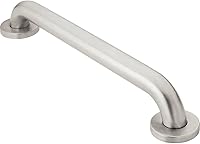
The Moen 8912 Home Care bar is 12 in long, with a 1.5 in diameter grip and concealed mounting hardware. It is stainless steel and intended for areas near showers, tubs, and toilets.
{{product B00084IBAE}} The listing describes a short stainless steel grab bar to consider when a suitable wall location and compatible mounting method are available.
A 12 in bar suits a specific handhold location where its length gives enough grip for the movement. It may be too short if the user needs a longer reach or more room to reposition a hand.
Measure the intended spot and consider the user’s reach before selecting a length. See grab bar mounting height guidance when planning its position.
How can you tell whether the wall can support a grab bar?
The wall and attachment points must suit the bar’s installation method. For a tiled surface, read about installing grab bars over tile.
Tile or a finished shower surface alone does not show what backing is behind it or whether the fasteners will hold.
Read the installation instructions before choosing a location. Some bars attach to framing, while certain mounting systems are designed for situations where direct access to a stud is unavailable.
The specific bar’s instructions determine which methods are appropriate.
If you cannot confirm the wall construction or fasteners, ask a qualified installer to inspect it. Our guides on grab bar mounting and studs and installing grab bars in a bathroom explain the decisions to make before installation.
Can you install a grab bar in a fiberglass shower?
Sometimes, but the wall or surround must support the selected fasteners. Fiberglass can have different construction behind its surface, so do not assume that fastening into the visible layer alone will provide secure support.
Check the shower manufacturer’s guidance and the grab bar’s instructions before drilling or choosing another mounting method. If you cannot identify the wall construction, have an installer assess it first.
Read more about putting a grab bar in a fiberglass shower. The same principle applies to glass doors: choose a mounting surface designed to support the bar.
What should you use when standing in the shower is difficult?
A shower chair can reduce the time a person needs to stand, but it is not a grab bar. It may suit someone who can sit safely while bathing, while a person who needs help with transfers may need a more complete support plan.
It can move into a shower and over a standard-size toilet.
Its stated weight capacity is 250 lb, so confirm that the user and setup fit its limits.
Before choosing a rolling chair, measure the bathroom doorway, shower opening, and turning space. Confirm that the chair can pass through the opening and fit inside without striking the enclosure.
Lock the rear wheels before use as directed, and do not use the chair as a substitute for a needed handhold.
If a seated transfer is difficult, plan for the user and any helper to have room to move. A chair with wheels is a poor fit when it cannot enter the shower or when the person cannot use it safely.
What can help when getting up from the toilet is the main concern?
A toilet safety rail is designed for support beside the toilet, not inside the shower. It may help a user who needs a stable handhold when sitting down or standing up, but it does not solve the separate need for a shower handhold.
Its stated capacity is 250 lb in the product title and 300 lb in the specifications, so confirm the correct limit and fit before choosing it.
Check the toilet and floor space to confirm the frame fits without interfering with normal movement. Adjust the arms to a useful position before relying on them, and do not assume that a toilet rail will help at the shower entrance.
How should you set up and care for bathroom support?
Set up each aid for its intended task, then check that the space stays clear and usable. Keep the shower door free to open, and position a wall bar where the user can reach it through the movement it is meant to support.
Follow the installation or assembly instructions for the specific item. For a wall bar, verify that the wall and attachment method match those instructions.
For a rolling chair, check the route and opening dimensions, and engage its wheel locks before bathing or transferring.
Keep grips, seats, and nearby floors clean and dry as appropriate for the materials and instructions. Check mounted bars and movable supports regularly for looseness, shifting, or visible damage.
Stop using a support that moves unexpectedly and have the cause addressed before relying on it again.
What mistakes should you avoid when choosing shower support?
The main mistake is treating a nearby surface or aid as if it were a secure grab bar. A shower door, suction attachment, or chair each has different limits and cannot automatically replace a properly installed wall bar.
Avoid these common errors:
- Do not drill or clamp a grab bar onto glass.
- Do not choose a wall location before checking the mounting instructions and wall construction.
- Do not assume a chair can fit through the shower opening without measuring.
- Do not use a rolling chair as a fixed handhold, or a toilet rail as shower support.
- Do not ignore the user’s reach, balance, transfer needs, or the space required for a helper.
If the person cannot use the planned support without leaning on the glass or losing balance, reassess the setup. A qualified installer can help identify a secure location, and a health professional can advise on support needs when mobility or transfers are changing.
Which option should you choose for grab bars on glass shower doors?
Choose a wall-mounted grab bar when a suitable wall and installation method are available. Consider the Moen bar for a short handhold location, the DMI chair when seated bathing and rolling access fit the user’s needs, and the Medline rail when toilet transfers are the main concern.
Skip any option that does not fit the person, room, or task. A wall bar is not suitable when its attachment cannot be confirmed, a rolling chair is not suitable when it cannot enter or be used safely, and a toilet rail does not provide shower support.
Start by identifying the movement that needs help, then measure the space and confirm the installation method or aid limits. For a practical example of checking an opening before choosing equipment, see how to fit a mobility scooter through a narrow door.
Frequently asked questions
Can you attach a grab bar to a glass shower door?
No. A shower door is not a suitable structural mounting surface for a grab bar.
Drilling or clamping it can damage the glass, and a shifting bar can cause a fall.
Mount a grab bar on a suitable wall using an appropriate installation method.
If you cannot confirm the wall or fasteners, ask a qualified installer to assess the location.
Can suction grab bars go on shower glass?
Some suction grab bars are made for smooth surfaces, but follow the maker’s directions and surface requirements. A suction device should not be treated as a fixed grab bar or relied on to catch a fall or support full body weight.
For dependable support, choose a properly installed grab bar on a suitable wall.
Where should a grab bar go in a shower?
Place the bar where it helps with the movement that needs support, such as stepping in, turning, or standing from a seat. The location must allow secure attachment to a suitable wall.
Consider the user's reach and transfer path.
Have an installer check the wall and fasteners if you cannot confirm they suit the bar.
What can I use if my shower has glass doors?
Keep the glass door separate from the support plan. A grab bar may fit on a nearby suitable wall, and a shower chair can help reduce standing during bathing.
A chair is not a handhold.
If no appropriate wall location is available, ask a qualified installer to assess other secure options.