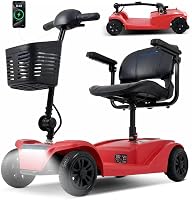
Do You Need Suspension on a Mobility Scooter?
A mobility scooter may feel more comfortable with suspension on bumpy routes, but the benefit depends on the suspension design, tires, seat and surfaces you cover. If your paths are smooth, prioritize fit, stability and transport.
On this page (11 sections)
- Is a mobility scooter better with suspension on bumpy sidewalks?
- What does suspension change during a ride?
- Who benefits most from mobility scooter suspension?
- How should you choose a scooter with suspension?
- What should you compare besides suspension?
- Which product fits your mobility needs?
- How do you set up and use a scooter for comfort?
- What care does suspension need?
- What mistakes should you avoid when choosing suspension?
- Is suspension worth prioritizing for your mobility scooter?
- Is suspension worth it for a mobility scooter?
Is a mobility scooter better with suspension? It can be, especially if your regular route has cracks, rough paving or uneven paths.
Suspension may soften some jolts, but the tires, seat, scooter fit and terrain all affect the ride.
For smooth floors and short, even paths, suspension may matter less than a scooter that fits your doors, turns easily and is simple to transport. For daily outdoor travel over rough pavement, make suspension one of the features you compare instead of choosing by seat padding or wheel size alone.
Start with your route. Note the surfaces you use most and how often you cross bumps.
Also consider whether you need to lift or store the scooter in a vehicle. Then compare how each scooter balances ride comfort with stability, turning space, weight and ease of use.
Our mobility scooter suspension guide covers models that make this feature a priority. The guide below explains when suspension helps, what to check, and when another feature should come first.
Is a mobility scooter better with suspension on bumpy sidewalks?
It may be a better fit when uneven sidewalks are part of your regular ride. Suspension can cushion some movement as the wheels cross cracks and joints, but the amount of comfort depends on the scooter and the surface.
One broken section of pavement is different from a route with repeated rough patches. If bumps occur throughout the trip, suspension is more relevant because the rider encounters those jolts again and again.
If you can avoid the rough section with a short detour, the added feature may carry less weight in your decision.
Consider the complete trip, too. A scooter that works on outdoor pavement still needs to fit through your doorway and turn in your hallway.
It also needs to reach its charging or storage spot. A smoother ride is useful only if the scooter works in the places you need it.
Four-wheel models are also worth comparing if stability is important on varied surfaces. See our guide to four-wheel mobility scooters for seniors for more on that layout.
What does suspension change during a ride?
Suspension cushions some movement between the wheels and frame, which may reduce the jolts a rider feels over bumps. It cannot smooth every surface or make an unsuitable route safe.
A scooter may have suspension at the front, rear or both ends. Full suspension generally means both ends have a suspension system, but designs vary, so confirm what a particular model includes before comparing it with another.
Think about suspension as one part of a ride system. The wheels meet the surface, and suspension manages some of the movement.
The seat and riding position also affect what the rider feels. A padded seat can add comfort, but it does not do the same job as suspension when the scooter crosses repeated bumps.
Tires matter as well. Larger wheels may pass over some surface changes differently from smaller ones.
Solid tires avoid the need to maintain air pressure. Neither wheel size nor tire material alone tells you how comfortable the complete ride will feel.
Our full-suspension mobility scooter guide is useful if you want to compare models that have suspension at both ends.
Who benefits most from mobility scooter suspension?
Suspension is worth prioritizing when rough pavement is a routine part of your route or repeated bumps make rides uncomfortable. The more often you encounter uneven ground, the more useful it is to compare suspension details directly.
It deserves a close look if you:
- Ride over cracked sidewalks, uneven joints or rough paths most days.
- Take longer trips where repeated bumps can make the ride tiring.
- Use outdoor routes that are less predictable than smooth indoor floors.
- Can try a scooter on a similar surface before choosing.
It may be a lower priority if you mostly travel indoors, on smooth floors or along short, even paths. In those situations, seat fit, controls, turning room and transport may have more effect on whether a scooter suits your routine.
Also consider how you get on and off. A comfortable seat is useful only if its height, shape and armrests work for you.
Ask someone qualified to help if you are unsure how a scooter’s setup will fit your needs.
A mobility scooter is not the same aid as a knee walker. If you need a device for an injured foot or ankle, see our best knee mobility scooters guide and compare the riding position and intended use before deciding.
How should you choose a scooter with suspension?
Choose by matching the suspension, wheels and seat to your usual route, then check that the scooter fits your body, home and transport plan. A feature list by itself cannot answer all three questions.
Is a mobility scooter better with suspension for your route?
Start by listing the surfaces you cross on an ordinary outing. Include the path from home to the sidewalk, curb cuts and store entrances.
Note any rough sections between destinations. Frequent bumps make suspension a stronger priority than a single uneven patch you rarely encounter.
If you can try the scooter, choose a place with a surface similar to your route. Notice how it feels when the wheels cross small changes in the ground, whether you can steer comfortably and whether the scooter remains manageable at your preferred pace.
If you cannot try it first, ask about the location and type of suspension. Then compare that information with wheel size, tire type and seat design.
A vague mention of suspension is not enough to compare two different setups.
How should the seat and riding position fit?
You should be able to sit in a position that feels manageable and reach the controls without straining. Check the seat width and height, the space for your legs, the position of the tiller and whether the armrests help you get on and off.
Seat padding can matter on both smooth and rough routes. It may make a short trip more comfortable, but it should not distract from the scooter’s handling, stability or ability to fit your regular path.
If your needs are not clear, talk with a clinician or mobility specialist about seat position and safe use. A scooter should match the rider’s abilities as well as the terrain.
How much stability do you need?
Compare the wheel layout, base and any stated stability features. Consider where you will turn, stop and park, especially if your route includes slopes or uneven ground.
A four-wheel design may be worth a look when stability is high on your list. The exact feel still depends on the model and how you use it, so compare the scooter as a whole rather than assuming that one layout or suspension feature settles the question.
Can you store and transport it?
Measure doorways, hallways, elevators and the place where the scooter will be parked or charged. If you plan to transport it, check the folded dimensions, disassembly steps and the weight of the parts you will need to lift.
The lightest option is not always the best choice for a rough outdoor route. A heavier scooter may also be difficult to load, even if it has features you want for comfort.
Decide how often you will transport it before you accept extra weight or bulk.
What should you compare besides suspension?
Compare tires, seat fit, stability, portability and controls alongside suspension. Those features determine whether a scooter works for your daily travel, not just how it handles one rough patch.
| Feature | What to check |
|---|---|
| Suspension | Whether it is at the front, rear or both ends |
| Tires | Wheel size, tire material and whether the tires need air |
| Seat | Width, cushioning, height and ease of getting on and off |
| Stability | Wheel layout and any stated stability features |
| Portability | Weight, folding or disassembly steps, and vehicle fit |
| Controls | Whether you can reach and use the controls comfortably |
| Capacity | Whether the weight limit suits the rider |
For example, the WAYCARE Mobility Scooter for Adults & Seniors has 8-inch solid, puncture-proof wheels, an adjustable seat and handles, and a folding and disassembly design. It supports up to 330 lb, but its described features do not specify suspension.
{{product B0DY7F5VJV}} The listing describes a seated scooter with solid tires and adjustable controls to compare for daily travel and transport needs.
The model’s combination of a cushioned seat and solid wheels may interest riders who want a travel option with simple tire care. If suspension is essential for your sidewalks, confirm its design before choosing it.
A lightweight scooter can also be useful if you regularly lift or store it. Still, low weight does not show how it handles uneven pavement.
Compare portability and suspension as separate needs rather than treating one as a substitute for the other.
If your main concern is a standing riding position, review the best standing mobility scooters and make sure that position suits you before comparing ride features.
Which product fits your mobility needs?
Choose a product that matches the kind of mobility aid you need first, then weigh its features against your route. The options below have distinct uses, and only one describes shock absorbers.
WAYCARE Mobility Scooter for Adults & Seniors
The WAYCARE is a seated four-wheel scooter with 8-inch solid, puncture-proof wheels and a cushioned seat. It folds and disassembles, with adjustable handles and a control lever.
Its controls include a gear dial for speed and forward or reverse movement, plus headlights and a horn. The described features also include a hill-holding mechanism.
They do not specify suspension, so riders who make that feature essential should confirm the details before choosing it.
This model suits someone comparing a seated scooter for daily travel who values solid tires and a folding, disassembly design. Skip it if you cannot confirm that it meets a must-have suspension requirement or if its transport weight and dimensions do not work for your vehicle.
{{product B0DY7F5VJV}} The listing describes a seated scooter with solid tires and adjustable controls to compare for daily travel and transport needs.
ONLYWIND 37.5lb Lightweight Mobility Scooter
The ONLYWIND has 7.5-inch puncture-proof tires, a padded seat and a reinforced four-point support frame. Its net weight is 37.5 lb without the battery, and its described features do not specify suspension.
Its portability details make it relevant to riders who need to store or handle a scooter more easily. The model also has a removable battery and an extra battery slot, according to its stated features.
Those details may support a travel routine, but they do not tell you how the scooter will feel on repeated bumps.
Choose it when lighter handling and travel features are more important than a confirmed suspension system. If rough pavement is a regular part of your route, compare it directly with models that state where their suspension is fitted.
{{product B0H891ZJZ8}} The listing describes a lightweight option with puncture-proof tires and a padded seat to compare when easier handling matters.
The BlessReach is a knee scooter for people with foot, ankle, calf or knee injuries, not a seated mobility scooter. It has 11-inch front wheels, 8-inch rear wheels, metal shock absorbers and a locking hand brake.
The brand describes its wheels as suitable for grass, gravel, dirt and sidewalk crevices. Its adjustable knee pad and handlebars are recommended for users from 5 ft 6 in to 6 ft 6 in tall, and the brand recommends a safe walking speed below 3 mph.
This is a different choice for someone who needs a knee walker during recovery, not for a rider seeking a seated mobility scooter. Skip it if you need a seat or if your height falls outside its recommended range.
How do you set up and use a scooter for comfort?
Set up the scooter to fit your body and route before relying on it for longer trips. Check its assembly and adjustment instructions, then practice controls and turns in a clear area.
Begin by confirming that the scooter is assembled and locked as directed by its manufacturer. Adjust the seat, tiller or other controls only as the instructions allow.
You should be able to sit upright and reach the controls without stretching or twisting.
Practice starting, stopping, reversing and turning at a slow pace in a place without traffic or obstacles. Learn how the brakes respond and where the scooter’s edges are before taking it through a doorway or busy area.
If someone is helping, agree on how they will assist without pulling or pushing the scooter unexpectedly.
For outdoor trips, choose a pace that lets you respond to surface changes. Approach cracks and uneven transitions slowly and as squarely as the path allows.
Avoid assuming that suspension makes a curb, steep incline or broken surface safe to cross.
If you need more guidance on controls and routine operation, see our guide to operating a mobility scooter. Follow the manufacturer’s instructions for the specific model you own.
What care does suspension need?
Keep the scooter clean and check its tires, controls and moving parts as directed by its manufacturer. Suspension parts also need inspection if the ride changes or you hear a new noise.
After a trip over dirt or gravel, remove loose debris from the wheels and frame with a suitable cloth or brush. Keep water away from electrical parts and follow the maker’s instructions for cleaning and storage.
Check tires according to their type. Solid tires do not need air pressure checks, while pneumatic tires do.
Look for visible wear or damage, and arrange service if a wheel or suspension part appears loose or damaged.
Pay attention to changes in handling. A new clunk, uneven ride, steering pull or repeated bouncing can signal that something needs attention.
Stop using the scooter if it feels unsafe, and consult the manufacturer or a qualified repair service rather than trying to adjust suspension parts without the right instructions.
For broader upkeep, read our mobility scooter maintenance guide.
What mistakes should you avoid when choosing suspension?
The most common mistake is treating suspension as a complete comfort solution. It is one part of the scooter, and the wrong fit, tires or route can still make a ride uncomfortable or difficult.
Avoid these shortcuts:
- Choosing by the word “suspension” alone. Confirm whether it is fitted at the front, rear or both ends.
- Assuming larger wheels do the same job. Compare wheel size and suspension as separate features.
- Picking a padded seat instead of checking the route. Cushioning and suspension address different parts of ride comfort.
- Ignoring transport weight. A scooter that is hard to load may not suit a routine that includes frequent car trips.
- Skipping measurements. Check doorways, turning space, storage and vehicle fit before settling on a model.
- Riding faster to get over bumps. A faster approach can reduce the time available to react; use a manageable pace.
- Assuming an all-terrain label means every surface is suitable. Check the exact intended use and avoid surfaces the manufacturer does not recommend.
A clear comparison helps avoid paying attention to one feature while missing a more practical issue. Write down your route, fit needs and transport limits before you compare models.
Is suspension worth prioritizing for your mobility scooter?
Choose suspension as a priority if you ride over uneven ground often and comfort on those routes matters to you. If your usual paths are smooth, start with fit, controls, turning room and transport.
Use this decision rule:
- Choose a suspension model when rough pavement is a routine part of your trips and the scooter also fits your body and home.
- Compare tires and seat first when your route is mostly smooth and your rides are short.
- Prioritize portability when you regularly fold, lift or store the scooter in a vehicle.
- Confirm the exact design when suspension is essential, especially if a model description does not specify it.
So, is a mobility scooter better with suspension? It can be for frequent rides over rough sidewalks, but the right choice is the scooter that matches both your route and daily routine.
If stability is also a concern, compare options in our four-wheel mobility scooter guide.
Is suspension worth it for a mobility scooter?
Suspension can be worth prioritizing when bumpy sidewalks are part of your regular route and ride comfort matters. If you mostly travel on smooth surfaces, choose for fit, stability, controls and transport first, then compare suspension details among models that meet those needs.
Frequently asked questions
Is a mobility scooter better with suspension?
A mobility scooter may feel more comfortable with suspension on uneven routes because the system can absorb some movement between the wheels and frame. The difference depends on its design, tires, seat and the bumps you encounter.
Compare the whole scooter and, if possible, try it on a surface like the one you use most.
Do all mobility scooters have suspension?
No, mobility scooters do not all have suspension. Some models describe suspension or shock absorbers, while others focus on tires, seat padding or frame design.
If suspension matters for your route, confirm where it is fitted and whether it covers the front, rear or both ends.
Can bigger wheels replace suspension on a mobility scooter?
No. Bigger wheels and suspension do different jobs.
Wheel size and tire type affect how the scooter meets a surface, while suspension cushions some movement between the wheels and frame.
Compare both features for the route you ride most often.
What should I check before buying a scooter with suspension?
Check whether the scooter has front, rear or full suspension, and compare its tires and seat with your route and comfort needs. Also measure your doors and storage area, and check the turning space, controls, portability and weight capacity.
A comfortable ride still needs to fit your home and transport routine.