How Long Does It Take to Charge a Mobility Scooter?
A mobility scooter often takes 6 to 12 hours to charge fully, but the time depends on battery type, capacity, charge level, and charger. Check your manual for the correct charging routine and full-charge signal.
On this page (9 sections)
- How long does mobility scooter charging time usually take?
- What affects how long a scooter battery takes to charge?
- How do you choose a replacement battery?
- How should you set up a reliable charging routine?
- What common charging mistakes should you avoid?
- Can you charge a mobility scooter overnight?
- Do fast-charging scooters save much time?
- How should you plan charging for daily use?
- How do you choose the right charging plan?
A mobility scooter charging time is often 6 to 12 hours for a full charge, but your scooter’s battery, charger, and starting charge can change that estimate. The manual for your specific model is the best guide to its charging schedule and full-charge signal.
If you use your scooter most days, plan charging around the next trip. Plugging in after your last ride can give the battery time to charge while the scooter is parked, but follow the routine in the manual.
How long does mobility scooter charging time usually take?
Plan for about 6 to 12 hours unless your manual gives a different estimate. A battery that is partly charged may finish sooner than one that is deeply depleted, and the charger and scooter affect how charging proceeds.
Use the charger’s light or display to confirm when charging is complete. Indicator colors and patterns vary, so don’t rely on a signal you learned from another model.
For a regular routine, check how to charge a mobility scooter battery. The guide covers the basic steps; your scooter manual still takes priority for its charger and connection order.
What affects how long a scooter battery takes to charge?
Battery capacity, remaining charge, chemistry, and charger output all affect charging time. A larger battery generally needs more energy than a smaller one when the other conditions are similar.
Voltage and amp-hour ratings help you compare batteries, but they don’t give an exact charging duration. The scooter’s approved charger and charging system determine how the battery accepts energy and when charging ends.
Never choose a charger only because its plug fits. Confirm that it is approved for your scooter and battery type.
Does a larger battery take longer to charge?
Usually, a higher-capacity battery takes longer to charge when the charger and starting charge are similar. That makes capacity useful for rough comparisons, but it cannot predict the exact time for a particular scooter.
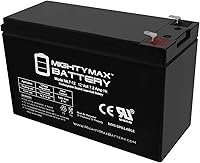
The Mighty Max Battery ML7-12 is a 12V sealed lead-acid battery rated at 7.2Ah. The ExpertPower EXP1270 is a 12V, 7Ah lead-acid battery, so both are in the smaller-capacity range.
These are not universal replacements. Before buying, match the scooter’s required voltage, capacity, terminals, dimensions, and battery type.
The ExpertPower EXP12200 is a 12V, 20Ah AGM lead-acid battery. Its capacity is higher than the two 7Ah-class examples, so it could need a longer charge under similar conditions, but it only suits a scooter built for its size, terminals, and battery requirements.
Does battery type affect charging time?
Yes. Different battery chemistries accept charge differently, and they may need different chargers.
Scooters commonly use sealed lead-acid batteries, including AGM, or lithium-ion batteries.
Use the charger approved for the exact battery type and scooter. A charger’s voltage alone does not prove compatibility.
How do you choose a replacement battery?
Choose a replacement by matching the scooter’s required battery specifications, not by choosing the largest capacity. A battery that doesn’t fit the compartment or match the connector and charging system can create problems even if its voltage looks right.
Start with the manual or the label on the battery currently installed. Check the required voltage, amp-hour capacity, battery chemistry, terminal type, dimensions, and whether the scooter uses one battery or a matched pair.
A 7Ah-class battery may suit a scooter that specifies that size and terminal style. The Mighty Max ML7-12 and ExpertPower EXP1270 are options to consider when the scooter’s requirements match their 12V lead-acid chemistry, capacity, and F1 terminals.
The ExpertPower EXP12200 is for a different fit: it is a 12V, 20Ah AGM battery with NB terminals and larger dimensions. Skip it if your scooter calls for F1 terminals, a smaller battery, another chemistry, or a different size.
If you’re unsure about compatibility, ask the scooter maker or a qualified service provider before ordering. For help comparing battery types, see which battery type is best for a mobility scooter.
How should you set up a reliable charging routine?
Use the scooter’s own charger, follow the manual’s connection steps, and allow enough time for its full-charge indicator. A steady routine makes it easier to plan outings and notice changes in charging behavior.
Park the scooter where it can remain stable, dry, and ventilated while charging. Keep the charger uncovered, and position the cable so it won’t be pulled, pinched, or tripped over.
Connect and disconnect the charger in the order your manual gives. If the charger has a light or display, check that it reaches the state your manual identifies as complete before your next trip.
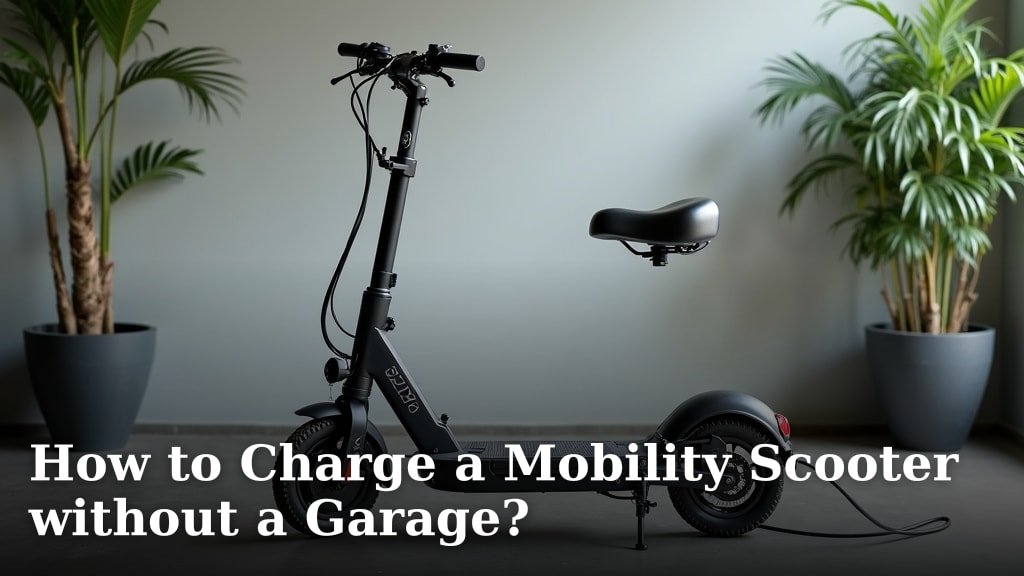
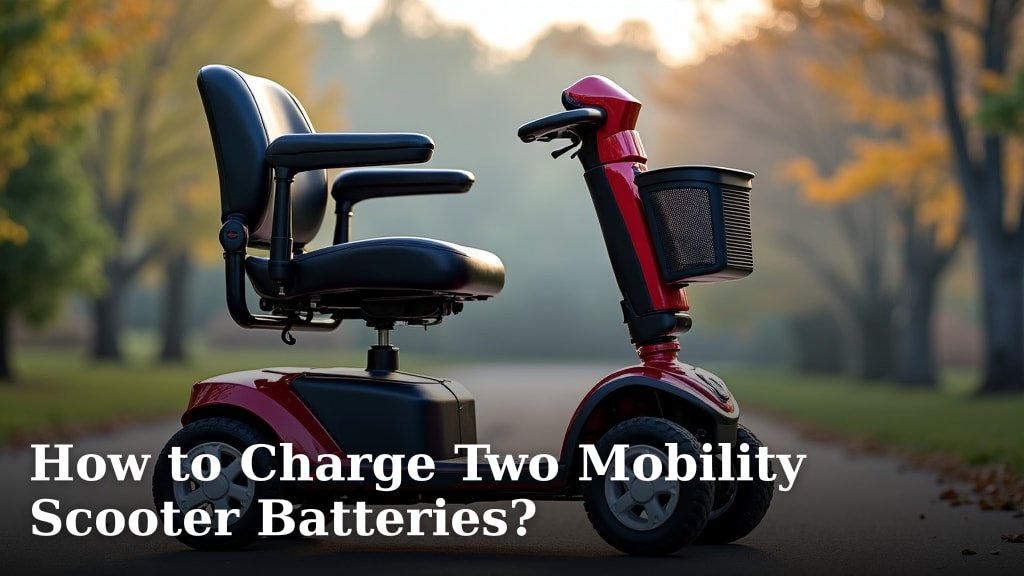
When you need to charge without a garage, these charging tips for homes without a garage can help you plan a suitable spot. If you have two removable batteries, see how to charge two mobility scooter batteries.
What common charging mistakes should you avoid?
The main mistakes are using an unapproved charger, guessing from the clock, and ignoring a change in charging behavior. Each can leave you with a battery that is incompatible, undercharged, or in need of attention.
- Don’t use a charger just because it plugs in. Check that the maker approves it for your scooter and battery chemistry.
- Don’t assume one light color means the same thing on every scooter. Read the manual for your charger’s indicator.
- Don’t unplug after an arbitrary number of hours. A partly charged battery may not be ready for the trip you have planned.
- Don’t overlook a loose or damaged connection. Stop charging if a cable or connector appears damaged, and follow the service guidance for your scooter.
- Don’t treat a sudden change as normal. If charging takes much longer than it used to or the scooter’s range changes, check the charger and connections and seek service guidance.
For more troubleshooting steps, read why a mobility scooter may not be charging.
Can you charge a mobility scooter overnight?
Only charge overnight if your scooter and charger instructions allow it. Your manual is the guide to trust for your model.
Some charging systems are designed to manage the process and stop when the battery is full. Others still expect you to check the indicator and unplug at the right point.
That difference matters for overnight use. A system that manages charging on its own is not the same as one that needs your attention.
Read the instructions for both the scooter and the charger before you plan an overnight session. Note any limit on charging time and the signal that marks a full charge.
Set up a spot that is stable, dry, and well ventilated for the scooter and charger. Keep the charger uncovered so heat can escape and the indicator stays visible.
Keep cables out of walkways and away from places where they can be pulled or pinched. A tidy setup reduces the chance of a loose connection during the night.
Plan to check the indicator in the morning before your next ride, even if overnight charging is allowed. That check confirms the battery reached the state your manual describes.
If your routine often needs overnight charging, build it around the manual schedule rather than guesswork. A consistent routine makes travel planning easier and helps you spot changes early.
For more detail, read whether you can charge a mobility scooter overnight.
Do fast-charging scooters save much time?
A fast-charging system can shorten the wait when the scooter, battery, and approved charger support it. The saving depends on the whole system, not on one part alone.
A scooter built for fast charging is designed to accept energy at a faster rate within its limits. Its battery and charger are matched to that design.
A higher-output charger by itself is not a safe shortcut for a scooter that was not built for it. Using an unapproved charger can create compatibility problems even if the plug fits.
When you shop, compare the stated charging time for a full charge and the exact charger requirements. Check whether the maker specifies a particular charger model or output.
Look at how often you need a short turnaround between rides. Fast charging helps most when your schedule is tight and you ride again soon after.
It helps less if you normally park the scooter overnight and have plenty of time. In that case, a standard system may fit your routine just as well.
Battery size and starting charge still affect the total wait, even with a fast system. A deeply depleted battery will usually take longer than a partly charged one.
Use the maker approved charger and follow the indicator in the manual to judge readiness. That approach protects the battery and keeps your plans realistic.
Mobility scooters with fast charging are a useful next step if you regularly need a shorter break between rides.
How should you plan charging for daily use?
Charge after your ride when your manual recommends it, then use the full-charge indicator to plan the next outing. This is more dependable than assuming the same number of hours will work every day.
A short ride may leave more charge in the battery, while a long outing may leave less. If your schedule depends on a full battery, leave time for the full charging routine rather than counting on a quick top-up.
How do you choose the right charging plan?
For a mobility scooter charging time that fits your routine, start with the manual’s estimate and indicator, then build in enough time before the next ride. For a replacement, pick the battery that matches the scooter’s voltage, chemistry, capacity, terminals, and dimensions.
If charging has slowed or your range has changed, check the charger and connections before buying a new battery. For a broader guide to mobility scooter batteries and their care, review the battery-specific steps for your setup.
Frequently asked questions
How long does it take to charge a mobility scooter?
Many mobility scooters need about 6 to 12 hours for a full charge, but the time varies with battery type, capacity, remaining charge, charger, and scooter. Follow your model's manual and use its charger indicator to tell when charging is complete.
Can I charge a mobility scooter for just a few hours?
A short charge may add some energy, but it may not restore enough for your planned trip. Check your scooter manual for guidance on partial charging, then use the charger's indicator to see whether the battery is ready.
Does a bigger mobility scooter battery take longer to charge?
A larger-capacity battery usually needs more time than a smaller one when the charger and starting charge are similar. Battery chemistry and charger output also affect the time, so capacity alone cannot predict an exact charge duration.
Should I leave my mobility scooter charging overnight?
Follow the scooter and charger manuals. Some systems manage charging automatically, but use your model's instructions and full-charge indicator rather than assuming every scooter is safe to leave plugged in overnight.