Upright Walker vs Rollator: Which Should You Choose? (November 2026)
Choose an upright walker if forearm support and a more upright stance matter most; choose a classic rollator if you prefer hand grips and a familiar frame. Compare how each style fits your balance, route and ability to steer and stop.
On this page (8 sections)
- Upright walker vs rollator: what is the difference?
- Which style may fit your posture and arm support?
- Which is easier to turn and use indoors?
- How do wheels, brakes and routes affect the choice?
- Which option offers a seat for resting?
- How should you compare fit and storage?
- How do you choose the right walking aid?
- Which should you choose?
Choose an upright walker if forearm support and a more upright stance matter most; choose a classic rollator if hand grips and a familiar frame feel like a better fit. The right choice depends on your posture, balance, grip, route and how well you can manage the brakes.
An upright walker and a rollator can both have wheels, brakes and a seat. Their support positions differ, so the best option is the one you can control and use comfortably.
This comparison focuses on standing support, steering, resting and fit. For a broader look at choosing a walker for seniors, start with the frame and features that match your daily needs.

Upright walker vs rollator: what is the difference?
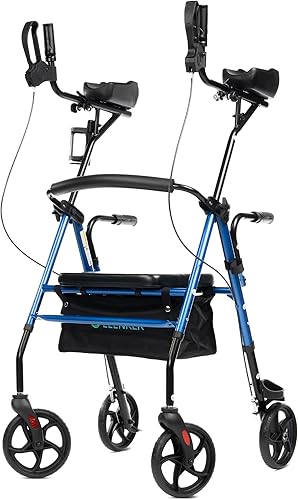
An upright walker supports your forearms; a classic rollator mainly supports your hands through its grips. That changes where your arms rest and how you hold the controls as you walk.
On an upright walker, your forearms rest on padded supports and your hands hold the grips near the brakes. A classic rollator usually has handles at about waist height, so you steer and brake with your hands.
Neither style guarantees better posture or steadier walking. Fit and control matter: if the frame is too tall, too wide or difficult to stop, its support may not suit you.
The category can be confusing because some upright walkers are also called upright rollators. Compare the support position and frame design rather than relying only on the product name.
Is an upright walker the same as a rollator?
An upright walker is a type of wheeled walking aid, but its forearm supports set it apart from a classic rollator. The terms can overlap in product names.
Both styles roll rather than needing to be lifted with every step. Many models also include brakes and a seat, but features vary by model.
If you're comparing arm support styles, read about upright walker vs platform walker for a closer look at how forearm support differs. A platform walker may be designed for a different support need than an upright walker.
Which style may fit your posture and arm support?
Choose an upright walker if you want padded forearm supports; choose a rollator if you prefer steering from hand grips. Try to match the support position to what feels manageable for your arms and trunk.
Upright walker supports let your forearms rest while your hands hold the grips. Some models, such as the Vive upright walker reviews, include forearm pads that adjust forward and backward, which may help you line up the support with your arm length.
A classic rollator's handles call for more support through your hands and wrists. If grip strength, wrist comfort or hand control is a concern, ask a clinician which handle style and brake type you can manage.
Who might prefer an upright walker?
An upright walker may suit you if you want to rest your forearms while walking and can manage the frame's size and brakes. It can be worth considering when standard rollator handles don't feel like the right support position.
Check how the arm supports adjust, where the brakes sit and whether you can reach them without shifting your weight. A frame that feels comfortable while standing still may feel different when turning or passing through a doorway.
The ELENKER upright walker reviews can help you compare an adjustable frame with other upright options. ELENKER's forearm tubes, handle bar and leg tubes adjust, and the model folds flat.
Who might prefer a classic rollator?
A classic rollator may suit you if hand grips and a familiar handle position are easier for you to control. Its simpler support layout can be easier to understand if you've used a similar frame before.
Check the handle height, grip shape and brake action before committing. You should be able to steer, slow down and lock the wheels while standing in a stable position.
A rollator is still a rolling frame, so it needs active steering and brake control. If you can't reliably use its brakes or keep it close as you walk, ask a clinician to help assess another option.
Which is easier to turn and use indoors?
The better indoor option is the frame that clears your doorways and turns without forcing you into tight maneuvers. Measure narrow spots and consider the width of the whole aid, not only the walking path.
An upright walker can have a larger footprint than a basic walker. A rollator's size and turning feel also vary, so compare the exact models you might use.
Measure door openings, hallways and the space beside your bed or favorite chair. If you share the home, check that the frame leaves room for another person to pass.
The Agrish Narrow Walker has adjustable width from 18 to 22 in and removable armrests. That makes it worth comparing if passage width is your main constraint, though you should confirm that its support configuration meets your needs.
Mark the widest part of the frame on the floor with painter's tape. Walk around the outline and practice turning in the space, while keeping the manufacturer's instructions in mind.
How do wheels, brakes and routes affect the choice?
Choose around the surfaces you use and the controls you can operate with confidence. A frame that rolls well on one route may feel less manageable on another.
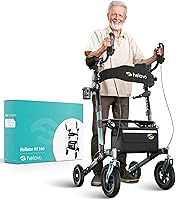
Upright walkers and rollators both rely on wheels, but wheel size and material vary. The Helavo Upright Walker with Seat has 10 in rubber front wheels, while the ELENKER and Vive models have 8 in wheels.
Brakes matter during walking and when sitting. Check whether you can squeeze the brakes, lock them and release them without losing your balance.
Think through the route: smooth indoor floors, thresholds, outdoor paths, slopes and crowded spaces call for different levels of control. Don't assume a larger wheel or a wider frame makes every surface easy to manage.
For outdoor use, review the specific model's wheel design and the route you plan to travel. The Helavo upright walker reviews cover a model with rubber front wheels and a parking brake.
If you have trouble steering or stopping either style, get help from a physical therapist or another qualified clinician. Practice in an open area before taking a new walking aid onto a busy route.
Which option offers a seat for resting?
Either style may include a seat, but a seat doesn't make the frame a wheelchair. Check that you can approach, lock the brakes and sit down safely before using it for rest.
The Helavo, ELENKER and Vive upright walkers in this comparison each include a seat. Their seat designs differ, so compare the dimensions and back support with your needs.
Some classic rollators also have seats, while others don't. Don't assume every model in either category has one.
Before sitting, follow the model's instructions for locking the brakes and positioning yourself. Keep the frame steady, and avoid using the seat on a slope or uneven surface unless the manufacturer allows it.
How should you compare fit and storage?
Check handle and support adjustments, total width, folded size and weight before choosing. The walker should fit your body and your home, and be manageable when it needs to be moved.
Upright walkers have several contact points to adjust, including the forearm supports and handles. A rollator still needs a suitable handle height and grip position.
The Vive model is designed for people from 5 ft 2 in to 6 ft 4 in, with handles that adjust from 45 to 52 in. The Helavo weighs 22.7 lb, the ELENKER 27 lb and the Vive 20 lb.
Ask someone to help measure your height and compare the device settings if you aren't sure. A clinician or mobility specialist can check your posture and how the frame responds when you walk and turn.
For transport, look at how the frame folds and whether you can lift it into a car. Folded dimensions aren't provided for each model here, so check the exact model instructions before planning around a trunk or storage closet.
How do you choose the right walking aid?
Choose the frame you can fit, steer, stop and use on your regular route. Your support needs and control matter more than the label on the frame.
Use this quick comparison:
- Choose an upright walker if you want forearm supports and can manage its width and brake controls.
- Choose a classic rollator if hand grips feel easier to steer and your route has enough turning space.
- Consider a regular walker if rolling frames feel difficult to control or you need a different style of support.
- Ask a physical therapist or clinician for help if you feel unsteady, have trouble braking or aren't sure which frame fits.
Compare product features in context rather than treating any single design as a universal answer. These product boxes highlight four options with distinct support or width features:
Once you know which support style fits, compare the exact dimensions, brakes and folding method. The upright walker vs regular walker guide explains another common choice.
Which should you choose?
Pick an upright walker if forearm support is your priority; pick a classic rollator if hand grips are easier for you to manage. Before deciding, confirm the frame fits your body, clears your route and lets you control the brakes.
If you're still weighing walker styles, revisit the complete walker buying guide and compare your day-to-day needs with the model's features. A clinician can help you assess fit and safe use when balance or brake control is uncertain.
Frequently asked questions
Is an upright walker safer than a rollator?
Neither style is automatically safer for everyone. An upright walker gives you forearm support, while a classic rollator uses hand grips and hand brakes.
Your balance, grip, posture, route and ability to stop all matter.
Ask a physical therapist or clinician to help assess a walking aid if you feel unsteady.
Can you sit on an upright walker?
Some upright walkers have seats, including the Helavo, ELENKER and Vive models compared here. Check the seat height, width, brake setup and your ability to turn and sit safely before choosing.
A seat is for resting, not a wheelchair substitute, and you should follow the model's instructions.
What is the main difference between a rollator and an upright walker?
A classic rollator usually has hand grips and a more forward-leaning frame position, while an upright walker has forearm supports intended to let you stand more upright. Both styles can have wheels, brakes and seats.
Compare the actual model's frame, fit and controls, since features differ.
Are upright walkers hard to steer?
Steering depends on the frame, wheel layout, fit and your control. An upright walker's forearm supports may feel different from a rollator's hand grips, so allow time to learn the brakes and turns in a clear area.
Check doorways and turning space on your usual route.
How do I choose between an upright walker and a regular walker?
Choose by the support and movement you need: an upright walker has forearm supports and wheels, while a regular walker often has a simpler frame that you lift or move in steps. Compare the differences in our guide to upright walker vs regular walker and get help with fit if needed.