Is a Knee Scooter Non-Weight Bearing?
A knee scooter can help you travel without bearing weight on an injured foot when you keep the leg supported on its padded platform and push with the other leg. Transfers and stumbles can still load the foot, so follow your clinician's instructions.
On this page (7 sections)
- Is a knee scooter non weight bearing?
- How do you choose a knee scooter for non-weight-bearing use?
- Who should use a knee scooter, and who should skip it?
- How should you set up and start using a knee scooter?
- What common mistakes can put weight on the injured foot?
- Which accessories help if you use a walker instead?
- How do you decide if a knee scooter fits your recovery?
If you are asking, is a knee scooter non weight bearing? It can help you move with an injured foot off the floor, as long as the leg stays on the knee platform and the other leg pushes.
That description sounds simpler than daily use really is. A scooter supports one position while you travel, but it does not handle getting on, getting off, turning, or stopping for you.
Each of those moments can change how much weight goes through the injured foot. A hurried transfer, a tight turn, or a sudden loss of balance can undo a careful start.
A knee scooter works best when your clinician has approved it for your injury and your current weight-bearing limit. It also works best when you can balance well enough to steer without reaching for the floor with the injured leg.
Comfort and route matter too. A leg that slips or tires on the pad makes control harder, and a crowded room, loose rug, or tight turn adds risk.
It cannot keep the foot unloaded during every transfer or stumble, so your clinician's instructions still apply. If you fall, touch the foot down, or feel unsure about a step, stop and get guidance before you keep going.
Think about the trips you make most often, such as a bedroom to a bathroom or a kitchen to a chair. If those routes are level and clear, practice may go more smoothly.
If you are new to the device, learn what a knee scooter is and how it works. That overview can help you understand the basic parts before you try to use one for daily movement.
Take time to compare the device with crutches, a walker, or a wheelchair, based on your strength and home layout. The right choice is the one that lets you follow your limit without added risk.
Is a knee scooter non weight bearing?
A knee scooter can support non-weight-bearing movement while you travel. Your injured leg rests on a padded platform, and your uninjured leg pushes against the floor as your hands guide the handlebars.
The platform holds the bent leg up so the foot stays clear of the ground. Your hands stay on the handlebars for steering, while the pushing leg provides the motion.
That setup can make short trips feel easier than hopping on the injured foot. It can also reduce the temptation to touch the foot down for balance, which is often the main concern.
“Non-weight bearing” describes a limit on how much weight you may place through the injured limb. A scooter can help you follow that limit while moving, but it does not change what you are allowed to do when standing, transferring, or getting on and off.
Those moments need a plan. A hurried turn, a loss of balance, or stepping down to steady yourself can put weight through the injured foot.
A transfer often involves a chair, bed, toilet, or car seat, and each one may need a different approach. Decide where you will go before you move, and keep a stable support nearby if your clinician advises it.
Ask for help if you cannot get on or off without twisting, reaching, or putting the foot down. A short wait for help is safer than a rushed move that breaks your limit.
Ask your clinician how strict your limit is and what to do if the foot touches down by mistake. Also ask which movements are allowed, such as sitting, standing, or short steps.
Write those instructions down where you can see them during the first days of use. Clear guidance makes it easier to stay within your limit when you are tired or in a hurry.
Keep the scooter on level ground and move slowly until your balance and steering feel steady. If a route feels too tight or uneven, choose another path or another aid.
How do you choose a knee scooter for non-weight-bearing use?
Choose a knee scooter only if your clinician agrees it suits your injury and you can control it safely. Then match the device to your body, routes, and daily tasks.
Check the knee pad height and position against your leg. Your injured knee should rest comfortably on the platform without forcing an awkward bend, and the foot should remain clear of the ground.
Follow the device instructions for fit and adjustment.
Think through where you'll use it. A scooter needs room to turn and a path its wheels can manage.
Tight rooms, stairs, uneven ground, and clutter may make it difficult to steer or stop, even if it works well in an open hallway.
Consider your balance and the strength and coordination needed to push and steer. If you have limited use of one arm, review the guidance on using a knee scooter with one hand.
If you can't keep the leg supported or maintain control, discuss crutches, a walker, or a wheelchair with your clinician.
Who should use a knee scooter, and who should skip it?
A knee scooter suits someone who can support the injured leg on the platform, push with the other leg, and steer without losing balance. It can be a practical choice for moving between rooms or along clear, level routes when the clinician approves it.
Skip it, or ask for another option, if you can't balance reliably, the platform position is uncomfortable, or your home has routes you can't safely manage. It may also be a poor fit if turns, thresholds, or transfers regularly make you reach for support.
A walker provides a different kind of support and is not automatically a substitute for a knee scooter. If you're comparing walking aids for a senior, the walkers and rollators buying guide explains common options.
How should you set up and start using a knee scooter?
Set the scooter up according to its instructions, then practice on a clear, level route before relying on it. Ask someone to stay nearby if you need help during your first transfers or practice.
Adjust the platform and handlebars as directed. Place the injured leg on the pad, keep the foot off the floor, and hold the handlebars as required for steering.
Start slowly, push with the uninjured leg, and make gentle turns while leaving enough space to stop.
Before each trip, move cords, loose rugs, and other obstacles. Don't carry anything in your hands if it interferes with steering or control.
Use a bag or another carrying method only if it's compatible with the scooter and does not affect how you handle it.
For care, follow the device instructions for cleaning, storage, and checking its parts. Stop using it if a wheel, brake, or steering control seems loose or unreliable, and ask the supplier or clinician what to do.
What common mistakes can put weight on the injured foot?
The most common risk is forgetting that the scooter only supports the leg while it's positioned on the pad. Standing up, transferring, and reacting to a stumble can all change where your weight goes.
Avoid these mistakes:
- Stepping down to push or brake. Use the uninjured leg as directed, and don't use the injured foot to steady the scooter unless your clinician allows it.
- Rushing a transfer. Decide where you'll sit or stand before moving, and ask for help if you can't transfer safely.
- Taking a route with hazards. Loose rugs, clutter, and tight turns can make balance and steering harder.
- Carrying objects in both hands. Keep your hands available for the controls.
- Assuming comfort means the limit has changed. Follow your clinician's weight-bearing instructions even if the foot feels better.
If you can't keep the foot supported or control the scooter, stop and get guidance before continuing. Your clinician can help decide whether another aid fits your current limits.
Which accessories help if you use a walker instead?
Walker accessories help carry items only when a walker is the aid you use; they do not attach to or replace a knee scooter. Choose an accessory that fits your walker and use it within its stated capacity.
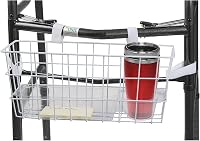
The HealthSmart basket has adjustable hook-and-loop straps, a removable plastic tray, and a built-in cup holder. Its design suits many walkers and rollators, especially walkers with straight front bars.
The DMI tray folds down when not in use and has two cup holders and a raised edge. It fits many standard walkers, but not extra-wide or bariatric models, and its weight capacity is 5 lb.
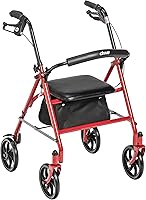
The Medline two-button folding walker has 5 in wheels, adjusts from 32 to 38 in high, and supports up to 300 lb. Consider it only if a clinician recommends a walker and its fit and support meet your needs.
Don't add a tray or basket to a knee scooter unless its manufacturer confirms compatibility. A walker accessory is not a way to carry extra weight while riding.
How do you decide if a knee scooter fits your recovery?
Choose a knee scooter if your clinician approves it, you can keep your leg supported, and your usual routes are manageable. Choose another aid if balance, transfers, fit, or the route make it hard to move without risking a step on the injured foot.
Before using one, confirm your weight-bearing limits, practice mounting and dismounting, and check that you can steer and stop on the surfaces you use. For travel, read the scooter instructions before folding it; see our guides to folding a knee scooter and taking one on an airplane.
For anyone still asking is a knee scooter non weight bearing, the practical answer is that it can keep the injured foot off the floor during controlled travel, but your own instructions cover every movement. Follow those limits and ask your clinician for another option if you can't use the scooter safely.
Frequently asked questions
Is a knee scooter considered non-weight bearing?
A knee scooter can support non-weight-bearing movement by keeping an injured foot off the floor while the other leg pushes. It does not keep the foot unloaded during every transfer, stand, or stumble.
Follow your clinician's instructions for all movement, including getting on and off the scooter.
Can you put any weight on your injured foot with a knee scooter?
Don't put weight on the injured foot unless your clinician has said it's allowed. A scooter supports the leg while you travel, but standing, transferring, or catching yourself can put weight through the foot.
Ask what to do if you accidentally touch it down.
Is a knee scooter better than crutches for non-weight bearing?
A knee scooter and crutches support movement in different ways. A scooter holds the bent leg on a pad while your other leg pushes; crutches rely more on your arms and balance.
Your injury, strength, balance, home layout, and clinician's advice should guide the choice.
Can you use a knee scooter without putting weight on your foot?
You can travel without putting weight on the injured foot if it stays supported on the knee platform and you push with the other leg. Plan how to get on and off, turn, and stop so you don't need to stand on the injured foot.
Follow your clinician's limits.