Can You Use a Knee Scooter With One Hand?
A knee scooter with one hand is usually unsafe if you can't steer and brake reliably. Ask a clinician to help compare suitable mobility aids before you ride.
On this page (8 sections)
- Is a knee scooter with one hand safe?
- What should you consider when choosing a one handed mobility aid?
- Why does a knee scooter need active hand control?
- Can a walker work better if one hand is unavailable?
- Do walker baskets or trays help you carry essentials?
- How should you set up and practice with a knee scooter?
- What common mistakes should you avoid?
- What is the best decision if you need one hand?
A knee scooter with one hand is usually unsafe if you can't steer and brake reliably. Ask a clinician to compare mobility aids that fit your injury, balance, and arm function before you ride.
A knee scooter supports one knee while you move with the other leg, but it still requires active control. If one hand is weak, injured, numb, or occupied, consider how you'll steer, stop, and react to obstacles before choosing this aid.
Is a knee scooter with one hand safe?
For most riders, one handed use isn't a safe choice unless a clinician confirms they can control that specific scooter. Steering and braking may both depend on your hands, and you need to respond when your route changes.
The control layout and braking method vary by model. Read the instructions for riding, turning, stopping, mounting, and getting off, then ask a clinician or physical therapist to review the controls with you.
Don't try riding to see whether your free hand can manage. If you can't grip firmly, reach the brake, or respond quickly, stop and ask about another mobility aid.
A scooter also needs to fit your injury restrictions. Read whether a knee scooter is non weight bearing and confirm with your clinician how much weight you can put on each leg.
What should you consider when choosing a one handed mobility aid?
Choose an aid you can control through the full movement, from getting on or standing up to turning and stopping. Your hand strength matters, but so do balance, injury instructions, the route, and whether you can use the aid without carrying anything.
Ask a clinician or physical therapist these questions:
- Can I grip and steer with both hands?
- Can I reach and operate the brake while keeping control?
- Can I safely mount and dismount?
- Which surfaces, doorways, turns, and slopes should I avoid?
- Would a walker, crutches, or wheelchair fit my restrictions better?
A walker buying guide can help you understand walker styles, but it can't determine which device is right for your injury. Get help matching the aid to your balance and arm function.
Why does a knee scooter need active hand control?
The handlebars guide the front end, while the brake helps you slow or stop. You may need to do both while steering around furniture, doorways, other people, or uneven ground.
A hand that can only hold the handle loosely may not provide enough control. Pain, numbness, or weakness can also affect how quickly you react, so discuss those limits before riding.
A knee scooter isn't a powered mobility scooter. For a basic explanation of its parts and purpose, see what a knee scooter is.
Can a walker work better if one hand is unavailable?
A walker may be an option only if you can grip and use it safely with the support your clinician recommends. Standard walkers rely on hand contact and steady movement, so a one handed limitation still needs careful assessment.
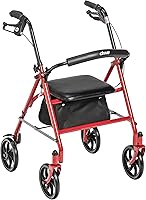
The Medline Lightweight Two Button Folding Walker has 5 in wheels, folds for storage, and supports up to 300 lb. Its listed height range is 32 to 38 in; ask your clinician whether this style and fit work for you.
A walker is a poor choice if you can't manage its grips, keep it stable, or follow the clinician's directions. Don't assume that switching from a scooter solves a hand control problem.
Do walker baskets or trays help you carry essentials?
A basket or tray can carry items on a compatible walker, but it doesn't make a knee scooter safe to use one handed. Keep both hands free for scooter controls unless the scooter's instructions and a clinician say otherwise.
The HealthSmart basket attaches to many walkers and rollators with adjustable hook and loop straps. Its removable tray helps keep small items from falling through, and its built in cup holder is intended for a walker.
The DMI Walker Tray fits most standard walkers about 18 in between the centers. It folds down when not in use, has two cup holders, and holds up to 5 lb with weight spread evenly.
Both options are for walkers, not knee scooters. Check that the accessory fits your walker and follow its instructions, especially the tray's even weight distribution guidance.
How should you set up and practice with a knee scooter?
Set up the scooter according to its instructions and have a clinician check your fit and control before riding. Practice only if they confirm the device suits your restrictions and you can use the controls as intended.
Start in a clear, level area with someone nearby. Make sure you know how to mount, stand, steer, turn, and stop before moving through a busy or tight space.
Keep your path free of loose items and avoid carrying objects in either hand. Follow the scooter's guidance for surfaces and slopes, and stop if you feel unsteady or can't control the device.
What common mistakes should you avoid?
Don't treat forward movement as proof that you can control the scooter safely. Turning, braking, and getting on or off also take coordination and reliable hand use.
Avoid these mistakes:
- Riding with one hand occupied by a phone, drink, or bag.
- Assuming every scooter has the same brake location or control method.
- Hanging a bag from the handlebar without checking the instructions.
- Trying to modify the steering or brake so one hand can reach it.
- Practicing alone before a clinician has reviewed your ability and setup.
- Choosing an aid without checking your weight bearing restrictions.
If you already own a scooter, ask a clinician to review its controls and fit. Our ELENKER knee scooter review covers one model, but its features may differ from yours.
What is the best decision if you need one hand?
Choose a knee scooter only if you can use its steering and brake reliably as intended. If one hand is unavailable or weak, pause and ask a clinician to recommend an aid that fits your injury, balance, and daily routes.
A walker, crutches, or wheelchair may be worth discussing, but each has different hand and balance demands. If you consider a rollator, compare rollator sizes and fit as part of that decision.
If you're comparing powered devices too, read whether you can use a mobility scooter with one hand, since its controls differ from a knee scooter.
For getting around with a knee scooter, plan to keep both hands on the controls and arrange another way to carry essentials. Before travel, review how to fold a knee scooter and taking a knee scooter on an airplane.
Frequently asked questions
Can you steer a knee scooter with one hand?
Usually, you need both hands available to steer and control a knee scooter. If you can't grip the handlebar or react reliably, don't assume your other hand can safely manage direction and braking alone.
Check your specific scooter's instructions and ask a clinician to assess your strength, balance, and injury restrictions before riding.
Can you brake a knee scooter with one hand?
It depends on the scooter's controls, but using one hand to steer and brake can make it harder to keep control. Don't ride if you can't operate the controls as the instructions require.
Ask a clinician to review the scooter with you and recommend an aid that fits your hand function.
What can you use instead of a knee scooter?
A walker, crutches, or wheelchair may suit some people, but the right choice depends on the injured leg, weight bearing limits, balance, and arm strength. Ask a clinician or physical therapist to compare these options for your situation.
Choose an aid you can operate safely in the places you need to go.
Can you carry items while using a knee scooter?
Keep your hands available for steering and braking. Carrying a phone, drink, or bag in one hand can interfere with control, and a walker basket or tray doesn't make one handed knee scooter use safe.
Ask about a storage option made for your scooter or have someone carry essentials.