
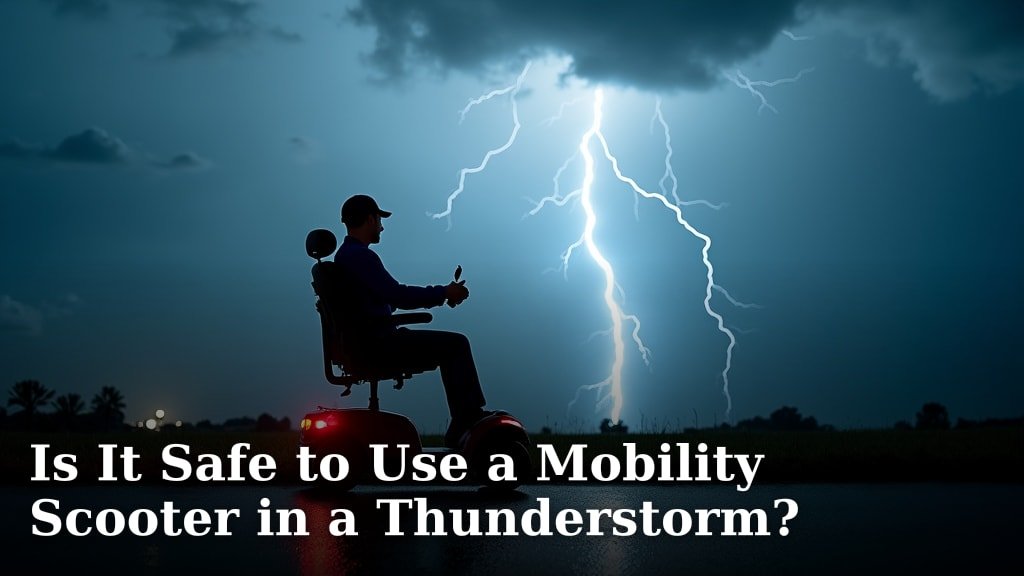
No, it is generally **not safe to use a mobility scooter in a thunderstorm**. The main risks include **lightning strikes** and **reduced visibility**, which can make navigating hazardous.
While your scooter might be your trusted companion for independence, storms bring **unpredictable dangers**. Sudden downpours can affect traction and the electrical components of your scooter, while strong winds can be a real handful. It’s always wise to err on the side of caution when severe weather hits, prioritizing your **personal safety** above all else.
- Thunderstorms pose serious risks to mobility scooter users.
- Lightning is a major concern during electrical storms.
- Heavy rain and wind can make maneuvering your scooter dangerous.
- Reduced visibility is a significant hazard in stormy conditions.
- Prioritize your safety and stay indoors during a thunderstorm.
Let’s dive into why it’s so important to avoid riding your mobility scooter in stormy weather and what you should do if caught unexpectedly.
Riding Your Mobility Scooter During a Thunderstorm: Safety First
Is it safe to use a mobility scooter in a thunderstorm? The short answer is a resounding **no**. While your scooter is designed to give you freedom, certain weather conditions, especially thunderstorms, can turn a routine trip into a dangerous situation. We found that understanding these risks is the first step to staying safe.
The Dangers of Thunderstorms for Scooter Users
Lightning: A Silent, Deadly Threat
Lightning is perhaps the most **obvious and serious danger** during a thunderstorm. Mobility scooters, especially those with metal components, can unfortunately act as conductors. While the risk of a direct strike might seem small, even being outdoors during a storm significantly increases your vulnerability. Experts advise seeking sturdy shelter immediately when you hear thunder. This is because lightning can strike as far as 10 miles from where rain is falling (National Weather Service).
Think of it like this: if you can hear thunder, you are close enough to be struck by lightning. Even if the sky looks clear in your immediate vicinity, a storm can be brewing nearby. Your scooter might not be specifically designed to attract lightning, but being out in the open makes you a target, and the electrical systems of your scooter could be affected. We found that **avoiding open areas** is critical during these times.
Reduced Visibility: A Recipe for Accidents
Thunderstorms often bring **heavy rain and fog**, drastically reducing visibility. This makes it incredibly hard to see where you are going. Potholes, uneven pavement, pedestrians, or other vehicles can become hidden obstacles. Your scooter might have lights, but they are often not powerful enough to cut through a dense downpour or fog.
Imagine trying to navigate your neighborhood with a thick curtain pulled in front of your eyes. That’s similar to what driving in a severe thunderstorm can feel like. We found that **impaired vision** is a major contributing factor in many weather-related accidents. For mobility scooter users, this reduced visibility can be even more hazardous due to slower speeds and different maneuverability compared to cars.
Traction and Control: Slippery Surfaces
Rain makes surfaces slick. Roads, sidewalks, and ramps can become **treacherous** when wet. Your scooter’s tires, while designed for good grip, may struggle on slick surfaces, especially during sudden stops or turns. Loss of traction can lead to skids and potentially a fall, which can be very dangerous.
We’ve all experienced that unnerving feeling when tires lose grip on a wet road. For someone on a mobility scooter, this can be even more disorienting and lead to a loss of balance. Many mobility scooters have a maximum speed that is quite low, but even at these speeds, a slick surface can be problematic. The CDC notes that **falls are a leading cause of injury** and death among older adults, and wet conditions certainly increase that risk.
Strong Winds: An Invisible Force
Thunderstorms are often accompanied by **strong, gusty winds**. These winds can be surprisingly powerful and can push your mobility scooter off course. If you are on an exposed path or crossing an open area, a sudden gust can be enough to destabilize you and your scooter.
Think of the wind as an invisible hand trying to push you around. While you might be able to brace yourself in a car, on a scooter, you are much more exposed. We found that even moderate winds can make steering difficult, and during a storm, these winds can be anything but moderate. This loss of control is a serious concern for safety.
What About the Scooter Itself? Water and Electronics
Mobility scooters are electrical devices. While many are designed with some level of water resistance, they are **not typically built to withstand heavy downpours** or submersion. Rainwater can seep into the battery compartment, motor, or control panel. This can lead to corrosion, short circuits, or permanent damage to your scooter.
Water and electronics don’t mix well, and your mobility scooter is no exception. Imagine dropping your smartphone in a puddle; it’s likely to stop working. While scooters are more robust, sustained exposure to heavy rain can overwhelm their protective measures. We found that **moisture damage** is a common reason for mobility scooter repairs after severe weather events.
Battery Life and Performance in the Cold and Wet
Cold temperatures and moisture can also affect your scooter’s **battery performance**. Batteries tend to work less efficiently in colder weather. If you’re caught in a sudden storm, the cold, wet conditions could drain your battery faster than usual. This could leave you stranded, which is a particularly worrying prospect during a thunderstorm.
You don’t want to be caught with a dead battery when the sky is rumbling. We found that battery life can be noticeably reduced in extreme temperatures. Adding rain and wind into the mix creates a perfect storm for a mobility issue becoming a genuine emergency. It’s wise to ensure your batteries are fully charged before heading out, and avoid testing their limits in bad weather.
When Thunder Roars, Go Indoors: Your Safety Checklist
Your personal safety is always the **top priority**. When thunder is heard, it’s time to seek shelter. Staying indoors or in a substantial building is the safest course of action. It might mean interrupting your outing, but it’s a small price to pay for your well-being.
Here’s a quick checklist to help you remember what to do:
- Listen to the weather forecast before you plan your trip.
- If thunder is heard, **immediately seek sturdy shelter**.
- Do not use your scooter in **heavy rain or fog**.
- Avoid areas prone to flooding or strong winds.
- If caught in a storm, **stay put** until it passes.
- Call for assistance if you feel unsafe.
What If You’re Caught Unprepared?
We understand that sometimes, storms can roll in much faster than predicted. If you find yourself caught out in a developing thunderstorm, your **immediate goal is to find shelter**. Look for the nearest substantial building, such as a store, library, or community center. Even a car parked in a driveway can offer temporary protection.
If no buildings are immediately accessible, try to get to an area that offers some protection, like under a thick canopy of trees (though this is still risky due to lightning) or a covered bus stop. Your priority is to **minimize your exposure** to the elements and lightning. While you might want to protect your scooter, your personal safety comes first. You can always retrieve your scooter later once the storm has safely passed.
Protecting Your Mobility Scooter from the Elements
When you do need to leave your scooter outside temporarily, consider using a **waterproof scooter cover**. These covers are designed to protect your scooter from rain, dust, and sun damage. Ensure it fits snugly to prevent wind from getting underneath it. This is a good practice even when storms aren’t forecast, to keep your scooter in good condition.
We found that a quality scooter cover can be a great investment for any mobility scooter owner. It helps preserve the lifespan of your scooter and protects its sensitive components. However, remember that even a cover offers **limited protection during a severe thunderstorm**. It’s not a substitute for seeking safe shelter.
Making Smart Choices for Independent Living
Mobility scooters are fantastic tools for independence. They open up possibilities and allow you to engage with your community. However, responsible use means understanding when conditions are unsafe. Making informed decisions about when to ride and when to wait out the weather is a key part of maintaining that independence safely.
Research and studies consistently show that **planning ahead** and being aware of your surroundings can prevent accidents. By respecting the power of nature and taking precautions, you can ensure that your mobility scooter continues to be a reliable companion for years to come. It’s about smart independence, not risky adventures.
| Storm Factor | Potential Risk | Precautionary Measure |
|---|---|---|
| Lightning | Electric shock, scooter damage | Seek sturdy shelter immediately when thunder is heard. Avoid open spaces. |
| Heavy Rain | Reduced traction, visibility, water damage to scooter | Stay indoors. Do not ride in downpours. Use a scooter cover when parked. |
| Strong Winds | Loss of control, scooter instability | Avoid riding in windy conditions. Brace yourself if caught outside unexpectedly. |
| Poor Visibility | Collisions with obstacles or people | Do not ride in fog or heavy rain. Wait for conditions to clear. |
| Cold/Wet Conditions | Reduced battery performance, potential stranding | Ensure batteries are fully charged before heading out. Avoid prolonged exposure. |
Conclusion
Your mobility scooter is a key to your independence, but it’s important to respect nature’s power. We’ve seen that using your scooter during a thunderstorm presents serious dangers, from lightning strikes to treacherous conditions. It’s always best to prioritize your safety and seek sturdy shelter. Don’t let a storm interrupt your day; simply wait for clearer skies. Making informed choices means you can continue enjoying your independence safely and reliably for years to come.
Frequently Asked Questions
What should I do if my mobility scooter gets wet in the rain?
If your scooter gets wet, turn it off immediately. Allow it to dry completely before attempting to use it again. You may want to gently wipe down accessible components with a dry cloth. If you notice any unusual behavior or warning lights, it’s best to have it inspected by a professional.
Can I use a mobility scooter cover during a thunderstorm?
A scooter cover offers some protection against light rain and sun damage, but it is not sufficient protection during a thunderstorm. The cover will not safeguard against lightning or strong winds that can destabilize your scooter. Always seek proper shelter indoors when a storm is present.
How does lightning affect mobility scooters?
Mobility scooters, especially those with metal parts, can attract lightning. Being outdoors during a storm puts you at risk of a direct strike or indirect electrical surges. Even if the scooter isn’t directly hit, lightning can damage its sensitive electronic components, potentially rendering it inoperable.
Are there specific areas to avoid when riding my scooter in bad weather?
Yes, you should definitely avoid low-lying areas that can flood quickly, open fields, hilltops, and areas near tall, isolated objects like single trees. These locations offer little protection from lightning and can be more exposed to strong winds. Stick to protected routes whenever possible.
What’s the best way to prepare my scooter for potentially wet weather, even if it’s not a thunderstorm?
Always ensure your scooter has a good quality, properly fitted waterproof cover for when it’s parked. Regularly check your scooter’s battery charge levels, as cold and moisture can reduce performance. It’s also wise to inspect your scooter for any pre-existing vulnerabilities that could be worsened by moisture.
