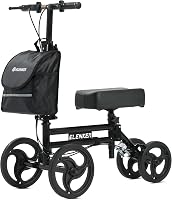
Knee Scooter Sizes: How to Pick the Right Size
Choose knee scooter sizes by checking the model’s fit guidance, knee pad adjustment, handlebar height and weight limit. Compare your measurements with the maker’s instructions before buying.
On this page (8 sections)
- How do you choose the right knee scooter size?
- Which measurements matter for knee scooter fit?
- What should you check on a small knee scooter?
- How do you set the knee pad and handlebars?
- How do weight limits affect size choice?
- When should you consider a wheelchair instead?
- What should you check before buying a knee scooter?
- What is the best way to choose knee scooter sizes?
Choose knee scooter sizes by checking the model’s fit guidance, knee pad adjustment, handlebar range and weight limit. Your leg length and how the scooter fits your body matter more than a size label alone.
Before buying, measure the floor-to-knee height of your injured leg while wearing the shoes you expect to use. Compare that measurement with the scooter’s adjustment range, and ask your clinician if you’re unsure how your leg should rest.
How do you choose the right knee scooter size?
Pick a scooter that lets you rest your injured leg securely while standing upright and steering with relaxed shoulders. The knee pad and handlebar ranges must both suit your body, and the model’s weight limit must cover your weight.
Start with the maker’s fit instructions. If they give a height range, check that your height falls within it, then compare your leg measurement with the platform adjustment range.
A scooter that fits your height may still feel wrong if your legs are unusually long or short for your frame. Check the knee platform, handlebars and steering position together before settling on a model.
Which measurements matter for knee scooter fit?
Your standing height, injured-leg length and weight are key checks. Measure in the footwear you plan to use, and follow the scooter maker’s instructions for measuring.
| Check | What to do | Why it matters |
|---|---|---|
| Standing height | Measure without shoes, then note your height in your usual shoes | Compare with the maker’s recommended user-height range |
| Knee-to-floor height | Stand comfortably and measure from the floor to the center of your kneecap | Helps you compare your leg position with knee-pad adjustments |
| Weight | Use your current body weight and check the model’s stated limit | The scooter must be rated for your weight |
| Handlebar reach | Check whether the handlebars adjust to a comfortable height | Low or high bars can make steering uncomfortable |
| Doorways and turns | Measure the route through your home | A well-fitting scooter still needs to fit where you plan to use it |
Take measurements with help if standing on one leg is difficult or unsafe. Don’t balance on your injured foot to get a number.
How do you measure leg length for knee scooter sizes?
Measure the distance from the floor to the center of your kneecap while standing in the footwear you expect to wear. Use support and have another person help if you can’t safely stand for the measurement.
This is a practical comparison measurement, not a substitute for the maker’s fitting instructions. If the manufacturer uses a different method, follow it and compare your result with the stated knee-pad range.
If your injured leg is bandaged or swollen, ask your clinician whether to measure now or account for a change in dressings. Leave enough clearance for the bandage without placing pressure on a sensitive area.
How much does knee pad adjustment matter?
The knee pad should support your leg at the height and position recommended by the manufacturer. Check the full adjustment range, since a low platform setting can matter as much as the maximum height.
Don’t choose a scooter just because the platform reaches your measurement. Make sure you can also stand upright, reach the handlebars comfortably and steer without leaning heavily forward or twisting.
What should you check on a small knee scooter?
A small knee scooter may suit a shorter user or a home with tight spaces, but the word “small” alone doesn’t confirm fit. Check the model’s measurements and user-height guidance before choosing it.
A compact frame can be easier to store or carry, but it still needs enough adjustment to support your leg and place the handlebars well. Check folded dimensions if storage or car transport matters.
Don’t assume an adult model will fit every adult. Compare your measurements with the scooter’s range, and check that the knee pad, handlebars and steering feel appropriate for you.
How do you set the knee pad and handlebars?
Adjust the scooter while it’s stationary, following the maker’s instructions. Set the knee support and handlebars before you start moving, and ask for help if you can’t balance safely during setup.
With your injured leg supported as instructed, check that the handlebars feel comfortable and your shoulders remain relaxed. Make sure your uninjured foot can reach the floor and that you can steer without stretching or hunching.
A caregiver can help adjust and check the scooter while you hold a stable support. Don’t ride with a new setting on an uneven surface.
How do weight limits affect size choice?
Choose a scooter whose stated maximum weight is at least your current weight. A model’s size label does not tell you its weight capacity, so check the limit separately.
The BlessReach Lightweight Knee Scooter for Adults has a stated capacity of 300 lb. It has a double-tube frame, 8 in wheels, an adjustable locking handbrake, a detachable canvas bag and a folding steering lever.
For more on this check, read our knee scooter weight limit guide. Ask the maker how to count bags or other items if the instructions don’t make that clear.
When should you consider a wheelchair instead?
A knee scooter requires standing, steering and pushing with your uninjured leg, so it may not suit everyone. Consider a wheelchair if balance, strength or the route makes a scooter difficult, and discuss the choice with your clinician.
The Drive Medical Blue Streak Lightweight Wheelchair has swing-away footrests and flip-back desk arms. It has a steel frame and push-to-lock brakes.
The Medline Lightweight Foldable Transport Wheelchair with Handbrakes has a 19 in wide seat, hand brakes and a folding frame. It may suit trips where a caregiver will assist.
Compare the trade-offs in our knee scooter vs wheelchair guide. If you’re looking for a walker for seniors, compare that option separately, since a walker serves a different mobility need.
What should you check before buying a knee scooter?
Confirm fit, capacity and everyday access before you choose. A scooter that fits your body also needs to suit your home and the places you’ll use it.
- Compare your height and leg measurement with the maker’s fit and adjustment ranges.
- Confirm the weight limit.
- Check that the handlebars adjust to a comfortable reach.
- Measure doorways, turns and storage space.
- Consider whether you’ll need to load the scooter into a car.
- Ask your clinician whether the scooter suits your injury and recovery instructions.
If transport space matters, check whether the frame or steering column folds and whether the folded scooter fits your vehicle. The BlessReach knee scooter has a removable main frame and folding steering lever.
Knee scooter price varies by model and features. Our guide to knee scooter price can help you compare cost with fit needs.
What is the best way to choose knee scooter sizes?
Choose a model whose fit guidance, knee-pad range and handlebar adjustment suit your measurements, then confirm its weight limit and check the setup while stationary. If the fit feels awkward or your care team recommends another option, compare a wheelchair or ask for professional fitting advice.
If you’re still comparing options, start with what a knee scooter is and read our ELENKER knee scooter reviews for another model to consider.
Frequently asked questions
How do I know what size knee scooter I need?
Compare your height and injured-leg length with the maker’s fit range, then check whether the knee pad and handlebars adjust to a comfortable position. Confirm the weight limit, too.
If measurements or fit guidance are unclear, ask your care team or the seller before ordering.
Can a knee scooter be too small?
Yes. A scooter may be too small if its knee pad cannot rise enough for your leg, the handlebars sit too low, or the maker’s height guidance excludes you.
Check the full adjustment range instead of relying on a label such as small or adult, since size names can vary.
How should my leg rest on a knee scooter?
Follow the maker’s instructions for placing your injured leg on the padded platform. Adjust the platform and handlebars before moving, and ask your clinician for guidance on leg position and whether a knee scooter suits your injury.
Do knee scooters have weight limits?
Yes. Each model has a maximum user weight, and you should choose one rated for your body weight.
Check the maker’s stated limit and ask how to count items you carry if the instructions are unclear.
See our knee scooter weight limit guide for more.
Is a knee scooter better than a wheelchair?
It depends on your injury, balance, strength and where you need to travel. A knee scooter requires you to stand, steer and use your uninjured leg, while a wheelchair may be pushed by a caregiver or self-propelled if the user can manage it.
Ask your care team which option fits your needs.