Threshold Ramp vs Modular Ramp: Which Do You Need? (November 2026)
Choose a threshold ramp for a small, measured rise at one doorway; choose a modular ramp when adjustable sections better match the entry. The right fit depends on the rise, approach space, doorway width and who will use it.
On this page (8 sections)
- Threshold ramp vs modular ramp: what is the difference?
- How do you match ramp type to entry height?
- When is a fixed threshold ramp the better fit?
- When is a modular threshold ramp the better fit?
- What else should you check before choosing?
- Should you choose a ramp or a lift?
- What will a mobility scooter ramp cost?
- Which ramp should you choose?
Choose a threshold ramp for a small, measured rise at one doorway; choose a modular ramp when adjustable sections better match the entry. The threshold ramp vs modular ramp decision depends on the rise, doorway, approach space and mobility device.
A modular threshold ramp is still a threshold ramp. The useful distinction is often whether you want a fixed, one-piece transition or a ramp whose sections can be adjusted.
Measure the rise before choosing. A ramp that is too short, too tall or too narrow can make an entry harder to use.
 Best for adjustable height
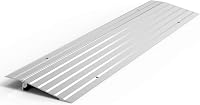
EZ-ACCESS TRANSITIONS Aluminum Modular Threshold Ramp

Threshold ramp vs modular ramp: what is the difference?
A threshold ramp bridges a short height change; a modular ramp uses sections to adjust the height or build a longer route. Some modular models are made specifically for thresholds, so the labels can overlap.
A one-piece rubber threshold ramp has a set rise and sits across the obstacle. A modular aluminum threshold ramp can use removable sections or extensions, depending on the model.
For a small doorway lip, a compact threshold ramp may be enough. For a higher rise, a change in height, or a route that needs more length, modular sections may offer a better match.
Don't decide by the word “modular” alone. Compare the actual dimensions, how it sits at the door, and whether the ramp's shape leaves enough room for the user's device.
How do you match ramp type to entry height?
Measure the vertical rise first, then choose a ramp designed to meet that height with enough approach space. Also check the usable doorway width and the floor area on both sides.
Measure from the lower floor to the top surface at the threshold. If the doorway or floor is uneven, measure across the width and use the highest point that the ramp must clear.
Next, check the ramp's stated rise and length. A small rise may suit a short threshold ramp, while a larger rise can call for a longer approach or a different access solution.
The VEVOR rubber ramp has a 3 in rise and measures 35.5 x 17.7 x 3 in. The lower VEVOR ramp has a 1.2 in rise and measures 35.4 x 7.9 x 1.6 in.
Check the device width against the usable ramp width, too. Leave room for the user to approach straight and pass through the doorway without catching a wheel, footrest or walker leg.
A step ramp vs threshold ramp comparison can help if the obstacle is a step rather than a small doorway lip. For more ramp types and planning considerations, see our ramps, lifts and stairlifts guide.
When is a fixed threshold ramp the better fit?
Choose a fixed threshold ramp when the rise is modest, stable and unlikely to change. A one-piece design can keep the setup simple when it fits the doorway and the device.
The VEVOR 1.2 in rise rubber ramp suits a low threshold that measures close to that height. Its width is 35.4 in, and it can be cut to a custom width.
Double-sided tape is included.
The VEVOR 3 in rise ramp is for a taller threshold or step that matches its fixed rise. It is a one-piece rubber design with beveled edges and a grooved tread surface.
A fixed ramp may be inconvenient if you need to move it often or adjust its height. Check how it sits against the door and whether its footprint blocks the opening.
When is a modular threshold ramp the better fit?
Choose a modular threshold ramp when removable or added sections can better match the measured rise. This can help at entries where a single fixed height leaves a gap or creates an awkward edge.
The EZ-ACCESS TRANSITIONS aluminum ramp starts at 1 in, and its sections can be removed or paired with extension pieces. Its pivoting flap allows up to 1/4 in of adjustment for the door fit.
Its extruded surface is slip-resistant, and the self-supporting design has a compact footprint. Check the selected height and ramp placement against your doorway before choosing it.
A modular threshold ramp is still a short transition. If the rise needs a longer route, compare full modular systems and their landing needs instead.
For a broader look at movement and storage tradeoffs, read our modular ramp vs portable ramp guide. Those ramp styles cover more than doorway transitions, so compare their use case with the specific entry you need to cross.
What else should you check before choosing?
Check width, surface, placement and movement with the mobility device the user will actually use. A ramp that fits the height can still be a poor fit if it crowds the doorway or shifts during use.
Measure the doorway's clear opening with the door in its normal position. Include any trim, door sweep or nearby wall that could limit the ramp's placement.
Check the landing area and approach from both directions. A user may need room to line up, turn or stop before continuing through the door.
Surface matters indoors and outdoors. Rubber and aluminum models have different textures and footprints, so check the floor, weather exposure and any instructions for keeping the ramp in position.
Think about who will set up or move it. The VEVOR 3 in rise ramp weighs 29 lb, while modular sections may take assembly and careful alignment.
Before regular use, confirm the ramp sits securely and does not create a trip hazard for people walking through. Recheck it after moving furniture, changing the door or noticing any shift.
Should you choose a ramp or a lift?
Choose a ramp when you have space for a suitable approach; consider a lift when the rise or layout makes that route impractical. The doorway itself, nearby landings and the user's device all affect the choice.
A short threshold ramp addresses a small floor transition. A full ramp or lift is a different project, with more space, installation and access needs.
If the route rises to a porch or deck, measure the full height and available run before deciding. Our comparison of a wheelchair lift vs ramp explains the main tradeoffs.
For stair access inside or outside the home, review stair lift options as part of the broader access plan. A stair lift may suit someone who can transfer to and from its seat, while a ramp supports a wheeled device along the route.
What will a mobility scooter ramp cost?
Cost depends on ramp type, rise, length and installation needs. A small threshold ramp and a longer access ramp solve different problems, so compare models with the same purpose and dimensions.
The mobility scooter ramp cost guide covers the main cost factors to consider. If you're choosing a ramp for a scooter, our Best Mobility Scooter Ramp guide can help compare options for that device.
Which ramp should you choose?
Pick a fixed threshold ramp for a measured, consistent rise that matches its height; pick a modular threshold ramp when adjustable sections better fit the doorway. If the entry needs a longer route, measure the full rise and available space before choosing a ramp or lift.
Start with the threshold measurement, then confirm width, approach room and secure placement. The best fit is the one the user can approach and cross safely with their own mobility device.
Frequently asked questions
Is a modular ramp the same as a threshold ramp?
A modular threshold ramp uses sections to create a short transition at a doorway, while threshold ramps also include one-piece styles made for a set rise. The names can overlap, so compare the ramp's actual height, length, width and adjustability with your entry.
How do I match a ramp to my entry height?
Measure the vertical rise from the lower floor to the top surface, then check the ramp's stated height and the slope it creates. Also measure doorway width, floor space on both sides, and the clearance needed for the wheelchair, walker or scooter.
Can a threshold ramp work for a wheelchair?
It can work when the rise, slope, width and surface suit the wheelchair and the person using it. Check the device's dimensions and turning needs, and ask an occupational therapist or accessibility professional for help if you're unsure about a safe fit.
When should I use a longer modular ramp?
Consider a longer ramp when the entry's rise needs a gradual approach or the user cannot manage a short, steeper transition. Measure the full route and landing space, then compare a ramp with a lift if a suitable path will not fit.
Can I leave a threshold ramp outside?
Some threshold ramps are made for indoor and outdoor use, but placement and surface conditions still matter. Check the specific ramp's material and setup instructions, keep the approach clear, and inspect for movement or debris before each use.