Transport Chair vs Wheelchair: Which Do You Need? (November 2026)
Choose a transport chair if a companion will push you; choose a standard wheelchair if you need to propel yourself or use a power assist. A transport chair vs wheelchair decision depends on who will move the chair, where you’ll use it and how much help you have.
On this page (9 sections)
- Transport chair vs wheelchair: who will push?
- Which chair is easier to take in a car?
- How do the wheels affect the trip?
- Which chair is easier for transfers?
- What matters for comfort and fit?
- When is a powered chair a better fit?
- How should you compare transport chair options?
- How much does a transport chair cost?
- Which one should you choose?
Choose a transport chair if a companion will push you; choose a standard wheelchair if you need to propel yourself or use powered mobility. In the transport chair vs wheelchair decision, start with who will move the chair, then consider the route, transfers and storage.
A transport chair is generally pushed by another person and has small wheels. A standard manual wheelchair has large rear wheels that a rider can push, while a power wheelchair uses a motor.
The right option depends on your day-to-day routine and the help available. For a broader overview of a wheelchair for seniors, compare chair styles, fit and use.

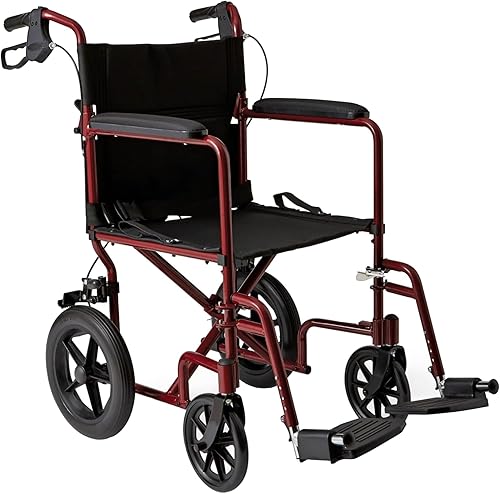 Best for tight turns
Medline Lightweight Foldable Transport Wheelchair with Handbrakes
Transport chair vs wheelchair: who will push?
Choose a transport chair when a companion will handle the pushing; choose a self-propelled manual wheelchair when you need to move yourself. This difference affects nearly every trip, from getting through a doorway to crossing a parking lot.
Transport chairs typically have small wheels and handles for a companion. The rider generally cannot reach the wheels to propel the chair.
A standard manual wheelchair usually has large rear wheels with hand rims. The seated person can push those rims, though the effort depends on the chair, the rider and the surface.
If a family member or caregiver is available for each trip, a transport chair can work for appointments, shopping or short outings. If you are often alone, a companion-pushed chair may leave you without a way to get around.
Is a transport chair a wheelchair?
A transport chair is a wheeled chair used to move someone who needs seated mobility, but it isn't interchangeable with every wheelchair. Its small wheels and attendant handles are meant for someone else to push.
The phrase “wheelchair” can refer to manual and powered chairs with different controls. When comparing options, name the type you mean and check whether it supports the rider's intended way of moving.
When does self-propelling matter?
Self-propelling matters if you need to move between rooms, reach a table or continue a trip without waiting for another person. It also takes strength, coordination and practice, and may not suit every rider or setting.
Think through a typical day, including the times when help may not be available. A chair that depends on a companion is only useful when that person can come along.
Which chair is easier to take in a car?
A folding transport chair may suit frequent car trips, but compare the exact chair's weight and folded size before you choose. Folding does not guarantee that the chair will fit your vehicle or be easy for you to lift.
The Drive Medical Folding Transport Wheelchair has a compact folding frame and fold-flat backrest. Its steel construction and 8-inch wheels are features to weigh against how often someone will lift and store it.
For a lighter-lifting option, the Drive Medical Lightweight Expedition Folding Transport Wheelchair is stated to weigh 19 lb. Its 12-inch rear wheels and companion-activated brakes may also matter on outings where a companion handles the chair.
A standard wheelchair can fold too, but its size and weight depend on the model. If portability is the priority, compare lightweight folding transport chairs and check the folded dimensions against your trunk opening and storage space.
How do the wheels affect the trip?
Transport chairs with smaller wheels are suited to companion pushing on smooth routes; larger rear wheels can help with maneuvering, but they don't make the chair self-propelled. Your route and the companion's ability to manage it should guide the choice.
Several transport chairs use 8-inch wheels. The Drive Medical Folding Transport Wheelchair and Medline Durable Folding Steel Transport Wheelchair both have 8-inch wheels.
The Medline Lightweight Foldable Transport Wheelchair and Drive Medical Lightweight Expedition have 12-inch rear wheels. The Expedition also has a curb assist feature, while the Medline has swivel front wheels described for maneuvering around corners, doorways or ramps.
Those details may help with pushing, but they don't tell you how a chair will handle every curb, slope or uneven surface. Plan a route that the companion can manage, and avoid relying on any chair to climb an obstacle without the method and assistance its instructions require.
What should you check about ramps and doorways?
Check the clear width of doorways, ramps and narrow turns along your regular route. A chair needs room not only to pass through, but also to turn and line up for a transfer.
The rider and companion should be able to stop and position the chair safely. Ask for help assessing tricky ramps or thresholds rather than assuming a particular wheel size makes them manageable.
Which chair is easier for transfers?
Look for features that support the rider's transfer routine, then practice with help before relying on them. Swing-away or detachable footrests can clear space near the chair, and brakes can help keep it in place.
The Drive Medical Folding Transport Wheelchair has swing-away footrests and padded armrests. The Medline Lightweight Foldable Transport Wheelchair has swing-away, detachable footrests, hand brakes and rear-wheel manual locking brakes.
The Medline Durable Folding Steel Transport Wheelchair also has swing-away, detachable footrests and manual locking brakes. Its backrest folds down for storage.
Brakes are not a substitute for a safe transfer plan. Follow the chair's instructions, lock the brakes as directed and ask a qualified professional or caregiver to help if transfers are difficult.
What matters for comfort and fit?
Seat width, armrests, footrests and posture matter in either chair. Check the person's measurements and seating needs before choosing by frame style alone.
The Medline Lightweight Foldable Transport Wheelchair and Medline Durable Folding Steel Transport Wheelchair each have a 19 in wide seat. The Drive Medical Folding Transport Wheelchair has a 17 in padded nylon seat.
A wider seat is not automatically a better fit. Allow room for clothing and positioning, and make sure the rider can sit securely without sliding or feeling squeezed.
If the chair will be used for long periods, ask a clinician or seating specialist about fit and support. Compare the wheelchairs and power chairs buying guide for more factors to consider.
When is a powered chair a better fit?
Consider powered mobility when pushing a manual chair isn't practical and the rider can use the controls safely. A companion-pushed transport chair also may not fit a routine that requires independent movement.
Power chairs have their own turning, charging, transport and control needs. A mobility scooter is another option for some people, but the two powered types differ in how the rider sits and steers.
Read the difference between a scooter and an electric wheelchair and the difference between a mobility scooter and a power wheelchair before comparing powered options. A clinician or mobility specialist can help match the controls and seating to the rider.
How should you compare transport chair options?
Compare who will push, chair weight, folded size, seat fit, wheels, brakes and footrests. Start with the route and routine, then narrow down to features that answer a specific need.
The Drive Medical Folding Transport Wheelchair has a steel frame, 8-inch wheels, swing-away footrests and a fold-flat backrest. The Medline Lightweight Foldable Transport Wheelchair has an aluminum frame, 12-inch rear wheels, hand brakes and a 19 in wide seat.
The Drive Medical Lightweight Expedition pairs 12-inch rear wheels with companion-activated brakes and a stated weight of 19 lb. The Medline Durable Folding Steel Transport Wheelchair has a steel frame, 8-inch wheels and a fold-down backrest.
These features serve different priorities. Compare transport chair options for seniors if you already know a companion will push, and review the transport chair definition if you're still deciding whether this chair type fits.
How much does a transport chair cost?
Set your budget after confirming the chair type, fit and features you need. A lower price won't help if the chair is too heavy to lift or requires a companion who isn't available.
Transport chair cost can vary with frame materials, wheel size, brakes and other features. Compare the same type of chair and check the current total before buying.
See how much a transport chair costs for factors that affect the budget. Include any accessories or delivery expenses that apply to your purchase.
Which one should you choose?
Pick a transport chair if someone will push you on your regular trips; pick a manual or powered wheelchair if you need independent movement. Then confirm fit, safe transfers, route access and storage.
A companion-pushed chair can be a sensible option for appointments and outings when help is consistently available. A standard wheelchair is a better starting point when the rider needs to propel themselves, while powered options may fit when manual propulsion isn't workable.
For a transport chair vs wheelchair choice, make the decision around the rider's routine and support. If the rider's needs are changing or the safest fit is unclear, ask a clinician or mobility specialist to help assess options.
Frequently asked questions
Is a transport chair a wheelchair?
A transport chair is a type of wheeled mobility chair, but it is designed for a companion to push. Its small wheels usually don't let the seated person propel it like a standard manual wheelchair.
Choose based on who will move the chair and how much help is available.
What is the main difference between a transport chair and a wheelchair?
The main difference is who pushes it. A transport chair is pushed by a companion and usually has small wheels, while a standard manual wheelchair has large rear wheels the user can push.
Some wheelchairs are powered, so compare the exact chair type and controls.
Can you use a transport chair by yourself?
A transport chair generally needs another person to push it, so it isn't a good match if you need to travel independently. If you can propel a manual chair, compare wheelchair options with large rear wheels; if not, discuss powered mobility and safe operation with a qualified clinician.
Are transport chairs easier to lift than wheelchairs?
Some transport chairs are designed to fold for car storage, but weight varies by model. Compare the chair's stated weight, folded dimensions and your lifting ability, and plan for help if needed.
A folding design doesn't guarantee that a chair will fit your trunk or be easy to lift.
When should you choose a standard wheelchair?
Choose a standard manual wheelchair when you need to propel yourself using its large rear wheels, or need a chair that can be configured for a particular mobility routine. Fit, posture, transfers and daily use matter, so ask a qualified professional to help assess your needs.


