U-Step Walker vs Rollator: Which Is Better? (November 2026)
A U-Step walker may suit someone who needs more directional stability, while a rollator may fit someone who can manage its rolling frame and wants a seat. The right choice depends on how much support you need and whether you can control the device safely.
On this page (9 sections)
- U-Step walker vs rollator: what is the main difference?
- Who may benefit from a U-Step walker?
- Who may benefit from a rollator?
- Which rollator features matter for this comparison?
- How should you decide between these walkers?
- When might a mobility scooter be a better fit?
- What is the safer way to start using either device?
- How we compared a U-Step walker and rollator
- Which should you choose?
A U-Step walker may suit you if you need more directional stability; a rollator may suit you if you can guide a rolling frame and want a seat. In the u step walker vs rollator choice, safe control and fit matter more than the name of the device.
A rollator has wheels and hand brakes, and many models include a seat. A U-Step walker is a different walking aid designed around stability, but people use the term for a specific kind of walker, so confirm the exact model and features before comparing.
If you’re unsure which device matches your walking needs, ask a physical therapist or another clinician to assess your balance, turns and ability to operate the brakes.
 Best for a familiar rollator setup
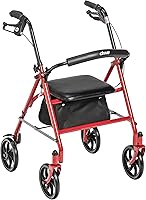
Drive Medical Rollator Walker with Seat

U-Step walker vs rollator: what is the main difference?
A rollator rolls as you guide it; a U-Step walker is intended to provide a more stabilizing walking frame. That difference shapes how each device should be used in daily life.
A rollator moves on wheels, so it can travel farther with less lifting than a walker you carry forward with each step. This can suit someone who walks steadily and can keep the frame close while steering.
It also means the rollator will not stay put by itself. You need to guide its direction, manage its speed and apply the brakes when you want to slow or stop.
A device can feel steady when you stand behind it and hold the handles, yet behave differently once you start to turn. Turning changes where your weight sits and how the frame follows your legs.
For that reason, a short standing check is not enough to judge either type. Ask a clinician to watch you begin walking, make a turn and come to a stop with the actual model you are considering.
A U-Step model is presented as a more stabilizing frame, but its exact shape, wheels and braking setup vary by model. Check the manual for the model you mean rather than assuming all U-Step walkers work the same way.
Learn how that specific frame moves, turns and stops before you rely on it in a hallway, a kitchen or outdoors. Practice first in a clear space where you can focus on control without trying to avoid furniture or other people.
A rollator also asks you to lock the brakes before sitting on its seat. The seat is for resting while stationary, and the brakes help keep the frame from rolling as you lower yourself down or stand up again.
Who may benefit from a U-Step walker?
Consider a U-Step walker when you need extra help controlling direction or keeping a steady path. A clinician can help determine whether its design matches your balance, stride and turning ability.
Some walking difficulties involve trouble starting, stopping or turning. A more stabilizing frame may be worth discussing when those actions feel uncertain, but no walker can guarantee that you won’t fall.
What should you check about fit and control?
A walker should let you stand comfortably without leaning far forward or reaching for the handles. The frame also needs to clear doorways and turn in the rooms where you use it.
Ask the clinician to observe you starting, stopping and turning with the actual device. If you’ll use it outdoors, ask whether its wheels and frame suit the surfaces on your route.
A walker for seniors buying guide can help you compare frame types, fit and everyday needs. The best starting point is the support level you can use safely.
Who may benefit from a rollator?
A rollator may fit you if you can guide a wheeled frame, operate its brakes and want a seat for resting. Its wheels can make walking less effortful, but they also mean you must control the device rather than lean on it as if it were fixed.
Think about the places you’ll use it. Hallways, tight turns, door thresholds and outdoor paths can all affect whether a rolling frame feels manageable.
Is a rollator seat useful?
A seat gives you a place to rest when the rollator is stopped. Set the brakes before sitting, and keep them locked while you stand back up.
If you’re comparing seat styles and safety steps, read whether you can sit on a rollator walker. A seat does not make a rollator a transport chair.
Which rollator features matter for this comparison?
Choose rollator features around your fit, grip and route, since a larger wheel or padded seat cannot replace safe control. Compare handle adjustment, brake access, frame weight and whether you can fold or store the walker.
The Drive Medical rollators in this guide have a steel frame, 7.5 in wheels, a padded seat and a locking hand brake. The red and blue versions share these listed features; choose the color you prefer after confirming the fit.
The VOCIC Z21 has 8 in puncture-proof tires, 3 brake modes and adjustable handle and seat heights. Its instructions say to check that the frame is locked open and the brakes work before use.
The blue Drive Medical model offers the same core rollator features as the red version, including a padded seat and under-seat pouch. It may suit you if you want those features in blue.
The Medline model weighs 16.5 lb and has 6 in wheels, a padded seat and backrest, and handles that adjust from 31 to 35 in. Its lighter frame may be easier to fold and move than a heavier walker, depending on your strength and handling needs.
For a broader comparison of frame shapes, handle styles and seating, see best rollator walkers for seniors. You can also compare a hemi walker vs rollator if you need support mainly on one side.
How should you decide between these walkers?
Choose by trying the actions that matter: starting, stopping, turning, passing through doorways and sitting down. A professional can watch how you use each frame and point out control problems before you buy.
Ask these questions during a fitting:
- Can you keep the frame close as you walk?
- Can you stop and lock the brakes without losing balance?
- Can you turn without the device pulling away?
- Is the seat at a comfortable height, if you need one?
- Does the frame fit through the narrowest doorway at home?
A junior rollator guide explains when a smaller frame may help with handle reach and fit. If a rollator feels difficult to control, ask about other walking aids rather than choosing one based only on its seat or wheels.
When might a mobility scooter be a better fit?
A scooter may be worth discussing if walking even with a support aid is difficult over longer distances. It has a different purpose from a walker and should be judged on its own terms.
A walker supports you while you stand and take steps. A scooter is for seated travel, so it does not give the same standing support for short indoor walks.
That difference matters at home. You may still need to move from bed to chair or walk a short distance to the bathroom, where a scooter can be awkward in tight spaces.
Think about where trips begin and end. You will need to transfer on and off, store it safely, and turn it where you park it.
Check whether you can reach the controls comfortably and get on and off without help. If transfers are difficult, discuss that openly with a clinician or retailer before choosing.
A mobility scooter guide for walkers who need extra support can help you weigh seated travel against your routine.
Ask how it handles paths, slopes and surfaces you use often. Also ask about storage and whether you can manage its size when parked.
Many people use different aids for different tasks. A walker may suit short indoor movement, while a scooter suits only longer seated trips.
If you are unsure, seek advice before making a change. A clinician can weigh walking distance, transfers and home layout against the demands of a scooter.
What is the safer way to start using either device?
Use the device only after you understand its brakes, turning limits and setup instructions. A calm first session can reveal problems that are easy to miss when you are rushed.
Ask a clinician to check the handle height and observe your first practice sessions. Handles that are too high or too low can change your posture and make the frame harder to control.
Stand with your arms relaxed and check that you are not leaning far forward to reach them. Adjust the fit as instructed, then walk a short distance and notice whether the frame stays within easy reach.
Practice on a clear, level surface with someone nearby if your clinician recommends it. An open room lets you focus on starting, stopping and turning without worrying about rugs or furniture.
Begin slowly and learn how the frame behaves before using it around rugs, slopes, curbs or crowded areas. Different surfaces can change how wheels roll and how much effort braking takes.
Pay attention to how the device responds when you release the brakes and when you apply them. Note whether it pulls to one side during a turn or drifts when you pause.
Inspect the walker before each use. Check that it opens and locks as intended, the wheels move freely and the brakes work on both sides.
Look over the seat, backrest and folding parts as well, since a loose part can affect comfort and control. Stop using it and seek help if something seems damaged, loose or unusual.
Keep practice short at first and repeat the same moves until they feel familiar. Ask for guidance again if you move to a new setting, such as outdoors or a busier home routine.
How we compared a U-Step walker and rollator
We compared the support style and everyday features described for each type, then checked the specifications of the rollators included here. This section explains how that comparison was made.
We did not test these products in person. No hands on trial, timing or field use sits behind the points in this guide.
Instead, we looked at how each walking aid is meant to support movement. A U-Step walker and a rollator differ in design, so the comparison starts with stability, control and seating.
For the rollators, we checked the listed specifications and features. Those details include frame type, wheel size, handle adjustment, seat design and how the device folds for storage.
Scores reflect how well each product's listed features match this comparison's needs. They are a guide to comparing listed details, not a promise about how a device will feel for a particular person.
Our score weighs specs and features against what you are shopping for. That includes fit, control and everyday needs such as a seat for resting or a lighter frame to move.
The four rollators are examples for readers considering that type of walker. They show the kinds of features you may compare, such as wheel size and handle height.
They are not direct substitutes for every U-Step model. A rollator example cannot stand in for a different frame design or a model with different brakes.
Use the specifications as a starting point for questions. Confirm the details for the exact model from its manual and ask a clinician to assess fit and safe use in person.
Which should you choose?
Choose a U-Step walker if a clinician recommends its stabilizing design for your walking pattern; choose a rollator if you can safely guide and brake a wheeled frame and want a seat. Fit and control should come before color, wheel size or other listed features.
If you cannot confidently stop or turn either device, get an in-person assessment before choosing. A clinician can watch starting, stopping, turning and sitting down.
That assessment should use the actual device you plan to buy. Small differences in handle position, frame width or brake style can change how easy it is to manage at home.
Compare fit and support first, then choose among rollators by handle adjustment, wheel size, frame weight and seat. Each feature helps in a different part of daily life.
Handle adjustment affects posture and reach. The right height should let you stand upright without leaning forward or stretching to keep hold.
Wheel size affects how the rollator moves over thresholds, rugs and outdoor surfaces. Larger wheels may roll more easily over uneven ground, while smaller wheels may behave differently in tight indoor spaces.
Frame weight affects lifting, folding and storage. A lighter frame may be easier to move into a car, but you still need to manage it safely in use.
The seat matters if you need a place to rest during longer outings. Stop on a level surface and lock the brakes before sitting, and keep them locked until you stand.
A rollator walker for seniors guide can help you narrow those details. Use it after you settle whether a rollator suits your walking pattern.
If a rollator feels hard to control during an assessment, ask about other walking aids. The safest choice is the device you can start, stop and turn with confidence.
Frequently asked questions
Is a U-Step walker better than a rollator?
A U-Step walker may be a better fit when you need more directional stability, while a rollator may suit you if you can control a rolling frame and want a seat. The designs differ, so ask a physical therapist or clinician to help assess fit and safe use.
Can a rollator replace a U-Step walker?
A rollator isn't automatically a safe replacement for a U-Step walker. A rollator moves on wheels and depends on your ability to guide and brake it, while a U-Step design may offer different support.
Get advice from a clinician who can assess your walking and turning.
Can you sit on a rollator while it moves?
No. Stop on a level surface and lock the brakes before sitting, and keep the brakes locked until you stand.
A rollator seat is for resting while stationary, not for riding.
Check the device manual for its specific instructions and weight limit.
What should you check before choosing a walker?
Consider how well you can start, stop and turn, whether you need a seat, and how the device fits your height and home. If balance, freezing or falls are concerns, ask a clinician to assess the options in person before you buy.