What Is a Junior Rollator?
A junior rollator is a wheeled walker with a smaller frame or fit range, often intended for shorter adults. Check the model’s handle and seat heights, width, weight capacity, and brake controls to see whether it suits you.
On this page (8 sections)
- What makes a rollator a junior model?
- Who may need a junior rollator?
- How can you check whether a junior rollator fits?
- What features should you compare?
- Can accessories make a rollator easier to use?
- What safety checks should you make before using one?
- What should you budget for a junior rollator?
- How do you choose the right junior rollator?
A junior rollator is a wheeled walker with a smaller frame or fit range, often intended for shorter adults. Check the measurements and controls, since “junior” alone doesn’t confirm that a model fits you.
Compare the handle and seat heights, overall width, and weight capacity before choosing. You should also be able to steer the walker and use its brakes while standing and sitting.
What makes a rollator a junior model?
A junior rollator is generally a smaller rollator intended for shorter users. The name isn't a standard size guarantee, so compare the measurements and user height range for each model.
A rollator has wheels and hand brakes, unlike a basic walker that you lift or move forward in steps. Many rollators also have a seat for resting, but features and fit differ across models.
If you’re comparing several types of walking support, start with this walker for seniors buying guide. It explains what to consider when choosing a walker or rollator.
Who may need a junior rollator?
A shorter adult who can't set standard rollator handles to a comfortable height may benefit from looking at smaller models. Fit can also matter for reaching the seat, turning the walker, and moving through narrow spaces.
The user should be able to control the walker and operate its brakes. If balance, strength, or coordination makes steering or braking difficult, ask a physical or occupational therapist to help evaluate options.
A junior frame isn't automatically the right choice for every shorter person. Check the stated height and weight range, then try the adjustments and controls if possible.
How can you check whether a junior rollator fits?
A rollator fits when you can stand upright, hold the handles with a slight bend in your elbows, steer without reaching, and use the brakes. Check seat height and width too, especially if you plan to sit on the walker.
Before choosing, look for:
- Handle height: Adjust the handles near wrist height when you stand upright with your arms relaxed.
- Seat height: Make sure you can sit down and stand up with control.
- Frame width: Check doorways and other places where you'll use the walker.
- Weight capacity: The model's stated capacity should suit the user's weight.
- Brakes and controls: Confirm you can squeeze and lock the brakes as intended.
- Folded size: Consider storage and transport if you need to lift or stow it.
The right rollator should let you walk without hunching over or stretching to reach the handles. If you feel unstable or can't control the brakes, stop and ask a clinician for guidance.
Is a junior rollator the same as a pediatric walker?
No. A junior rollator is often a smaller model for adults, while a pediatric walker is made for a child's size and support needs.
The intended age group and fit range depend on the specific model.
For a child, ask a clinician about the right equipment and fit. Don't assume a product labeled “junior” is intended for children.
What features should you compare?
Compare the measurements and controls that affect fit and daily use. A seat or larger wheels can be useful, but neither makes a rollator suitable if the frame is too tall or hard to control.
Some models adjust at the handles or seat. The VOCIC Z21 has 5 handle-height settings from 31.5 to 36.6 in and 3 seat-height settings from 20 to 22 in.
Its stated user height range is 4 ft 11 in to 6 ft 3 in.
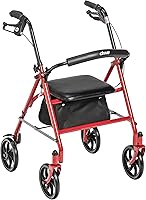
The Drive Medical rollator has a height adjustment lever, ergonomic handles, a padded seat, a fold-down backrest, and an under-seat pouch. Its available adjustment range isn't specified here, so check the fit before deciding.
Can accessories make a rollator easier to use?
A storage basket may help keep small items close while you walk, as long as it fits securely and doesn't interfere with steering or folding. Avoid carrying more than the accessory's stated capacity.
The HealthSmart basket measures 16 x 5.5 x 7 in, has a removable tray insert and built-in cup holder, and attaches with adjustable hook-and-loop straps. It's designed to mount to most walkers and rollators, but check that it fits your frame before use.
Keep the load within the basket's 10 lb capacity and make sure items don't shift into the wheels or brakes. A basket adds storage, not walking support.
What safety checks should you make before using one?
Before each use, check that the frame is fully open and locked, the wheels turn freely, and the brakes work. Sit only if the rollator is designed for seated use, and lock the brakes before sitting.
Practice turning, stopping, and using the brake locks in a clear area. Keep your hands on the handles when moving, and don't use the seat while the walker is rolling.
VOCIC advises checking the Z21's frame, fasteners, wheels, brakes, seat, backrest, storage bag, and brake cable before use. Stop using any rollator if a part is loose, damaged, or not working properly.
If a rollator's two hand brakes and seated rest don't match the support you need, compare a U-Step walker vs rollator to understand how their designs differ. A clinician can help assess which type suits your walking needs.
What should you budget for a junior rollator?
Junior rollators vary in features and price, so compare the cost with the fit adjustments and support you need. A higher price doesn't confirm that a model fits better or is safer for you.
For a broader price overview, see how much a rollator walker costs. If you’re comparing models for an older adult, our best rollator walker for seniors guide covers options with different features.
How do you choose the right junior rollator?
Choose a junior rollator only after checking that its height range, seat, width, weight capacity, and controls suit the user. If the fit feels awkward or the brakes are difficult to operate, get help before relying on it.
Pick a model with the adjustments and features you can use safely. For additional support beyond a walker, compare mobility scooters for walkers who need extra support.
Frequently asked questions
What is a junior rollator?
A junior rollator is a wheeled walker with a smaller frame or fit range, often intended for shorter adults. Models vary, so check handle height, seat height, width, and weight capacity rather than relying on the word “junior” alone.
Who should use a junior rollator?
A shorter adult who needs wheeled walking support may find a smaller rollator easier to fit than a standard model. The user should be able to steer and operate its brakes safely.
Ask a physical or occupational therapist for help choosing if balance or coordination is a concern.
Is a junior rollator the same as a pediatric walker?
No. “Junior” often refers to a smaller adult rollator, while pediatric walkers are intended for children and may have different sizing and support needs.
Check the manufacturer’s stated height and weight range, and get professional guidance for a child who needs walking equipment.
How do I know whether a rollator fits?
With your arms relaxed at your sides, the handles should be near wrist height, so your elbows bend slightly when you hold them. You should also be able to sit and stand safely, reach the brakes, and walk without leaning forward.
Adjustability and fit ranges vary by model.