Hemi Walker vs Rollator: Which Is Better? (November 2026)
Choose a hemi walker for one-handed support; choose a rollator if you can use both hands and want wheels, brakes and a seat. The right fit depends on how you walk, where you need support and whether you can safely control the aid.
On this page (8 sections)
- Hemi walker vs rollator: what is the main difference?
- Which walking aid fits one-handed use?
- When does a rollator make more sense?
- Which is easier to move through a home?
- Which one is easier to transport?
- How should you compare fit and safety?
- Which should you choose for daily errands?
- What is the simple choice between a hemi walker and a rollator?
Choose a hemi walker for one-handed support; choose a rollator if you can use both hands and want wheels, brakes and a seat. In a hemi walker vs rollator comparison, the main question is whether you can safely control a two-hand rolling frame or need a one-hand aid.
A hemi walker has a broad base and is designed to be held on one side. A rollator has wheels and handles on both sides, so you steer and brake it while walking.
If you have weakness, pain or limited movement on one side, ask a physical therapist or other qualified clinician which aid suits your walking pattern. The two styles work differently, and the label alone can't confirm a safe fit.


Hemi walker vs rollator: what is the main difference?
A hemi walker is designed for one-hand use; a rollator rolls on wheels and is controlled through both handles and its brakes. Choose based on the support you can use consistently while moving.
The Vive Hemi Walker weighs 3.85 pounds and has a foldable frame. The Loyoda Hemi Walker is also foldable and has a wide base, with an adjustable handle height from 28.7 to 33.6 inches.
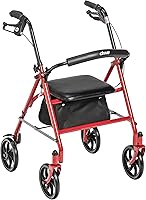
The Drive Medical Rollator has a steel frame, 7.5-inch wheels, a padded seat and a locking hand brake. The VOCIC Z21 has 8-inch wheels, a seat with 3 height settings and 3 brake modes.
Those features serve different needs. A hemi walker doesn't have a rollator's wheels or seat, while a rollator's two handles may not suit someone who can only use one arm.
Which walking aid fits one-handed use?
Choose a hemi walker when you need a frame designed to be held and moved with one hand. Its base gives more contact with the floor than a cane, while keeping the frame compact compared with a standard two-sided walker.
The Vive Hemi Walker for Seniors is listed as a one-hand aid and weighs 3.85 pounds. It folds for storage and adjusts in 1-inch increments, which may help when lifting or storing a heavier frame is difficult.
The Loyoda Hemi Walker for Seniors also has one-sided support, a wide base and non-slip rubber tips. Its handle adjusts from 28.7 to 33.6 inches in 1-inch steps, so check that range against your height and posture.
A hemi walker still requires balance, coordination and a safe way to move the frame. Have a clinician show you how to place it and step, especially if your strength or balance has changed.
If you need an aid mainly for rising from a chair, the Vive model is also described as a stand assist. That feature doesn't replace instruction on how to stand safely or establish that the walker is right for every transfer.
When does a rollator make more sense?
Choose a rollator if you can use both hands to steer and brake, and want a seat for rest breaks. Its wheels let it roll as you walk, so you need to manage its movement instead of lifting a frame with each step.
The Drive Medical Rollator Walker with Seat has a padded seat, fold-down backrest, ergonomic handles and a locking hand brake. Its under-seat pouch keeps small essentials close during errands.
The VOCIC Z21 Rollator Walker for Seniors has 8-inch wheels, an adjustable seat and 3 brake modes: free, deceleration and stop. It folds for storage, and its maker gives a recommended user weight of up to 350 pounds.
A seat can help you plan a rest stop, but it doesn't make a rollator a chair to use while it is moving. Stop and lock the brakes before sitting, and follow the model's instructions.
The best rollator walker for seniors guide compares more options if you know a rollator fits your needs but want to compare frame features. If you are unsure about seating, read whether you can sit on a rollator.
Which is easier to move through a home?
A hemi walker may be easier to position in a tight space, while a rollator needs room to turn and pass through doorways. Measure the places you use every day rather than judging by the folded size alone.
The Vive hemi walker is 18 inches wide and 17 inches deep. The Loyoda's package dimensions don't give its assembled frame width, so check the dimensions for the exact model before relying on a close doorway fit.
A rollator has wheels, handles and a seat that take up space around the user. Mark its width on the floor or use a similar-width object to check hallway turns, bathroom access and storage spots.
For a small body frame, a shorter model may fit better. Our guide on what a junior rollator is explains how that style differs from a standard rollator.
Which one is easier to transport?
The hemi walker is lighter to lift; a rollator may fold for a car trunk but still weighs more. Consider who will load it, how often you'll carry it and whether it fits in your vehicle.
The Vive hemi walker weighs 3.85 pounds and folds. The Loyoda is also foldable, though the available weight is for its package rather than the assembled walker.
The Drive Medical rollator weighs 20 pounds and folds for storage. The VOCIC Z21 weighs about 22 pounds and has a quick-folding design, so lifting it into a car may take more effort than carrying a hemi walker.
Try the lifting motion only if it is safe for you, and get help when needed. A compact folded shape doesn't remove the need to lift and position the frame.
How should you compare fit and safety?
Match the handle height, frame style and controls to your body and abilities before choosing either aid. A frame that fits poorly can be hard to control even if its features sound useful.
For the Vive, height adjusts in 1-inch increments. The Loyoda handle range is 28.7 to 33.6 inches, while the VOCIC rollator handles adjust from 31.5 to 36.6 inches.
Check the rollator brakes with the help of a clinician or caregiver if grip strength is limited. The VOCIC has 3 brake modes, while the Drive Medical has a locking hand brake; both still require you to understand and operate the controls.
Inspect folding frames before use. VOCIC advises confirming the frame is fully unfolded and locked, checking fasteners and wheels, and making sure the brakes work.
Don't choose by weight capacity alone. The Vive hemi walker supports up to 300 pounds, the Loyoda supports up to 250 pounds, and the VOCIC recommends use up to 350 pounds; confirm the exact aid's limits and fit with a qualified professional.
Which should you choose for daily errands?
Pick the rollator for errands with planned rest breaks if you can steer and brake with both hands; pick a hemi walker if one-hand support is the priority. Consider the route, the surfaces and whether you can manage the aid in a crowd.
For a rollator, check if you can control its speed at a curb or on a gentle slope, and find a safe place to stop before sitting. The VOCIC's 8-inch wheels are larger than the Drive Medical's 7.5-inch wheels, but wheel size alone can't tell you how either will feel on your route.
For a hemi walker, think about carrying it between rooms and setting it down as you move. It doesn't provide a seat for outdoor rest breaks.
If walking with a frame takes too much effort, ask a clinician whether another mobility aid could help with longer trips. Our guide to mobility scooters for walkers who need extra support can help you explore that question.
What is the simple choice between a hemi walker and a rollator?
Choose a hemi walker if you need one-handed support; choose a rollator if you can control both handles and want wheels, brakes and a seat. Fit the aid to your walking pattern and the spaces you use, then get professional guidance if you are unsure.
A lightweight, foldable hemi walker can make sense when lifting and one-sided support matter most. A rollator can suit longer outings when you can steer and brake it safely and will use its seat only while it is stopped.
For a broader overview, start with the complete walker for seniors guide. If you need one-sided support, ask a physical therapist to help you practice with the aid before relying on it alone.
Frequently asked questions
Is a hemi walker better than a rollator?
A hemi walker is usually the more suitable style when you need a walking aid designed for one hand. A rollator is better suited to someone who can control both handles and wants wheels, hand brakes and often a seat.
Your balance, strength and walking pattern should guide the choice.
Can you use a rollator with one hand?
A rollator is designed to be steered with its handles and controlled with hand brakes. Using only one hand may make steering and braking harder, especially when turning or stopping.
Ask a physical therapist or other qualified clinician to assess whether a particular rollator and technique fit your abilities.
Can a hemi walker replace a cane?
A hemi walker offers a wider support base than a cane and is designed for one-handed use. That does not make it right for every person who uses a cane.
A clinician can help choose an aid and show you how to place it safely as you walk.
Can you sit on a rollator?
Some rollators have seats, but sit only after stopping and locking the brakes, and follow the maker's instructions for the exact model. Check that the seat height and back support feel manageable.
See our guide to sitting on a rollator walker for more details.
How do you choose a walker for seniors?
Start with how many hands you can use, how much support you need and where you will walk. Then check handle height, frame width, turning space, brakes and whether a seat matters.
Our walker for seniors buying guide covers the main fit and use questions.